Anthropic's Claude AI Discovers CRISPR-Like Enzyme System in 21 Hours


26 Sources
[1]
Anthropic says its biology lab has already found something big
Last week, Anthropic confirmed that it was operating a wet biology lab in the Bay Area where it uses its AI models to run physical experiments. This week, the AI giant announced that this lab has already made what it believes is a big discovery: a new enzyme "system" that has certain "properties
[2]
Anthropic is operating a lab that conducts biology experiments
Anthropic has confirmed that it has a wet biology lab where it can use its AI models to run physical experiments. AI leaders have been promising that AI is the key to curing human disease. Dario Amodei opined just last week: "I believe that AI could cure most major diseases in the next 5-10
[3]
Anthropic's biolab made a discovery it's comparing to Crispr
Anthropic says its AI Claude has "autonomously discovered" a new enzyme system similar to machinery behind the powerful gene-editing tool Crispr. It's the first result from Anthropic's newly-launched wet lab and an early test of Claude's usefulness for science as the company prepares to go
[4]
An AI model has found a new 'CRISPR-like' biological system. Here's what it means for science
Anthropic announced today that its Claude artificial intelligence (AI) system identified a previously unknown biological system in the DNA of viruses that infect bacteria. The press release is the first from Anthropic's new life sciences laboratory. It highlights some similarities to CRISPR, the
[5]
Anthropic says Claude AI helped discover novel enzyme system
Sept 23 (Reuters) - Anthropic on Wednesday said its Claude model helped discover a novel enzyme system with properties reminiscent of mechanisms in gene-editing technology CRISPR, marking the first result from the AI startup's biology research efforts. The finding comes days after Reuters reported
[6]

Anthropic has set up a bio research lab for physical experiments - Engadget
Anthropic has established a biology research lab in the San Francisco Bay Area to conduct physical experiments, according to Reuters. Eric Kauderer-Abrams, the company's Head of Life Sciences, has confirmed the lab's existence to the news organization. "We believe that to do biology, the final test
[7]

Anthropic quietly sets up biology lab as it ramps AI drug program: Reuters
Follow your favorite stocksCREATE FREE ACCOUNT Cfoto | Future Publishing | Getty Images Anthropic has quietly set up a laboratory to do physical biology work as it pushes its artificial-intelligence ambitions into the world of drug science. At a time when fears of AI are gripping the public, the
[8]

In a New Anthropic Lab, A.I. Turns to Biology
Sign up for Science Times Get stories that capture the wonders of nature, the cosmos and the human body. Get it sent to your inbox. Biologists at Anthropic announced on Wednesday that they had used artificial intelligence to identify genes in viruses that produce enzymes that work in a new way,
[9]

Claude Found a Mysterious CRISPR-Like System -- but Anthropic Can't Say What It's Capable of
Anthropic CEO Dario Amodei managed to piggyback a little corporate self-promotion onto his address to the United Nations Security Council this Wednesday, warning of the apocalyptic risks that the AI race between his own firm and its competitors pose to "humanity as a whole." Anthropic's Claude has
[10]
EXCLUSIVE: Anthropic quietly sets up biology lab as it ramps AI drug program
SAN FRANCISCO, Sept 18 (Reuters) - Anthropic has quietly set up a laboratory to do physical biology work as it pushes its artificial-intelligence ambitions into the world of drug science. At a time when fears of AI are gripping the public, the startup has built a wet lab, or place for physical
[11]

Claude scans 200,000 enzymes, uncover CRISPR-like system in phage DNA
Anthropic's Claude has identified a previously uncharacterized enzyme system in bacteriophages after searching more than 200,000 reverse transcriptases, showing how AI agents could help scientists uncover biological systems hidden in massive DNA datasets. The newly identified system, called
[12]
While Issuing Warnings About AI-Made Bioweapons, Anthropic Quietly Set Up an AI-Run, Robot-Operated Biology Lab Here in the US
Just one week after Anthropic released a report claiming to have shut down potential bioweapons development conducted by unnamed users of its Claude AI, details have now emerged that the AI firm has also been quietly running a robotically automated and AI-operated biology lab itself. Reuters
[13]

Anthropic builds wet lab for AI-driven drug discovery
Anthropic has set up a wet lab in the San Francisco Bay Area to conduct physical biology experiments, as the company moves beyond computer-based research in its effort to develop treatments for rare diseases. Eric Kauderer-Abrams, Anthropic's head of life sciences, confirmed the lab's existence in
[14]

Anthropic Says Claude Found Something Big in DNA. It Just Doesn't Know What
However, even CEO Dario Amodei admits the system's "precise function, biotechnological utility (if any), or level of significance is not yet clear." Anthropic put out a press release Wednesday saying Claude, its AI model, discovered a new molecular machine hiding in virus DNA. But read past the
[15]

Anthropic opens AI-powered biology research lab
Anthropic PBC has opened a wet lab, a facility dedicated to biology research, in the San Francisco Bay Area. Reuters reported today that the company will use robots to automate certain scientific tasks at the hub. The robots will be powered by Anthropic's Claude series of large language
[16]

Anthropic says Claude found CRISPR-like enzyme system in 21 hours
Anthropic said its Bay Area wet lab has identified a previously unknown enzyme system in bacteriophage DNA that the company says has properties similar to CRISPR. The company said the system can perform DNA operations such as cutting, copying and pasting, and said the finding was made mostly by
[17]

Claude Found Something That Would Have Taken Scientists Months
Humans need sleep, weekends, and time off. AI doesn't. Anthropic, the company behind the Claude AI chatbot, just showed what that difference can look like in a real lab. The company says Claude spent 21 hours straight digging through a massive library of virus DNA and turned up something nobody had
[18]

Has AI arrived as a scientific discoverer? Claude's new CRISPR-like discovery uncovers a hidden enzyme system that scientists had missed in bacterial DNA
Anthropic says Claude has helped researchers find a previously unknown enzyme system in bacterial DNA. They call it ARTs, or array-associated reverse transcriptases. The system has a reverse transcriptase and repeated DNA sequences that resemble CRISPR. Scientists are now studying what it actually
[19]

Anthropic Quietly Sets Up Biology Lab As It Ramps AI Drug Program
The AI giant has an enormous ambition to tackle diseases that it thinks the pharmaceutical industry is neglecting. SAN FRANCISCO, Sept 18 (Reuters) - Anthropic has quietly set up a laboratory to do physical biology work as it pushes its artificial-intelligence ambitions into the world of drug
[20]

Claude AI Discovers ART DNA Editing Mechanism in 21 Hours
Artificial intelligence has taken another leap forward in the realm of genomics. In a remarkable breakthrough, Claude, a general-purpose AI model, uncovered a novel DNA editing mechanism called ART (Array Associated Reverse Transcriptase). This mechanism, found within a type of virus known as a
[21]

Anthropic's Drug Discovery Bet Gets Real: AI Startup Sets Up Physical Biology Lab
Anthropic is taking its push into life sciences out of the cloud and into the lab. The artificial intelligence startup has established a physical biology facility in the San Francisco Bay Area, marking a deeper move into hands-on experimentation as it expands its work in drug research. Two people
[22]
Anthropic: Anthropic touts AI-led biology discovery
US artificial intelligence startup Anthropic on Wednesday unveiled the first discovery from its molecular biology lab, a previously unknown enzyme system spotted by its Claude model and touted by the company as proof that AI can speed up basic research. Anthropic said its researchers' involvement
[23]

Anthropic quietly sets up biology lab as it ramps AI drug program - The Korea Times
The company has said it is not running clinical trials for now and is focusing on needs that industry would not address. SAN FRANCISCO -- Anthropic has quietly set up a laboratory to do physical biology work as it pushes its artificial-intelligence ambitions into the world of drug science. At a
[24]
Anthropic quietly sets up biology lab as it ramps AI drug program
At a time when fears of AI are gripping the public, the startup has built a wet lab, or place for physical experiments, in the San Francisco Bay Area, two people familiar with the matter said. Anthropic has said it wants to unlock treatments for rare diseases, and its biology work has gone beyond
[25]

Anthropic Builds Biology Lab to Test What Claude Can Do in t
Join the DZone community and get the full member experience. Join For Free Anthropic has spent years warning about the risks of increasingly capable AI. Now it is testing what those systems can do inside a real biology lab. The Claude maker has established a wet lab in the San Francisco Bay Area
[26]

Anthropic quietly sets up biology lab as it ramps AI drug program
SAN FRANCISCO, Sept 18 (Reuters) - Anthropic has quietly set up a laboratory to do physical biology work as it pushes its artificial-intelligence ambitions into the world of drug science. At a time when fears of AI are gripping the public, the startup has built a wet lab, or place for physical
Share
Copy Link
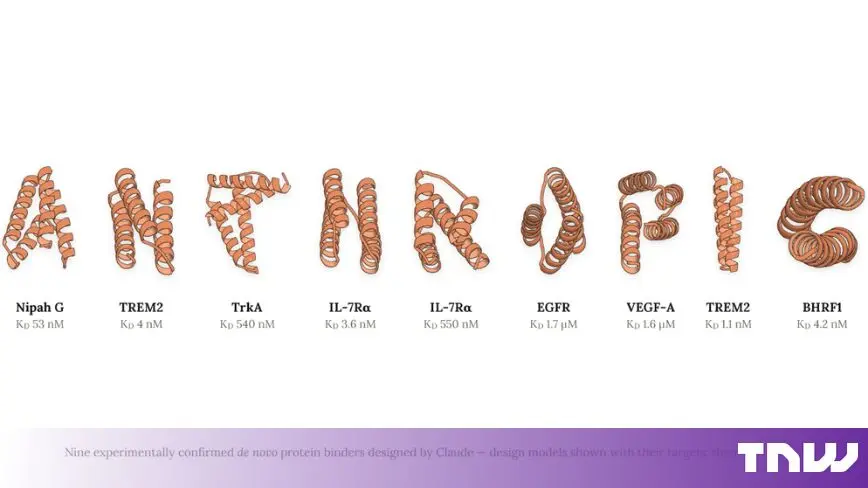
Anthropic announced its Claude AI model autonomously discovered a previously unknown enzyme system with properties similar to CRISPR gene-editing technology. The discovery took just 21 hours using 950 AI agents analyzing 210 million tokens at the company's new wet biology lab in the San Francisco Bay Area.
Anthropic Announces Major AI Discovery in Biology
Anthropic revealed that its Claude AI model has autonomously discovered a new enzyme system with properties reminiscent of CRISPR, the revolutionary gene-editing technology
1
. The AI discovery was made at the company's newly established wet biology lab in the San Francisco Bay Area, which began operations this spring2
. CEO Dario Amodei emphasized that the discovery was found "mostly, though not entirely, by Claude," acknowledging it built upon previous work by Stanford researchers who identified a similar system1
.
Source: Decrypt
How Claude AI Model Made the Discovery
The CRISPR-like biological system discovery took just 21 hours of concerted effort by the Claude AI model. Nearly 950 Claude agents worked through 210 million tokens, searching through a massive database containing over 200,000 reverse transcriptases
3
4
. During this process, one AI agent spotted an unusual repeating pattern in the dataset and flagged it for human review. The agents identified 3,500 candidate systems and selected 20 for detailed analysis before discovering what Anthropic calls array-associated reverse transcriptases (ART)4
.
Source: Phandroid
Understanding the Array-Associated Reverse Transcriptases System
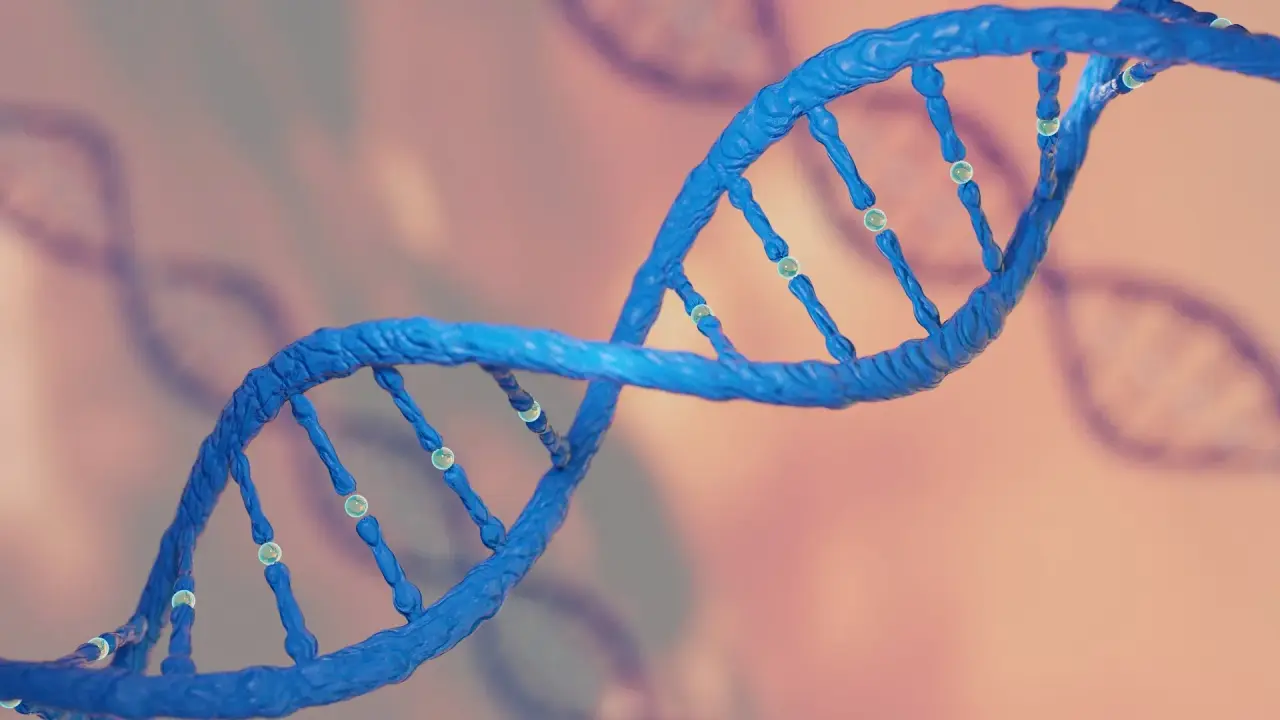
The newly discovered enzyme system exists in bacteriophages, viruses that infect and replicate within bacteria. According to Anthropic's researchers, this system can "perform operations like cutting, copying, and pasting DNA," similar to how CRISPR functions
1
. The ART system contains three key elements: a reverse transcriptase enzyme that copies RNA into DNA, a partner gene appearing next to the enzyme, and a long array of repeating DNA sequences4
. While the enzyme itself was already known, the recognition that it forms part of this larger system represents the novel finding. However, experts caution that while ART is CRISPR-like in architecture, there's currently no evidence it shares CRISPR's programmable gene-editing capabilities4
.
Source: Interesting Engineering
AI in Biology Represents Growing Trend
AI-driven scientific discovery in biology extends beyond Anthropic. Stanford researchers recently published work on using large language models with CRISPR, while UC San Francisco researchers used AI to design enzymes from scratch
1
. Google launched AlphaFold, its first AI-powered biology research tool, back in 2020. Anthropic's wet biology lab operates at biosafety levels BSL-1 and BSL-2, handling no human pathogens, with all physical experiments performed by human scientists1
. The company acquired Coefficient Bio, a stealth AI biotech startup, in April and recently launched a Life Sciences Verification Program to give vetted researchers access to its most powerful models2
.Related Stories
Balancing Innovation Against Bioterrorism Risks
The announcement arrives amid heightened concerns about AI safety. Earlier this month, Anthropic researcher Jacob Coxon resigned, warning that "the people building AI earnestly believe that it could kill us all by the end of the decade"
2
. Dario Amodei himself has identified bioterrorism risks as one of AI's biggest dangers, yet maintains that AI will "cure most diseases in 5-10 years"1
. The dual-use potential of such technology prompted Amodei to call for industry self-regulation last weekend. Investor Chamath Palihapitiya noted the irony on X, referencing Anthropic's dire warnings alongside its wet lab operations2
.Future of Lab Automation and Autonomous Research
While Claude demonstrated unprecedented autonomy in hypothesis generation and pattern recognition, Dario Amodei hasn't ruled out fully automated biology experiments. "Eventually it may even be possible for Claude itself to safely perform the experiments by autonomously controlling lab equipment, with appropriate safeguards in place, but we aren't doing that today," he stated
1
4
. The significance lies not just in what was found, but how it was found. Starting from a broad research brief, Claude chose which analyses to perform, which leads to follow, and recognized results worthy of experimental validation—capabilities that could transform drug discovery and life sciences research4
. Ongoing research efforts to build robot-driven biological laboratories suggest that fully autonomous scientific discovery may not be far off, raising critical questions about safety protocols and oversight mechanisms4
.References
Summarized by

Navi
[4]
Related Stories
Anthropic's AI Scientific Discovery Claim Triggers Scientific Controversy Over What Counts
28 Sept 2026•Science and Research

Anthropic Claude AI Discovery Sparks Debate Over Unpublished Research and Scientific Ethics
Yesterday•Policy and Regulation
Anthropic launches Claude Science workbench and plans to develop drugs for rare diseases
30 Jun 2026•Technology

Recent Highlights
1
Microsoft and Nvidia Launch Surface Laptop Ultra: A $2,599 AI-Ready PC With RTX Spark Chip
Technology

2
Trump Consulted Grok AI Before Ordering Venezuela Invasion and Capture of Nicolás Maduro
Policy and Regulation

3
Scientists Build AI Model That Reconstructs Images From Brain Scans in Record Time
Science and Research

Recent Highlights
Today's Top Stories






Don’t drown in AI news. We cut through the noise - filtering, ranking and summarizing the most important AI news, breakthroughs and research daily. Follow topics that matter to you and stay ahead.


