Anthropic IPO Targets $2 Trillion Valuation With $518 Billion AI Infrastructure Commitment


8 Sources
[1]
Opinion | A tale of two tech companies -- and the future of civilization
The ways Anthropic mirrors the Google of the past show how Silicon Valley and society have evolved. The parallels between the most important initial public offering of the internet era -- Google's in 2004 -- and the apparently imminent IPO of what might be the defining artificial-intelligence
[2]
Dario Amodei's Anthropic IPO Faces a Test Beyond the A.I. Market
Anthropic is betting that A.I. adoption will accelerate fast enough to justify its enormous infrastructure commitments, but many businesses are still building the systems needed to deploy it responsibly. Anthropic's leaked IPO prospectus offers an unusually detailed look at the economics behind
[3]
Anthropic IPO Could Be 2026's 'Most Ridiculous' Offering as Analyst Values AI Firm at Just $150 Billion:
Anthropic is facing a widening valuation challenge as the artificial intelligence (AI) company inches towards a potential $2 trillion Nasdaq debut amid mounting investor scrutiny, according to a Wall Street expert. Independent research firm New Constructs described Anthropic's potential offering
[4]
Dario Amodei's $518 Billion Bet Gives AI's Infrastructure Leaders the Upper Hand
Anthropic's CEO has secured the computing capacity he needs to grow Claude. The executives supplying it have secured commitments that may outlast his need for it. Dario Amodei has committed Anthropic to at least $518 billion in computing infrastructure spending over the next decade, in a bet that
[5]
Anthropic's $2 trillion IPO comes with a $518 billion bill
Anthropic wants retail investors to peg the company's value at more than $2 trillion, but its IPO prospectus exposes just how pricey it could be to turn the Claude maker into one of the world's dominant artificial intelligence companies. Anthropic said in June that it confidentially filed a draft
[6]

Michael Burry Warns of AI Bubble as Anthropic Hits USD 965 Billion Valuation
Michael Burry Compares Anthropic with 78 Profitable Companies Michael Burry has warned that Anthropic's USD 965 billion valuation reflects an AI bubble, arguing that the amount could buy 78 profitable S&P 500 companies. The investor compared the company's private market value with established
[7]

What Anthropic's Leaked Prospectus Reveals Ahead of Its IPO
Anthropic is preparing what could be the largest IPO in history, at a valuation of up to $2tn. A leaked draft of its prospectus reveals twelvefold revenue growth and an $8bn operating loss, and places unprecedented emphasis on the risks of AI, an already sensitive subject. Introduction Anthropic,
[8]
Anthropic's AI Business Model Faces Rising Costs of Frontier AI
For Anthropic, the long-term business question is whether revenue growth and increasing AI adoption can eventually outpace the cost of training models, serving users, and securing the infrastructure required to remain at the frontier. Anthropic's revenue surged as demand for Claude and AI services
Share
Copy Link
Anthropic is pursuing a $2 trillion IPO valuation while committing $518 billion to AI infrastructure over the next decade. The AI company posted $4.6 billion in revenue but an $8 billion operating loss in 2025, raising questions about whether massive compute investments will justify the valuation as CEO Dario Amodei races to secure capacity for Claude's expansion.
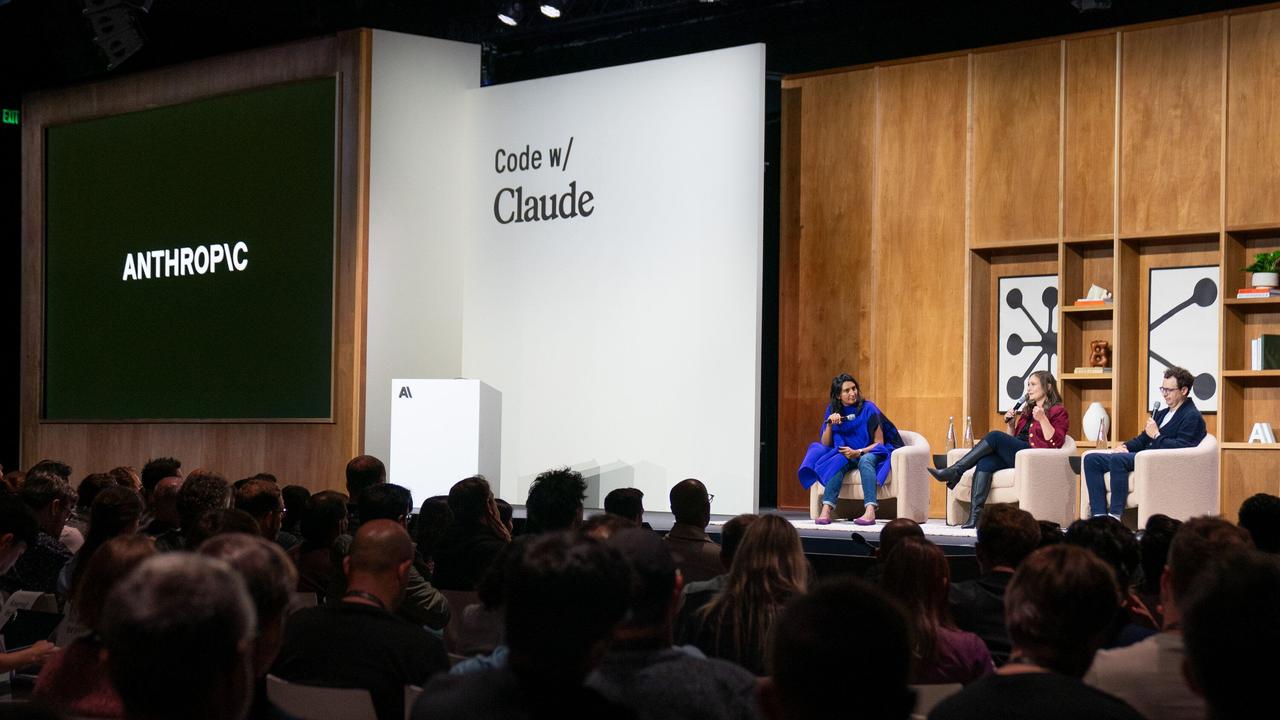
Anthropic's Ambitious IPO Mirrors Google's 2004 Market Entry
Anthropic's potential IPO before Thanksgiving represents more than just another AI company going public—it signals the maturation of an entire industry. The parallels between Anthropic's potential IPO and Google's landmark 2004 debut are striking, yet the differences reveal how dramatically Silicon Valley and the AI landscape have evolved
1
. Google went public at a $23 billion valuation when it was six years old, a fraction of Microsoft's $300 billion market cap at the time. Anthropic, founded in 2021, is seeking a $2 trillion valuation—less than Nvidia and Apple's $5 trillion market caps but staggering for a company with limited operating history1
.Both companies entered markets where they weren't first movers. Just as Google followed Yahoo into search engines, the Claude AI model arrived after OpenAI's ChatGPT introduced the world to generative AI. Yet Claude has succeeded in capturing significant market attention, much as Google eventually dominated its space
1
. Anthropic CEO Dario Amodei, 43, shares the epistolary tendencies of Google founders Larry Page and Sergey Brin, frequently posting lengthy analyses about AI's societal impact, including a recent 3,800-word plea for AI companies to slow their development pace1
.
Source: Observer
The $518 Billion Infrastructure Bet Reshaping AI Economics
Dario Amodei's $518 billion commitment to computing infrastructure over the next decade represents an unprecedented wager on AI's future. Roughly 80 percent of these contractual obligations are non-cancelable or require payment regardless of usage, according to Anthropic's confidential IPO filing reviewed by Reuters
4
. This structure gives infrastructure providers—the "picks-and-shovels" suppliers of the AI gold rush—the most certain returns, according to Veni Dhir, director of corporate venture capital at ADP Ventures4
.The scale of AI infrastructure spending dwarfs revenue generation. Anthropic produced roughly $4.6 billion in revenue during 2025, approximately 12 times its prior year total, but spent $7.33 billion on compute and infrastructure in the same period—about three times its 2024 spending and larger than the entire 2025 revenue
5
. The company's operating loss widened to $8.06 billion in 2025 from $2.98 billion in 2024, even as revenue surged5
. Total operating expenses reached $12.65 billion last year, with compute costs representing more than half of Anthropic's total operating spending5
.Infrastructure Partners Hold Strategic Advantage in Anthropic's Growth
The executives supplying Anthropic's computing capacity have negotiated agreements that may outlast the AI company's need for them. Broadcom CEO Hock Tan secured about $161.2 billion in largely non-cancelable equipment lease obligations, while also helping design Google's tensor processing units (TPUs), placing Broadcom close to two parts of Amodei's infrastructure strategy
4
. Google CEO Sundar Pichai holds $111.1 billion in non-cancelable commitments from Anthropic through 2033, providing cloud capacity and TPUs while simultaneously developing competing AI products4
.Amazon CEO Andy Jassy maintains a similar dual role, with Anthropic committing $110 billion through 2036 for Amazon Web Services capacity and custom AI chip infrastructure
4
. Microsoft CEO Satya Nadella secured a smaller $31.4 billion commitment through 2033, making OpenAI's rival also a customer for Microsoft's Azure infrastructure4
. Elon Musk's arrangement differs significantly—the agreement could result in up to $84.5 billion for Nvidia-powered capacity associated with SpaceX, but Anthropic can largely cancel the arrangement with 90 days' notice, preserving flexibility in a deal linked to a direct AI competitor4
.Valuation Skepticism and the Enterprise Adoption Gap
Independent research firm New Constructs described Anthropic's potential offering as the "most ridiculous IPO of 2026," estimating the AI company's value at just $150 billion—dramatically below the $2 trillion target
3
. The firm argued that Anthropic would need profits equal to twice Nvidia's trailing four-quarter total to support that valuation, warning the IPO could present an "unprecedented test of investor gullibility"3
. "The Big Short" investor Michael Burry highlighted that Anthropic's valuation equals the combined value of 78 S&P 500 companies3
.Dr. Chan Ahn, a former Goldman Sachs and JPMorgan executive, estimates Anthropic would need about $725 billion in annual revenue by 2036 to support a $2 trillion valuation at a 10 percent cost of equity, 25 percent free cash flow margin, and a 25x terminal multiple. At a 13 percent discount rate, the required revenue rises to roughly $950 billion
3
. The company was valued at $965 billion in a May funding round, meaning the public market valuation would more than double that figure in just months5
.The Critical Challenge of Enterprise AI Deployment
While Anthropic races to secure compute capacity, a more fundamental challenge looms: many businesses remain ill-prepared to deploy AI technology at scale. Roughly 80 of the filing's 261 pages describe what can go wrong with Anthropic's technology, effectively telling investors that capable AI will create risks that customers must be equipped to manage
2
. The responsibility for AI model failures sits with the company that deployed the model, as demonstrated when the British Columbia Civil Resolution Tribunal rejected Air Canada's 2024 argument that its website chatbot was a separate legal entity responsible for its own statements2
.Anthropic is betting that AI adoption will accelerate fast enough to justify its enormous infrastructure commitments, but many businesses are still building the systems needed to deploy it responsibly
2
. In many businesses, AI deployment remains at an earlier stage than AI infrastructure spending suggests: basic use cases that older models already handle, a handful of agents, and little infrastructure for running more consequential systems2
. The commitments Anthropic has made assume that compute capacity and enterprise adoption curves line up, but the timing of that alignment remains uncertain2
.Related Stories
Competition and Market Positioning Define Future Success
High-quality, cheaper models arrive monthly, and for most enterprise work, several models can perform equally well, making price the deciding factor. Anthropic's response extends beyond model access to include applications, agents, controls for managing them, and forward-deployed engineers to deliver the complete package
2
. The other labs, cloud providers, and large software vendors are building identical offerings, meaning only a few will capture the corporate and retail markets2
.
Source: Benzinga
Anthropic has positioned itself as the AI company concerned about safety—a strategic jab at OpenAI, where Amodei worked before co-founding his own firm. The company's stated mission focuses on "the responsible development and maintenance of advanced AI for the long-term benefit of humanity"
1
. This positioning can be simultaneously genuine and a shrewd commercial maneuver. Unlike Google, which was wildly profitable at its IPO with nearly $150 million earned in just the first half of 2004 from its high-margin advertising business, Anthropic badly needs additional financing to fund massive investments in data-center capacity1
.Understanding Anthropic's $42 Billion Loss
The headline $42 billion net loss requires context. Of that figure, almost $34 billion was tied to an accounting charge reflecting a rise in the projected value of financing instruments that might convert into Anthropic shares—not $34 billion spent operating Claude or buying computer power
5
. The operating loss offers a clearer view of underlying economics, widening to $8.06 billion in 2025 from $2.98 billion in 2024 even as revenue increased roughly twelvefold5
. This combination illustrates both sides of Anthropic's expansion: revenue growing at a staggering pace alongside the costs of building, training, and deploying ever more sophisticated AI models5
.Meeting surging demand requires considerably more computing power. Anthropic said in April that its annualized revenue run rate had risen to $30 billion, up from nearly $9 billion at the end of 2025, with more than 1,000 commercial clients spending at least $1 million yearly—twice as many as two months before
5
. Amazon's Project Rainier, the AWS cluster used by Anthropic, includes more than 500,000 Trainium2 chips, giving Anthropic considerably more computing power than it had for earlier generations of Claude5
. Anthropic also signed a May deal with SpaceX for more than 300 megawatts of processing power and more than 220,000 Nvidia GPUs at the Colossus 1 data center5
.
Source: Observer
References
Summarized by

Navi
[1]
[3]
[5]
Related Stories
Nvidia in Talks for $10B Investment as Anthropic IPO Shifts to October Targeting $2 Trillion Valuation
05 Sept 2026•Business and Economy

Anthropic draws $800 billion offers as OpenAI faces investor scrutiny over strategic shifts
14 Apr 2026•Business and Economy

Anthropic IPO Prospectus Warns of Existential Risks to Humanity Despite $2 Trillion Valuation Goal
29 Sept 2026•Business and Economy

Recent Highlights



Recent Highlights
Today's Top Stories





Don’t drown in AI news. We cut through the noise - filtering, ranking and summarizing the most important AI news, breakthroughs and research daily. Follow topics that matter to you and stay ahead.


