Anthropic draws $800 billion offers as OpenAI faces investor scrutiny over strategic shifts


10 Sources
[1]
Anthropic Attracts Investor Offers at an $800 Billion Valuation
Anthropic PBC has received several offers from investors for a new round of funding that could value the artificial intelligence startup at about $800 billion or higher -- overtures that the Claude maker has so far resisted, according to people familiar with the matter. The offers would more than
[2]
Anthropic chief Dario Amodei: 'I don't want AI turned on our own people'
Views vary about Dario Amodei. US President Donald Trump has denounced the chief executive of Anthropic and his AI company's fellow founders as radical "leftwing nut jobs". Amodei's offence? Daring to argue that Anthropic's services should not be used by the Pentagon for domestic mass surveillance
[3]
OpenAI's $852 billion valuation is under scrutiny from its own investors
Some backers say OpenAI has revised its product roadmap twice in six months and risks losing focus ahead of an IPO expected as early as Q4 2026. OpenAI's new CRO has accused Anthropic of overstating its $30B run rate by $8B through gross accounting on cloud partner revenue. Both companies say they
[4]
OpenAI investors question $852bn valuation as strategy shifts
OpenAI's $852bn valuation is under increasing scrutiny from its own backers as the group switches focus to the enterprise market and tackling competition from Anthropic. A recent flurry of deals, initiatives and abandoned projects is designed to reorient the company around a new strategy: defend
[5]
Anthropic's fast ascent: The strategy behind an $800 billion valuation
The AI firm Anthropic has emerged as a dominant force in the global technology sector, attracting investor interest that values the company at approximately $800 billion (€678.3bn), but what is behind the success? Anthropic's recent financial trajectory has stunned market observers, with venture
[6]

Anthropic draws VC interest at up to $800 billion valuation, Business Insider reports
Anthropic has so far resisted overtures from investors for a new round of funding, according to a Bloomberg News report. The reports also come weeks after Anthropic announced a power new model named Mythos earlier this month, describing it as its "most capable yet for coding and agentic tasks,"
[7]

Anthropic Nears OpenAI Territory With Reported $800 Billion Valuation Chatter As Explosive Claude Growth
Anthropic has reportedly received multiple unsolicited investment offers from venture capital firms valuing the company at as much as $800 billion. Investor Frenzy Drives $800B Valuation Buzz Anthropic did not immediately respond to Benzinga's request for comments. The company was last
[8]

OpenAI Backers Question Valuation Amid Anthropic Competition | PYMNTS.com
As the Financial Times (FT) reported Tuesday (April 14), this growing scrutiny comes amid OpenAI's new focus on enterprise customers and dealing with competition from rival artificial intelligence (AI) startup Anthropic. In the past few months, OpenAI has made a series of moves to further a new
[9]

Can Anthropic Lead IPO Race Over OpenAI With an $800 Billion Valuation Edge?
Anthropic is moving closer to a possible public listing as private-market valuation talk rises to as much as $800 billion. At the same time, OpenAI remains the other company most closely watched in the same race. Investors are now looking at revenue growth, enterprise demand, IPO readiness, and the
[10]

OpenAI's $852 bln valuation faces scrutiny amid strategy shift, FT reports By Investing.com
Investing.com-- OpenAI's lofty valuation is facing growing scrutiny from some of its own investors as the company pivots strategy and intensifies competition in the artificial intelligence sector, the Financial Times reported on Tuesday, citing investors. The group, valued at about $852 billion,
Share
Copy Link
Anthropic has received investor offers valuing the AI startup at $800 billion, more than doubling its February valuation, as its revenue surged to $30 billion. Meanwhile, OpenAI's $852 billion valuation faces questions from its own backers over strategic pivots and accounting disputes. The rivalry highlights intensifying AI competition in the enterprise market.
Anthropic Receives $800 Billion Valuation Offers
Anthropic has attracted multiple investor offers for a new funding round that could value the artificial intelligence startup at approximately $800 billion or higher, according to people familiar with the matter
1
. The offers would more than double the $350 billion pre-money AI valuation Anthropic secured during its $30 billion fundraising in February1
. While the Claude maker has so far resisted these overtures, discussions remain early and details could change1
.Investors have been particularly impressed by Anthropic's exceptional revenue growth, especially among deep-pocketed enterprise customers. Earlier this month, the startup announced it had reached $30 billion in annual run-rate revenue, marking a sharp increase from $19 billion just a few months before
1
. The company's annualised revenue surged from approximately $9 billion at the end of 2025 to $30 billion by the end of March 2026, driven largely by demand for its coding tools3
.OpenAI Faces Investor Scrutiny Over Strategic Shifts
While Anthropic enjoys its momentum, OpenAI's $852 billion valuation is under increasing scrutiny from its own backers as the company switches focus to the enterprise market and tackles AI competition from Anthropic
4
. Some OpenAI investors have expressed concerns that the company has revised its product roadmap twice in six months, first in response to competitive pressure from Google and then from Anthropic3
."You have ChatGPT, a 1 billion-user business growing 50-100 per cent a year, what are you doing talking about enterprise and code?" said one early backer of OpenAI to the Financial Times. "It's a deeply unfocused company"
4
. One investor who has backed both companies told the FT that in order to underwrite an investment in OpenAI's recent round, they would have to assume an Initial Public Offering (IPO) valuation of $1.2 trillion or more4
.Revenue Accounting Dispute Intensifies Rivalry
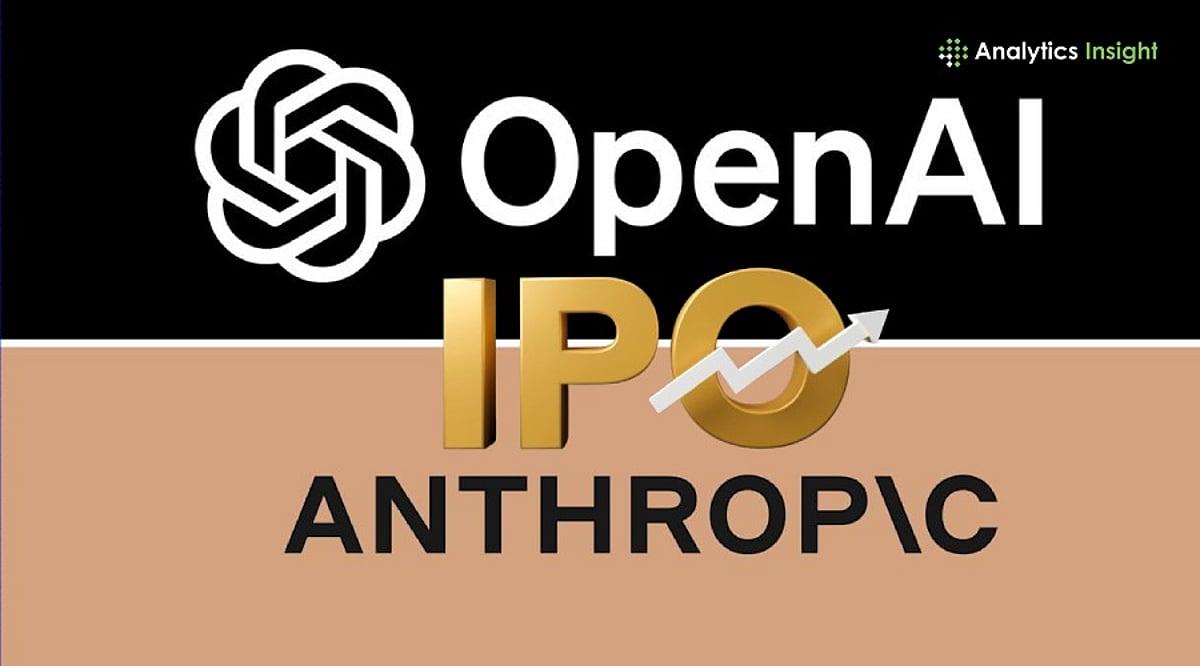
The competitive tension between the two AI leaders escalated when OpenAI's new chief revenue officer, Denise Dresser, accused Anthropic of overstating its $30 billion run rate by roughly $8 billion through gross accounting on cloud partner revenue
3
. The accusation centers on a well-documented accounting difference: Anthropic books the full value of revenue generated through its cloud distribution partners, Amazon Web Services and Google Cloud, on a gross basis, while OpenAI reports its Microsoft revenue share on a net basis3
.Both approaches are permissible under US GAAP. Anthropic disputed the characterization, with one person close to the company stating that Anthropic "recognises gross revenue on sales through partners because it is the principal in the transaction and its cloud partners are the distribution channel"
3
. If Dresser's analysis is correct, the difference would put Anthropic's comparable run rate closer to $22 billion rather than $30 billion3
.
Source: Analytics Insight
Enterprise Market Strategy Drives Anthropic Success
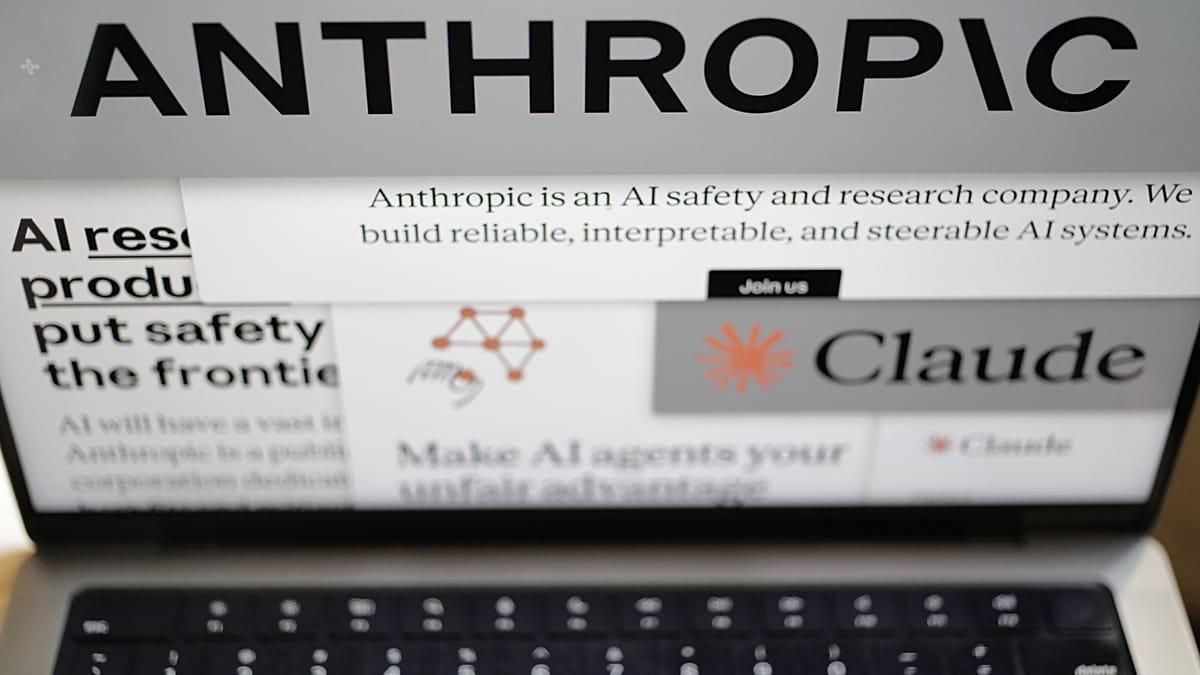
Anthropic's rapid ascent stems from its focused approach to the enterprise market. Unlike competitors such as OpenAI that have sought broad consumer appeal, Anthropic has concentrated on becoming the primary infrastructure for professional and technical workflows
5
. Ben Barringer, head of technology research at Quilter Cheviot, noted that "Anthropic differs from OpenAI in that it looks to sell to enterprises more than it does to the end consumer, so the business models are very different"5
.
Source: Euronews
The company has released a series of AI tools aimed at overhauling the way businesses handle tasks from coding to cybersecurity. Those products are resonating with a growing base of business customers, leading to a surge in revenue and rising competition with rival OpenAI
1
. OpenAI's chief financial officer Sarah Friar told CNBC that enterprise now accounts for 40% of OpenAI's total revenue and is on track to match its consumer business by the end of 20263
.Related Stories
Mythos Model Raises Security Concerns
Anthropic recently unveiled a new model, Mythos, that it said would be irresponsible to release widely because it can identify and exploit software vulnerabilities
1
. Jamie Dimon, CEO of JPMorgan Chase, has voiced concerns regarding the potential misuse of such advanced systems, suggesting that the capabilities of Mythos, particularly in identifying software vulnerabilities, could potentially be used to orchestrate sophisticated cyber-attacks against global banking infrastructure5
.US Treasury Secretary Scott Bessent and Federal Reserve Chair Jerome Powell reportedly convened an urgent and closed-door meeting with the chief executives of the nation's major banks last week in Washington to warn Wall Street leadership about the profound systemic risks posed by Anthropic's new Mythos model
5
. The model is reportedly so effective at finding flaws in code that it is a transformative tool for cybersecurity, but in the wrong hands, those same features could be catastrophic .IPO Plans and Leadership Vision
Anthropic has discussed a public listing as soon as October, Bloomberg has reported
1
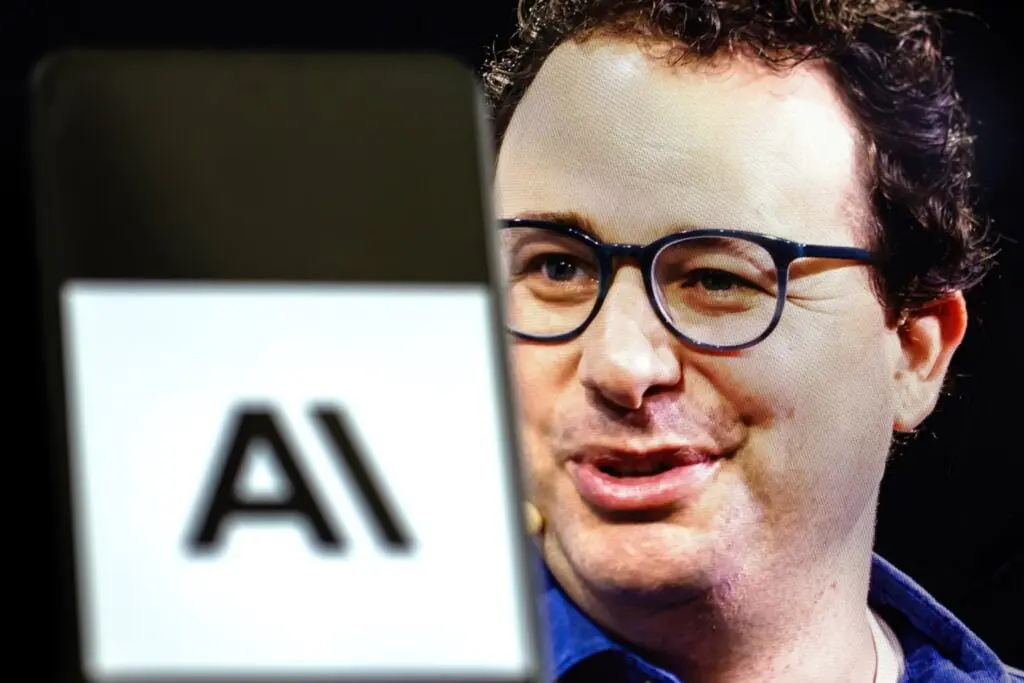
. The company's CEO Dario Amodei remains convinced that scaling AI still has a long way to go. "There's no end to the rainbow. There's just the rainbow," he told the Financial Times. "We don't see anything slowing down. I'm the first to say that it's going to completely transform the world and we're underestimating its significance"2
.
Source: FT
Anthropic has risen in prominence recently after a disagreement with the US Defense Department over the safety of using its AI tools
1
. US President Donald Trump has denounced Dario Amodei and his AI company's fellow founders as radical "leftwing nut jobs" for daring to argue that Anthropic's services should not be used by the Pentagon for domestic mass surveillance or fully autonomous weapons2
. The stance cost the firm lucrative contracts with the Pentagon but that did not stop Anthropic from successfully expanding its business5
.Data from secondary marketplaces that trade proxies for both companies' stock suggests demand is higher for Anthropic, and, for the first time, buyers are placing a premium on the startup over OpenAI
4
. Roy Luo, a partner at Iconiq Capital, which has invested over $1 billion into Anthropic, noted: "There's room for both but there is fundamentally a number 1 and a number 2 dynamic and the 1 will win disproportionately"4
. As both companies prepare for potential public listings, the battle for dominance in the enterprise AI market will determine which company can justify its massive valuation to public market investors.References
Summarized by

Navi
Related Stories
Anthropic weighs $50bn funding round for near $1tn valuation as revenue explodes to $45bn
06 May 2026•Startups

OpenAI Delays IPO to 2027 Amid AI Safety Concerns While Anthropic Surges to $65 Billion Revenue
12 Sept 2026•Business and Economy

Anthropic IPO Filing to Cite AI Backlash as Major Risk as Company Eyes $2 Trillion Valuation
21 Aug 2026•Business and Economy
Recent Highlights
1
Meta Unveils Muse Wonder Frontier AI Models, Claims Performance Matching OpenAI and Anthropic
Technology

2
IMF Report Warns AI Market Correction Could Spark Global Financial Crisis With $1.4T at Risk
Business and Economy

3
Eight States Sue OpenAI Over ChatGPT Safety Concerns and Unlawful Collection of Children's Data
Policy and Regulation

Recent Highlights
Today's Top Stories











Don’t drown in AI news. We cut through the noise - filtering, ranking and summarizing the most important AI news, breakthroughs and research daily. Follow topics that matter to you and stay ahead.


