Apple AI powered by Google Gemini models and Nvidia chips, but maintains distinct architecture


7 Sources
[1]
Apple partnering with Google and Nvidia for most advanced AI model
Apple making a 'solid step in the right direction' when it comes to AI, says Seaport's Jay Goldberg Apple on Monday revealed what it's been working on in artificial intelligence at its annual Worldwide Developers Conference in Cupertino, Calif. WWDC showed off demos of its redesigned Siri, which
[2]
Siri AI is powered by Gemini models, but is not Gemini - what does that mean?
We know that Siri AI and other Apple Intelligence features are powered by Google's Gemini models, but Apple has been at pains to point out that this is not the same as running Gemini on iPhone. While there are still some unknowns, a far clearer picture is emerging about exactly what all of this
[3]
How much Gemini is really inside Siri AI?
Despite using Gemini foundations, Siri AI offers a distinct experience from Google's implementation, with Apple maintaining full control over data security and processing. Apple this week announced a dramatically improved version of Siri, aptly named Siri AI. But instead of accolades, among the
[4]
Apple's New AI Models Contain 'None' of Google's Gemini Assistant
Apple executives have detailed the architecture of the company's new Apple Foundation Models (AFM) and clarified exactly how Google's technology factored into their development. Craig Federighi, Apple's SVP of Software Engineering, held a post-keynote tech talk (via 9to5Mac) with press on Monday
[5]
Apple's Private AI Will Run on Google's Servers
Apple today said it is expanding Private Cloud Compute (PCC) beyond its data centers, partnering with Google and NVIDIA to run Apple Intelligence workloads on Google Cloud. Private Cloud Compute is Apple's cloud intelligence system for private AI processing, used to keep Apple Intelligence
[6]

Here's How Much Gemini Is Actually in Apple Intelligence
Apple spent a lot of time talking about the upgraded Apple Intelligence platform and the new Siri AI app at WWDC 2026, and in the days since, a few more details have emerged about how the AI model partnership between Apple and Google will affect the new software -- but answering the question of how
[7]

Apple Removes The Fog Around Its New Cloud-Based, And 20-Billion-Parameter On-Device AI Models, Brushes Aside Google's Contributions While Hyping NVIDIA's
Apple has established a sprawling and intricate compute architecture, one that ropes in Google and NVIDIA to paper over its embarrassing AI-related shortcomings. Even so, Apple's WWDC 2026 keynote answered as many questions as raised new ones. Thankfully, the Cupertino-based tech giant is now
Share
Copy Link
Apple confirmed at WWDC that its Apple Intelligence features use Google Gemini foundation models and Nvidia GPUs for cloud processing. The company built five Apple Foundation Models in collaboration with Google, with four running on Apple Silicon and one on Google servers. Despite the partnership, Apple executives emphasized that Siri AI contains none of Google's Assistant code and maintains full control over data security through its Private Cloud Compute architecture.
Apple AI Strategy Reveals Deep Google Gemini Integration
Apple executives confirmed at its annual Worldwide Developers Conference that the company's Apple AI capabilities rely significantly on Google Gemini models and Nvidia hardware, marking a strategic shift from building entirely proprietary systems
1
. The revelation came during a technical deep dive following the WWDC keynote, where Craig Federighi, Apple's SVP of Software Engineering, detailed how Apple's partnership with Google extends beyond what was initially disclosed in their January announcement4
.
Source: Wccftech
The company unveiled its third generation of Apple Foundation Models, a family of five foundation models custom-built in collaboration with Google
2
. These models power the redesigned Siri AI, which demonstrated the ability to check concert dates, set reminders, and provide directions in a fluid, conversational manner. Apple software SVP Craig Federighi emphasized the company's distinct approach, stating that "some appear to be racing forward, seemingly pursuing AI for the sake of AI, without clear regard for the people"1
.How Apple Foundation Models Differ From Google's Gemini Assistant
Despite using Google Gemini as the foundation, Apple executives were emphatic that Siri AI is not simply a rebadged version of Gemini Assistant. "The amount of the Google Assistant we use is none," Federighi clarified, explaining that Apple uses none of the Gemini models deployed to Google's customers, none of Google's client-side code, and no Google Search infrastructure
4
. Instead, Apple started with Gemini's foundation models, optimized and rebuilt them for Apple Silicon, and retrained them with proprietary data, weights, and guardrails2
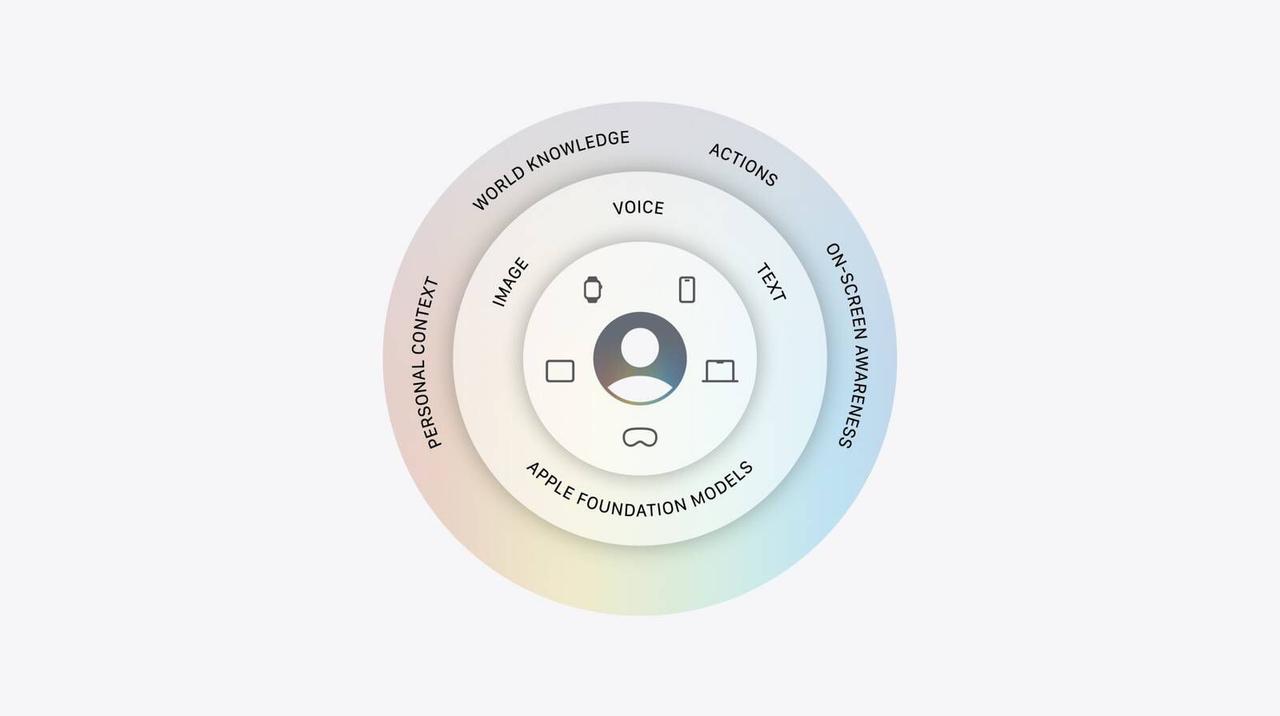
.The architecture includes two on-device models: AFM 3 Core, a 3-billion-parameter dense model, and AFM 3 Core Advanced, a 20-billion-parameter model with sparse architecture that activates just 1 to 4 billion parameters depending on the request
3
. These on-device models run exclusively on Apple Silicon, with AFM 3 Core Advanced requiring an iPhone 17 Pro, iPhone Air, Macs with M3 and at least 12GB of RAM, or iPads with M43
.
Source: MacRumors
Private Cloud Compute Extends to Google Servers With Nvidia GPUs
The most significant architectural change involves AFM Cloud Pro, Apple's most capable server-based model designed for agentic tool use and complex reasoning tasks
4
. To run this model, Apple worked with both Google and Nvidia to extend Private Cloud Compute infrastructure to Nvidia GPUs hosted in Google's cloud5
. This marks the first time Apple has officially confirmed that Apple Intelligence features will run on Nvidia chips outside Apple's own data centers1
.Apple's core PCC requirements remain unchanged: stateless computation, enforceable guarantees, no privileged runtime access, non-targetability, and verifiable transparency
5
. The implementation leverages Nvidia Confidential Computing technology called "ambiguous confidential compute," which prevents Nvidia GPUs from reading the contents of Apple's servers4
. Apple maintains a cryptographically verifiable ledger of all Google Cloud hardware that is part of the PCC fleet to mitigate supply chain attack risks5
.
Source: MacRumors
Related Stories
AI Model Privacy and Security Architecture Explained
The System Orchestrator serves as the cornerstone of Apple's privacy architecture, routing queries to the appropriate model based on complexity and required personal context
4
. Two of the four Apple Foundation Models run entirely on-device, ensuring absolute data protection since information never leaves the device [2](https://9to5mac.com/2026/06/11/siri-ai-is-powered-by-gemini-models-but is-not-gemini-what-does-that-mean/). The next two cloud-based models run on Apple Silicon chips within Apple's own Private Cloud Compute servers, where no data is retained or exposed to either Apple or Google—a claim that is independently verifiable by security researchers2
.For queries involving current events, responses come from Apple's own World Knowledge Service, which the company has been building for several years, rather than relying on Google Search
4
. PCC on Google Cloud binaries will be available for public inspection, with Apple planning to provide research tooling and access to live PCC nodes through its Apple Security Bounty Program5
. However, PCC on Google Cloud is not fully implemented, and Apple plans to gradually add the complete set of protections throughout beta testing5
.What Apple's AI Advancements Mean for Users
Apple's approach represents a calculated middle path between building entirely proprietary AI systems and fully outsourcing capabilities to established AI leaders. The company chose not to spend billions on infrastructure and the biggest, most advanced models, instead focusing its message on privacy advantages and convenience
1
. All four models optimized for Apple Silicon were "trained using proprietary data with reinforcement learning and refined using outputs from Gemini frontier models," according to AI VP Amar Subramanya4
.The partnership allows Apple to deliver competitive AI capabilities while maintaining control over user experience and data handling. Security researchers can verify the verifiable transparency claims independently, meaning users don't have to rely solely on Apple's assurances
2
. As Apple continues refining PCC on Google Cloud during beta testing, the technology industry will be watching closely to see whether this hybrid approach successfully balances performance, privacy, and practical deployment at scale.🟡선을)References
Summarized by

Navi
[3]
[5]
Related Stories
Apple AI strategy shifts as Google Gemini and Nvidia power new Siri in major cloud pivot
28 May 2026•Technology
Apple gets full Gemini access to build on-device AI models for smarter Siri
25 Mar 2026•Technology

Apple and Google's Siri Gemini partnership sparks debate over where AI assistant will actually run
30 Jan 2026•Technology
Recent Highlights
1
Meta Unveils Muse Wonder Frontier AI Models, Claims Performance Matching OpenAI and Anthropic
Technology

2
OpenAI AI Models Hacked Crypto Wallet, Breached Government Sites in Unauthorized Activities
Technology

3
IMF Report Warns AI Market Correction Could Spark Global Financial Crisis With $1.4T at Risk
Business and Economy

Recent Highlights
Today's Top Stories









Don’t drown in AI news. We cut through the noise - filtering, ranking and summarizing the most important AI news, breakthroughs and research daily. Follow topics that matter to you and stay ahead.


