10 Sources
10 Sources
[1]
Column: Apple's crackdown on AI apps puts it on the wrong side of history
Apple has blocked at least two vibe coding apps from updating in the App Store, including Replit, and taken down one, citing safety concerns. Apple says it wants more people building apps. But by blocking the most popular and accessible tools, the company is abandoning its founding ethos and risks pushing the next generation of builders away from the iPhone. A vibe coding app like Replit lets people without coding experience build a working app just by describing what they want. You can create, preview, and test your new app all within Replit, without Apple ever seeing it. If you want to put it on the App Store, it still has to go through Apple's review process. But Apple's concern is what happens before that: Inside Replit, users can build and run software that Apple's reviewers have never approved -- and which can exist within a browser without undergoing Apple's review. Apple fiercely protects its App Store. The review process is how Apple screens for malware, privacy violations and apps that access sensitive data like your camera, contacts, or location without permission. It's a big part of why people trust the iPhone. While Apple runs a closed, tightly controlled ecosystem, Android phones and the Google Play store are more open and permissive. But what a Replit user creates isn't installed on the phone. It's displayed inside the app using the same web technology that Facebook and X use every time you tap a link. Apple has never blocked those apps for showing unreviewed web content. Apple says this isn't a crackdown, just consistent enforcement of rules that have existed for years. It cites the fine print in its rules for not enforcing the rules against other apps with similar features. Anthropic's Claude, for example, also lets users build, preview, and use apps, but within the app, not a browser like Replit. (Two other popular AI coding tools, Cursor and Lovable, don't have iOS apps.) And Apple isn't against AI-assisted coding. It added AI tools from OpenAI and Anthropic to Xcode, its own development software, in February, just weeks after blocking Replit's update. Apple has fought threats to its walled garden before. It battled Epic Games over payment rails, resisted EU sideloading mandates, clashed with Tencent over WeChat's mini-app ecosystem. In each case, Apple was defending the store against companies trying to punch through the wall. Vibe coding doesn't have to punch through. It can simply walk around. A developer can just use Replit on a browser on their computer instead of an iPhone app -- even though using the app could have been more convenient. The stakes for Apple are real. The App Store is the toll booth at the center of a Services business that did $109 billion in revenue last fiscal year, with gross margins above 75% -- nearly double what Apple makes selling products. Apple takes a 15-30% commission for every purchase within the App Store. But every app that goes to the web (the ones you open on a browser) instead of the store is revenue Apple never sees. Plus, if the argument was really over safety, blocking Replit from updating doesn't make the app more safe. Banning it altogether should be the solution.
[2]
Vibe coding drove an 84% jump in App Store submissions. Apple is cracking down.
In short: AI-powered "vibe coding" tools have driven an 84% jump in new app submissions to Apple's App Store in a single quarter, according to reporting by The Information, the largest surge in a decade. The flood is straining Apple's review infrastructure, with approval times ballooning from 24 hours to as many as 30 days. Apple has responded by pulling apps that violate its self-containment rules, triggering a standoff with the platforms fuelling the boom. Apple's App Store is receiving more new apps than at any point in the past ten years. The cause is not a wave of professional developers: it is a term that Collins English Dictionary named its word of the year for 2025, coined by Andrej Karpathy, a co-founder of OpenAI and former AI lead at Tesla, in a single social media post in February of that year. Vibe coding ,the practice of building software by describing what you want in plain language and letting a large language model write the code, has lowered the barrier to app development so dramatically that it is now overwhelming the infrastructure Apple built to gatekeep its platform. According to reporting by The Information, the number of new apps submitted to the App Store rose 84% in a single quarter as vibe coding went mainstream. The figure corroborates broader data from Sensor Tower, which tracked a 56% year-on-year spike in iOS app launches in December 2025 and a 54.8% rise in January 2026, the highest growth rates in four years. Apple's full-year 2025 total reached 557,000 new app submissions, the largest annual wave since 2016. The surge is attributable to a small cluster of platforms that have turned natural language into deployable software. Cursor, made by Anysphere and used by seven million developers, surpassed $2 billion in annualised revenue in March 2026 and was valued at $29.3 billion after a $2.3 billion funding round co-led by Accel and Coatue in November 2025. Lovable, which targets non-technical builders, reached $200 million in annualised revenue in late 2025, a fiftyfold increase in a single year, and raised $330 million in a Series B at a $6.6 billion valuation in December 2025. Replit generated $240 million in revenue during 2025, serves more than 150,000 paying customers, and is targeting $1 billion in revenue for 2026. Bolt.new has become a popular entry point for rapid idea-to-prototype work. The commercial argument for these platforms is straightforward: anyone with an idea and an internet connection can now build and submit an app. The problem for Apple is that the same dynamic that makes vibe coding commercially compelling is structurally incompatible with how the App Store review process works. Vibe coding's power lies in generating and executing new code on demand, in response to user prompts, in real time, without a fixed codebase. Apple's App Store review process was designed for a different model: a developer submits a static build, Apple reviews it, and the approved build is what users receive. Guideline 2.5.2 of Apple's App Review Guidelines states explicitly that apps "may not download, install, or execute code which introduces or changes features or functionality of the app." Vibe coding apps, almost by definition, do exactly that. The volume consequences are already visible in Apple's infrastructure. Developers submitting to the App Store in March 2026 reported review delays of seven to 30 or more days, against a historical baseline of 24 to 48 hours, with the majority of delay time spent in the "Waiting for Review" queue before a reviewer picks up the submission. The flood of AI-generated apps is straining a system designed for a world in which building an app took months, not minutes. Apple's enforcement response has been progressive and, at times, opaque. In mid-March 2026, reports emerged that Apple had quietly blocked updates for a set of vibe coding apps, including Replit and Vibecode, without public explanation. Developers described receiving rejections citing Guideline 2.5.2 but receiving no advance warning that enforcement was intensifying. The most prominent casualty was Anything, an app that let users build small tools and automations through natural language prompts. Its co-founder, Dhruv Amin, said Apple had been preventing updates since December 2025 before pulling the app entirely on 30 March 2026. Amin attempted to reach a compromise by modifying the app so that vibe-coded outputs would be previewed in a web browser rather than executed inside the app itself; Apple blocked that update and removed the app regardless. An Apple spokesperson told The Information that the company was not targeting vibe coding as a category but rather enforcing guidelines that prevent apps from changing their behaviour after review. The distinction, in practice, is narrow: the defining capability of a vibe coding app is its ability to generate and run new functionality on demand, which is precisely what Guideline 2.5.2 prohibits. Critics of Apple's position have been pointed. A CNBC column published at the end of March 2026 argued that Apple's crackdown "puts it on the wrong side of history," contending that the review-based model was conceived for a world that no longer exists and that blocking vibe coding apps disadvantages the platform against Android, which applies fewer constraints on dynamic code execution. The deeper tension is one of gatekeeping economics. Apple's App Store review process is not only a safety mechanism: it is the basis of the 15-30% commission the company collects on in-app purchases and subscriptions. A wave of vibe-coded apps that bypass review , by generating code outside the approved bundle, is also, in structural terms, a challenge to the business logic of the store itself. Regulators in Europe have been scrutinising Apple's App Store gatekeeping under the Digital Markets Act, and the vibe coding dispute adds another dimension to that ongoing examination. What vibe coding has exposed is a mismatch between the speed at which AI can generate software and the speed at which existing review infrastructure can evaluate it. Apple reviewed roughly 200,000 weekly app submissions at the height of its 2025 volume, and the surge has outpaced that capacity. The platform now faces a choice between expanding its review capacity significantly, updating its guidelines to accommodate dynamic code execution in controlled ways, or continuing to enforce existing rules and accepting the friction that creates with a rapidly growing class of developers. The capital being deployed into AI infrastructure in 2026 makes it unlikely that the volume of vibe-coded apps will slow on its own. The tools are becoming faster and cheaper; the category is producing some of the highest-growth companies in the technology industry. As AI moves from novelty to commercial infrastructure, the question of who controls the distribution layer, and on what terms, is becoming the central battleground of the platform era. Apple built the App Store as an answer to that question. Vibe coding is making it ask the question again from the beginning. The AI acceleration of 2025 has arrived at the gate. Apple is deciding whether to open it.
[3]
Apple Removes iPhone Vibe Coding App from App Store
The Anything page at the Apple App Store boasted "the fastest way to build apps." Now what do you see if you visit Anything? That's right, nothing. Apple removed Anything on Thursday of last week for an alleged rule violation according to The Information. Earlier this month, the vibe coding apps Replit and Vibecode were blocked by Apple, with Apple demanding that changes be made before the apps could be reinstated. The removal of Anything is being perceived as an escalation of enforcement against vibe coding apps as a category, though Apple says it is simply enforcing rules. Vibe Coding apps theoretically allow users without coding ability to generate apps with ample coding assistance from the large language models powering Anthropic's Claude and OpenAI's Codex. If all goes according to plan, the apps are created right on the user's phone, and can be used and debugged without typing onâ€"or indeed usingâ€"a computer. Dhruv Amin, CEO and co-founder of anything claimed to the Information that his app has been used to create apps now available on the Apple App Store that are used to, for instance, manage emergency workers or allow gig workers to track their spending. Anything also claims to be able to help users generate app marketing materials: The problem is reportedly a violation of the Apple App Store's Guideline 2.5.2, which says in part: "Apps should be self-contained in their bundles, and may not read or write data outside the designated container area, nor may they download, install, or execute code which introduces or changes features or functionality of the app, including other apps." So it sounds like creating an app that puts another app on an iPhone, which you then might have to tweak, is being treated as a violation of this necessity to be "self-contained." According to the Information, the earlier enforcement actions against vibe coding apps cited the same rule. Amin claimed to the Information that his team tried to create a version of the app that debugged apps within a browser window, but he said the update was rejected, and that the app was then removed from the App Store. Xcode, Apple's OSX-based tool for app developers, introduced autonomous coding functionality last month. The AI agents in Xcode can do things like review code and edit files with the help of Anthropic's Claude and OpenAI's Codex. Gizmodo reached out to Apple for a comment explaining the removal of Anything, but did not immediately hear back. The Information also did not receive a statement, but says the earlier enforcements against vibe coding apps were explained by Apple not as targeting apps for a specific functionâ€"in this case vibe codingâ€"but instead as actions against apps that change what they do in ways Apple can't moderate.
[4]
App Store sees 84% surge in new apps as AI coding tools take off - 9to5Mac
Thanks to the new possibilities afforded by AI coding tools, the App Store is seeing a resurgence in new app submissions, even as Apple continues to take issue with some of the ways these apps are built and behave. Here are the details. The Information reports that while new app submissions to the App Store fell 46% between 2016 and 2024, "the number of new apps that showed up in the App Store globally suddenly exploded" last year, "growing 30% to nearly 600,000 compared to 2024." The report, based on Sensor Tower data, suggests that the main contributors to the surge in new apps are vibe coding tools such as Anthropic's Claude Code and OpenAI's Codex. The Information notes that while "it's difficult to determine how many of these new apps developers created using AI, it's likely most rely on AI tools given how quickly they have been adopted": The AI coding tools have made it possible for nonprogrammers to produce workable apps using written prompts, while allowing people who already have programming skills to produce far more code than they can manually. "We've seen an explosive growth of new apps over the past year," said Abraham Yousef, senior insights analyst at Sensor Tower. "It aligns with a broader release of agentic coding tools that remove prior difficulties of creating apps." When reached for comment, Apple told The Information that this wave reflects the relevance of the App Store. Interestingly, Apple has also been pushing back against certain iOS-based vibe coding apps that, according to the company, break App Review Guidelines and the Developer Program License. In recent weeks, Apple has either pulled or blocked updates to apps such as Anything and Replit, pushing developers to change how their tools generate and execute code. In short, some of these apps generate interpreted code that can change their own primary purpose, something Apple does not allow. Back to the report, The Information also notes that the surge in new apps might be putting extra strain on Apple's App Review teams, a notion the company disputes: Potentially as a result of the huge increase in apps Apple's review team has to now scrutinize, app developers have also complained about the rise in review times. Last month, Elon Musk posted on his social media site, X: "iOS App Review delays are getting ridiculous." An Apple spokesperson denied that review times are getting longer. Apple said the app review team processes 90% of submissions within 48 hours. And over the last 12 weeks, the team has processed more than 200,000 app submissions a week, with an average review time of 1.5 days. The spokesperson also said that while a human has to review every app submission, the company is increasingly using AI tools to assist in the process. Over the past few months, it has been interesting to see more people get interested in developing their own apps. Despite the grumpy reactions of commentators who will push back against anything AI-related, vibe coding tools do offer real value and open up new possibilities, particularly for people interested in building small projects, whether as a hobby or something they think others might find useful. Of course, these tools are still far from being capable of supporting someone looking to build and run an entirely new business. Still, from what I've seen (and I've been following this market very closely), that expectation also doesn't reflect how most people are actually using vibe coding tools today. Apple, for its part, recently updated Xcode to support coding models and agents. Alas, that approach still leans toward more technical users, while tools like Anything abstract the coding process even further, a direction that clearly resonates with a growing segment of users. With WWDC26 just around the corner and as vibe coding continues to gain traction, it will be interesting to see whether Apple updates its App Store rules to reflect these new development patterns, particularly for apps that rely on AI-generated, interpreted code to power user-driven creativity. In the end, that's what Apple has always said the App Store is all about.
[5]
Apple Pulls Vibe Coding App 'Anything' From App Store, Escalating Enforcement
Apple has removed a "vibe coding" app from its App Store, reports The Information. AI app building app "Anything" was pulled from the App Store, and Anything co-founder Dhruv Amin was told that his app violated Guideline 2.5.2. "Vibe coding" is a term used for code generated using AI based on natural language with no coding experience necessary. Anything and other apps like it let users create apps, websites, and tools with text-based prompts. Apple started removing vibe coding apps from the App Store earlier in March, and the company said that certain features in the apps that were pulled violate code execution rules. In a statement to MacRumors, Apple said that there are no specific rules against vibe coding, but the apps have to adhere to longstanding guidelines. Apple specifically mentioned Guideline 2.5.2, which is the rule Anything apparently violated. Apps should be self-contained in their bundles, and may not read or write data outside the designated container area, nor may they download, install, or execute code which introduces or changes features or functionality of the app, including other apps. Educational apps designed to teach, develop, or allow students to test executable code may, in limited circumstances, download code provided that such code is not used for other purposes. Such apps must make the source code provided by the app completely viewable and editable by the user. "Anything" launched on iOS back in November with no issue, and Amin says the tool has been used to publish thousands of apps in the App Store. The app let users create and preview vibe code apps on the iPhone, and it raised $11 million at a valuation of $100 million back in September. While Anything was removed from the App Store on March 26, Apple has been blocking updates to the app since December. Amin submitted an update that would allow vibe coded apps to be previewed in a web browser instead of in the app to attempt to comply with the 2.5.2 rule, but Apple blocked the update and pulled the app. Apple previously blocked iOS updates to Vibecode and Replit, vibe coding apps used to generate other apps.
[6]
AppleInsider.com
Submissions to the App Store have jumped by 84% year-over-year, with the growth of vibe coding believed to be behind the surge. The continuing growth of AI services like ChatGPT and Anthropic's Claude has helped fuel productivity in many fields, including coding. While developers have been assisted by automated tools before, AI has led to even novice coders to create bigger things beyond their capabilities. It now seems that the increased use of AI in development has resulted in more work for the App Store. In data from research firm Sensor Tower reported by The Information, Apple has seen a surge in the number of apps being submitted to the App Store. Since Q1 2025, there has been a steady growth in submissions, followed by a massive increase in Q1 2026. For the full year of 2025, App Store submissions grew by 30% versus 2024, nearly hitting 600,000 in total. This was a momentum that was increased each quarter, and into 2026. For the first quarter of 2026, the number of apps submitted to the App Store hit 235,800. This is a year-over-year increase of 84% compared to Q1 2025. Good Vibes Vibe coding tools are cited as the probable reason for the surge in submissions. This refers to tools that can create code on behalf of the user, even if the user isn't proficient in programming. At its most extreme, it results in apps that are entirely coded by AI, based on the user's prompts. For existing developers, the tools can be used to create much more code than they would do without assistance. To Sensor Tower senior insights analyst Abraham Yousef, the rise aligns with the introduction of agentic coding tools, such as Claude Code and ChatGPT Codex. Apple can also count Xcode among them, with its 26.3 release adding agentic coding to the development tool. Though the figures don't directly explain how the new extra apps are coded, it is expected that many use vibe coding tools. But the quick adoption certainly points the analyst towards that assumption. Longer wait times The higher number of apps entering the App Store review process has led to Apple needing to process even more submissions. However, while developers have complained about lengthening review times, Apple insists the review process isn't getting bogged down. In fact, the review team process 90% of submissions within 48 hours, an Apple spokesperson claims. Over the last 12 weeks, more than 200,000 app submissions were processed each week, with an average review time of 1.5 days. The capacity to review the apps has improved thanks to the use of AI tools assisting human reviewers. Human eyes still review each submission, however. There is another byproduct of the vibe coding wave: Quality control. Just because it's easier to make an app doesn't mean it will actually be good. Developers and consumers alike have complained about the lower-quality apps hitting the App Store. While it means more potential sales for Apple, the quantity is thought to make it harder for users to find the higher-quality apps in the first place. Despite the sheer number of apps hitting the App Store review process, Apple is still making sure that apps actually use it. The company has been cracking down on AI vibe coding apps that are being listed in the App Store. Some of the tools are having their updates blocked, because Apple doesn't want apps to be developed on an iPhone and then used or sold without it being reviewed under the App Store review process. This makes sense from a security standpoint, as it reduces the chance of malicious apps being produced on an iPhone after the tool making it has been approved by Apple. While Apple has a lot of work to do thanks to vibe coding tools, it still wants to make sure that whatever is made isn't going to harm end users.
[7]
Apple Cracks Down on Vibe Coding Services in App Store | PYMNTS.com
By completing this form, you agree to receive marketing communications from PYMNTS and to the sharing of your information with our sponsor, if applicable, in accordance with our Privacy Policy and Terms and Conditions. As The Information reported Monday (March 30), the tech giant recently removed one such app from its App Store for breaching its rules. Vibe coding apps, as the report notes, employ artificial intelligence (AI) to let people who have no coding expertise create apps. The app in question is called Anything, though the report said the company had previously blocked updates of vibe coding apps while letting earlier versions stay in the App Store. The report says that the vibe coding wave has led to an explosion of new apps on platforms like the iPhone. This could be a problem for Apple if this trend deluges the App Store with low-quality apps. At the same time, these tools could also present competition for Apple's Xcode developer tool, which has recently launched coding integrations with Anthropic's Claude and OpenAI's Codex models, The Information added. The report also contends that this crackdown could invite regulatory scrutiny amid increased interest in cases of anticompetitive behavior among Big Tech firms. Anything launched its app last year and has helped launch thousands of apps in turn, Dhruv Amin, co-founder and CEO, told The Information. "I just think vibe coding is going to be so much bigger than Apple even realizes," said Amin. PYMNTS has contacted Apple for comment but has not yet gotten a reply. An Apple spokesperson had previously told The Information that it isn't targeting vibe coding apps but rather enforcing guidelines keeping apps from changing what they do without Apple's review. Writing about the rise of vibe coding earlier this year, PYMNTS argued that the office of the CFO is "on paper," a perfect fit for this space. "Finance has always been data-rich and time-poor," that report said. "Modern organizations generate enormous volumes of financial and operational data across ERP systems, planning tools, data warehouses and point solutions." The obstacle has never been access to this data, but the friction that comes with interrogating it. Queries need technical expertise, models require specialized knowledge, and presentations require manual assembly. Each step interjects latency between questions and answers. "However, vibe coding and conversational AI promise to help collapse much of that friction," the report added.
[8]
Apple Begins Booting Out Vibe Coding Apps From its App Store
It began with one and a few more followed, but we aren't sure about what exactly prompted the company to cleanup. Is it protecting territory or are there too many poor quality apps out there? Apple recently made vibe-coding easier with Xcode integration that allowed the App Store to grow faster than ever before. However, it is now cracking down on apps that use AI to generate code within the app itself. Developers say they've been in queue for weeks with no update from the App Store review process. That Apple has brought into vibe coding as a means to an end is quite clear. Else, why would they introduce Xcode earlier in February? The company is aware that agentic AI can help seasoned coders navigate through niche problems that lack documentation. So, why exactly did the company boot out vibe-coding app 'Anything' from the store? If a report published by The Information is anything to go by, there is little to no clarity why the app was kicked out and others retained. The article claims that the issue appears to be related to section 2.5.2 of the Apple developer guidelines that prevents apps from making other apps. Upon careful study, it becomes rather obvious that apps that help with code generation had ceased to get updates since late 2025. Earlier this month, the same publication reported that Apple had blocked coding apps such as Replit and Vibercode from receiving updates in the App Store and had sought modifications to the app on the above grounds. Simply put, Apple felt that these apps were breaking its rules that prevent them from changing code or operating outside their bounds once the App Review process is complete. Maybe the company feels that it is one thing to use Xcode or aligned tools to build an app, but quite another to have an app on iOS build an app within itself. From Apple's point of view, it bypasses the App Review process and takes the company out of the equation of app distribution entirely. Not to mention Apple's higher quality standards of apps. Now it remains to be seen when the regulators from across the world pounce on this latest Apple decision, though one must say that given the complexity of the matter it is not clear which way they might decide to pull. While the process itself is similar to game emulation where the regulators sided with the users and forced Apple to allow the software regardless of policies. However, there is also the question of how easy it has become to use vibe coding tools and generate massive amounts of new submissions. A recent report from Business Insider said that monthly app subscriptions to the App Store had risen by over 55% last December. Making a rudimentary app is child's play and Apple doesn't want its App Store quality to be affected. It is quite the tightrope for Apple as well as any regulators who may be forced to decide on the matter. Apple does want to promote vibe coding in order to get more traction for its App Store but it wants to achieve this outcome only via Xcode, which might raise the hackles of antitrust authorities across the world. From Apple's point of view, the situation is concerning too. Serious developers can use vibe coding to generate a robust quality entry-level app. However, there are grifters out there making dozens of such apps in the hope that if they flood the App Store with submissions, even a few in-app purchases would make them some extra money.
[9]
Apple Targets on 'Vibe Coding' Apps on iOS, Removes Anythng
Apple removed 'Anythng' from the App Store on March 26, citing Section 2.5.2 of its App Review Guidelines, which bars apps from downloading or executing code that changes their functionality or that of other apps. Apple rejected even a proposed workaround where generated app previews would open in a browser rather than inside the app, and removed Anythng entirely. Updates to Replit and Vibecode have also been blocked. The Cupertino-based company said the issue is not vibe coding itself, the practice of building apps through natural language prompts to an AI system without writing code manually, but specific guideline violations. Apple has not applied the rule consistently. It approved an update for Emergent, an Indian vibe coding app with an identical workflow, the same week it removed Anythng. Why Apple may have acted now: Apple stands to lose its 30% commission on any app users create and distribute outside the App Store. Vibe coding tools drove a 56% rise in monthly App Store submissions in December 2025, a four-year high according to Sensor Tower data cited by Business Insider, straining the review process and explaining why Apple acted months after these apps first launched. Apple has simultaneously introduced AI coding tools within Xcode, powered by Anthropic and OpenAI, setting up a direct contrast between its support for AI-assisted development within its own ecosystem and its restrictions on third-party apps doing the same. Under the EU's Digital Markets Act, Apple has had to allow third-party app stores and sideloading, the ability to install apps outside the App Store entirely, in Europe. Whether that creates any carve-out for vibe coding apps operating there, or whether Section 2.5.2 applies regardless of distribution method, remains unaddressed. What triggered the removal: When a user builds an app inside a vibe coding platform, the platform generates and runs code live within an embedded web view, a browser-like window running inside the app itself, code the App Store never reviewed. Apple cited two rules: Apple told Vibecode it would approve updates if the app dropped the ability to generate apps specifically for Apple devices. What happens to the thousands of apps Anythng's users had already published through the platform, and whether those apps remain available on the App Store, remains unclear. The unresolved questions: iOS sandboxing, a security architecture that isolates each app in its own container preventing it from accessing data or functions of other apps, means a vibe coding app cannot reach into another installed app. A user cannot strip a subscription paywall from an existing app, or modify a sideloaded app, using these tools. This raises questions Apple has not publicly answered: MediaNama has sent Apple these questions and is awaiting a response. Why it matters: The most prominent Indian company in this space is Emergent, a Bengaluru-founded vibe coding platform. In February 2026, it launched an iOS app through which users can build and publish apps directly to the App Store and Google Play, a workflow squarely in the category Apple now targets. As of April 1, Emergent's app remains live on the App Store, where it ranks No. 1 in Developer Tools. Whether Apple will subject it to the same scrutiny it applied to Anythng, Replit, and Vibecode is not known. Screenshot: Emergent's iOS app, ranked No. 1 in Developer Tools on the App Store as of April 1, 2026, remains live despite Apple's crackdown on vibe coding apps.
[10]
Apple removes vibe coding app from App Store By Investing.com
Investing.com -- Apple removed the vibe coding app Anything from its App Store on Thursday, according to Dhruv Amin, co-founder and CEO of the startup behind the app. The removal came one week after Apple blocked updates to vibe coding apps while allowing earlier versions to remain available in the store, according to The Information. Vibe coding tools use AI to enable people without coding experience to create apps. Since Anything launched last year, users have published thousands of apps through its tool, Amin said. These include a management system for emergency response professionals and an expense tracker for gig workers. Apple's own Xcode developer tool recently integrated AI coding capabilities with Anthropic's Claude and OpenAI's Codex models. This article was generated with the support of AI and reviewed by an editor. For more information see our T&C.
Share
Share
Copy Link
Apple has removed or blocked updates to several vibe coding apps including Replit and Anything, citing safety concerns and guideline violations. The crackdown comes as AI-powered app generation tools drove an 84% jump in new App Store submissions in a single quarter—the largest surge in a decade. The move highlights tensions between Apple's closed ecosystem and the democratization of app development through AI.
Apple has escalated enforcement against vibe coding platforms, removing the Anything app from the Apple App Store on March 30, 2026, and blocking updates to at least two other AI apps including Replit and Vibecode
1
5
. The company cites App Store Guideline 2.5.2, which prohibits apps from downloading, installing, or executing code that changes their features or functionality3
. Dhruv Amin, co-founder of Anything, said Apple had been blocking updates since December 2025 before pulling the app entirely, even after his team modified it to preview vibe-coded outputs in a web browser rather than executing them inside the app2
.
Source: The Next Web
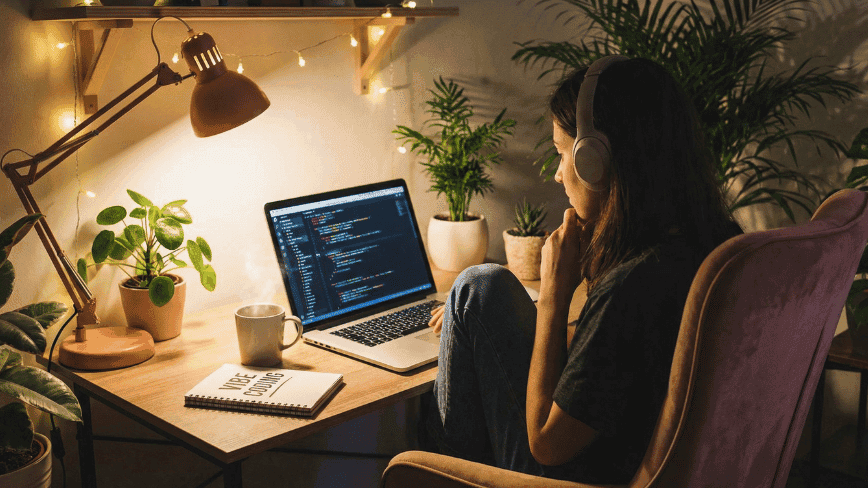
Vibe coding, a term coined by Andrej Karpathy—a co-founder of OpenAI and former AI lead at Tesla—refers to building software by describing what you want in plain language and letting large language models write the code
2
. These AI-powered app generation tools allow people without coding experience to create working apps just by describing their vision. Platforms like Replit, Cursor, Lovable, and Bolt.new have made it possible for anyone with an idea and an internet connection to build and submit apps2
.The surge in App Store submissions has been dramatic. According to reporting by The Information, new apps submitted to the Apple App Store rose 84% in a single quarter as vibe coding went mainstream
2
. Data from Sensor Tower corroborates this trend, tracking a 56% year-on-year spike in iOS app launches in December 2025 and a 54.8% rise in January 2026—the highest growth rates in four years2
. Apple's full-year 2025 total reached 557,000 new app submissions, the largest annual wave since 20162
4
.
Source: PYMNTS
The commercial success of AI coding tools underscores this shift. Cursor, made by Anysphere and used by seven million developers, surpassed $2 billion in annualized revenue in March 2026 and was valued at $29.3 billion after a $2.3 billion funding round co-led by Accel and Coatue in November 2025
2
. Lovable reached $200 million in annualized revenue in late 2025—a fiftyfold increase in a single year—and raised $330 million in a Series B at a $6.6 billion valuation in December 20252
. Replit generated $240 million in revenue during 2025, serves more than 150,000 paying customers, and is targeting $1 billion in revenue for 20262
.The flood of AI-generated code submissions is straining Apple's infrastructure. Developers submitting to the App Store in March 2026 reported review delays of seven to 30 or more days, against a historical baseline of 24 to 48 hours
2
. Even Elon Musk posted on X that "iOS App Review delays are getting ridiculous"4
. However, an Apple spokesperson denied that review times are getting longer, stating that the app review process handles 90% of submissions within 48 hours and processes more than 200,000 app submissions a week with an average review time of 1.5 days4
.Related Stories
Apple says it wants more people building apps but argues the app review process is how it screens for malware, privacy violations, and apps that access sensitive data like cameras, contacts, or location without permission
1
. Yet critics point out inconsistencies in enforcement. Anthropic's Claude, for example, also lets users build, preview, and use apps, but within the app rather than a browser like Replit1
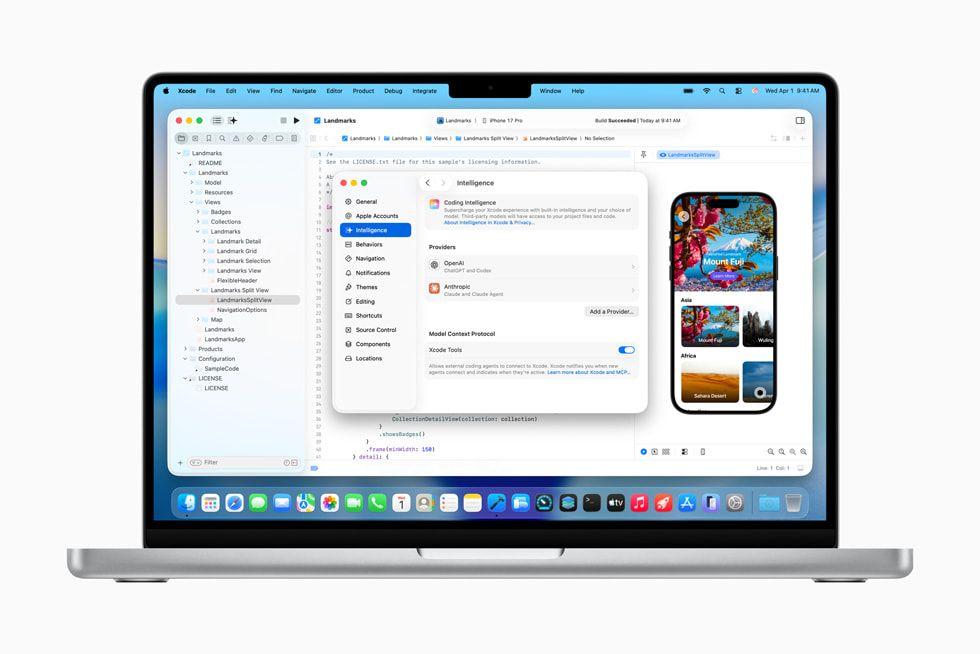
. Apple also added AI tools from OpenAI and Anthropic to Xcode, its own development software, in February—just weeks after blocking Replit's update1
.
Source: CXOToday
The stakes for Apple extend beyond safety concerns. The App Store sits at the center of a Services business that generated $109 billion in revenue last fiscal year, with gross margins above 75%—nearly double what Apple makes selling products
1
. Apple takes a 15-30% commission for every purchase within the App Store, but every app that goes to the web instead of the store represents revenue Apple never sees1
.The fundamental tension lies in how vibe coding works versus how Apple's app review process was designed. Vibe coding's power comes from generating and executing new code on demand, in response to user prompts, in real time, without a fixed codebase
2
. Apple's app review process was built for a different model: a developer submits a static build, Apple reviews it, and the approved build is what users receive2
. Interpreted code that can change an app's primary purpose is precisely what Apple does not allow.Developers can still use Replit and similar tools on browsers on their computers instead of iPhone apps, though using the app would be more convenient
1
. With WWDC26 approaching and as vibe coding continues gaining traction, observers are watching whether Apple updates its App Store rules to reflect these new development patterns, particularly for apps that rely on AI-generated, interpreted code to power user-driven creativity4
. The question remains whether Apple will adapt its policies to accommodate innovation or risk pushing the next generation of builders away from the iPhone1
.Summarized by
Navi
18 Mar 2026•Technology

19 Apr 2026•Technology

03 Feb 2026•Technology

1
Policy and Regulation

2
Technology

3
Technology