3 Sources
[1]
NVIDIA Releases Major Collection of Open Source Agent Tools and Skills for Physical AI
* NVIDIA releases a major open source collection of physical AI agent skills and tools spanning NVIDIA Omniverse, Cosmos, Alpamayo and Metropolis for robotics, autonomous vehicles, vision AI and industrial digital twins. * New physical AI skills turn complex physical AI training, evaluation and deployment workflows into repeatable, optimized and agent-executable instructions. * Industry leaders including Agile Robots, Cadence, Dassault Systèmes, Delta Electronics, Foxconn, Pegatron, PTC, Siemens, Synopsys and TSMC are using NVIDIA physical AI tools to accelerate physical AI development. NVIDIA GTC Taipei -- NVIDIA today announced a major collection of open source physical AI skills and tools that help developers turn complex robotics, autonomous vehicle (AV), vision AI and industrial digital twin workflows into agent-executable tasks -- reducing the costs, time and complexity of building physical AI workflows at scale. As AI agents move from writing code to orchestrating entire development tasks, physical AI is the next frontier. NVIDIA physical AI skills, available as part of NVIDIA Agent Toolkit, let agents use NVIDIA libraries, models and frameworks to speed the data generation, simulation, training, evaluation and deployment pipelines behind robots, AVs, factories and labs. "AI agents are revolutionizing software development, and that shift is now coming to physical AI, extending into the systems that will transform transportation, manufacturing, healthcare and robotics," said Jensen Huang, founder and CEO of NVIDIA. "When agents can directly use NVIDIA libraries, models and frameworks, physical AI development will move faster, enabling developers to build the robots, autonomous vehicles and industrial systems of the future at an incredible pace." Agent-Ready Tools and Skills for Physical AI Development NVIDIA is optimizing its entire physical AI stack for agents by turning libraries, models and frameworks into agent-callable tools. This includes NVIDIA Cosmos™ world foundation models for physical world reasoning and generation, NVIDIA Omniverse™ libraries for simulation and digital twins, NVIDIA Isaac™ for robotics simulation and robot learning, NVIDIA Metropolis for vision AI, NVIDIA Alpamayo for autonomous driving and the NVIDIA Jetson™ platform for edge AI development. To help developers apply these tools, NVIDIA is launching new skills as part of NVIDIA Agent Toolkit to turn physical AI development processes into repeatable instructions that coding agents can follow. This includes which tools to call, what outputs to produce and how developers can validate results. Developers can also safely build and deploy autonomous agents using these skills with the NVIDIA NemoClaw™ blueprint and the NVIDIA OpenShell™ runtime, which provides policy-based security and privacy governance on local or cloud hardware. NVIDIA physical AI skills and tools are accelerating agentic development across: * Robotics and edge AI: Robot developers can use skills to accelerate the entire robotics development pipeline, from generating perception and mobility training data to simulation, automating navigation training, advancing robot learning and tuning Jetson-based edge systems for deployment. * Autonomous vehicles: For AV developers, skills can direct agents to reconstruct data captured by fleets into simulation environments, generate photorealistic driving scenarios at scale and run closed-loop reinforcement learning to expand training and evaluation coverage. * Real-time vision AI agents: For automated inspection and video intelligence, agent skills help teams generate synthetic training data, fine-tune models, automate labeling and build video AI agents that search, summarize and analyze live or recorded video. * Industrial AI: Industrial software developers can use these skills to convert engineering data into computer-aided design (CAD) assets for digital twin simulation, optimizing large OpenUSD scenes with less manual setup. * Healthcare: Before deploying automation in clinical environments, healthcare teams can guide agents through hospital-environment digital twin creation, sim-to-real data generation and software-in-the-loop policy testing. The skills can be combined and integrated into larger agentic systems, enabling developers to orchestrate and automate complex workflows such as data generation, simulation, optimization, inference tuning, continuous evaluation and more. Industry Leaders Build With NVIDIA Physical AI Technologies Industry leaders across manufacturing, autonomous vehicles, healthcare and industrial software are using NVIDIA physical AI libraries to advance the development of autonomous systems and industrial AI. As these libraries become agent-ready, developers can use NVIDIA skills to help agents automate setup, execution and iteration across complex physical AI workflows. In electronic manufacturing, TSMC and Pegatron are fine-tuning visual inspection models. Pegatron reduced model training and deployment time by 67% using synthetic data generated from the Defect Image Generation skill. Delta Electronics generated synthetic defect data and used the skill to catch excess soldering on metal busbars, improving detection rate by 17%. Inventec developed its Observation Agent visual inspection pipeline by integrating the Defect Image Generation skill, reducing defect data collection effort for laptop chassis manufacturing by 30%. Foxconn, working with DeepHow, used the skill to improve manufacturing efficiency by catching errors early, boosting first pass yield by about 3%. For autonomous vehicles, Li Auto, Afari and DeepRoute.ai are using NVIDIA Omniverse NuRec models for neural scene reconstruction and rendering, generating 1,000+ reconstructions and more than 300,000 renders and simulations per day. In addition, they are using the new agent skills repository to accelerate and enhance their development of safer, more capable autonomous driving systems. In industrial AI, Cadence, Dassault Systèmes, Siemens and Synopsys are using NVIDIA Omniverse libraries and skills for engineering data inspection, simulation and interactive digital twins. PTC, MetAI and Lightwheel are tapping the NVIDIA Isaac Sim™ framework and OpenUSD-based workflows to transform CAD data into simulation-ready assets and environments. As part of its Autonomous Fab 2030 roadmap, SK hynix is implementing semiconductor fab digital twins using NVIDIA Omniverse, and collaborating with NVIDIA and SK Telecom to validate NVIDIA Agent Toolkit for manufacturing-specific physical AI. 1x, Agile Robots, Agility, FieldAI, Hexagon Robotics, NEURA Robotics, Skild AI and Universal Robots are among the robotics leaders using NVIDIA's agent-ready physical AI stack to accelerate robotics development from data generation to deployment. Foxconn and Compal are using NVIDIA Isaac for Healthcare to accelerate hospital robotics. Foxconn is scaling Nurabot across several hospitals and long-term care environments, bringing AI-powered robotics to patient care, as well as introducing its new Scrub Nurse Collaborative Robot to help optimize operating room workflows. Compal is advancing the development process of its PolyMedX robot toward a hospital-wide orchestration platform, integrating simulation, AI and real-world operations. Availability NVIDIA physical AI agent tools and skills are now openly available through GitHub and skills.sh for use with any coding agent. Agent skills and tools for synthetic data generation -- Neural Reconstruction, Video Augmentation, Defect Image Generation -- are also available to try instantly on NVIDIA Brev as Physical AI Launchables, preconfigured environments that bundle agent skills and tools for faster synthetic data generation and evaluation. Microsoft, CoreWeave and Nebius are integrating these agent skills and tools with their cloud services to enable developers to streamline and scale synthetic data generation and deployment. Watch Huang's keynote, learn more at NVIDIA GTC Taipei and explore physical AI sessions.
[2]
Enterprise Software Leaders Build AI Agents With NVIDIA
* New NVIDIA Agent Toolkit software -- including latest NVIDIA NemoClaw blueprints, Nemotron models, OpenShell secure runtime and CUDA-X libraries with agent skills -- delivers open source foundations for enterprise development. * Cadence, Dassault Systèmes, Siemens and Synopsys are among the first to use NVIDIA NemoClaw to build autonomous AI engineers working as digital coworkers to execute simulation and verification workflows -- compressing weeks of engineering work into hours. * New NVIDIA Nemotron 3 Ultra is a smaller, faster open model built for long-running agents, delivering 5x faster inference and up to 30% lower cost for complex agentic tasks. * CrowdStrike and Palantir are transforming cybersecurity and operational decision-making with long-running AI agents powered by Nemotron open models, enabling teams to analyze data faster and streamline operations across complex environments. * NVIDIA and Microsoft are collaborating to deliver a native Windows experience for personal agents with new security primitives and NVIDIA OpenShell, while Canonical and Red Hat are integrating NVIDIA OpenShell as a secure, open source runtime with policy and privacy controls for agents, extending support across PCs, data centers and clouds. * NVIDIA CUDA-X libraries -- including cuDF, cuOpt, AI-Q, NeMo, PhysicsNeMo and CUDA-Q -- are now accessible to AI agents as domain-specific skills to expand agent capabilities. NVIDIA GTC Taipei -- NVIDIA today announced new software, open source models and partnerships with the world's leading software platform providers to build autonomous AI agents for industries and enterprises across engineering, healthcare, software development and business operations. Leading software companies are using NVIDIA Agent Toolkit software to build secure, long-running AI agents that act as digital coworkers. These autonomous agents start with a model. Then, they require a software layer called a harness to turn the model into an agent with functions like orchestration, context, memory, tool use and security. NVIDIA Agent Toolkit software equips enterprises to build agents that can work alongside employees at scale. NVIDIA Nemotron™ open models and NVIDIA NemoClaw™ blueprints connect popular harnesses; the NVIDIA OpenShell™ secure runtime sets policy and privacy controls; and agents can now tap into NVIDIA CUDA-X™ libraries as skills. "The world's software leaders are bringing AI agents into the systems where work gets done -- showing how AI coworkers help employees think faster and execute complex tasks to solve bigger problems," said Jensen Huang, founder and CEO of NVIDIA. "NVIDIA NemoClaw provides enterprise software developers with the open building blocks to create more secure, long-running AI coworkers that amplify human expertise as they reshape how work gets done." Design and Simulation Leaders Build Autonomous AI Engineers With NVIDIA NemoClaw In semiconductor and industrial engineering, simulation and verification are among the most time-intensive workloads, requiring teams to execute complex, repetitive workflows across days or weeks before a design can move forward. Cadence, Dassault Systèmes, Siemens, Synopsys, Flexcompute, Luminary, Neural Concept, nTop, P-1 AI, PhysicsX and Synera are among the first to build autonomous AI engineers to work alongside employees, using NVIDIA NemoClaw. By delegating these tasks to always-on autonomous AI engineers, organizations can compress those weeks of engineering cycles into hours and redirect human expertise toward the work that demands it most. Cadence is using NVIDIA OpenShell to secure its ChipStack AI Super Agent, a fully autonomous AI engineer that executes chip design and verification. NVIDIA is the first customer using ChipStack to autonomously verify its chip designs. Dassault Systèmes is using NVIDIA NemoClaw and OpenShell to productize the 3DEXPERIENCE agentic platform for long-running, autonomous agents across design, simulation and manufacturing operations. Siemens is integrating NVIDIA NemoClaw and OpenShell into Fuse EDA AI Agent, a purpose-built autonomous agent that plans and orchestrates multi-tool workflows across semiconductor, 3D integrated circuit and printed circuit board system design. Synopsys is working with NVIDIA to build always-on autonomous AI engineers for chip design, with a focus on achieving full workflow autonomy. Also announced today, Foxconn is piloting NVIDIA NemoClaw to power its Nurabot and CoDoctor platforms, using teams of specialized AI agents to support clinical reasoning, documentation and care coordination. Foxconn is also using the NVIDIA FOX and NemoClaw blueprints to build MoMClaw, a factory operations agent that connects sensor and machine data with AI agents to deliver real-time insights and action plans with NVIDIA OpenShell privacy controls and safety guardrails. NVIDIA Unveils New Nemotron Open Models to Power Long-Running Agents Fueling the intelligence of autonomous agents, NVIDIA today unveiled new open models and datasets for always-on agents, developed with contributions from the NVIDIA Nemotron Coalition. NVIDIA Nemotron 3 Ultra is a 550-billion-parameter mixture-of-experts model that delivers frontier-level intelligence to long-running agents across coding, research and enterprise workflows. With up to 5x faster inference and up to 30% lower cost compared with open frontier models in its class, Ultra enables agents to complete tasks faster and at lower cost. Nemotron 3 Ultra is post-trained for leading agent platforms and harnesses -- the orchestration frameworks enterprises use to deploy and coordinate agents -- including Hermes Agent, LangChain Deep Agents, OpenClaw, OpenHands and OpenCode. In addition, new Nemotron models for safety and speech recognition further expand the model family's capabilities for building efficient, specialized enterprise agents. NVIDIA Nemotron models are enabling a new class of long-running AI agents across enterprise platforms from companies including CrowdStrike and Palantir. These agents help teams analyze complex data, coordinate tasks and streamline operations across cybersecurity and enterprise environments. CrowdStrike is using NVIDIA Nemotron models for its specialized agents that continuously identify, prioritize and remediate vulnerabilities and policy misconfigurations, helping stop adversaries faster while reducing the operational burden on security teams. Palantir is integrating NVIDIA Nemotron models into its AI FDE (Forward Deployed Engineer) platform to autonomously execute complex tasks, enabling continuous learning from agent interactions to build domain-specific, air-gapped enterprise systems. Major Software Platforms Integrate Secure Agent Runtime With NVIDIA OpenShell Autonomous agents that write code, generate sub-agents and remember context across sessions can access local files, learn new tools and execute advanced workflows with increasing independence. The more capable agents become, the more important it is to have necessary guardrails for the agents to operate within. The critical layer is a runtime with adjustable privacy and security controls that make autonomous agents safer to deploy at scale. NVIDIA and Microsoft are partnering across new Windows security primitives and the NVIDIA OpenShell runtime to ensure agents run safely and under full user control. The new Windows primitives deliver identity, containment, policy and end-to-end security capabilities to build and run agents natively. NVIDIA OpenShell builds on these primitives to provide additional policy capabilities and will intelligently route queries to local models based on the user's privacy policies, as well as disguise personal information in queries sent to cloud models. Canonical will integrate OpenShell with Ubuntu through supported snaps and rocks, aka OCI-compliant containers, to run autonomous agents on enterprise servers worldwide. Red Hat is integrating OpenShell into its full-stack Red Hat AI platform to maintain oversight and policy at the infrastructure level. The company is also making key contributions to the OpenShell upstream open source project to help standardize how agents are managed on enterprise platforms. Today's announcements build on recent integrations by SAP, which is embedding OpenShell into Joule Studio runtime -- part of SAP Business AI Platform for enterprise AI agents -- and ServiceNow, which secured Project Arc, ServiceNow's enterprise autonomous desktop agent, with OpenShell to add policy-based management for enterprise safety. OpenShell runs in on-premises, hybrid and enterprise cloud environments, local devices such as NVIDIA RTX Spark™, NVIDIA DGX Spark™ and GB10 systems from system providers, as well as NVIDIA DGX Station™ for Windows and NVIDIA DGX Station GB300 systems from NVIDIA partners. NVIDIA CUDA-X Libraries Available as Skills for Autonomous Agents NVIDIA CUDA-X libraries are now accessible to AI agents with domain-specific skills, giving AI agents the ability to more easily use specialized capabilities to tackle the biggest challenges in science, industry and enterprise. Examples include: * NVIDIA cuDF accelerates data processing and analytics over massive structured datasets, enabling agents to quickly reason over enterprise data. * NVIDIA cuOpt™ helps agents solve complex routing, scheduling, resource allocation, supply chain and decision optimization problems in real time. * NVIDIA AI-Q gives agents intelligent routing, persistent context and built-in evaluation for enterprise research and knowledge workflows. * NVIDIA NeMo™ accelerates agent optimization, evaluation and governance through prompts, skills, model routing and model customization for specialized domains and regions. * NVIDIA PhysicsNeMo™ empowers agents to build and benchmark high-fidelity AI physics models for complex scientific and engineering simulations. * NVIDIA CUDA-Q™ enables AI agents to streamline installation, generate and test quantum programs, simulate quantum systems and orchestrate quantum applications. NVIDIA also released a major collection of open source physical AI libraries, skills, models and frameworks, enabling AI agents and developers to stand up workflows that accelerate development of robotics, autonomous vehicles and industrial systems. Availability NVIDIA NemoClaw is available now. NVIDIA OpenShell is available in early preview. NVIDIA Nemotron 3 Ultra is expected to be available on June 4 via Hugging Face, ModelScope, OpenRouter and build.nvidia.com as NVIDIA NIM™ microservices, as well as through a broad ecosystem of NVIDIA Cloud Partners, inference platforms and cloud service providers. The verified NVIDIA agent skills are available in the Claude Code plug-in marketplace, as well as Hermes Skills Hub. Watch Huang's keynote and learn more at NVIDIA GTC Taipei.
[3]
Nvidia gives developers the tool to build secure, autonomous AI workers that scale
Nvidia gives developers the tool to build secure, autonomous AI workers that scale Not content with just providing the infrastructure for the next generation of artificial intelligence agents, Nvidia Corp. is also providing the tools for developers to build them. At Nvidia GTC Taipei 2026, concurrent with the Computex conference, the company unveiled the latest iteration of its Agent Toolkit. It's a comprehensive suite of software, open-source models and blueprints for building powerful, long-running digital coworkers capable of executing complex workflows across business operations, engineering and cybersecurity tasks. The Nvidia Agent Toolkit is meant to be an open and accessible foundational stack that provides everything developers need to transform powerful frontier models into fully functional AI agents. The suite includes a selection of highly optimized models and a secure runtime environment that attempts to reduce the friction that has caused many companies to hold off from deploying AI agents at scale. Though large language models have proven themselves to be capable coding assistants and graphics designers, they tend to struggle when attempting to take on more complex business and operational tasks. One of the main challenges for developers is to create a kind of orchestration layer, often called a "harness," that manages the model's memory to preserve context across multi-day sessions, enables agents to use third-party tools and collaborate with other agents. There's also the security headaches that AI agents create. When organizations give autonomous agents the freedom to access sensitive files, make changes to their application's code and create their own sub-agents for offloading tasks, this introduces massive security risks that cannot be contained with traditional software enterprise policies. These are the challenges Nvidia is looking to address, providing developers with a range of open-source building blocks that enable them to create the agentic harness they need. With the Agent Toolkit, developers will be able to safely orchestrate and secure digital coworkers at large scale. Nvidia Chief Executive Jensen Huang said if the AI revolution everyone imagines is to happen, AI agents must have a way to operate within the systems where business work gets done. The core of the Agent Toolkit is Nvidia NemoClaw, a new framework that serves as the main blueprint for building agentic orchestration layers. With NemoClaw, developers have access to ready-made templates that structure the way their agents plan, reason, execute and delegate the tasks they're being asked to do. "NemoClaw provides enterprise software developers with the open building blocks to create more secure, long-running AI coworkers that amplify human expertise as they reshape how work gets done," Huang explained. Another key component is Nvidia's Nemotron 3 Ultra, a massive new 550 billion-parameter mixture-of-experts model that's built specifically for long-running autonomous agents. According to Nvidia, it enables frontier-level reasoning across both coding and research workflows, with up to five times faster inference speeds and 30% lower running costs than comparable frontier models in its class. Nvidia wants developers to run these agents in the OpenShell Secure Runtime, which is a secure container environment that supports custom security and privacy controls. The OpenShell runtime was developed in collaboration with Microsoft Corp., Canonical Ltd. and IBM Corp.'s Red Hat and integrates with native Windows security primitives to ensure AI agents will remain under the full control of their users and avoid dangerous behavior. Using the runtime, developers can intelligently mask sensitive data before sending queries to cloud-based models, and ensure the most sensitive workloads are routed to local hardware only. Finally, Nvidia introduced a number of CUDA-X libraries as reusable "Agent Skills," giving Agents access to a range of specialized capabilities without needing to undergo extensive training first. The plug-and-play skills include cuDF, which enables agents to process massive structured datasets rapidly and reason about their findings, and cuOpt, which gives agents the ability to solve complex problems relating to routing, scheduling, supply chain, resource allocation and decision-optimization in real time. Other skills include AI-Q, which integrates intelligent routing with persistent context and built-in evaluation for enterprise research workflows; NeMo, for accelerating agent optimization, evaluation and governance; PhysicsNeMo, for agents to undertake complex scientific and engineering simulations; and CUDA-Q, which can gives agents the knowledge they need to generate, test and install quantum programs, simulate quantum computing systems and orchestrate quantum applications. Nvidia shared what a number of early adopters have done with the revamped Agent Toolkit. For instance, the semiconductor design software firm Cadence Design Systems Inc. used OpenShell to deploy a ChipStack AI Super Agent that can automatically verify new chip designs, with Nvidia as the first customer to use that agent. Siemens AG used the toolkit to develop a Fuse EDA agent that can orchestrate multi-tool workflows in printed circuit board design. In addition to engineering, others are using AI agents to automate cybersecurity workloads. For instance, CrowdStrike Holdings Inc. has developed a number of agents based on Nvidia's NemoTron 3 Ultra model to continuously identify and remediate security vulnerabilities. Another customer is Palantir Technologies Inc., which has integrated multiple AI models into its Forward Deployed Engineer platform to create autonomous, air-gapped systems that continuously learn from their previous interactions. Nvidia said the NemoClaw framework is being made available for developers today, while the OpenShell runtime is currently accessible as an early preview. Nemotron 3 Ultra is set to launch on June 4, and will be available as an Nvidia NIM microservice through Hugging Face, ModelScope and OpenRouter, as well as Nvidia's own Build platform. The CUDA-X agent skills are also available now via the Claude Code marketplace and the Hermes Skills Hub.
Share
Copy Link
NVIDIA unveiled a comprehensive Agent Toolkit at GTC Taipei, providing developers with open-source models, blueprints, and security features to build long-running AI agents. The toolkit includes NemoClaw framework, Nemotron 3 Ultra model, and OpenShell secure runtime, enabling companies like Siemens, Cadence, and Dassault Systèmes to deploy autonomous AI workers that compress weeks of engineering work into hours while maintaining enterprise-grade security.
NVIDIA announced a major expansion of its Agent Toolkit at GTC Taipei, releasing open-source agent tools and frameworks designed to help developers build secure, autonomous AI workers capable of executing complex workflows across industries
1
2
. The toolkit addresses a critical gap in the AI agent ecosystem by providing the orchestration layer, security infrastructure, and domain-specific skills needed to transform large language models into fully functional digital coworkers3
.
Source: NVIDIA
The release spans NVIDIA's entire physical AI stack, including tools for robotics, autonomous vehicles, vision AI, and industrial digital twins. Jensen Huang, founder and CEO of NVIDIA, emphasized the significance: "AI agents are revolutionizing software development, and that shift is now coming to physical AI, extending into the systems that will transform transportation, manufacturing, healthcare and robotics"
1
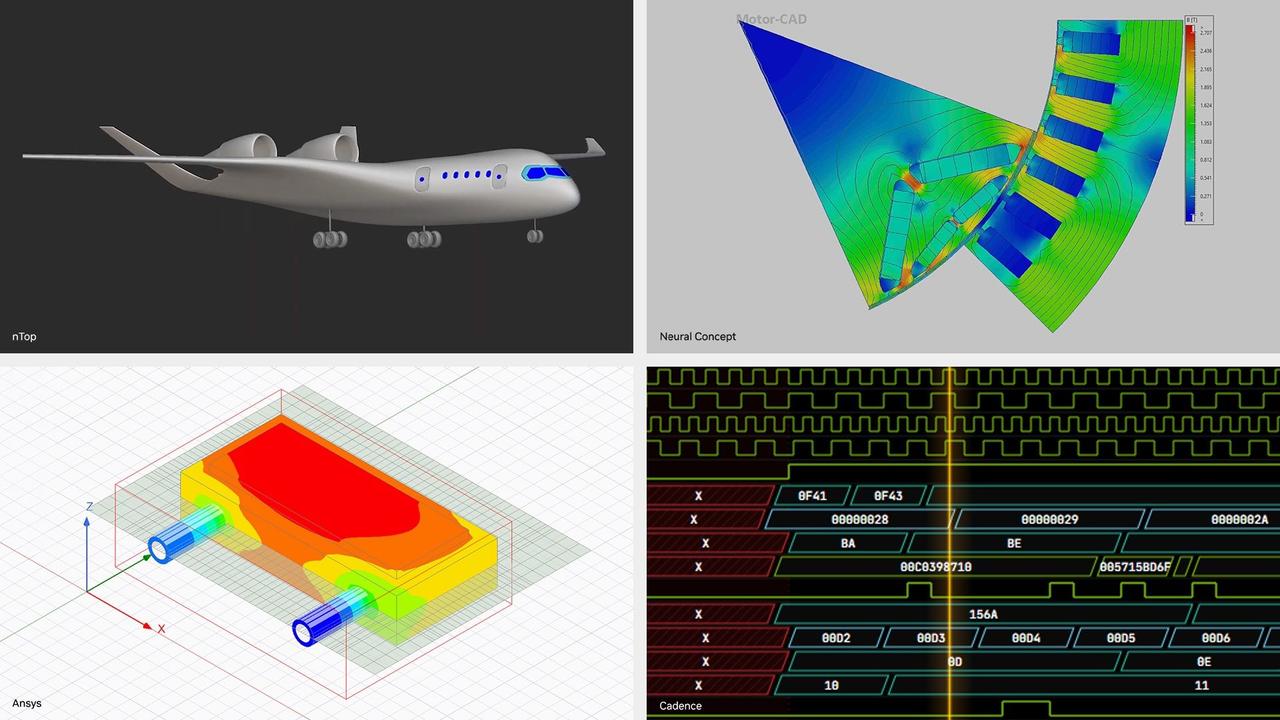
.Enterprise software leaders including Siemens, Cadence, Dassault Systèmes, and Synopsys are among the first to adopt NVIDIA's Agent Toolkit to build autonomous AI engineers that function as digital coworkers
2
. These companies are using the NemoClaw framework to execute simulation and verification workflows, compressing weeks of engineering work into hours2
.Siemens is integrating NemoClaw and OpenShell into its Fuse EDA AI Agent for semiconductor design workflows, while Cadence is using OpenShell to secure its ChipStack AI Super Agent for chip design and verification, with NVIDIA serving as the first customer
2
. Dassault Systèmes is productizing its 3DEXPERIENCE agentic platform for long-running agents across design, simulation, and manufacturing operations2
.Beyond engineering, CrowdStrike and Palantir are transforming cybersecurity and operational decision-making with long-running AI agents powered by Nemotron open models
2
. Foxconn is piloting NemoClaw to power its Nurabot and CoDoctor platforms for clinical reasoning and documentation, while also building MoMClaw, a factory operations agent that connects sensor and machine data with AI agents2
.At the core of the Agent Toolkit sits NemoClaw, a blueprint framework that provides ready-made templates structuring how agents plan, reason, execute, and delegate tasks
3
. This addresses one of the main challenges developers face: creating an orchestration layer or "harness" that manages model memory to preserve context across multi-day sessions and enables agents to use third-party tools3
.NVIDIA also introduced Nemotron 3 Ultra, a 550 billion-parameter mixture-of-experts model built specifically for long-running agents
3
. The model delivers 5x faster inference and up to 30% lower cost for complex agentic tasks compared to comparable frontier models2
. This performance improvement proves critical for autonomous AI workers that need to operate continuously across extended timeframes.Security remains a significant barrier to enterprise AI agent adoption. When organizations grant autonomous agents access to sensitive files and the ability to modify code or create sub-agents, traditional software enterprise policies become insufficient
3
.The OpenShell secure runtime, developed in collaboration with Microsoft, Canonical, and Red Hat, provides a container environment with custom security and privacy controls
2
3
. It integrates with native Windows security primitives and enables developers to intelligently mask sensitive data before sending queries to cloud-based models, ensuring the most sensitive workloads are routed to local hardware only3
.Related Stories
NVIDIA is optimizing its entire physical AI stack for agents by converting CUDA-X libraries into agent-callable skills
1
. These plug-and-play skills give agents access to specialized capabilities without extensive training3
.
Source: NVIDIA
The available skills include cuDF for processing massive structured datasets, cuOpt for solving complex routing and supply chain problems, AI-Q for intelligent routing with persistent context, NeMo for agent optimization and governance, PhysicsNeMo for scientific and engineering simulations, and CUDA-Q for quantum computing applications
3
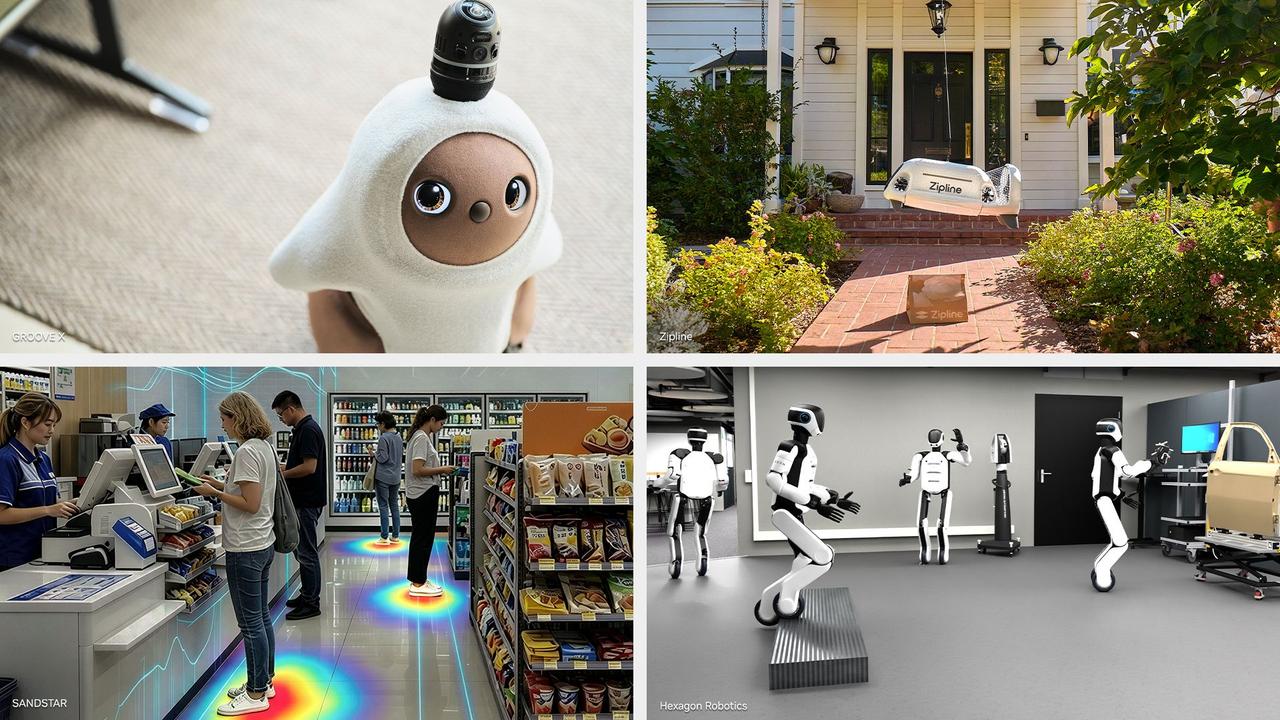
.For robotics developers, skills accelerate the entire development pipeline from generating perception and mobility training data to simulation and automating navigation training
1
. Autonomous vehicle developers can direct agents to reconstruct fleet data into simulation environments and generate photorealistic driving scenarios at scale1
.The adoption pattern among industry leaders suggests a fundamental shift in how complex workflows will be executed. Manufacturing giants including TSMC, Pegatron, Delta Electronics, and Foxconn are using NVIDIA physical AI tools to accelerate development
1
. TSMC and Pegatron are fine-tuning visual inspection models using the toolkit1
.The toolkit's ability to compress engineering cycles from weeks to hours represents a significant productivity gain. As Jensen Huang noted, "When agents can directly use NVIDIA libraries, models and frameworks, physical AI development will move faster, enabling developers to build the robots, autonomous vehicles and industrial systems of the future at an incredible pace"
1
.For healthcare teams, the toolkit enables hospital-environment digital twin creation, sim-to-real data generation, and software-in-the-loop policy testing before deploying automation in clinical environments
1
. Industrial software developers can use skills to convert engineering data into CAD assets for digital twin simulation with less manual setup1
.Summarized by
Navi
07 Jan 2025•Technology

20 May 2025•Technology

11 Mar 2026•Technology

1
Business and Economy

2
Policy and Regulation

3
Technology