Siri AI rolls out to select Apple devices as compatibility splits across iPhone models


9 Sources
[1]
Will your iPhone support Siri AI? The answer is complicated
Follow ZDNET: Add us as a preferred source on Google. ZDNET's key takeaways * Only newer devices can access all the features of Siri AI. * Older devices can't use the advanced on-device AI model. * The advanced model lets you tweak Siri's voice and dictate accurately. Apple spent much of its
[2]
Siri AI is coming to newer Apple devices only, here's the full list
Siri AI is a major upgrade and big highlight of iOS 27, macOS Golden Gate, watchOS 27, and more. But only newer Apple devices will support the overhauled Siri. Here's the full list of Siri AI-compatible hardware across iPhone, iPad, Mac, Apple Watch, and Apple Vision Pro. Here are the Apple
[3]
Siri AI passed my Taylor Swift superfan test with flying colors
Available on iPhone 15 Pro and M1 Macs/iPads, this AI foundation makes Siri highly context-aware with access to emails, calendars, and messages. As you already know by now, iOS 27 comes with a new version of Siri that's built entirely on a new AI foundation. And this has finally unleashed the
[4]
Some AI features aren't available on older iPhones, but are you actually missing that much?
There are only two exclusive features, and they're not such a big deal If you were paying attention to the WWDC 2026 keynote earlier this week, you'll know that all of the amazing new Apple Intelligence features are not coming to every iPhone. Apple confirmed that some of those features will be
[5]

Apple Says New Siri is Compatible With These iPhones, iPads, and Macs
The more intelligent and personalized version of Siri that Apple introduced today -- "Siri AI" -- is limited to devices with Apple Intelligence support. "Siri AI" is available on the devices listed below. iPhone * iPhone 15 Pro * iPhone 15 Pro Max * iPhone 16e * iPhone 16 * iPhone 16 Plus *
[6]

Only iPhone 17 Pro users will get some of iOS 27's AI tools
iOS 27 may run on devices as far back as the iPhone 11, but Apple's most advanced AI features are reserved for a much shorter list of hardware, the company revealed. Apple's Craig Federighi, Senior Vice President of Software Engineering, confirmed that a subset of advanced Siri AI and Apple
[7]

AppleInsider.com
Because Apple tossed out a slide that has no context outside the keynote, the internet has convinced itself that Siri AI is only coming to hardware released since 2024. That's untrue. Apple announced Siri AI as part of the WWDC 2026 opening keynote on June 8. It'll ship this fall as part of the
[8]

Apple's New AI Features WIll Only Work on These iPhones
We may earn a commission from links on this page. Deal pricing and availability subject to change after time of publication. Apple's WWDC 26 event today was heavily focused on how Apple is using AI, or Apple Intelligence, to upgrade its existing devices. Unfortunately, many iPhones didn't make the
[9]

Not Every iPhone Is Getting Siri AI: Is Yours on the List?
If you watched Apple's WWDC 2026 keynote, it was hard not to get caught up in the excitement. Siri AI looked genuinely capable for the first time, handling multi-step tasks and pulling context from across your apps in ways no third-party AI assistant can replicate. Apple spent the better part of
Share
Copy Link
Apple unveiled Siri AI at WWDC 2026, promising conversational abilities and contextual awareness. But the upgraded AI-powered Siri comes with hardware restrictions that leave some recent iPhone buyers frustrated. Only devices with sufficient memory can access advanced features like voice customization and improved dictation.
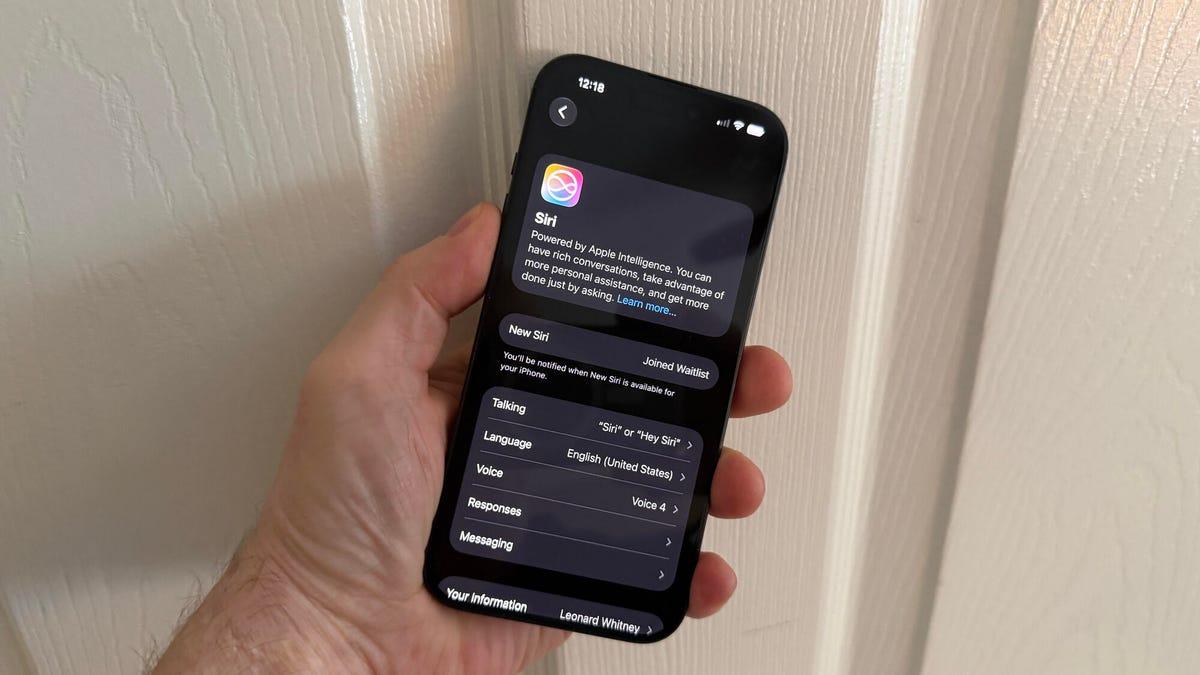
Siri AI Brings Major Upgrade But Not to All Apple Devices
Apple introduced Siri AI at its WWDC keynote this week, marking a significant overhaul of its virtual assistant that promises to deliver conversational abilities, contextual awareness, and natural language understanding
1
. The upgraded AI-powered Siri can engage in open-ended conversations, understand what's on your screen, and run tasks across apps and files. Available with iOS 27, the new Siri AI features represent Apple's attempt to compete with other AI-powered chatbots, but hardware compatibility has become a contentious issue2
.The Siri AI compatibility list reveals a tiered system based on device capabilities. All Apple devices with Apple Intelligence support can access the basic version, including iPhone 15 Pro and newer models, iPads with M1 chip or A17 Pro, and Macs with M1 chip and later
5
. This means iPhone 16 series, iPhone 17 series, and select iPad and Mac models will support the new Siri AI features when it launches this fall2
.iPhone Compatibility Creates Two-Tier Experience
The iPhone compatibility situation is more complex than initially presented. Apple Intelligence features rely on two distinct on-device AI models: AFM 3 Core and AFM 3 Core Advanced, where AFM stands for Apple Foundation Models
1
. The advanced model requires at least 12GB of unified memory, limiting full access to iPhone 17 Pro, iPhone 17 Pro Max, and iPhone Air2
.Devices with only the basic AFM 3 Core model include iPhone 17, iPhone 17e, the entire iPhone 16 lineup, and iPhone 15 Pro models. These devices can still access most new Siri AI features but miss out on two specific capabilities: voice customization that adjusts expressiveness and pace, and advanced system-wide dictation that automatically adds punctuation and formatting as you speak
1
4
.Real-World Performance Shows Promise
Early testing reveals impressive capabilities for the AI-powered Siri. One user with iOS 27 developer beta access tested Siri AI with complex Apple Music queries, asking it to "play songs from the Lover album that were part of The Eras Tour setlist"
3
. The virtual assistant correctly identified all five songs and created a playlist on command. Siri AI also demonstrated extensive knowledge by accurately answering questions about recent events and specific concert details, showing its ability to access emails, calendars, and messages for contextual responses3
.This context-awareness represents a stark difference from previous versions that struggled with anything beyond basic commands. The on-device processing combined with cloud-based AI models enables natural language understanding that finally unlocks the potential Apple has promised for years
3
.Related Stories

Limited Exclusivity Sparks Debate
Despite social media complaints about features being locked to newer hardware, the actual limitations appear minimal for now. Only voice customization and advanced dictation require the AFM Core Advanced model with 12GB RAM
4
. Apple already offers 19 preset Siri voices covering different nationalities, accents, and genders, making voice customization less critical4
.However, this situation may evolve as more advanced on-device AI models require additional resources. Future iOS updates could introduce features exclusively for devices with 12GB RAM or more, similar to how Apple Intelligence wasn't available on iPhone 15 or older models
4
. The hardware requirements suggest Apple is preparing for increasingly sophisticated AI capabilities that demand more processing power and memory.Siri AI enters developer beta testing today and will launch to the public this fall with iOS 27, though it will retain a "beta" label even after general release
5
. The feature won't be available in the EU on iOS 27 at launch due to Digital Markets Act regulatory concerns5
.References
Summarized by

Navi
[4]
Related Stories
Apple's Siri AI in iOS 27 Requires Waitlist Access—Here's How to Join and What to Expect
15 Sept 2026•Technology

Apple's Siri AI Upgrade Faces Delays Amid Engineering Challenges
15 Feb 2025•Technology

iOS 27 Siri AI Features Limited to Newer iPhones, Beta Users Face Waitlist Access
08 Jun 2026•Technology

Recent Highlights



Recent Highlights
Today's Top Stories






Don’t drown in AI news. We cut through the noise - filtering, ranking and summarizing the most important AI news, breakthroughs and research daily. Follow topics that matter to you and stay ahead.


