2 Sources
[1]
Why Apple's slow-and-steady AI bet is starting to look pretty smart
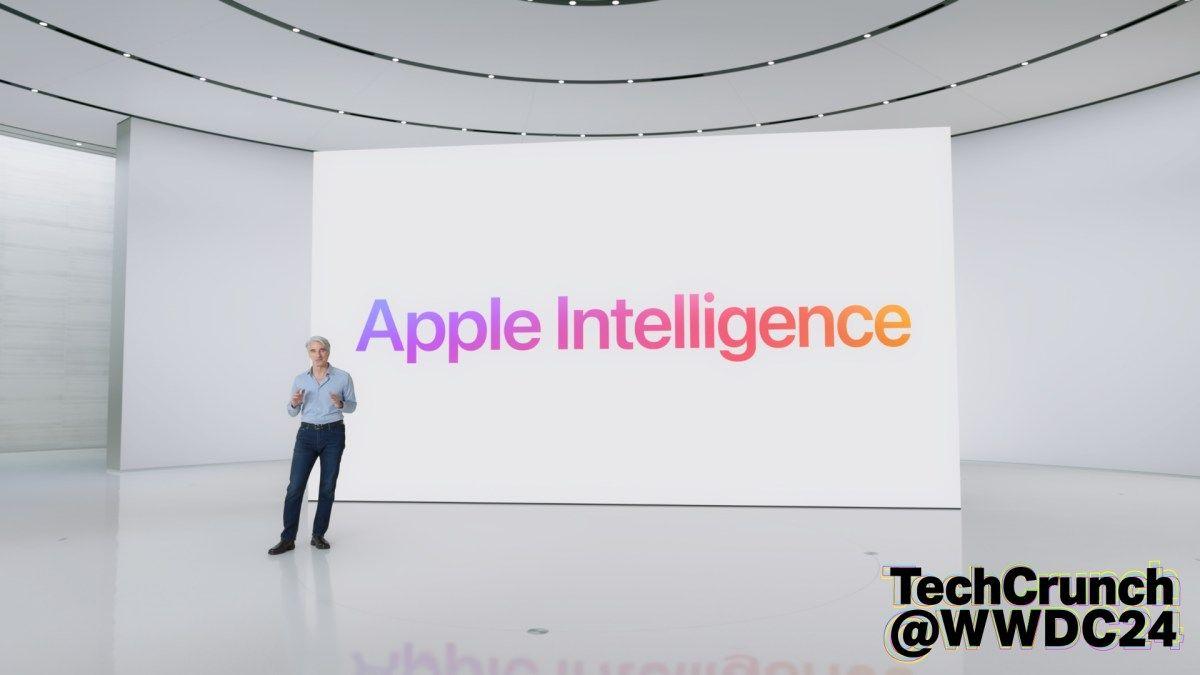
For years, Apple has been accused of being one of the biggest stragglers in the AI arms race. Doubters have argued that Apple's lack of a clear AI strategy have cost it its edge, and Wall Street analysts have worried that the gap could start hurting iPhone sales. Now, the company has unveiled what it is billing as its biggest AI launch to date: Siri AI, which embeds new automated capabilities (fueled by a partnership with Google Gemini) into the very spine of its software. Is it enough to get people to stop saying that Apple is "losing" the AI race? To be honest, nobody really knows. But the question itself may be the wrong one. A better one might be: are Apple customers actually going to use these features and, if they do, will it help Apple's business? Before we address that question, we should note that Monday's announcements also came with an interesting comment from Craig Federighi, Apple's senior vice president of software engineering. "Some appear to be racing forward, seemingly pursuing AI for the sake of AI, without clear regard for the people -- all of us -- that it's ultimately meant to serve," Federighi said during his remarks. "At Apple, our mission has always been to turn the potential of advanced technology into helpful and intuitive products for everyone." The not-so-veiled defiance on display here seems like both a response to Apple's "behind-on-AI" criticism and an effort to acknowledge the deeply ambivalent -- and, according to some polls, increasingly negative -- sentiments that many consumers have about the AI industry. It's also a shrewd message at a moment when Americans are worried that AI will take their jobs and rot their brains. Apple is positioning itself as the AI company that's actually on your side. Judging by Monday's demos, that positioning has some substance behind it. Siri can now surface information buried deep in your inbox or text history and surface helpful information and offer helpful suggestions based on it. It can use what Apple calls onscreen awareness to give you context about what you're looking at. And -- using Gemini -- it can pull near-instantaneous up-to-date information from the web and deliver it right to your device. Siri is also designed to work seamlessly across Apple devices, giving users increased flexibility and, like other AI chatbots, it stores chat histories so users can revisit past conversations. By building AI functionalities into its disembodied, ethereal assistant, Apple also has the potential to eat into the advantages of competitors whose apps can only reach users through its own App Store. For those competitors, having Apple's AI embedded at the operating system level is a meaningful threat to their distribution advantage. The keyword here is "potential" since this version of Siri won't be available to consumers until later this year, as a beta. A final verdict will have to wait, but what's already clear is that Apple is doing its best to court its audience -- whether they end up going for it or not. Apple is obviously a hardware company, and these updates are designed to make that hardware incrementally more user-friendly and convenient, keeping users glued to their devices a little while longer. The contrast with its competitors is instructive and maybe the most important signal in Monday's announcements for anyone watching where the AI industry is actually headed. Take OpenAI, which, despite shipping updates at a relentless pace, has struggled to define who it's actually selling to, oscillating between consumers and enterprises. Or Meta, which is pouring gargantuan sums into AI without a clear explanation of how it connects to the company's core advertising business. Apple's more measured approach is starting to look optimal by comparison -- and more financially sound. For the most part, Apple hasn't needed a gangbusters AI strategy. It posted historic iPhone sales last quarter. And as questions mount over AI's profitability and real-world utility, Apple is spending significantly less than its competitors -- roughly $14 billion in capex planned this year, against a cumulative $900 billion being committed by other tech giants -- while still earning huge amounts of revenue. That revenue has come from the AI industry itself via taxes on AI companies that use its App Store to platform their apps. In short, Apple is spending less, making more, and now launched a suite of AI features that -- for many iPhone users -- will feel indistinguishable from the other AI applications already available to them through the App Store. If that doesn't exactly count as "winning the AI race," it may be the smartest way to run it.
[2]
Apple's Cautious AI Strategy Could Have Been Its Smartest Move
Macy has been working for CNET for coming on 2 years. Prior to CNET, Macy received a North Carolina College Media Association award in sports writing. You've probably heard someone say something along the lines of, "Apple is losing the AI race" or "Apple's AI is lagging." What if being behind on AI was intentional? Or maybe even a winning strategy? For years now, the media has treated Apple's caution in integrating AI as a failure, approaching every underwhelming developer event as a catastrophe. That framing failed to assess what the company was doing behind the scenes. Apple has spent decades evaluating how to bring innovative tech to real people. Apple didn't need to sprint into flashy demos that are loud on stage but don't appeal to everyday users. Choosing when to adopt a technology is a business strategy, not an act of cowardice. As tech consumers, we're also in an embarrassing contradiction. We've been asking Apple to hurry along with its AI integration, while also insisting we're exhausted by AI hype. We keep demanding novelty, and then complain about pointless novelty. During yesterday's WWDC keynote event, Apple's senior vice president of software engineering, Craig Federighi, gave the standard line about AI, calling it an "incredibly powerful technology with the potential to shape society in profound ways, and with proper care, unlock meaningful benefits for people everywhere." But he also implied that Apple is not about chasing trends that offer little value. "Some appear to be racing forward, seemingly pursuing AI for the sake of AI, without clear regard for the people -- all of us -- that it's ultimately meant to serve." Seems reasonable. I also thought we didn't want performative or useless AI from tech companies. I also thought we were becoming allergic to AI washing. Apple plays coy when it comes to AI The WWDC keynote rhythm and language mattered, too. Artificial intelligence barely showed up in the first half of the keynote, with the first mention coming right around the 28-minute mark of a 1-hour event. Only after the glossy parts had settled did Federighi stroll in and say that Apple will not race ahead with AI unless it's private and helpful. That line landed because it mapped onto Apple's major advantage: consumer trust. We're right to worry about how our data is being grabbed and sold to bad actors. We're right to worry about how AI can compromise our safety and security. Companies like OpenAI, xAI and Meta have lost public trust and had to make major policy changes to convince us that our sensitive information is being protected. Apple is deliberately careful with the term "AI." At least someone in the company must know that a lot of us freeze or check out when we hear it. Sparing vocabulary is a strategic decision aimed at avoiding alienation, and it's going to pay off for Apple in the long term. "WWDC 2026 is Apple's AI credibility test," Francisco Jeronimo, vice president of client devices at International Data Corporation, said in an email statement to CNET. "Apple does not need to win AI by having the biggest model or the loudest demo. It needs to make AI trusted, useful and invisible across the ecosystem." Apple isn't hemorrhaging money on AI Notice, too, that Apple treats AI models as commodities to be licensed or leveraged through partnerships rather than a cause for declaring war on competitors. There's no need to get behind every AI investment unless there's a real market for it -- and it proves to be profitable. That last point is crucial. The current AI hype, with its massive cloud compute, training and infrastructure requirements, is expensive. Shockingly so. A website called Is AI Profitable Yet? tracks how much frontier AI companies have invested versus how much they've made back in revenue. If the large red bars are any indication, big players like Amazon, Alphabet (Google) and Meta are not seeing a profitable return on their AI investments, costing them billions. (In the few minutes I spent on the page, $20 million had been spent on AI.) Meanwhile, Apple has avoided spending hundreds of billions of dollars on data centers and compute, which gives the giant some padding if -- or when -- the bubble pops. Apple's path looks a lot like this: Invest where there's a clear payoff and where privacy aligns for users -- and punt on the rest until it makes sense. Rather than going all-in on AI devices, products and services, Apple is betting on the growing use of local AI functions and on-device foundation models, particularly with the company's high-performance chips. If the AI bubble bursts, who survives? So, who survives the worst of the bubble? The companies that built consumer value rather than viral demos, leaned into privacy and trust as selling points and avoided massive, irreversible infrastructure bets. The survivors retained massive amounts of cash on promoting products that sell, and only made AI an ingredient -- not an identity. Apple seems well-positioned to survive an AI crash. If the market corrects all the cloud splurge and flashy demo mania, Apple will be standing with tools that work for people on their devices and a solid reputation (i.e., brand loyalty) that most of its rivals lack. That doesn't mean Apple is immune to mistakes or slow-to-fail products, but it does mean it's less at risk of overspending or misreading consumer demand. Apple still needs to prove that these on-device models and its revamped Siri provide value for us. But for now, the company is picking its battles and its timing.
Share
Copy Link
For years, critics claimed Apple was losing the AI race. But the company's measured AI strategy is proving financially sound as it spends just $14 billion compared to competitors' cumulative $900 billion commitment. With the launch of Siri AI powered by Google Gemini, Apple positions itself as the AI company focused on user privacy and trust rather than chasing hype.
Apple has long faced accusations of lagging in the AI arms race, with Wall Street analysts worrying the gap could hurt iPhone sales
1
. The company has now unveiled what it calls its biggest AI launch to date: Siri AI, which embeds new automated capabilities into the core of its software through a partnership with Google Gemini1
. During Monday's announcements, Craig Federighi, Apple's senior vice president of software engineering, delivered a pointed message: "Some appear to be racing forward, seemingly pursuing AI for the sake of AI, without clear regard for the people -- all of us -- that it's ultimately meant to serve"1
. This positioning acknowledges the increasingly negative sentiments many consumers have about the AI industry while framing Apple as the company actually on users' side1
.
Source: CNET
The new Siri can surface information buried deep in inboxes or text history and offer helpful suggestions based on it
1
. It uses what Apple calls onscreen awareness to provide context about what users are viewing, and leverages Gemini to pull near-instantaneous, up-to-date information from the web directly to devices1
. Designed to work seamlessly across Apple devices, Siri stores chat histories so users can revisit past conversations1
. By building AI functionalities into its assistant at the operating system level, Apple threatens the distribution advantage of competitors whose apps can only reach users through its App Store1
. The updated Siri won't be available to consumers until later this year as a beta1
.
Source: TechCrunch
Apple's cautious approach is starting to look optimal compared to competitors, particularly from a financial standpoint
1
. The company is spending roughly $14 billion in capex this year, against a cumulative $900 billion being committed by other tech giants1
. Apple posted historic iPhone sales last quarter without needing a gangbusters AI strategy, while earning substantial revenue from the AI industry itself via taxes on AI companies using its App Store1
. Companies like OpenAI have struggled to define who they're selling to, oscillating between consumers and enterprises, while Meta is pouring gargantuan sums into AI without a clear explanation of how it connects to the company's core advertising business1
.Apple is deliberately careful with the term "AI," sparing vocabulary to avoid alienating consumers who freeze or check out when they hear it
2
. "Apple does not need to win AI by having the biggest model or the loudest demo. It needs to make AI trusted, useful and invisible across the ecosystem," said Francisco Jeronimo, vice president of client devices at International Data Corporation2
. Companies like OpenAI, xAI and Meta have lost public trust and had to make major policy changes to convince users that sensitive information is being protected2
. Apple's major advantage is consumer trust, and Federighi's message that Apple will not race ahead with AI unless it's private and helpful maps onto this strength2
.Related Stories
Rather than going all-in on AI devices, products and services, Apple is betting on the growing use of local AI functions and on-device foundation models, particularly with the company's high-performance chips
2
. Apple treats AI models as commodities to be licensed or leveraged through partnerships rather than a cause for declaring war on competitors2
. These updates are designed to make Apple hardware incrementally more user-friendly and convenient, keeping users engaged with their devices a little while longer1
. By avoiding spending hundreds of billions of dollars on data centers and AI infrastructure, Apple has padding if the AI bubble pops2
.The current AI hype, with its massive cloud compute, training and infrastructure requirements, is expensive
2
. According to Is AI Profitable Yet?, big players like Amazon, Alphabet (Google) and Meta are not seeing a profitable return on their AI investments, costing them billions2
. As questions mount over AI's profitability and real-world utility, Apple is spending significantly less than its competitors while still earning huge amounts of revenue1
. If the AI bubble bursts, the survivors will be companies that built consumer value rather than viral demos, leaned into privacy and trust as selling points, and avoided massive, irreversible infrastructure bets2
. Apple's path involves investing where there's a clear payoff and where privacy aligns for users, making AI an ingredient rather than an identity2
.Summarized by
Navi
12 Nov 2025•Business and Economy

08 Feb 2025•Business and Economy

01 Jul 2025•Technology

1
Technology

2
Policy and Regulation

3
Health