6 Sources
[1]
iOS 27's most powerful on-device AI requires iPhone 17 Pro, iPhone Air
Today at WWDC Apple unveiled its next generation of Apple Intelligence, including the new Siri AI. But the most powerful on-device AI model will be restricted to some of Apple's newest products. Here are the details. Apple has strict hardware requirements for iOS 27's most advanced on-device model Apple shared a lot about the new Siri AI and next-gen Apple Intelligence today during WWDC. But one especially surprising announcement involves the system requirements for its most powerful on-device AI model. While many of the new AI features in iOS 27 run on the same hardware supported today (e.g., iPhone 15 Pro), Apple has higher standards for a new on-device model. To run Apple's most powerful on-device model, you'll need: * iPhone 17 Pro or iPhone Air * iPad with M4 and later with 12GB or more in memory * Mac with M3 and later with 12GB or more in memory Essentially, while Apple Intelligence used to require a minimum of 8GB of memory, in order to run the most advanced new on-device model, you'll need 12GB. The biggest shock is that the base iPhone 17 isn't included. But that's because the model only has 8GB of memory. Users with non-supported iPhone, iPad, and Mac models should still be able to access many of the same features, but they will rely on Private Cloud Compute and thus will perform slower than the on-device versions. Check out our WWDC News Hub for all the latest announcements from Apple.
[2]
iPhone 17's 8GB Limit Costs It These Two Siri AI Features in iOS 27
Apple this week revealed what its most advanced on-device AI model does, and the feature list is shorter than the hardware requirements might suggest. In its Siri AI announcement during WWDC 2026, Apple confirmed that the model powers two things: more expressive Siri voices and a major accuracy gain for systemwide dictation. Both require 12GB of unified memory. Among current iPhones, that limits the more powerful AI model to the iPhone Air, iPhone 17 Pro, and iPhone 17 Pro Max, alongside iPad models with the M4 chip or later, Macs with M3 or later, and Apple Vision Pro with M5. That's right, the standard iPhone 17 misses out. Having only 8GB to its name - the minimum Apple Intelligence has required since launch - the base flagship model falls short of the new threshold. This is the first time Apple has raised that bar, given that Apple Intelligence has required 8GB since its introduction two years ago. So What Does 12GB Get You That 8GB Doesn't? On the voice side, users can adjust the expressiveness and pace of Siri's speech so that the assistant sounds the way they want it. However, it's the dictation feature that includes the more substantial change. Apple's most advanced on-device AI model is said to be able to turn speech into polished text on the fly, handling capitalization, punctuation, and formatting automatically, with improved speech understanding that's meant to cut down on errors. Everything else in the Siri AI rollout - personal context, onscreen awareness, web answers, the dedicated Siri app, Visual Intelligence, and Writing Tools - runs on the broader Apple Intelligence device list. That list still includes iPhone 15 Pro, the iPhone 16 series, and iPhone 17. The 12GB requirement, in other words, does not refer to Siri AI wholesale; it improves how Siri sounds and how well it transcribes. Base iPhone 17 owners will still get the new chatbot-style assistant with iOS 27, they'll just get the older voices and a less precise dictation engine. Whether that matters will vary from user to user, but for anyone who dictates messages and notes all day, the better transcription is the kind of thing you will likely notice immediately. For everyone else, the difference may be something they can quite happily live with. iOS 27 is currently in developer beta, with a public beta launching next month and a general release arriving in the fall.
[3]
Only 3 iPhones can access the best version of Siri AI -- here's which features are exclusive to Apple's 'most powerful on-device model', AFM Core Advanced, and whether you should care about them
I was in charge of live-blogging WWDC 2026 earlier this week, and keeping up with Apple's device requirements for iOS 27, Apple Intelligence, and Siri AI felt like a job for someone with a photographic memory. All three software packages have different entry criteria (and that's to say nothing of iPadOS 27 and macOS Golden Gate), so after the show, I published an iOS 27 and Siri AI compatibility explainer, which will tell you whether your iPhone can support Apple's upcoming iOS features. I'm not going to repeat all those device requirements here, but a big point of confusion has been the exclusivity of Apple's "most powerful on-device model", known officially as Apple Foundation Models (AFM) Core Advanced. Only three iPhones -- the iPhone 17 Pro, iPhone 17 Pro Max, and iPhone Air -- have enough RAM (12GB) to access this model and, therefore, the very best version of Siri AI. But what does that mean, exactly? According to Apple's press release on Siri AI, the two features exclusive to AFM Core Advanced are voice customization and more advanced systemwide dictation. The former gives you the ability to customize the expressiveness and pace of Siri's voice -- anyone with access to Siri AI can still choose from a set number of Siri voices, but you'll need an iPhone 17 Pro, iPhone 17 Pro Max, and iPhone Air to make Siri speak faster, slower, and with more or less enthusiasm. The second feature -- more advanced systemwide dictation -- is arguably the more significant. It essentially means those top-end iPhones are more effective at converting speech into accurate text than older or less advanced iPhones. This updated dictation engine "automatically handles capitalization, punctuation, and formatting as [you] speak," Apple says, meaning you can "speak naturally and trust that [your] words will appear clearly, accurately, and as intended". To be clear, this doesn't mean that if you own, say, an iPhone 15 Pro, your Siri will be incapable of converting speech into text. Yes, Siri has been awful at doing just that in the past -- anyone who's tried to send a message using CarPlay will know what I'm talking about -- but my understanding is that Siri AI, in being an entirely new version of Siri, will bring improved dictation at a foundational level (i.e. to all compatible iPhones). But for those who rely on dictation to send messages or navigate their iPhone hands-free, the difference in dictation capabilities between the best iPhones and older models may be more consequential. The capability gap will get bigger At this point, it's not entirely clear whether Apple's AFM Core Advanced model will also result in noticeably faster query resolution for the iPhones equipped with it. Dictation is not the same as interpretation -- Apple has only said that these iPhones will be better at the former, not the latter. But given that AFM Core Advanced is a 20-billion-parameter model that only exists on iPhones with 12GB of RAM, it figures that these iPhones will be able to perform AI tasks more quickly than those equipped with Apple's 3-billion-parameter AFM Core model and only 8GB of RAM. Incidentally, more RAM also facilitates faster app loading and more seamless switching between apps, though the differences between iPhones on those fronts are already negligible (the iPhone 15 Pro feels just as fast to navigate as the iPhone Air, for instance). What's more, iOS 27 is making app loading and switching faster for all compatible iPhones, so having more or less RAM isn't a cause for concern outside of AI. At the moment, then, it looks like owners of the iPhone 17 Pro, iPhone 17 Pro Max, and iPhone Air are simply getting a more customizable Siri, and one more capable of converting speech into text. That's not ideal for iPhone 16 Pro or iPhone 17 users who thought they were buying a phone "built for Apple Intelligence" -- lawyers at the ready! -- but these iPhones are capable of running all the Apple Intelligence features revealed at the software's announcement in 2024 (so, actually, put down your pitchforks). Of course, in classic marketing fashion, Apple's small print on the matter leaves the door ajar for more features to be made exclusive to the AFM Core Advanced model: "Apple's most powerful on-device model and the features it enables, like expressive voices and more advanced dictation, are available on...," reads the press release. 'Like' is the operative word there -- more hardware-exclusive features are surely coming down the line, ones which require more compute power than Apple's base AFM Core model can provide. But for the moment, I do think the furore is a little overblown. If you own an Apple Intelligence-compatible iPhone, you're getting all but two of the features announced at WWDC 2026. Follow TechRadar on Google News and add us as a preferred source to get our expert news, reviews, and opinion in your feeds.
[4]
As Apple pushes AI in software, the RAM crisis caught up and your gadgets are feeling old
iOS 27 shows where Apple's AI roadmap is heading, and why 8GB devices are already losing ground. Apple's next big AI divide is starting to look less like a software cutoff and more like a memory cutoff. The iOS 27 requirements for Apple's strongest on-device AI model suggest some devices built for Apple Intelligence won't run the most capable version locally. That puts iPhone 17 Pro and iPhone Air in a different class from older Apple Intelligence-ready hardware. Apple has trained buyers to expect long device lifespans, but AI is making the spec sheet harder to ignore again, especially if you've been treating RAM as a background detail. Why is RAM suddenly the dividing line The key detail is memory. Apple's strongest on-device AI model for iOS 27 needs at least 12GB of RAM on supported iPads and Macs, with iPhone 17 Pro and iPhone Air named for iPhone support. That leaves many current Apple Intelligence devices in an awkward middle ground. An 8GB device may still get plenty of AI features, but the heaviest local model could sit outside its reach. Recommended Videos For users, the upgrade math changes fast. Processor speed still counts, but RAM is becoming the quieter spec that helps decide whether a device feels ready for Apple's next AI wave. What happens when AI moves local A device can support Apple Intelligence and still miss the best on-device model. That gap shapes the experience, since local processing is tied to the speed, privacy, and hardware-first feel Apple has emphasized around AI. Private Cloud Compute gives Apple a way to support more devices without putting every task on the device itself. Still, it creates a practical split between what runs on your gadget and what needs help from Apple's servers. That's where 8GB devices start to feel older than their age. They won't suddenly become useless, but they may stop feeling like the safest bet for whatever Apple adds next. Why should your next upgrade depend on memory The practical takeaway is straightforward. If Apple's AI roadmap matters to you, RAM deserves more attention than it used to. You'll want to treat memory as a long-term AI spec, not just a multitasking spec. That means checking RAM alongside chip generation, especially on iPad and Mac, and watching whether more iPhones move beyond 8GB by default. The next devices Apple ships with more memory will say a lot about where iPhone, iPad, and Mac AI is headed. For now, Apple Intelligence support alone doesn't tell you the whole story.
[5]
Apple's Most Powerful On-Device AI Now Requires iPhone 17 Pro or iPhone Air
Apple's most advanced on-device AI model in iOS 27 requires a minimum of 12GB of unified memory, meaning the standard iPhone 17 is excluded. The next generation of Apple Intelligence introduces a new on-device model more powerful than anything Apple has shipped before. While most iOS 27 AI features run on the same hardware supported today, including iPhone 15 Pro, the most capable model carries stricter requirements. To run Apple's most powerful on-device model, users will need one of the following devices: * iPhone: iPhone Air, iPhone 17 Pro, or iPhone 17 Pro Max * iPad: iPad with M4 or later with at least 12GB of unified memory * Mac: Mac with M3 or later with at least 12GB of unified memory * Vision Pro: Apple Vision Pro with M5 The base iPhone 17 is excluded because it ships with 8GB of memory, falling short of the 12GB threshold. The standard memory requirement for Apple Intelligence has been 8GB since its introduction, so this marks the first time Apple has raised the bar for its most capable on-device features. According to Apple's press release, the new model specifically enables features including expressive voices and more advanced dictation.
[6]
Apple iPhone 17 can't handle these two major Siri AI features
The standard iPhone 17 model only has 8GB of RAM. The full Siri AI feature suite requires 12GB. The new Siri AI features unveiled by Apple at WWDC will not be fully supported by the standard iPhone 17 models, which was released less than a year ago. Two of the key Siri AI features revealed during Monday's keynotes address have a system requirement of 12GB of RAM, Apple confirmed. That means only the iPhone 17 Pro, iPhone 17 Pro Max and iPhone Air models from 2025 can handle the load. The standard iPhone 17 only has 8GB of RAM. No model released before that, Pro or otherwise, has more. The two features in question are surprising as, in theory, they don't sound all that labour intensive. They are: * The more expressive Siri voices that are designed to help interactions with the assistant feel more natural and conversational. * The big boost to on-board dictation across the system. In the case of the latter, the additional computing power is leveraged to enable our waffled speech to be expressed on screen as polished prose, complete with punctuation and formatting. 8GB of RAM seemingly isn't enough to cut it anymore, and this is the first time Apple has raised the threshold so high for Apple Intelligence features. Beyond those two, Apple is confident all of the other features will work perfectly well on a device with 8GB of available RAM. Those include the new standalone chatbot app, the awareness of personal context pulling from other stock apps within the system, the enhancements to Writing Tools, the presence of Siri as part of the Camera app, the on-screen awareness, and plenty more. Not receiving the new voices might be a little bit of a bummer, but if you don't currently use the dictation feature, you probably will not miss the updated one either. It does feel a bit odd announcing a new feature that part of the newest iPhone generation is unable to handle. It's likely Apple agonised over this, but decided the experience drop-off wasn't worth it. It may have determined the likely audience for both of these features would largely be owners of the Pro devices anyway.
Share
Copy Link
Apple raised the bar for its most capable AI at WWDC 2026, announcing that iOS 27's most powerful on-device model needs 12GB of unified memory. The iPhone 17 Pro and iPhone Air make the cut, but the standard iPhone 17 with 8GB RAM doesn't. This marks the first time Apple has increased hardware requirements since Apple Intelligence launched two years ago.
Apple announced at WWDC 2026 that its most powerful on-device AI model in iOS 27 will require significantly more memory than previous versions, setting a new 12GB unified memory threshold that excludes several devices previously marketed as Apple Intelligence-ready
1
. This marks the first time Apple has raised the hardware requirements since Apple Intelligence launched two years ago with an 8GB minimum2
.
Source: TechRadar
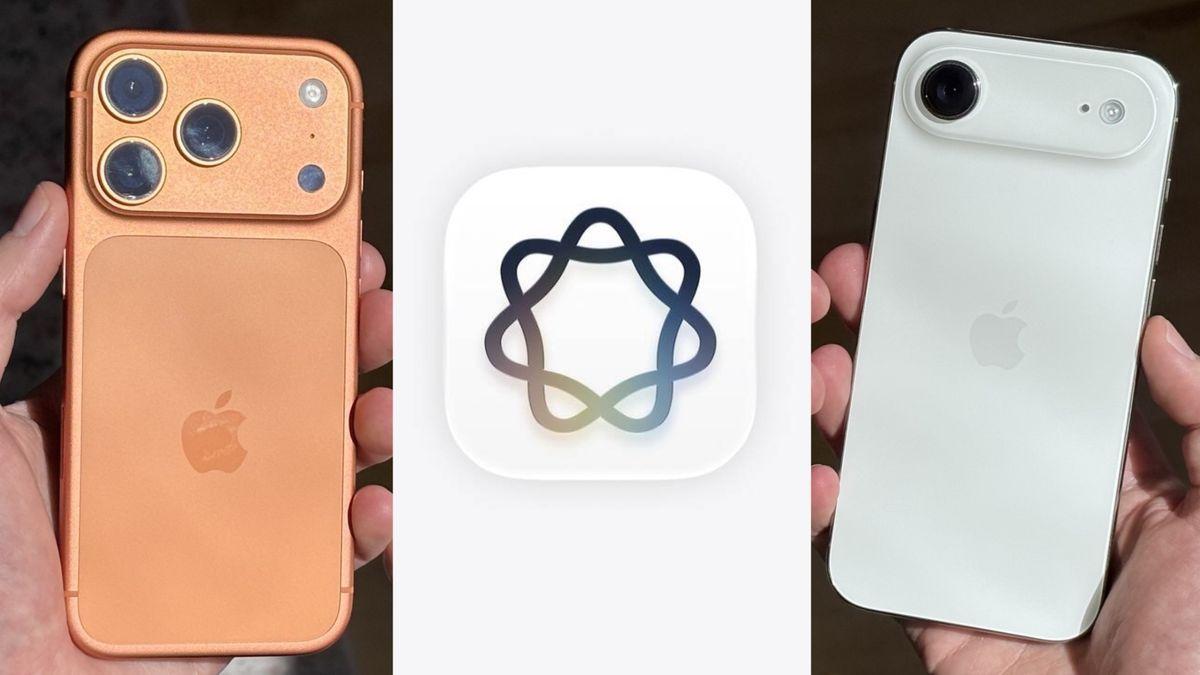
The decision creates a clear divide among Apple's current lineup. Only the iPhone 17 Pro, iPhone 17 Pro Max, and iPhone Air qualify among smartphones, while iPads need M4 chips or later with at least 12GB RAM, and Macs require M3 or later with the same memory specification
5
. The standard iPhone 17, despite being a flagship device, falls short with only 8GB of memory.The new Apple Foundation Models (AFM) Core Advanced model powers two specific capabilities that distinguish it from the base AFM Core model. First, users gain access to expressive Siri voices with customizable pace and expressiveness, allowing them to adjust how the assistant sounds
3
. Second, and more significantly, systemwide dictation receives a substantial accuracy boost through improved speech-to-text conversion that automatically handles capitalization, punctuation, and formatting as users speak2
.
Source: 9to5Mac
The AFM Core Advanced model operates as a 20-billion-parameter system, considerably larger than the 3-billion-parameter base model available on 8GB devices
3
. For users who rely heavily on dictation to send messages or navigate their devices hands-free, the enhanced transcription capabilities represent a noticeable improvement over previous versions.Devices with 8GB of memory aren't entirely left behind. The broader Apple Intelligence feature set remains accessible to iPhone 15 Pro, the entire iPhone 16 series, and the standard iPhone 17
2
. This includes personal context awareness, onscreen recognition, web answers, the dedicated Siri app, Visual Intelligence, and Writing Tools.However, users with non-supported devices will need to rely on Private Cloud Compute to access features powered by the most advanced model, resulting in slower performance compared to on-device processing
1
. This creates a practical split between what runs locally on your device and what requires server assistance, potentially affecting the speed, privacy, and overall experience that Apple has emphasized around its AI strategy4
.Related Stories
The shift toward memory-dependent AI capabilities changes how users should evaluate their next Apple device purchase. RAM has transitioned from a background specification primarily affecting multitasking to a critical factor determining access to cutting-edge AI features
4
. Apple has trained buyers to expect long device lifespans, but the Siri AI rollout demonstrates that 8GB devices are already losing ground despite being relatively recent.

Source: MacRumors
Apple's press release language suggests this divide may widen. The phrasing "features it enables, like expressive voices and more advanced dictation" leaves room for additional capabilities to become exclusive to the AFM Core Advanced model in future updates
3
. As Apple continues developing its AI roadmap, memory capacity will likely determine which devices feel current versus which start showing their age faster than previous hardware generations.The next devices Apple ships with increased memory will signal where iPhone, iPad, and Mac AI development is headed. For now, Apple Intelligence support alone doesn't guarantee access to the most capable on-device AI experience. iOS 27 is currently in developer beta, with a public beta launching next month and general release scheduled for fall
2
.Summarized by
Navi
[4]
1
Technology

2
Policy and Regulation

3
Health