3 Sources
[1]
Apple is 'rethinking its future product roadmap' after losing smart glasses chief to OpenAI, analysts say
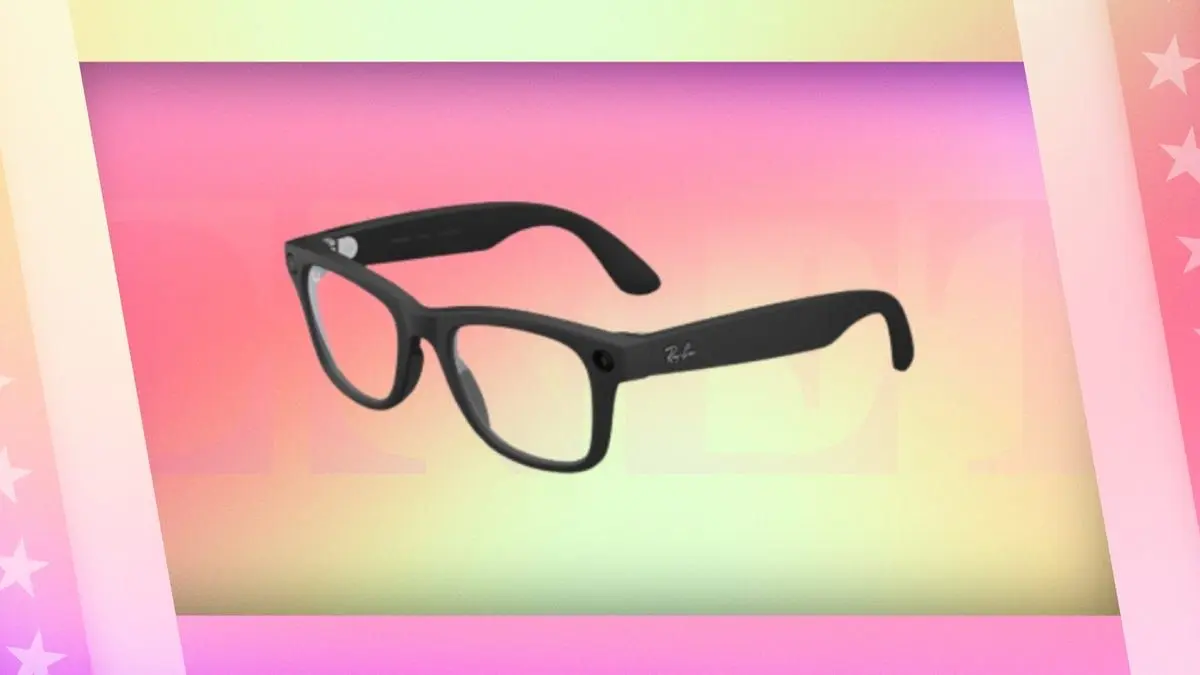
The future of Apple's rumored smart glasses and the existing Vision Pro headset has become blurrier in recent weeks. Between price hikes, the alleged back-burning of projects and high-level departures, it seems from the outside that Apple's Vision division isn't working. The most recent potential setback came last week when Bloomberg's Mark Gurman reported that Paul Meade, the vice president in charge of the Vision Pro and glasses efforts, is leaving for OpenAI. Meade is the second Vision executive to leave in the last year after the creator of the Vision Pro, Mike Rockwell, was shifted to overseeing Siri after AI failures in that department. Meade, meanwhile, was an integral part of Vision Pro's development and has reportedly been responsible for developing the Apple Glasses, as per Gurman's sources. Normal attrition or an indicator of problems? Apple is in a period of transition as Tim Cook's reign as CEO comes to an end and John Ternus starts his takeover. Soon after Ternus was announced as the heir apparent, Johny Srouji was promoted to chief hardware officer, and quickly went about making controversial changes to Apple's product design org chart. Analyst Avi Greengart of Techsponetial told Tom's Guide that this kind of attrition is normal, especially after a leadership change: "The executive moves that Apple is making appear to be more about securing the future of Siri - which impacts nearly every product Apple makes." As MacRumors reports, several members of Apple's leadership team have been there for decades, including marketing head Greg Joswiak and services chief Eddy Cue. In the coming years, we may see more departures as the old guard retires or moves on and younger faces rise up. The question is whether the current attrition is a new development strategy on Ternus' part, which opened the door for people like Meade to leave. Or is it a more challenging problem? "Sometimes that's the way companies move forward," IDC analyst Francisco Jeronimo told Tom's Guide. "Potentially, [Apple] is rethinking its future product roadmap and looking for a different challenge." Jeronimo noted that a problem that Apple may have is a Jony Ive one. OpenAI and Jony Ive poaching As Paul Meade leaves for OpenAI it looks like former Apple designer Jony Ive is rebuilding his Cupertino team at his new home. Meade joins Tang Tan and Evans Harkey, who used to run design, hardware, product design and industrial design at Apple with Ive. Gurman noted that Ive has also pillaged Apple's rank-and-file designers and engineers to build out his team. That trio brings a lot of expertise and knowledge of Apple's plans to OpenAI, which is in the midst of designing its own suite of AI-forward devices. The most recent rumors indicate that OpenAI has "fast-tracked" development of its own ChatGPT phone, which could debut as soon as the first quarter of 2027. Reportedly, OpenAI and Ive are developing at least five other AI-powered products, including earbuds, speakers, smart glasses, a smart pen, and a Humane AI-esque pin. OpenAI promised AI devices that will replace the phone, though IDC's Jeronimo said that any other kind of device will be harder for consumers to think they need. "There are concerns that it will not going to be as popular as they [OpenAI] think." Where does this leave Apple Glasses? Apple has reportedly back-burned its expensive, heavy Vision Pro headset in favor of two different smart glasses. Supply chain analysts have claimed the Meta Ray-Ban-esque Apple Glasses will launch in 2027, while an XR version might debut in 2028 or 2029. "I expect Apple to be a player in AI wearables one way or another," Greengart told Tom's Guide. Everyone I spoke with agreed that Apple Glasses seem to be the next step; it's just unclear what direction Apple wants to take them. Though any glasses will likely be more consumer-friendly and cheaper than the Vision Pro. If Apple gets glasses correct, it could be the next Apple Watch and actually send shockwaves through the eyewear industry. The question is whether key departures are draining Apple of talent and knowledge or just an adjustment of priorities. Follow Tom's Guide on Google News and add us as a preferred source to get our up-to-date news, analysis, and reviews in your feeds.
[2]
Apple Loses Another Top Executive to OpenAI
Paul Meade, who oversees development on the Vision Pro and Apple's upcoming smart glasses, is leaving Apple for OpenAI, reports Bloomberg. Meade took over leadership of Apple's Vision Products Group when Vision Pro chief Mike Rockwell took over Siri's AI upgrade. He was previously leading the Vision Pro hardware engineering team, and before that, he was on the iPad and iPhone teams. Meade has been at Apple since 2010, and working in the Vision Products Group since 2017. More recently, Meade was overseeing the development of the AI smart glasses that Apple has in the works to compete with the Meta Ray-Bans, and also leading the team working on future augmented reality glasses. Meade is leaving Apple by next week and will join OpenAI's hardware unit to work on AI devices. Fletcher Rothkopf, who heads up product design function for the Vision Pro and smart glasses, will take over for Meade. Meade's decision to leave is a result of executive changes at Apple as John Ternus prepares to take over as CEO. Apple chip lead Johny Srouji is taking Ternus's role as chief hardware officer, and the reorganization has upset some hardware executives. Former Apple employees Jony Ive, Tang Tan, and Evans Hankey are also at OpenAI, among others.
[3]
OpenAI's Quest For An iPhone Killer Lures Apple's Head Of Vision Pro, As Its MediaTek-Powered Smartphone Lurks In The Shadows
In what is a continuation of a sordid saga, one that involves OpenAI and its proverbial halls rapidly filling up to the brim with talent poached from Apple outright, the head of Apple's Vision Products Group is now departing for supposedly greener pastures over at OpenAI, leaving behind an Apple product category that is hopelessly falling behind its peers. It's a tale as old as OpenAI itself: Apple's talent lured to lay the foundations of future growth avenues over at OpenAI According to Bloomberg's Mark Gurman, Paul Meade, who is Apple's VP of hardware engineering at its Vision Products Group, overseeing the Vision Pro as well as Apple's upcoming smart glasses gambit, is now leaving for a stint at OpenAI. According to Gurman, Meade will end his 15-year tenure at Apple next week, and then go on to work within OpenAI's hardware unit that remains laser-focused on bringing a number of consumer-oriented AI devices to the market. As we noted recently, OpenAI has been working on a number of AI devices, including AI-powered earbuds that bear the internal codename "Sweetpea" but might retail under the "Dime" brand name, and a consumer device that is shaped like a pen and bears the internal codename "Gumdrop." Even so, the famous Apple-centric analyst, Ming-Chi Kuo, disclosed back in April that OpenAI has relegated its planned range of consumer devices to the proverbial cryo unit for now, focusing its efforts instead on an AI-powered smartphone. According to Kuo, Luxshare is likely to serve as the key assembler of OpenAI's smartphone that appears poised to challenge the dominance of the Apple iPhone, going on to note that OpenAI appears to have settled on a customized version of MediaTek's upcoming Dimensity 9600 chip as the SoC of choice for its planned smartphone. For the benefit of those who might not be aware, the Dimensity 9600 chip will leverage TSMC's N2P node. Moreover, the Pro version is expected to sport 2x ARM C2-Ultra cores (clocked at around 5GHz), 3x ARM C2-Premium cores, and 3x ARM C2-Pro cores, emulating the 2+3+3 CPU architecture of Qualcomm's upcoming Snapdragon 8 Elite Gen 6 chip. Meanwhile, Apple's Vision Pro has largely failed to gain mainstream traction, while its smart glasses won't launch until late 2027, with AR glasses pushed back till 2028 or even 2029. It is hardly a surprise, therefore, that Meade has chosen to leave Apple at this juncture. Of course, Meade is not alone in opting to depart Apple over the past few months. Back in January 2026, Apple lost a key Siri executive, Stuart Bowers, to Google's DeepMind. Apple also lost four key executives in December 2025, including the then-AI czar, John Ginnandrea, and the head of UI design, Alan Dye. Apple's core iPhone design team has also been bleeding talent to Jony Ive's io, which was recently acquired by OpenAI in its quest for an "iPhone Killer" device. Gurman reported back in 2025 that OpenAI had hired as many as 40 Apple engineers, including Matt Theobald, a manufacturing design expert, and Cyrus Daniel Irani, the lead on human interface design To counter OpenAI's siren call, Apple recently increased the bonus for its key design team members, who now stand to earn between $200,000 and $400,000 in annual bonuses, depending on how Apple's stock performs. Follow Wccftech on Google to get more of our news coverage in your feeds.
Share
Copy Link
Paul Meade, who led Apple's Vision Pro and smart glasses development, is leaving for OpenAI after 15 years at Apple. The departure marks another high-profile exit as OpenAI builds its hardware team with former Apple talent, including Jony Ive and key designers. Analysts suggest Apple may be rethinking its product roadmap amid leadership changes under incoming CEO John Ternus.
Paul Meade, Apple's vice president of hardware engineering who oversees the Vision Pro and smart glasses development, is departing for OpenAI next week, marking another significant Apple executive departure to the AI company
1
2
. Meade has been at Apple since 2010 and joined the Vision Products Group in 2017, previously working on iPad and iPhone teams before taking a central role in Apple Vision Pro development2
. He assumed leadership of the Vision Products Group after Mike Rockwell, the creator of Vision Pro, was shifted to oversee Siri following AI failures in that department1
. Most recently, Meade was responsible for developing AI-powered smart glasses designed to compete with Meta Ray-Bans, as well as leading the team working on future augmented reality glasses2
.
Source: Wccftech
Meade will join the OpenAI hardware team to work on AI-powered devices, becoming the latest in a string of high-profile Apple departures to the company
3
. Former Apple designer Jony Ive appears to be rebuilding his Cupertino team at his new venture, which was recently acquired by OpenAI. Meade joins Tang Tan and Evans Hankey, who previously ran design, hardware, product design and industrial design at Apple with Ive1
. OpenAI has reportedly hired as many as 40 Apple engineers, including manufacturing design expert Matt Theobald and human interface design lead Cyrus Daniel Irani3
. This talent poaching brings significant expertise and knowledge of Apple's plans to OpenAI, which is designing its own suite of consumer AI hardware.Analyst Francisco Jeronimo of IDC told Tom's Guide that Apple may be "rethinking its future product roadmap and looking for a different challenge"
1
. The departures come as Apple undergoes leadership changes with John Ternus preparing to take over as CEO from Tim Cook. Apple chip lead Johny Srouji is taking Ternus's role as chief hardware officer, and this reorganization has upset some hardware executives . Fletcher Rothkopf, who heads up product design function for the Vision Pro and smart glasses, will take over for Meade2
. Avi Greengart of Techsponetial noted that this kind of attrition is normal after leadership changes, stating "The executive moves that Apple is making appear to be more about securing the future of Siri - which impacts nearly every product Apple makes"1
.Source: MacRumors
Related Stories
OpenAI has fast-tracked development of its own ChatGPT phone, which could debut as soon as the first quarter of 2027
1
. According to analyst Ming-Chi Kuo, OpenAI has settled on a customized version of MediaTek's upcoming Dimensity 9600 chip as the SoC for its planned smartphone, with Luxshare likely serving as the key assembler3
. The Dimensity 9600 chip will leverage TSMC's N2P node, with the Pro version expected to sport a 2+3+3 CPU architecture3
. OpenAI and Ive are reportedly developing at least five other AI-powered products for the wearables market, including earbuds, speakers, smart glasses, a smart pen, and a pin device1
.Apple Vision Pro has largely failed to gain mainstream traction, while its smart glasses won't launch until late 2027, with AR glasses pushed back to 2028 or even 2029
3
. Apple has reportedly back-burned its expensive, heavy Vision Pro headset in favor of two different smart glasses projects1
. Supply chain analysts claim the Meta Ray-Ban-esque Apple Glasses will launch in 2027, while an XR version might debut in 2028 or 20291
. Greengart told Tom's Guide he expects "Apple to be a player in AI wearables one way or another," with any glasses likely to be more consumer-friendly and cheaper than the Vision Pro1
. To counter OpenAI's recruitment efforts, Apple recently increased bonuses for key design team members, who now stand to earn between $200,000 and $400,000 in annual bonuses depending on stock performance3
.
Source: Tom's Guide
Summarized by
Navi
[1]
[2]
05 Dec 2025•Business and Economy

05 Nov 2024•Technology

03 Jun 2026•Business and Economy

1
Policy and Regulation

2
Policy and Regulation

3
Policy and Regulation