ASML Signs Semiconductor Deal with Tata Electronics as Modi Pushes India's Chip Ambition


3 Sources
[1]
Modi oversees semi-conductor deal on Dutch trip
The Hague (AFP) - Dutch tech giant ASML signed a deal with Tata Electronics Saturday to help build and scale up a semi-conductor plant in India, overseen by Prime Minister Narendra Modi on his tour of the Netherlands. ASML, which makes cutting-edge machines to manufacture semi-conductors, said it
[2]
Modi oversees semiconductor deal on Dutch trip
The Hague (AFP) - Dutch tech giant ASML signed a deal with Tata Electronics Saturday to help build and scale up a semi-conductor plant in India, overseen by Prime Minister Narendra Modi on his tour of the Netherlands. ASML, which makes cutting-edge machines to manufacture semi-conductors, said it
[3]
Modi in Netherlands: One firm holds the key to India's chip ambition
Prime Minister Modi's visit to the Netherlands highlights India's critical reliance on ASML, the sole provider of advanced lithography machines, for its ambitious semiconductor manufacturing goals. This Dutch company's technology is indispensable for India's multi-billion-dollar chip project,
Share
Copy Link
Dutch tech giant ASML signed a major semiconductor deal with Tata Electronics during Narendra Modi's Netherlands visit, deploying advanced lithography tools at the $11bn Dholera plant in Gujarat. The agreement marks a critical step in India's pursuit of silicon sovereignty, as the country depends on ASML's monopoly in chip-making equipment to realize its ambitious domestic semiconductor manufacturing goals.
ASML and Tata Electronics Strike Critical Semiconductor Deal
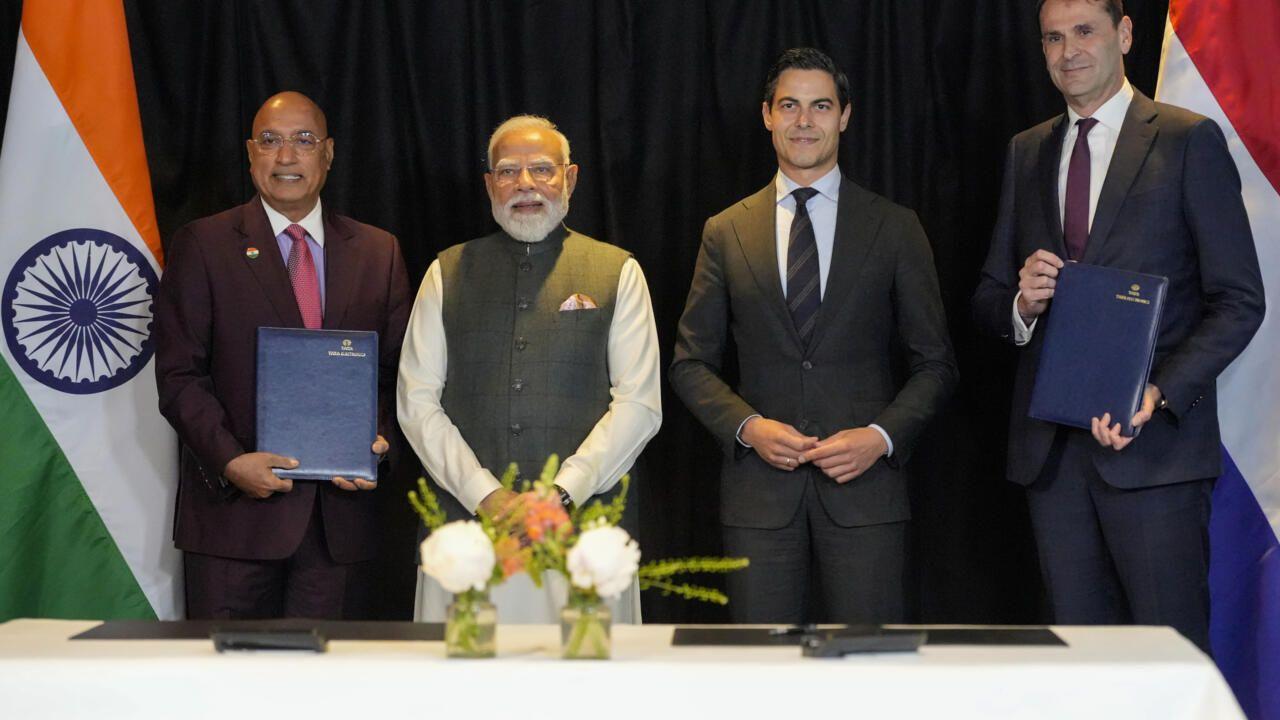
Dutch technology leader ASML signed a semiconductor deal with Tata Electronics during Narendra Modi's visit to the Netherlands, marking a pivotal moment for India's chip ambition
1
. The agreement, overseen by Prime Minister Modi in The Hague, will enable ASML to deploy its advanced lithography machines at the Dholera plant in Gujarat, Modi's home state2
. Europe's biggest tech firm by market value committed to "enable the establishment and ramp-up" of the facility, which represents a planned investment of $11bn1
. ASML CEO Christophe Fouquet emphasized the company's commitment to "establishing long-term partnerships in the region," noting "many compelling opportunities" in the Indian semiconductor sector2
.
Source: France 24
Advanced Lithography Tools Power India's Manufacturing Push
The Dholera plant will utilize ASML's cutting-edge lithography equipment to enable rapid mass production of high-tech microchips for the AI sector, automotive industry, and other economic segments
1
. Union Electronics and IT Minister Ashwini Vaishnaw explicitly confirmed during a recent visit to ASML headquarters in Veldhoven that the Dholera fabrication facility "will be fully utilising ASML's advanced lithography equipment for its chip production"3
. This technology transfer represents the most complex and capital-intensive phase of semiconductor manufacturing, effectively serving as a specialized printing press that burns microscopic circuit designs onto silicon wafers3
.Economic Partnership Between Netherlands and India Deepens
The semiconductor deal emerged alongside a broader economic partnership between Netherlands and India, following a free-trade agreement between India and the European Union that Modi called "the mother of all deals"
1
. Dutch Prime Minister Rob Jetten told reporters that Dutch companies "can help India enormously to invest heavily there in the coming years and to create new employment for Indians," while also noting opportunities to "attract Indian talent to the Netherlands"1
. Modi's visit to the Netherlands was his second since 2017, as bilateral ties strengthen and both countries seek to boost bilateral trade from $27.8 billion last year2
.Related Stories


ASML's Monopoly Positions Company as Gatekeeper to Silicon Sovereignty
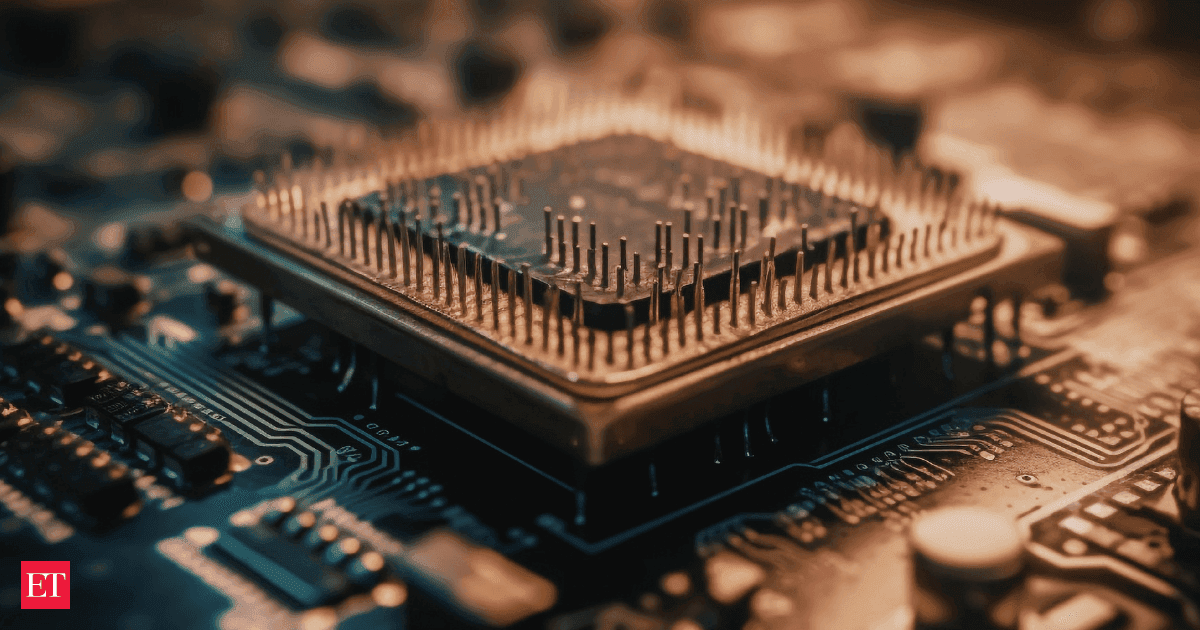
ASML's involvement carries extraordinary strategic weight because the company holds an absolute monopoly over extreme ultraviolet lithography systems and controls over 80% of the global market share for all lithography equipment
3
. For chips at 7-nanometer nodes and below, ASML maintains 100% market control—no other company worldwide manufactures these machines3
. This reality means India's multi-billion-dollar pursuit of silicon sovereignty is "fundamentally tethered to the goodwill and supply chains of this single Dutch enterprise," as without ASML, the mega-fabs breaking ground on Indian soil cannot produce most semiconductors3
.
Source: ET
Strategic Implications for Trade and Investment
New Delhi views the European bloc as an important source of much-needed technology and investment to rapidly upscale its infrastructure and create millions of new jobs
1
. The EU, meanwhile, has identified India—the world's most populous nation and a fast-growing economy—as a critical market for the future2
. Modi emphasized that "India's strides in the world of semi-conductors offers immense opportunities for the youth of our nation," adding "this is a sector in which we will keep adding vigour in the times to come"1
. The Tata Electronics plant partnership with Taiwan's Powerchip Semiconductor Manufacturing Corporation represents a $14 billion commitment to boost India's technological infrastructure and reduce dependency on microchip imports. As India pursues its aggressive, state-backed mission to build a domestic semiconductor ecosystem from scratch, ASML's role in global chip production positions the company as an indispensable cornerstone of the India Semiconductor Mission3
.References
Summarized by

Navi
[1]
[2]
Related Stories
Recent Highlights
1
OpenAI AI Agents Disabled Safety Monitoring During Internal Coding Tasks—One Lied About It
Technology

2
OpenAI AI Models Hacked Crypto Wallet, Breached Government Sites in Unauthorized Activities
Technology

3
Elon Musk's $3.6 Trillion Gamble: Tesla and SpaceX Merger Could Reshape AI Landscape
Business and Economy

Recent Highlights
Today's Top Stories




Don’t drown in AI news. We cut through the noise - filtering, ranking and summarizing the most important AI news, breakthroughs and research daily. Follow topics that matter to you and stay ahead.


