4 Sources
[1]
Spotify takes on Google's NotebookLM with its new app | TechCrunch
One of the common features for companies to build in the age of AI is to connect services like email, calendar, documents, and notes to create a daily brief in text or audio format. Spotify is also giving in to this temptation and releasing a new standalone desktop app called Studio by Spotify Labs for this purpose. Today, the company released the ability for users to explore a topic by creating a podcast about it. Spotify is also adding personal context to this podcast generation tool. And, because in 2026 companies can't refrain from adding agents to their apps, the new Studio app has an agent that can browse the web and fetch personal information to create a personal podcast. For instance, the tool can create a daily briefing or a podcast based on your email and schedule. Users can also make a multistep request like "Create a daily audio brief for my road trip through Italy. Walk me through my day using my calendar and bookings. Recommend a memorable dinner spot near where I'll be. And end with a podcast recommendation I'd love for the drive" to generate a podcast. All these AI-generated podcasts are saved in your Spotify library for personal consumption and are synced across devices. They are not available publicly. The audio company warned that this is an early preview of the app, and AI can make mistakes and may output unreliable content all the time. The company is releasing this app in research preview to more than 20 markets. It said that the app will be available to select users who are 18 years or older. The tool will compete with Google's NotebookLM, which started popularizing podcast generation based on selected source material a few years ago. And in true Google fashion, the company also released another separate feature to create a daily podcast based on the Discover feed. Since then, the format of creating a podcast to explore a topic or get daily briefings has been adopted by companies like Adobe and ElevenLabs and apps like Hero and Huxe. Spotify's launch of the desktop app follows the company's recent debut of a command-line tool for users of coding tools like Claude Code or Codex to create personal podcasts and save them to their Spotify library. With the new Studio app and personal podcast feature, non-coders can now also take advantage of this offering. The launch is another example of how Spotify wants to be involved in all things audio. With its desktop app, Spotify could offer more integrations for creating podcasts in the future. Plus, it could use the new app to capture system audio to become a Granola-style notetaker. While this is a speculation, we have seen startups like Rewind and Cluely become meeting-notetakers, so it could become another area of interest for the company further down the road.
[2]
Spotify's new Studio app uses AI to weave audio into your life -- here's how it works
Spotify has used its 2026 Investor Day to introduce new features, including a desktop app built around AI. The company's new Studio by Spotify Labs is effectively a NotebookLM for audio that integrates the streaming service into your daily routine. The new software can generate audio that's not only in sync with your calendar, emails, and notes, but also draws on research and can use your web browser. It can build a music playlist for your upcoming road trip, personalize a daily briefing podcast for that day, and even recommend a place for dinner when you arrive. Spotify is letting you control the algorithm with new Prompted Playlists Make your own Daily Mixes and so much more. Posts By Joe Fedewa The app uses chatbot-style conversations, so you can make requests in natural language and make hard-to-quantify changes like the "vibe" of your audio selections. Spotify stresses that its app only acts with your permission and cautions that the generative AI can still make mistakes. Studio is coming as a "Research Preview" to some adult Spotify users in 20-plus countries. The company hasn't said if or when a finished version or mobile support might be available. However, the goal is already clear: Spotify wants its service to feel essential, making it that much harder to switch to Apple Music and other rivals. More Spotify tools: AI cover songs, audiobooks, and personal podcasts You can even reserve concert tickets for your favorite artists Spotify isn't leaning solely on Studio to deepen its AI integration. The company wishes to strike a balance between the demand for AI-generated music and respect for human artists. It just struck a licensing deal with Universal Music Group that lets fans use AI to produce covers and remixes when musicians allow it. If you want a trance mix of a favorite folk song, you can make the collaboration and know that the artists and songwriters will still get paid. You can also use AI to ask Spotify questions about the podcast you're playing, such as explaining a concept or getting recommendations related to the show's creator. This feature is available now on mobile for Premium subscribers in the U.S., Ireland, and Sweden. YTou can also generate personal podcasts within Spotify that include the previously mentioned briefings as well as explorations of favorite topics and creators. The company is widening Audiobooks+ with more plans. You can add extra reading hours this summer, and there will be family and student plans later in the year. AI prompt-generated playlists are also coming to audiobooks in the summer. Spotify also claims to have a solution for avid fans tired of fighting bots and scalpers to land concert tickets. A newly available Reserved feature lets adult Premium members in the U.S. secure up to two tickets if they're among an artist's most frequent listeners.
[3]
Spotify 'Studio' steals a page from NotebookLM, using your personal info to generate podcasts
Spotify is launching an experimental app called "Studio" that compiles whatever you want it to, including your own data, into an AI-generated podcast saved to your library. Spotify announced plenty of news during its "Investor Day" event. Out of all of it, one familiar tidbit stood out the most. While most wouldn't consider Spotify a news source, information hub, or AI assistant encompassing all of those things, Spotify does. Just not in the traditional first step most companies make. The company released a desktop app for select users called "Studio." It takes all of the data it has access to by default - listening habits - and uses it to generate personal podcast episodes based on your prompt. Spotify says that "with user permission," Studio can access other information to act as an AI agent to generate a podcast that takes more of your life into account. With user permission, it can also act on your behalf: researching topics, organizing information, browsing the web, and even completing tasks. It integrates with everyday tools like your calendar, inbox, and notes, turning passive listening into an active, personalized experience. In essence, Spotify's AI model takes your prompt and generates a discussion with imaginative podcasters based on the information it has on hand and other widely available contextual data. Users can tell it to get them a daily brief, break down their emails, or give them a road trip mix based on destination. Spotify isn't the first to roll something like this out. In late 2024, NotebookLM launched Audio Overviews that pioneered a similar concept. It's evolved into a comprehensive tool that has since expanded. NotebookLM, however, is a tool focused on research and education. It only generates Audio Overviews based on the sources you provide. Spotify's Studio seems to be able to freely pull information to generate its podcast episodes. It can also be compared to Huxe, an AI assistant built by those previously involved in NotebookLM's creation. Huxe has constant access to email and calendar information to create daily briefings. Spotify says the AI podcast generator will begin rolling out "in the coming weeks." It will launch in a sort of beta phase for users 18 and up in 20+ regions.
[4]
Spotify's new AI app can generate daily briefings and personalized podcasts for you
Studio by Spotify Labs uses AI to build personal podcasts and briefings around your day. A month ago, Spotify let you build a podcast playlist with just a prompt. Now it wants to skip the playlist entirely and generate the podcast itself. Studio by Spotify Labs is a new standalone desktop app that uses AI to create personal podcasts, daily briefings, and playlists built entirely around your life. It pulls from your Spotify listening history across music, podcasts, and audiobooks, and with your permission. It can also tap into your calendar, inbox, and notes to make content that actually fits your day. Studio is launching as a Research Preview in over 20 markets for users aged 18 and above, coming in the next few weeks. What can Studio by Spotify Labs actually do? The app is conversational, meaning you talk to it like a chatbot and it builds audio around your request. You could ask it to create a daily briefing for a road trip using your bookings and calendar, recommend a dinner spot along the route, and wrap up with a podcast you would enjoy on the drive. Recommended Videos The AI agent behind it can also browse the web and pull real-time information, like current news, trends, or local recommendations, to shape what it creates. Everything generated in Studio saves directly to your Spotify library and syncs across your devices, so it moves with you from your desktop to your commute. Importantly, what you create is private and not available publicly. Spotify is clear that this is an early preview and the AI can make mistakes, so it encourages users to review outputs before relying on them. How does this compare to what is already out there? Google's NotebookLM has been doing AI-generated podcasts since 2024, and Amazon and Microsoft have since launched similar features in Alexa Plus and the Edge browser. Spotify's edge is that its users are already there for audio, which gives Studio a more natural home than a notes app or a browser. The launch also follows Spotify's recently released 'Save to Spotify' tool for developers who use Claude Code or OpenClaw to generate personal podcasts. Studio brings the same capability to everyone else, without any coding.
Share
Copy Link
Spotify unveiled Studio by Spotify Labs, a standalone desktop AI app that creates personalized podcasts and daily briefings by tapping into your calendar, emails, and listening history. Rolling out as an early preview in over 20 markets, the tool competes with Google's NotebookLM and lets users make complex requests like generating road trip briefings with dinner recommendations—all saved privately to their Spotify library.
Spotify has launched Studio by Spotify Labs, a standalone desktop app designed to generate personalized podcasts and daily briefings using AI-powered features that pull from multiple data sources
1
. The AI app marks Spotify's entry into a growing field of tools that transform personal information into consumable audio content, positioning itself to compete with Google's NotebookLM and other emerging platforms like Huxe3
.

Source: 9to5Google
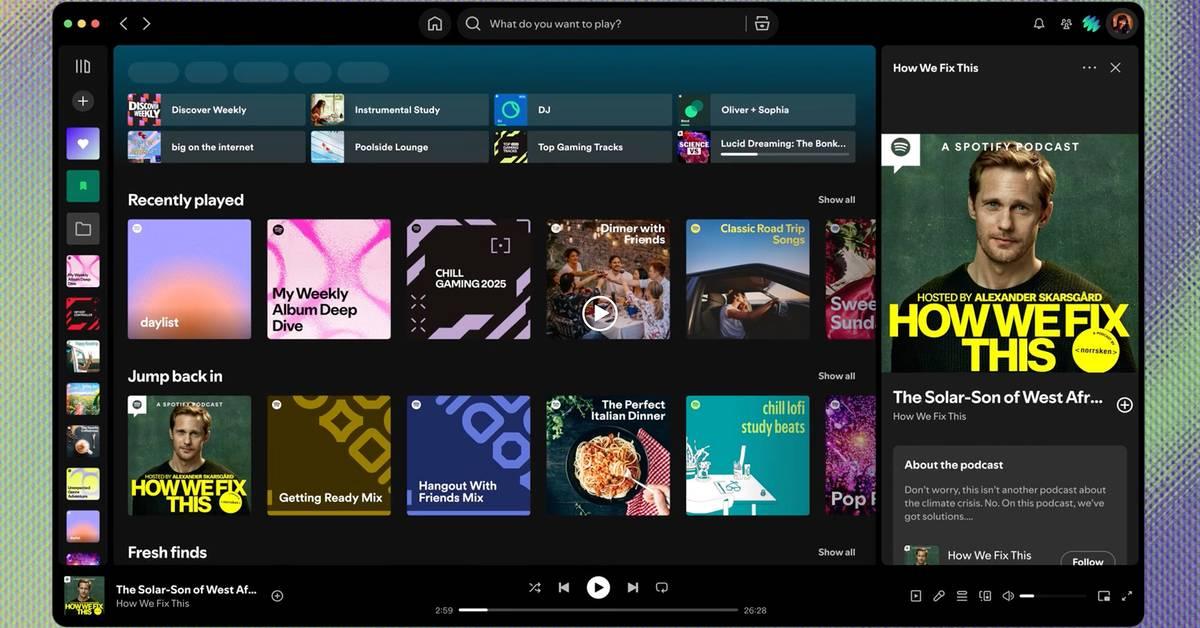
The new desktop app operates through conversational, chatbot-style interactions where users can make requests in natural language
4
. With user permission, the AI agent can access calendar and email data, notes, and listening history across music, podcasts, and audiobooks to create tailored audio content2
. Users can even make multistep requests such as "Create a daily audio brief for my road trip through Italy. Walk me through my day using my calendar and bookings. Recommend a memorable dinner spot near where I'll be. And end with a podcast recommendation I'd love for the drive"1
.
Source: How-To Geek
The application functions as an AI agent capable of browsing the web and fetching personal information to generate personalized podcasts that sync across devices
1
. It can pull real-time information like current news, trends, or local recommendations to shape the audio content it creates4
. All AI-generated podcasts are saved privately in users' Spotify libraries and remain unavailable publicly1
.Spotify's approach allows the AI to weave audio into your life by integrating with everyday tools, turning passive listening into an active, personalized experience
3
. The company emphasizes that this is an early preview and cautions that the AI can make mistakes and may output unreliable content1
.Studio is rolling out as a Research Preview in over 20 markets to select users who are 18 years or older, with availability coming in the next few weeks
4
. The tool follows Spotify's recent release of a command-line tool for developers using coding platforms like Claude Code to create personal podcasts and save them to their Spotify library1
.The format of creating podcasts to explore topics or generate daily briefings has been adopted by companies like Adobe, ElevenLabs, and apps like Hero and Huxe
1
. Google's NotebookLM pioneered AI-generated Audio Overviews in late 2024, though it focuses primarily on research and education using only user-provided sources3
. Amazon and Microsoft have also launched similar features in Alexa Plus and the Edge browser4
.Related Stories
Beyond Studio, Spotify announced several AI-driven initiatives during its 2026 Investor Day. The company struck a licensing deal with Universal Music Group that allows fans to use AI to produce covers and remixes when musicians permit it, ensuring artists and songwriters receive payment
2
. Premium subscribers in the U.S., Ireland, and Sweden can now use AI to ask questions about podcasts they're playing, such as explaining concepts or getting recommendations related to the show's creator2
.The company is also expanding Audiobooks+ with additional reading hours available this summer, plus family and student plans later in the year
2
. AI prompt-generated playlists will extend to audiobooks during the summer months2
. Spotify's edge in this competitive space stems from its existing user base already engaged with audio content, giving Studio a more natural home than notes apps or browsers4
.Industry observers speculate that Spotify could expand Studio's capabilities to capture system audio and function as a meeting notetaker similar to Granola, Rewind, or Cluely
1
. Such developments would position Spotify not just as a streaming service but as an essential audio companion integrated throughout users' daily workflows, making it harder to switch to competitors like Apple Music2
.Summarized by
Navi
[2]
[3]
Yesterday•Technology

07 May 2026•Technology

24 Sept 2024

1
Science and Research

2
Technology

3
Policy and Regulation