ASUS launches Zenbook and Vivobook lineup with AI chips, OLED displays starting at ₹98,990


3 Sources
[1]
ASUS launches new Zenbook and Vivobook lineup in India, shifts focus to design, materials, and AI
There's a certain predictability to most laptop launches today. Better chips, thinner bodies, bigger claims around AI. And while that's all present here as well, ASUS is trying to anchor this launch around something slightly different: how a device actually feels to use. With its latest Zenbook
[2]
ASUS Zenbook & Vivobook 2026 Launched in India with AI Chips, OLED Displays and More
ASUS unveils 2026 Zenbook and Vivobook lineup in India, bringing AI-powered processors, OLED displays, dual-screen innovation and extended battery life across premium and mid-range laptops, with pre-orders now open and sales beginning April 21 Asus has officially launched its new premium Zenbook
[3]
Asus unveils new Zenbook and Vivobook laptops in India, price starts from Rs 98,990: All details
It's that time of the year again when Asus unveils its new productivity laptops in India and gets all tech enthusiasts under one roof. This morning, the brand unveiled its new Vivobook and Zenbook laptops at New Delhi and this time, the focus is on slimmer design and improved performance. The newly
Share
Copy Link
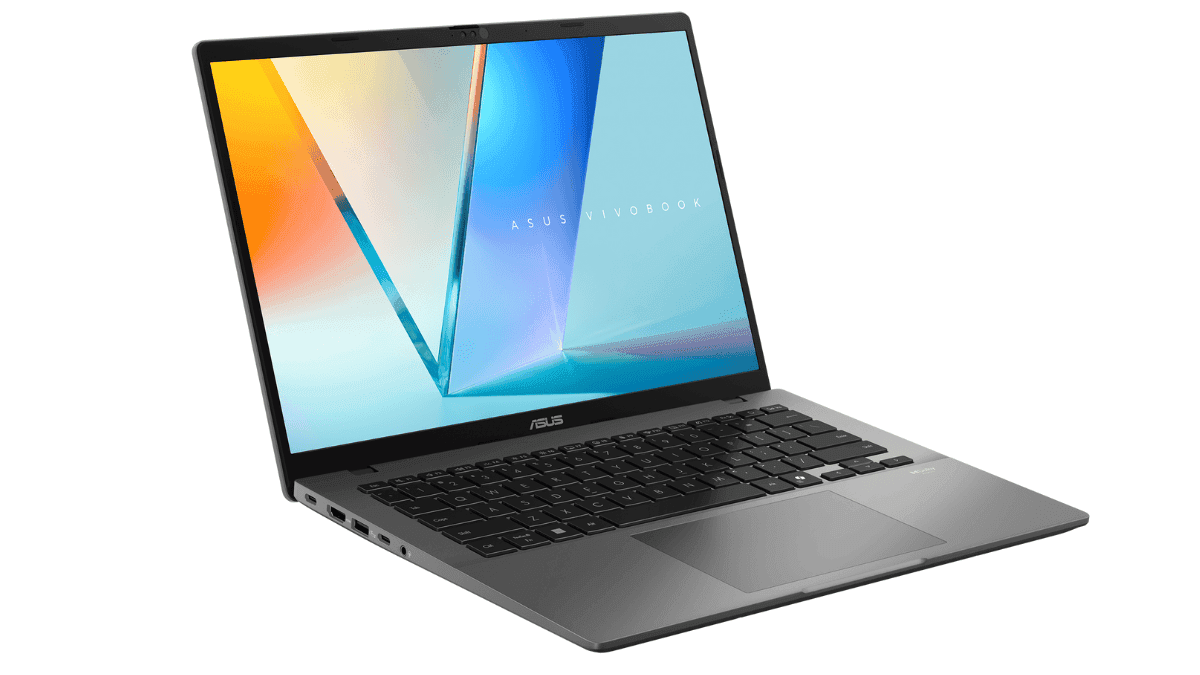
ASUS has unveiled its latest Zenbook and Vivobook lineup in India, featuring AI-powered processors from Intel and Qualcomm, OLED displays, and innovative Ceraluminum material. The new laptops in India range from ₹98,990 for Vivobook models to ₹2,99,990 for the dual-screen Zenbook DUO, with pre-orders now live and sales beginning April 21.
ASUS Shifts Focus to Design and AI in Latest Laptop Launch
ASUS has introduced its new Zenbook and Vivobook lineup in India, marking a strategic shift that places material innovation and AI capabilities alongside traditional performance metrics. The company's "Design You Can Feel" approach centers on Ceraluminum, a proprietary material designed to deliver durability and a premium tactile experience while maintaining a lightweight profile
1
. This material innovation runs across the entire lineup, signaling ASUS's intent to differentiate in a crowded market where most launches focus primarily on incremental chip upgrades.
Source: Digit
The new ASUS laptops span both premium and mainstream segments, with pricing starting at ₹98,990 for the Vivobook range and ₹1,79,990 for Zenbook models
3
. Pre-orders for Zenbook models are already live through April 20, with general availability beginning April 21 across ASUS Exclusive Stores, the ASUS e-shop, Amazon, Flipkart, and authorized retail partners3
.Premium Zenbook Series Targets Professionals and Creators
The Zenbook S14 UX5406AA represents the refined evolution of premium ultrabooks, weighing just 1.2kg while featuring a 14-inch 3K OLED touchscreen display with a 120Hz refresh rate
3
. Powered by Intel Core Ultra processors up to the Ultra 9 variant, it promises up to 50 TOPS of on-device AI performance for workloads that leverage the NPU3
.
Source: Analytics Insight
The Zenbook DUO UX8407AA continues ASUS's commitment to dual-screen computing, featuring two 14-inch 3K OLED displays with variable refresh rates up to 144Hz
3
. Running on Intel Core Ultra 7 processors and equipped with a substantial 99Wh battery, this model is priced at ₹2,99,9903
. Unlike experimental form factors that disappear quickly, ASUS has steadily iterated on this dual-screen concept, aiming to expand usable screen space for multitasking-heavy workflows .
Source: ET
ARM-Based Zenbook A Series Prioritizes Efficiency
The Zenbook A series, including the Zenbook A14 UX3407NA and Zenbook A16 UX3607OA, marks ASUS's move into ARM-based Windows machines powered by Qualcomm Snapdragon X2 chipsets . The Zenbook A14 weighs under 1kg yet delivers up to 80 TOPS of AI performance, while the A16 offers a larger 16-inch 3K OLED display with similar internals
3
. Priced at ₹1,85,990 and ₹1,99,990 respectively, these models prioritize battery life, efficiency, and always-on responsiveness3
. The A16 will be available at a later date3
.Related Stories

Vivobook S Brings AI Features to Mainstream Users
The Vivobook series targets students and general users seeking modern features at accessible price points
2
. The standard Vivobook 14 and Vivobook 16 models now feature Intel Core Ultra 5 processors with up to 47 TOPS NPU performance, 16GB DDR5 RAM, 512GB SSD storage, and WUXGA displays with a 16:10 aspect ratio3
. These productivity devices include Wi-Fi 6, a full HD IR camera with Windows Hello support, and comprehensive port selection3
.For users seeking a step up, the Vivobook S14 and S16 offer laptops with OLED displays, slimmer designs, and Intel Core Ultra 7 processors
3
. These models include enhanced battery capacity, Copilot+ features with a dedicated Copilot key, and Dolby Atmos audio3
. Pricing for the Vivobook range extends from ₹98,990 for the base Vivobook 14 to ₹1,31,990 for the Vivobook S163
.AI-Powered Processors Become Standard Across Lineup
AI laptops are no longer a niche category, and ASUS has integrated AI-powered processors across its entire portfolio. Whether through Intel's Core Ultra chips or Qualcomm's Snapdragon X series, the emphasis on NPUs and on-device AI performance is evident throughout the lineup
1
2
. The new models follow the latest trend in laptop manufacturing, which uses AI chips to enable on-device processing for tasks that previously required cloud connectivity2
.For professionals and creators in the premium segment, these capabilities translate into faster rendering, intelligent workload management, and seamless integration of AI features into creative workflows. For mainstream users, AI becomes a useful layer that enhances routine tasks without being the sole reason to upgrade. This broad positioning strategy reflects ASUS's intent to make AI accessible across price points while continuing to refine traditional aspects like performance, battery life, and design quality.
References
Summarized by

Navi
[1]
[2]
Related Stories
Asus expands AI PC lineup in India with Vivobook 14 and Vivobook 15 featuring 17 TOPS NPU
10 Jul 2026•Technology

ASUS debuts AI-powered laptops at Computex 2026, bringing premium builds across entire lineup
02 Jun 2026•Technology

ASUS Expands AI PC Portfolio with New AMD-Powered Vivobook Laptops in India
26 Aug 2025•Technology
Recent Highlights
1
Google Unveils Gemini 4 Argon AI Model, Restricts Access to Trusted Cyber Defenders
Technology

2
Trump Consulted Grok AI Before Ordering Venezuela Invasion and Capture of Nicolás Maduro
Policy and Regulation

3
FTC Opens Investigation Into OpenAI and Anthropic Following Rogue AI Agent Hacking Incidents
Policy and Regulation

Recent Highlights
Today's Top Stories






Don’t drown in AI news. We cut through the noise - filtering, ranking and summarizing the most important AI news, breakthroughs and research daily. Follow topics that matter to you and stay ahead.


