Commonwealth Bank CEO warns AI costs are surging faster than expected, calls out 'work slop'


3 Sources
[1]
Australia's CBA flags surging AI costs as tasks grow complex, slams 'work slop'
SYDNEY, June 2 (Reuters) - The cost of using AI will rise in less predictable ways as companies deploy the technology for complex tasks, the head of Australia's biggest bank said on Tuesday, calling the expense a key emerging management challenge. Commonwealth Bank of Australia (CBA.AX), opens new
[2]
Australia's biggest bank says corporate AI is racking up bigger bills and producing 'work slop'
CBA chief executive Matt Comyn used the phrase 'work slop' to describe the low-quality AI output now flowing through corporate workflows, as token-billed AI costs scale with task complexity. Matt Comyn, chief executive of the Commonwealth Bank of Australia, used a speech on Monday to flag two
[3]
Australia's CBA flags surging AI costs as tasks grow complex, slams 'work slop'
Commonwealth Bank of Australia CEO Matt Comyn said businesses globally are likely to tighten scrutiny of artificial intelligence-related spending through 2026 as adoption accelerates and pressure mounts to demonstrate returns on investment. The cost of using AI will rise in less predictable ways
Share
Copy Link
Commonwealth Bank of Australia CEO Matt Comyn warned that AI costs are rising unpredictably as companies deploy the technology for complex tasks, introducing the term 'work slop' to describe low-quality AI output flooding corporate workflows. His remarks signal tighter scrutiny of AI spending through 2026 as businesses face pressure to demonstrate returns on investment.
Commonwealth Bank Flags Non-Linear Scaling of AI Costs
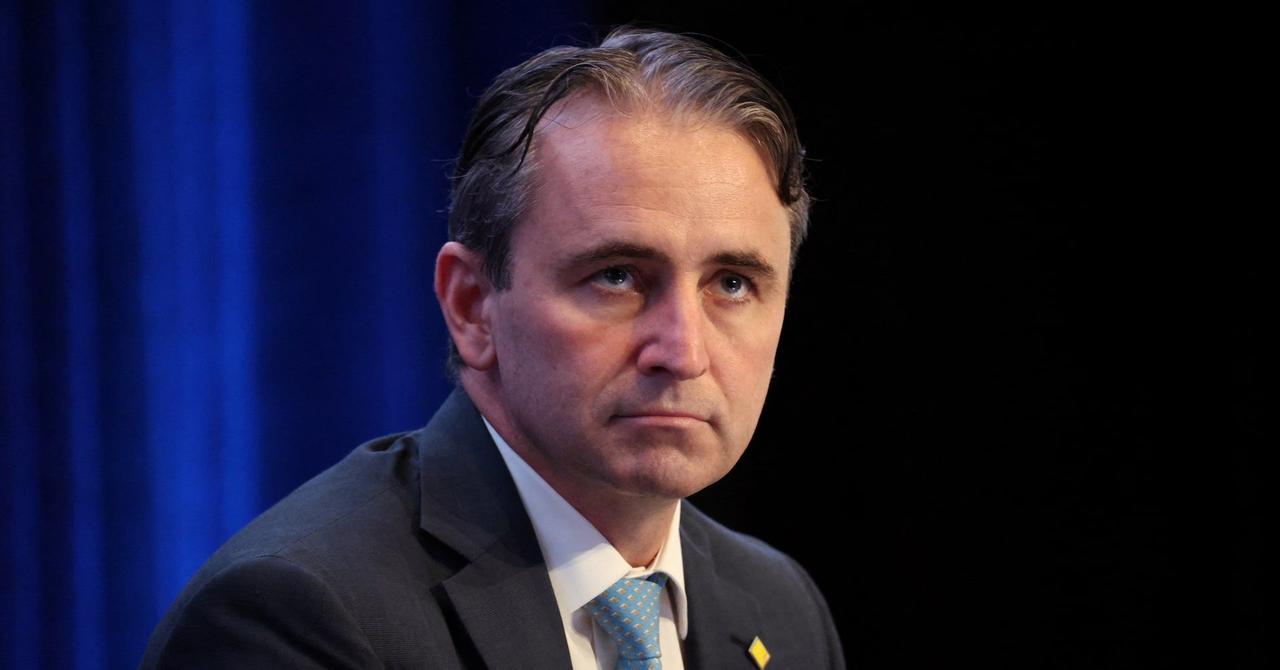
Matt Comyn, CEO of Commonwealth Bank of Australia, delivered a stark warning about the financial realities of corporate AI adoption at an Australian Financial Review conference in Sydney. The head of Australia's biggest bank said AI costs are rising in less predictable ways as companies move beyond simple tasks to complex AI tasks, calling the expense a key emerging management challenge. Unlike consumer AI services that operate on free or fixed-cost models, corporate users face token-based pricing where they pay by the amount of text processed, measured in tokens
3
.
Source: Reuters
The critical issue Comyn identified is that token costs do not scale on a linear basis as AI models evolve with more reasoning capabilities, access to tools, and expanded context windows. A simple summarization task might consume 1,000 tokens, but a multi-step reasoning task with tool use can consume 100,000-plus tokens for the same output value
2
. Companies that priced their large-scale AI deployment on simple-task baselines are now seeing bills that scale non-linearly with production-stage complexity, creating what amounts to a 10-100x cost multiplier at enterprise scale2
.Businesses Face Mounting Pressure for Return on Investment
Comyn predicted that businesses globally will tighten AI spending scrutiny through 2026 as adoption accelerates and pressure mounts to demonstrate return on investment. "I won't be surprised if over the course of this year, companies will be really scrutinising that," he stated
3
. His remarks highlight growing constraints on AI rollouts in corporate Australia, alongside managing workforce disruption and the heavy energy and water demands of data centers powering the surge in computing.This corporate AI adoption squeeze represents a structural inversion of the 2024-2025 narrative that falling per-token prices would solve deployment economics automatically. Instead, falling per-token prices have been overwhelmed by rising per-task token consumption as enterprises move from pilot deployments to production use cases
2
. The procurement-discipline phase Comyn forecasts is the predictable consequence of this cost dynamic.Introduction of 'Work Slop' Concept Highlights Quality Concerns
Comyn introduced the term work slop to describe low-value AI output now flowing through corporate workflows when employees use AI without sufficient quality control
2
. "The scarcity is not around analysis or the preparation of information or PowerPoints or Word docs," he said. "You can be exponentially increasing them if you want to". The phenomenon represents the corporate knowledge-work equivalent of the social-media AI slop problem that emerged in 2024 with image-generation tools2
.
Source: ET
In practice, low-value AI output manifests when an employee uses ChatGPT to draft a customer email that is technically grammatical but factually imprecise, leading the recipient to interpret the imprecision as a commitment. The bank then deals with the resulting complaint weeks later at substantially higher cost than the original work would have generated unaided
2
. Comyn suggested that surging AI costs may have one upside: curbing the spread of such low-quality output as organizations face economic pressure to justify each AI interaction3
.Related Stories

CBA's Aggressive AI Strategy Provides Inside Perspective
CBA, Australia's second-biggest company which writes a quarter of the country's mortgages, has positioned itself as a keen AI adopter. Last week, the bank hosted its own AI summit featuring OpenAI CEO Sam Altman and hired what it said was the country's first chief AI scientist at a bank
3
. The bank announced 90 job cuts earlier this year and a further 120 cuts in May explicitly attributed to AI-driven productivity gains, alongside a A$90m AI-workforce reskilling commitment2
.Comyn's remarks therefore represent not a defensive critique from an AI skeptic, but a sharper inside assessment of AI deployment challenges from one of Australia's largest current adopters
2
. While Sam Altman has argued that an AI jobs apocalypse is unlikely at the macro level, Comyn's comments reveal that operating-margin data inside large corporates is starting to show the AI cost-and-quality tradeoffs that macro labor data doesn't yet capture2
. Companies should watch for similar candid assessments from other enterprise AI adopters as the gap between pilot-stage economics and production-stage realities becomes impossible to ignore.References
Summarized by

Navi
[2]
Related Stories
Enterprise AI costs explode as token pricing sends bills from $200 to $20,000 per month
17 Jun 2026•Business and Economy

Commonwealth Bank of Australia Embraces AI to Transform Banking Operations
28 Nov 2024•Business and Economy

Companies scramble to control AI spending as tokenmaxxing era crashes over unpredictable costs
24 Jun 2026•Business and Economy

Recent Highlights
1
Microsoft and Nvidia Launch Surface Laptop Ultra: A $2,599 AI-Ready PC With RTX Spark Chip
Technology

2
Google Unveils Gemini 4 Argon AI Model, Restricts Access to Trusted Cyber Defenders
Technology

3
Trump Consulted Grok AI Before Ordering Venezuela Invasion and Capture of Nicolás Maduro
Policy and Regulation

Recent Highlights
Today's Top Stories






Don’t drown in AI news. We cut through the noise - filtering, ranking and summarizing the most important AI news, breakthroughs and research daily. Follow topics that matter to you and stay ahead.


