Australian Companies Face AI Washing Claims as Job Cuts and Offshoring Surge


2 Sources
[1]
Australian companies face 'AI washing' claims after wave of job cuts, offshoring
SYDNEY, Nov 12 (Reuters) - Australia's blue-chip companies are increasingly invoking artificial intelligence as they cut jobs and move work offshore, unions and experts say, complicating the government's efforts to support employment in a slowing economy. On Tuesday, Qantas (QAN.AX), opens new
[2]
Fewer hours and higher wages - or more burnout and surveillance: employers told to prepare for AI
Workplace relations minister Amanda Rishworth launches best practice guide on AI adoption after Qantas and Canva job cuts Entry-level jobs will be the first to be automated due to AI, but it could mean fewer hours and higher wages for ordinary workers - or make jobs tougher with more burnout and
Share
Copy Link
Australian companies are invoking AI to justify widespread job cuts and offshoring, with Qantas slashing 850 roles and moving work to India. Unions accuse firms of AI washing—using automation as cover for cost-cutting measures. The government has launched guidelines urging transparency as workers face uncertain futures.
Australian Companies Cut Jobs Citing AI Adoption
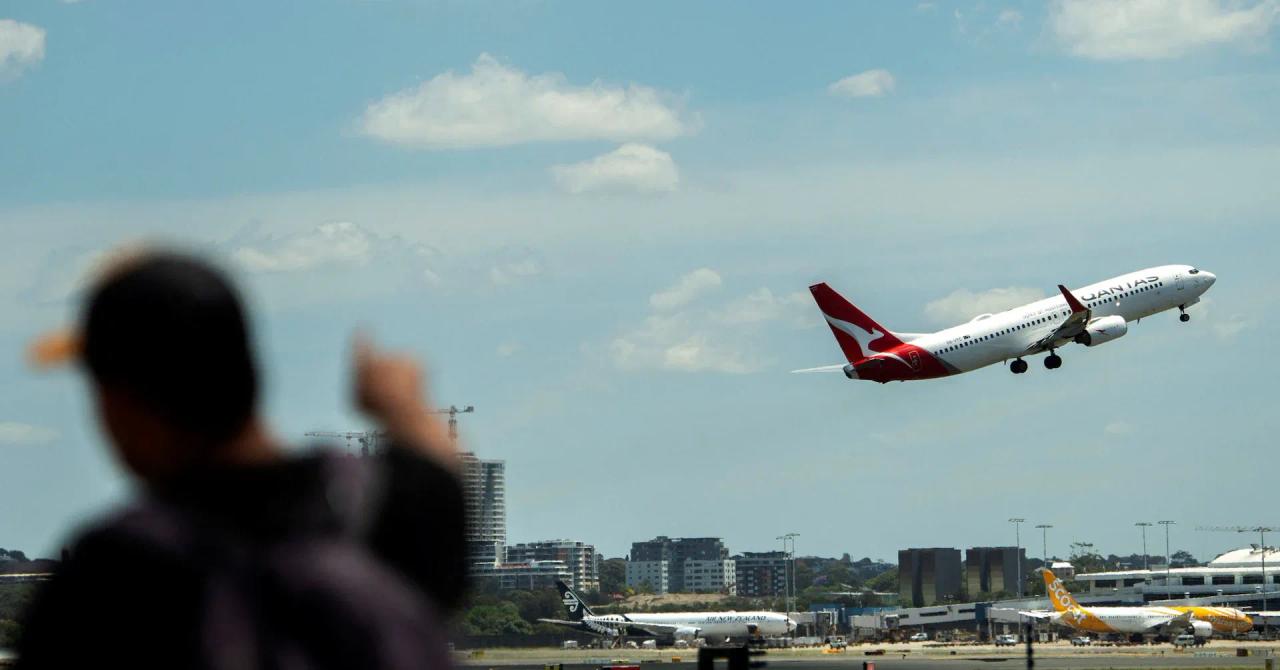
Australian companies are increasingly attributing job cuts to AI adoption, raising concerns about transparency and worker protections. Qantas announced 850 job cuts
1
on Tuesday, outsourcing corporate functions offshore through a partnership with consulting firm Accenture. The airline's restructuring primarily targets finance, human resources, and marketing roles2
. Tech companies WiseTech and Atlassian have similarly reduced headcounts this year, explicitly linking the losses to AI1
. Telecommunications firm Telstra cut positions from an AI joint venture with Accenture, transferring some operations to India1
. National Australian Bank announced 2,500 job losses while Canva revealed 1,200 layoffs, both partially linked to AI-driven restructuring2
.
Source: Reuters
Unions Challenge AI Washing Claims
Labour unions have challenged the narrative that AI is directly replacing workers, arguing that Australian companies are using automation as justification for cost-cutting measures and offshoring to lower-wage countries. "Unions are concerned about the risk of companies using AI simply as a cover to cut Australian jobs with no accountability," said Australian Council of Trade Unions Secretary Melissa Donnelly
1
. The Australian Services Union accused Qantas of "using AI to launder their cuts to Australian jobs"1
. Senator Barbara Pocock from the Australian Greens party expressed concern about major corporations engaging in AI washing, using technology as an excuse to eliminate positions1
.Corporate Restructuring Raises Questions About AI's Role
Uri Gal, a professor at the University of Sydney Business School, noted that companies face real incentives to engage in AI washing. "A company that announces job cuts to reduce costs may face criticism, whereas one that presents the same decision as part of an AI transformation can appear innovative and forward-looking,"
1
he explained. Gal questioned the Qantas restructuring, pointing out that the airline announced corporate functions would transfer to Accenture employees in India before being transformed through AI and automation. "If AI is making these jobs redundant, why does the work first need to be transferred to another group of employees?"1
he asked. This sequence suggests conventional outsourcing rather than genuine automation-driven redundancy.Related Stories

Government Launches AI in the Workplace Guidelines
Workplace relations minister Amanda Rishworth launched a best practice guide on AI in the workplace
2
, urging employers to provide workers with clear plans about how automation could affect their jobs. The guide warns that entry-level work may be the first to be automated2
and highlights that younger, older, and First Nations workers, along with women and people with disabilities, face disproportionate impacts. While the document presents an optimistic vision of improved productivity and potentially shorter working hours with higher wages, it also acknowledges potential hazards including intrusive workplace surveillance, poor rostering practices, intensified performance standards, and discrimination2
.Impact of Automation on Workers and Economic Outlook
The Reserve Bank of Australia reported little evidence to date of AI disrupting the labour market
2
, though it identified tentative signs of adjustment, with job advertisements weakening in AI-exposed occupations like clerks, computer programmers, and call centre workers1
. The central bank has raised interest rates five times this year to their highest level in 18 years amid persistent inflation, while unemployment reached a five-year high of 4.7%1
. Former industry minister Ed Husic questioned who would benefit from the AI revolution, asking whether it would mean better services and lower prices for customers, secure jobs with higher wages for workers, or simply lower labour costs and higher returns for companies2
. Greens leader David Shoebridge criticized the government for "watching from the sidelines" and demanded legal protections against surveillance and job cuts, arguing that optional guidelines are insufficient2
.References
Summarized by

Navi
Related Stories
ClickUp slashes 22% of workforce while promising million-dollar salaries for AI-skilled survivors
19 May 2026•Business and Economy

AI Layoffs Backfire: Why Worker Productivity Falls Despite Billions in AI Investments
08 Aug 2026•Business and Economy
AI delivers jobs and wage growth in exposed industries, even as public backlash intensifies
11 Apr 2026•Business and Economy

Recent Highlights
1
Jensen Huang's Affair with Suspected Chinese Spy Exposes $7 Billion AI Chip Smuggling Network
Policy and Regulation

2
Anthropic Launches Claude Meetings and AI-Powered Office Tools to Challenge Microsoft and Google
Technology

3
Anthropic launches Fable 5.2 and Mythos 5.2 with 20% price cut and 30% faster output
Technology

Recent Highlights
Today's Top Stories









Don’t drown in AI news. We cut through the noise - filtering, ranking and summarizing the most important AI news, breakthroughs and research daily. Follow topics that matter to you and stay ahead.


