Autodesk Assistant: Next-Generation Agentic AI Transforms Design and Construction Workflows


3 Sources
[1]
Autodesk's AI assistant could radically change how buildings are designed and built
A new AI tool from software giant Autodesk reconsiders the entire design stack. The 3D model behind almost every building project today is as powerful as it is confusing. The precision of digital modeling brings every tiny detail to bear, which is great for building complex architecture, but not
[2]
Closing The Gap Between What We Can Imagine And What We Can Build
Auckland, New Zealand - September 16, 2026 - AI is expanding what's possible, but our ability to deliver in the real world hasn't caught up. We're still constrained by money, labour, and resources. In Australia, the construction industry has raised concerns that almost one-million worker shortfall
[3]
Autodesk Previews Next-Generation Agentic AI Across Forma, Fusion, And Flow Industry Clouds
Autodesk previewed new agentic AI across its three industry clouds: Autodesk Forma for Architecture, Engineering, and Construction; Autodesk Fusion for Design and Manufacturing; and Autodesk Flow for Media and Entertainment. These new capabilities are shaping the next generation of Autodesk
Share
Copy Link
Autodesk unveiled its next-generation Autodesk Assistant at Autodesk University 2026, bringing agentic AI across its Forma, Fusion, and Flow industry clouds. The AI-powered tool addresses labor shortages and complexity in construction by automating 3D building models and connecting project data across design, manufacturing, and operations lifecycles.
Autodesk AI Redefines Design Software with Agentic AI
Autodesk announced the next generation of Autodesk Assistant at Autodesk University 2026, introducing agentic AI capabilities across its three industry clouds: Autodesk Forma for architecture, engineering, and construction, Autodesk Fusion for design and manufacturing, and Autodesk Flow for media and entertainment.
1
3
The AI-powered tool fundamentally reconsiders the design software stack "from an AI-assisted scenario to an AI-first scenario," according to Mike Haley, senior vice president of research at Autodesk.1
Addressing Critical Labor Shortages in Construction
The timing addresses urgent industry needs. Australia's construction industry faces a projected worker shortfall of almost one million by 2035.
2
Autodesk AI aims to expand what people can accomplish with existing resources, making individuals more productive and companies more competitive while reducing resource requirements per project. This approach helps teams take on more work despite constrained budgets, labor availability, and materials.Neural CAD and AI Orchestrator Power the Platform
Autodesk built its own specialized AI models, including Neural CAD, a geometry-based AI model that inherently understands the three-dimensional nature of buildings.
1
The platform uses an AI Orchestrator that evaluates different models based on task requirements like accuracy, speed, security, and cost, allowing the system to draw on various forms of intelligence rather than relying on a single model.3
This orchestration layer operates completely invisibly to users, switching between frontier models and Neural CAD as needed.Simplifying Complex 3D Building Models
3D building models contain thousands of square feet of digital detail, making it challenging for engineers, consultants, and contractors to locate misaligned beams or incorrect specifications. Andrew Anagnost, president and CEO of Autodesk, acknowledges the complexity: "I don't know if you've ever seen one of our users using some of our software, but it's hard to build a model. You have to become an expert in the software."
1
Autodesk Assistant pushes the act of building models into the background, letting designers and planners iterate on problems rather than design software.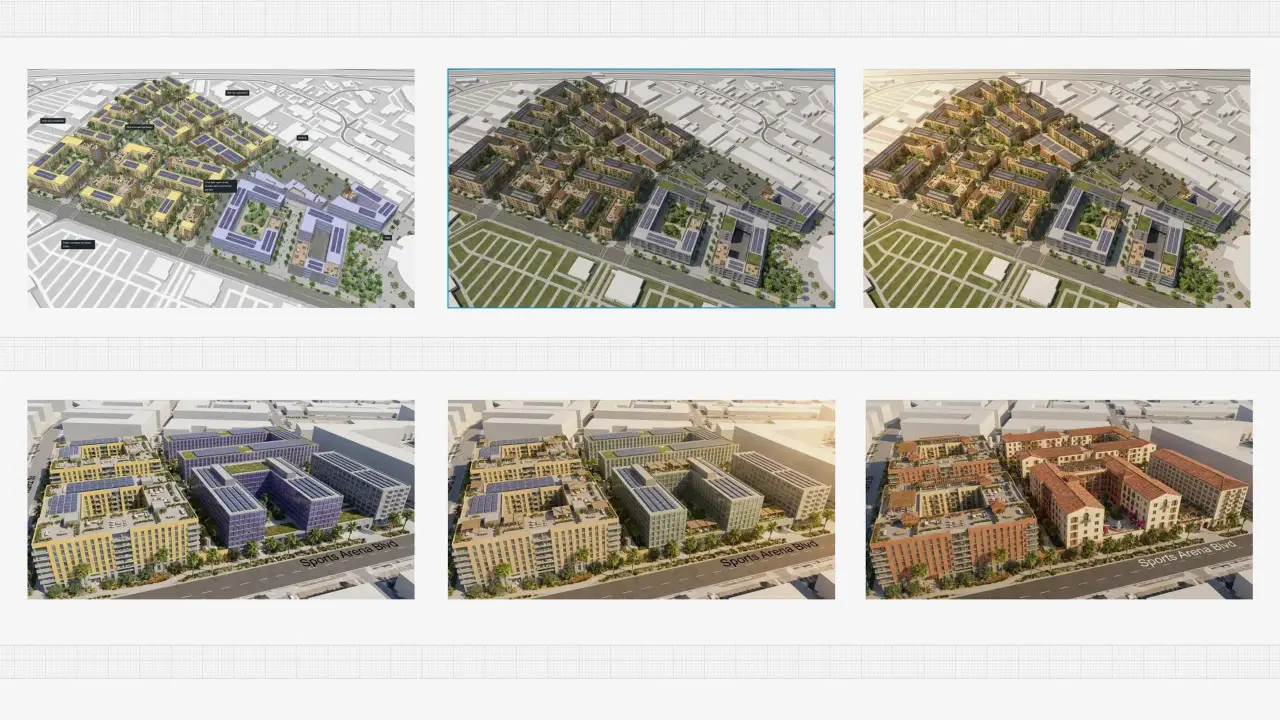
Source: Fast Company
Project Intelligence Across the Entire Lifecycle
The next-generation agentic AI experience connects project intelligence with Autodesk capabilities across products, projects, and teams through a standalone experience planned for 2027.
3
Personal Pulse surfaces prioritized issues and insights across projects, while Assistant Spaces provides teams and their agents focused environments to investigate problems and see downstream effects. In the AEC industry, Forma is expanding across more of the lifecycle, with Civil 3D becoming the newest Forma Connected Client, while Revit benefits from AI capabilities that help teams explore options and reduce repetitive work.2
Related Stories

Bringing Custom Agents and Third-Party Tools
Assistant Builder enables customers to connect their own AI agents, tools, and trusted partner services to Autodesk project context, with support planned for third-party agents from the Design & Make Marketplace.
3
This lets professionals focus on problems they need to solve rather than which product to use. The platform supports natural-language and voice interaction, turning intent into trusted, reviewable outcomes across design, manufacturing, and production workflows.Operations and Product Lifecycle Management Integration
Autodesk's acquisition of MaintainX closes the loop across Design, Make, and Operate by connecting operational intelligence to field action.
2
In Fusion, new AI capabilities automate repetitive design and manufacturing tasks, while a new agentic Product Lifecycle Management experience connects product data and decisions across teams. Autodesk Assistant is expanding in Inventor and Vault to help engineers work more effectively with existing data and tools. Operational data shows how designs perform in the real world, creating feedback loops that improve future engineering.Data Integrity and Human Oversight Safeguards
Autodesk AI maintains data integrity, privacy protections, and appropriate human oversight throughout its implementation.
3
The company publishes AI Transparency Cards for Autodesk Assistant covering data and technologies used, safeguards, and known limitations. Autodesk Assistant is designed to support professional judgment with appropriate controls. The platform is already generally available across many Autodesk products, including Forma, Fusion, and Flow, with expanded next-generation capabilities previewed at Autodesk University 2026 and full availability details to be announced in 2027.References
Summarized by

Navi
Related Stories
Autodesk Unveils New AI Capabilities Across Its Software Portfolio
16 Oct 2024•Technology

AI Optimism Wanes in Design and Construction Industries Amid Economic Uncertainty
17 Apr 2025•Business and Economy
Canva AI 2.0 transforms design platform with memory, automation, and third-party integrations
16 Apr 2026•Technology

Recent Highlights
1
Microsoft and Nvidia Launch Surface Laptop Ultra: A $2,599 AI-Ready PC With RTX Spark Chip
Technology

2
OpenAI Releases 722 AI-Generated Math Papers on GitHub, Igniting Fury Among Mathematicians
Science and Research

3
Trump Consulted Grok AI Before Ordering Venezuela Invasion and Capture of Nicolás Maduro
Policy and Regulation

Recent Highlights
Today's Top Stories










Don’t drown in AI news. We cut through the noise - filtering, ranking and summarizing the most important AI news, breakthroughs and research daily. Follow topics that matter to you and stay ahead.


