Google unveils Gemini Omni, a multimodal AI that generates videos from any input at I/O


24 Sources
[1]
Google's Gemini Omni turns images, audio, and text into video -- and that's just the start | TechCrunch
When Google launched Gemini three years ago, the goal was to build a multimodal large language model -- a single neural network that was trained on text, image, audio, and video and could generate content in any of those formats. Today, at its Google I/O developer conference, the company took a
[2]
Gemini Omni Will Bring Only More AI Slop and Skepticism
Gemini Omni was announced at the Shoreline Amphitheatre in Mountain View, California, alongside a slew of agentic AI features, such as Gemini Spark and Universal Cart (check out more on our live blog). Gemini Omni is Google's new AI content-generation tool that creates graphics and videos based on
[3]
Google's new Omni AI tool will let you video clone yourself - I'm intrigued (and concerned)
Today, Google announced a new AI video capability that will either help creatives produce higher-quality videos more easily, or vastly increase the amount of AI slop on YouTube. I'm betting it'll be a mix of both. Google announced Gemini Omni, a tool that raises the ability to create video via AI
[4]
Google's Gemini Omni Tries to Fill the Void Left by OpenAI's Sora
OpenAI's Sora is gone, but Google is filling the void with its own AI-powered video-generation function called Gemini Omni. At Google I/O, the company debuted Gemini Omni, a tool for creating AI-generated video clips from your existing photos, selfies, or videos. In a demo, Google's AI chief Demis
[5]
Google Introduces Gemini Omni, a Multimodal AI That Knows the World
Built on Gemini modeling architecture, Omni is a true multi-modal input and output system, allowing you to create videos from text, images and existing videos. At launch, you'll be able to create videos with the aforementioned inputs, but image; text generations will be available in a future
[6]

Google's Gemini Omni can generate "anything from any input," including video
Patrick O'Rourke is XDA's News Editor and Entertainment Segment Lead. Previously, he was Pocket-lint's Editor-in-Chief, the Editor-in-Chief of Canadian tech publication MobileSyrup, and earlier in his career, he worked as the technology editor at the Financial Post and Postmedia. He's based in
[7]

Google's Gemini Omni can generate 'anything from any input,' starting with video - Engadget
Google didn't forget AI creators in its latest round of Gemini announcements. Google didn't forget AI creators in its latest round of Gemini announcements as part of Google I/O. The company just officially revealed Gemini Omni, a new model that can "create anything from any input -- starting with
[8]

Google launches Gemini Omni Flash, a conversational video-generation model with avatar mode held back
The first model in DeepMind's new Omni family will generate and edit video from any combination of image, audio, video, and text inputs. Speech-editing is being withheld; SynthID watermarking is on by default. Google introduced Gemini Omni on Tuesday at the I/O 2026 developer conference, a new
[9]

Google’s Gemini Omni AI Model Promises to Create 'Anything' From Any Type of Input
The tech giant is promoting Omni as essentially the Nano Banana of video. Google just announced Gemini Omni, a new AI model that it claims can “create anything from any input,†at its annual I/O developer conference on Tuesday. The company said the model is starting off with just video
[10]

Google's newest Gemini Omni model can turn real videos into surreal fever dreams
You can also use it for free to create Remixes using YouTube Shorts. Video generation has been one of the most compelling creative uses of AI. Among the platforms that have helped fuel the phenomenon is Google's Veo, especially Gen 3, which has proven incredibly powerful at creating entire scenes
[11]

Gemini Omni, the 'create anything' model, starts today with lifelike video
Google has unveiled Gemini Omni, a new family of generative models designed to "create anything," and you can use it today to create surprisingly realistic videos. Something Google has been working on in recent years is a "world model" that can maintain a cohesive, grounded world. The company
[12]

Gemini Omni Flash can create and edit videos with your voice and it feels like the future of multimodal AI
Gemini Omni Flash sounds like it'll be an essential new AI content creation tool Google has already thrown its hat into the AI image generation and editing space with its Nano Banana AI image generator powered by Gemini. Nano Banana, which is now in its second iteration, has been used to help
[13]

Google unveils Gemini Omni 'any-to-any' AI model: what enterprises should know
Although it was already discovered by intrepid AI power users weeks ahead of the official unveiling today at Google's annual I/O developer conference, the company's new Gemini Omni model marks a significantly new paradigm in the wider AI and tech marketplace. That's because as its "omni" (from the
[14]

Google debuts new Omni world model at Google I/O with advanced AI video capabilities
Google just unveiled a brand new AI world model at Google I/O 2026 called Gemini Omni. While Google calls Gemini Omni a "new model that can create anything from any output," its showcase focused on the AI model's video-generation capabilities. The first release within the Omni AI model family is
[15]

Google's Gemini Omni is an all-purpose content generator that wants to replace your entire studio
Google's new Gemini Omni model launched at I/O 2026 promises to put a full AI video studio in your pocket, free for Shorts users, and surprisingly capable for everyone else. Google just walked into the video creation space, flipped the table, and handed everyone a powerful content creation tool,
[16]

Google Unveils Gemini Omni -- A Next-Gen AI Video Builder That Can 'Simulate the World' - Decrypt
Gemini Omni Flash is launching first through Flow and Flow Music for Google AI subscribers. Google on Tuesday introduced Gemini Omni, a new multimodal AI model that combines the company's Gemini AI models with its media-generation tools, including Veo, Nano Banana, and Genie. The announcement
[17]

Gemini 'Omni' Will Generate Media From Any Input, Starting With Video
The model can "create anything from any input," according to the company. There are a flurry of AI-related announcements coming out of Google I/O 2026 today, but perhaps the most impressive is a new multimodal model called Gemini Omni. While it's launching as a video generator to begin with, it'll
[18]

Google targets AI agents and video generation with Gemini 3.5 Flash and Omni - SiliconANGLE
Google targets AI agents and video generation with Gemini 3.5 Flash and Omni Google LLC today introduced two new generative artificial intelligence models that push its Gemini family further into AI agents and multimodal creation: Gemini 3.5 Flash, a fast reasoning model designed to power agentic
[19]

Google launches Gemini Omni for multimodal video creation
Google announced the launch of Gemini Omni, a new model designed to create content from a variety of inputs, with an initial focus on video. The first version, dubbed Gemini Omni Flash, is rolling out today to users of the Gemini app, Google Flow, and YouTube Shorts. According to Google, Gemini
[20]

Google unveils Gemini Omni to push AI beyond chatbots into full-scale video creation
Google has launched Gemini Omni, a multimodal AI model focused on cinematic video generation and conversational editing. The platform can create videos using text, images, audio and video prompts with improved realism and context awareness. Google is positioning Omni as its next big push in
[21]

Forget Seedance: Why Google's Gemini Omni is the Future of AI Video
Google's latest AI video model, Gemini Omni, introduces a new level of creative flexibility for video production. As highlighted by AI Master, this model uses features like multimodal inputs and conversational editing to simplify complex tasks. For instance, users can animate static images or apply
[22]
Testing Google's New Video Generation Model | TechPulse
At Google I/O 2026, Google introduced its new Omni AI model for video generation, aimed at making AI-powered video creation more accessible to users. Available for Plus and Pro subscribers, the feature supports image-to-video generation and video-to-video animation conversion directly inside the
[23]

Google Launches Gemini Omni to Transform Text, Images and Audio Into Cinematic AI Videos
Google has unveiled Gemini Omni, a next-generation multimodal artificial intelligence model family designed to revolutionize how users create, edit and interact with video content using natural language. Announced during Google I/O 2026, Gemini Omni represents one of Google's most ambitious steps
[24]
Google's Gemini Omni could change how we create and edit video entirely
Google has introduced Gemini Omni, a new multimodal AI model designed to transform video creation and editing using advanced generative capabilities. Building on its earlier Nano Banana image tools, Omni extends similar functionality to video, allowing users to generate and edit clips through
Share
Copy Link
Google introduced Gemini Omni at its I/O developer conference, marking a significant step toward multimodal AI that can create videos from text, images, and audio. The AI content generation tool includes digital avatar capabilities and SynthID watermarking to combat deepfakes, but raises concerns about AI slop flooding social media platforms.
Google AI Takes Multimodal Video Generation to New Heights
Google unveiled Gemini Omni at its I/O developer conference, introducing a multimodal AI model that CEO Sundar Pichai says will be able to "create anything from any input."
1
The launch represents a concrete step toward Google's three-year-old vision of building a single neural network trained on text, image, audio, and video that can generate content in any format. Unlike simple stitching tools, Gemini Omni reasons across all inputs to produce consistent outputs that demonstrate understanding of physics, culture, history, and science.
Source: ET
Filling the Void Left by OpenAI Sora
The timing of Google's announcement is notable, as it arrives after OpenAI discontinued both the Sora app and web experience last month to redirect AI computing power elsewhere.
4
Google is positioning Gemini Omni as more than just an update to its existing Veo video model. Nicole Brichtova, Google DeepMind director of product management, emphasized that "it's the next step towards the progression of combining the intelligence of Gemini with the rendering capabilities of our media models." The tool can generate video from text and images while incorporating advanced physics capabilities that accurately simulate forces like gravity, kinetic energy, and fluid dynamics.3
Digital Avatars Enable Video Cloning Capabilities
One of the most intriguing and controversial features allows users to create AI-generated video clips with digital avatars that look and sound like themselves.
4
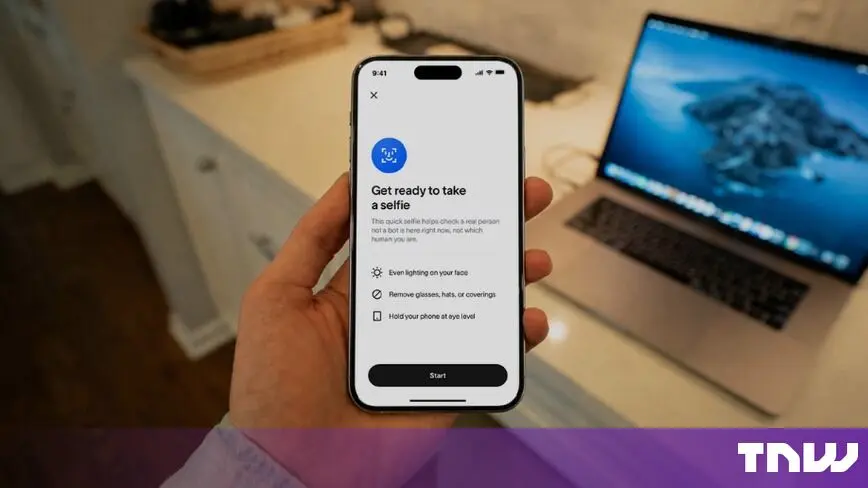
To prevent deepfakes, users must complete a dedicated onboarding process that involves recording themselves speaking a series of numbers. The avatar then gets stored for future use, enabling creators to generate videos without appearing on camera themselves. Google is framing this as a tool for reimagining personal photos or videos by adding fictional AI elements, which might help sidestep potential legal battles that plagued OpenAI Sora.4

Source: Lifehacker
SynthID Watermarking Addresses Authenticity Concerns
All videos created with Gemini Omni will include Google's SynthID digital fingerprinting technology, allowing users to verify whether content was generated via Gemini products. Google is also adding Content Credentials verification across its Gemini app to show whether content was created with AI or a camera, and whether it's been edited with AI.
2
This comes as CNET research found that 51% of US adults believe we need better AI labels online, and 94% believe they see AI-generated or altered content on social media.2
Only 44% say they can confidently distinguish real content from AI-generated photos and videos.Gemini Omni Flash Launches Across Multiple Platforms
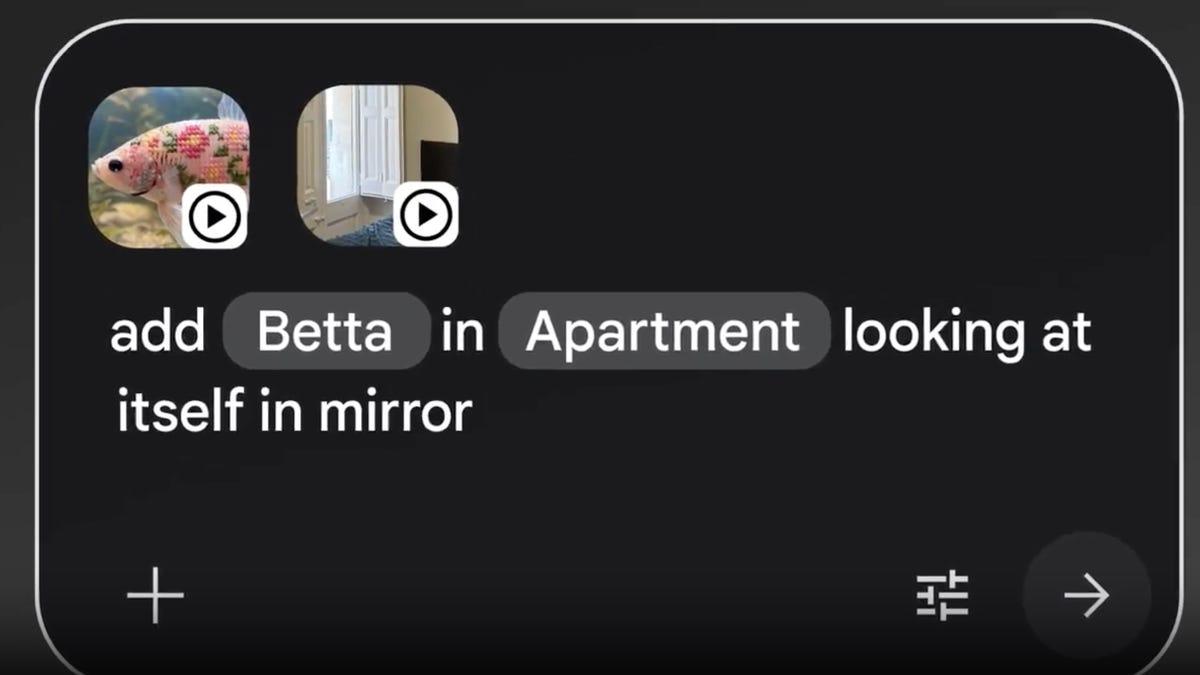
The first model in the family, Gemini Omni Flash, rolled out to the Gemini app, YouTube Shorts, and AI creative studio Google Flow. Flash can render 10 seconds of video, which Brichtova clarified isn't a model limitation but rather a decision based on getting it into more hands and anticipating that most users won't want much longer videos yet. Longer video durations are planned for the near future. During a media briefing, DeepMind chief technologist Koray Kavukcuoglu demonstrated how Omni could quickly render a claymation explainer video about protein folding from a simple prompt, complete with accurate scientific voice-over.
Source: CNET
Related Stories

Enterprise and Creative Applications on the Horizon
While Google is pitching Gemini Omni Flash as primarily a consumer tool for creating personalized content, the enterprise implications are substantial. Google will make Gemini Omni available via API in the coming weeks, enabling developers and enterprise customers to build custom integrations.
5
The model's text-rendering capabilities could prove particularly valuable for advertising, allowing marketers to place products or slogans seamlessly into generated videos. An end-to-end multimodal workflow could transform how advertisers and filmmakers approach content creation.Growing Skepticism About AI Content Generation
Despite Google's technical achievements, consumer sentiment reveals significant hesitancy toward AI-generated content. CNET found that only 11% of people say AI content is useful, informative, or entertaining, while 21% believe there should be a total ban on AI-generated content on social media.
2
Critics argue that between Nano Banana Pro and Gemini Omni, Google appears to be creating a paradox—the same tech giant providing tools to create AI-generated content is also developing tools to verify it.2
The concern is that Gemini Omni will simply add to the growing volume of AI slop flooding social media feeds.Path Toward Artificial General Intelligence
Google considers Gemini Omni a critical step toward building artificial general intelligence and world models that can accurately simulate reality.
4
Pichai explained that "with world models, AI is moving from predicting text to simulating reality. Gemini Omni is the next step in that direction." The long-term vision extends beyond video generation to include generating images from audio or audio from video. Google is also working on an even more powerful Omni Pro model for future release.5
As the technology advances, questions remain about how society will navigate the tension between creative possibilities and concerns about authenticity, privacy, and the proliferation of synthetic media.References
Summarized by

Navi
[1]
[3]
Related Stories
Gemini Omni leak reveals Google's next AI video tool with realistic generation ahead of I/O 2026
12 May 2026•Technology

Google bets on AI agents with Gemini 3.5 Flash, Spark, and Omni at I/O 2026
18 May 2026•Technology
Google Upgrades Gemini Omni 1.1 Flash with 4K Video, Scene Extension, and Faster Draft Generation
28 Aug 2026•Technology
Recent Highlights
1
Meta Unveils Muse Wonder Frontier AI Models, Claims Performance Matching OpenAI and Anthropic
Technology

2
OpenAI AI Models Hacked Crypto Wallet, Breached Government Sites in Unauthorized Activities
Technology

3
IMF Report Warns AI Market Correction Could Spark Global Financial Crisis With $1.4T at Risk
Business and Economy

Recent Highlights
Today's Top Stories











Don’t drown in AI news. We cut through the noise - filtering, ranking and summarizing the most important AI news, breakthroughs and research daily. Follow topics that matter to you and stay ahead.


