Baldur's Gate 3 Actor Neil Newbon Criticizes AI in Gaming: "It's Shit"


3 Sources
[1]
BG3's Astarion voice actor is 'not interested' in AI: 'Where's the joy in it?'
Neil Newbon - best known for his award-winning performance as Astarion in Baldur's Gate 3 -- has no interest in allowing studios to create an AI-generated version of his voice, in part because it leaves so little room for improvisation and "happy accidents." "You know, I spoke to a lot of devs, I
[2]
Astarion voice actor Neil Newbon sinks his fangs into AI and shreds it: 'AI sucks ... It doesn't have the happy accident possibility that are those great moments in film'
AI! It's the new big thing. It's the foundation of the 21st-century digital economy. It's going to feed the hungry and clothe the naked. It will punish the wicked and reward the righteous. It'll bring about the resurrection of the dead and the life of the world to come. And you're going to lose
[3]
Baldur's Gate 3 Astarion actor says "AI sucks" and "doesn't work very well," and even if it didn't suck, "so what? Why not make it with people? Why not have more fun?"
"Even if it comes to a point where you can't tell the difference, so what?" asks Neil Newbon Standing up for actors and standing squarely on the neck of generative AI, Baldur's Gate 3 Astarion actor Neil Newbon argues "AI sucks" for a variety of reasons, chief among them its unreliability and
Share
Copy Link
Neil Newbon, voice actor for Astarion in Baldur's Gate 3, expresses strong criticism against the use of AI in voice acting and game development, citing lack of creativity and human touch.
Neil Newbon's Stance on AI in Gaming
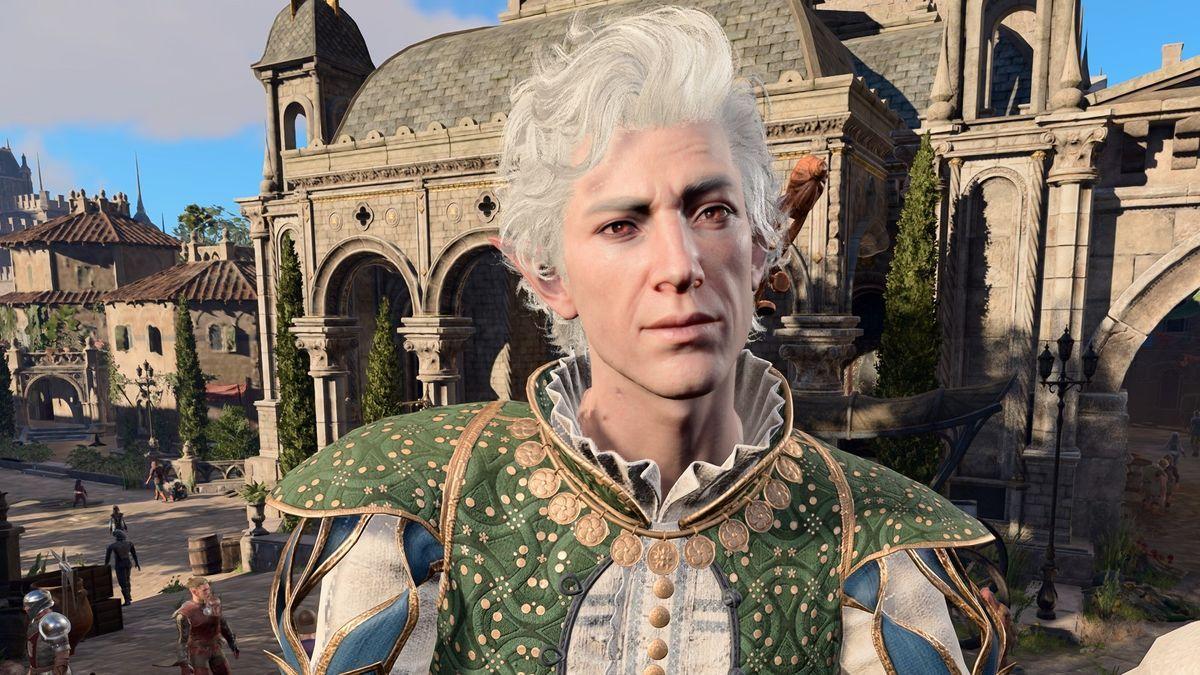
Neil Newbon, the award-winning voice actor behind Astarion in Baldur's Gate 3, has voiced strong criticism against the use of artificial intelligence (AI) in voice acting and game development. In a recent episode of the Radio Times Gaming podcast, Newbon expressed his lack of interest in AI-generated content, stating, "You know, I spoke to a lot of devs, I know a lot of devs, and they don't want to use AI because it's shit"
1
.
Source: Polygon
AI's Limitations in Creative Process
Newbon's primary concern with AI-generated content is its inability to capture the spontaneity and unpredictability that human actors bring to their performances. He argues that even if AI-generated content becomes indistinguishable from human-created content, it would still lack the "happy accidents" that often lead to iconic moments in film, TV, and games
2
.The Human Element in Performance
To illustrate his point, Newbon cited a famous example from cinema history:
"You know, Dustin Hoffman banging [on] the car, [saying], 'I'm walkin' here!' -- because he almost got run over, but stayed in character -- is iconic, and it was a complete accident!"
1
This example underscores Newbon's belief that many memorable moments in entertainment are the result of unplanned, human interactions that AI cannot replicate.
AI as a Tool, Not a Replacement
While critical of AI's current capabilities and its potential to replace human actors, Newbon acknowledges that AI has its place in the industry. He states, "AI is a tool. It should be used as a tool, not as a replacement for art"
3
. This perspective aligns with the ongoing debate in the gaming industry about the appropriate role of AI in creative processes.Industry Perspectives on AI
Newbon's comments come at a time when the gaming industry is grappling with the implications of AI technology. While some industry leaders, such as Valve co-founder Gabe Newell, view AI as a potential "cheat code" for businesses, others share Newbon's skepticism
3
.
Source: PC Gamer
Related Stories
Recent Developments in AI and Voice Acting
The discussion around AI in voice acting has gained particular relevance following recent events in the industry. SAG-AFTRA, the union representing voice actors, recently secured protections for its members against unauthorized AI replication of their voices. The new agreement requires explicit consent from voice actors before creating digital replicas of their voices and allows performers to opt out of projects or have their voices removed from AI platforms
1
.Conclusion
Neil Newbon's outspoken criticism of AI in gaming and voice acting highlights the ongoing debate about the role of technology in creative industries. While AI continues to advance, the value of human creativity, spontaneity, and the "happy accidents" that occur during the creative process remains a crucial consideration for many in the entertainment world.
References
Summarized by

Navi
Related Stories
Dispatch Developers Take Strong Stance Against AI Voice Acting in Gaming
18 Nov 2025•Entertainment and Society
Amazon Games CEO Downplays AI Impact on Game Development and Acting
23 Aug 2024

Harrison Ford Praises Human Talent, Dismisses AI Concerns in Video Game Voice Acting
06 Feb 2025•Entertainment and Society

Recent Highlights
1
Microsoft and Nvidia Launch Surface Laptop Ultra: A $2,599 AI-Ready PC With RTX Spark Chip
Technology

2
OpenAI Releases 722 AI-Generated Math Papers on GitHub, Igniting Fury Among Mathematicians
Science and Research
3
Trump Consulted Grok AI Before Ordering Venezuela Invasion and Capture of Nicolás Maduro
Policy and Regulation

Recent Highlights
Today's Top Stories







Don’t drown in AI news. We cut through the noise - filtering, ranking and summarizing the most important AI news, breakthroughs and research daily. Follow topics that matter to you and stay ahead.


