Anthropic to Brief Global Finance Watchdog on Mythos AI Model's Cybersecurity Vulnerability Findings


8 Sources
[1]
Britain's bank regulator expects 'quite significant disruption' from latest AI models
LONDON, May 11 (Reuters) - The head of the Bank of England's regulatory arm on Wednesday said it was "reasonable to expect quite significant disruption" to financial services from the latest AI models such as Anthropic's Mythos and ChatGPT 5.5 Instant. Sam Woods, chief executive of the Prudential
[2]
Anthropic is briefing the Financial Stability Board on what Mythos has been finding
Bank of England Governor Andrew Bailey, who chairs the global financial-risk watchdog, has invited the company to present to G20 finance ministries and central banks. The model that worried him is the model now being explained. Anthropic is preparing to brief the Financial Stability Board on the
[3]
Anthropic to share Mythos cyber flaw findings with global finance watchdog
Startup has declined to release Claude Mythos AI model publicly amid fears it could be used by hackers Anthropic is to brief the global finance watchdog on the implications of its Claude Mythos AI model, whose potential threat to cyber defences has alarmed experts. The US startup will discuss
[4]
UK regulators warn of new threats from frontier AI models
This content has been selected, created and edited by the Finextra editorial team based upon its relevance and interest to our community. UK authorities are warning that frontier AI models represent a step-change in capability, with significant implications for cyber security and operational
[5]

Anthropic Will Update Regulators on Mythos' Cyber Vulnerability Findings | PYMNTS.com
The AI startup agreed to meet with members of the Financial Stability Board (FSB) to discuss Anthropic's Mythos model, the Financial Times reported Monday (May 18). The meeting was requested by Bank of England Governor Andrew Bailey, who is also a member of the FSB, a watchdog group of finance
[6]

BoE regulator warns of disruption from latest AI models By Investing.com
Investing.com -- The Bank of England's regulatory arm warned Wednesday that the latest artificial intelligence models could cause significant disruption to financial services. Sam Woods, chief executive of the Prudential Regulation Authority, said it was reasonable to expect considerable upheaval
[7]

UK firms should take steps to limit risks from frontier AI models, UK says
LONDON, May 15 (Reuters) - British companies should take steps to plan for and mitigate risks from new artificial intelligence models, the country's finance ministry, the Bank of England and the Financial Conduct Authority regulator said on Friday. "The cyber capabilities of current frontier AI
[8]
Britain's bank regulator expects 'quite significant disruption' from latest AI models
LONDON, May 11 (Reuters) - The head of the Bank of England's regulatory arm on Wednesday said it was "reasonable to expect quite significant disruption" to financial services from the latest AI models such as Anthropic's Mythos and ChatGPT 5.5 Instant. Sam Woods, chief executive of the Prudential
Share
Copy Link
Anthropic will present findings from its Mythos AI model to the Financial Stability Board, chaired by Bank of England Governor Andrew Bailey. The model has identified thousands of high-severity vulnerabilities across major operating systems and browsers, succeeding in developing exploits in over 83% of cases during testing. Regulators warn of significant disruption ahead as financial institutions race to patch flaws in legacy technology systems.
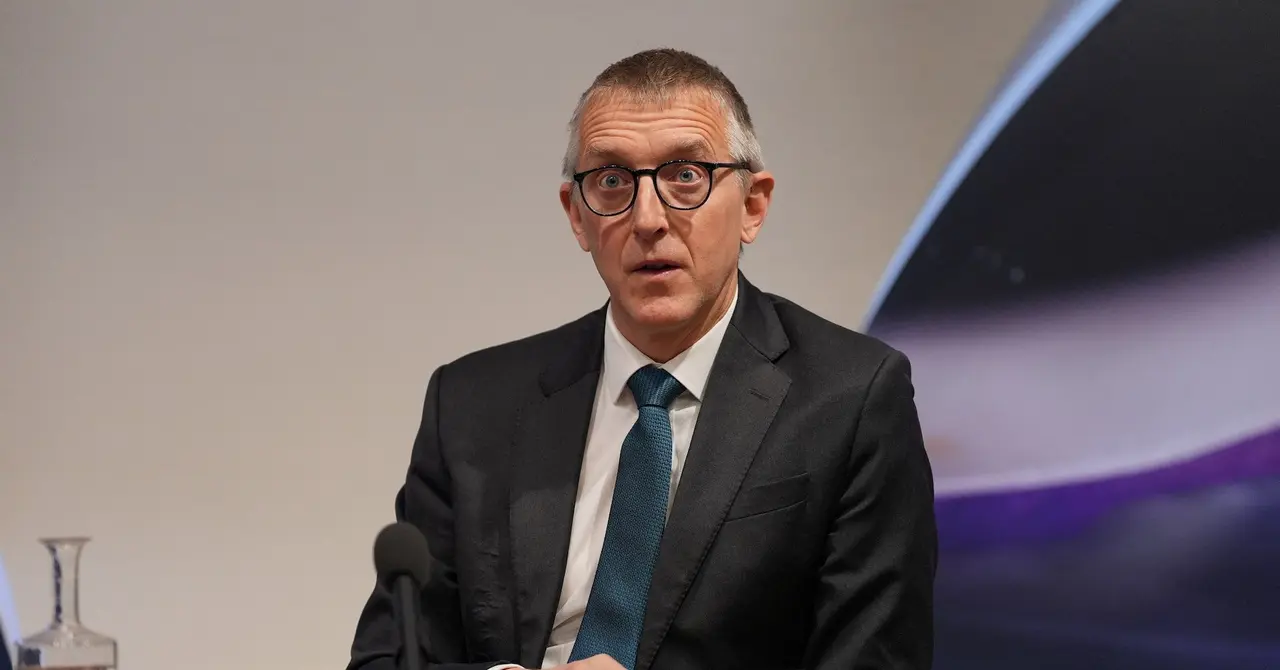
Anthropic Mythos Heads to Global Financial Regulators
Anthropic is preparing to brief the Financial Stability Board on cybersecurity vulnerabilities its Mythos AI model has been identifying in the global financial system, marking a critical moment for regulators grappling with the implications of frontier AI models
2
. The briefing was requested by Andrew Bailey, the Bank of England governor and FSB chair, and will be delivered to G20 finance ministries and central banks2
. This represents the first time the global financial-supervision community will coordinate their response to what Bailey himself described as a capability that could "crack the whole cyber risk world open"2
.The US startup has declined to release the model publicly after announcing its advanced capabilities in highlighting previously unknown flaws in IT systems that could be utilized by hackers . Instead, Anthropic has made the model available through Project Glasswing, a controlled-access program limiting who can run the model and against what
2
. Roughly 40 to 50 organizations have early access, including AWS, Apple, Google, Microsoft, Nvidia, Cisco, and JPMorgan Chase2
.Significant Disruption Expected from Latest AI Models
Sam Woods, chief executive of the Prudential Regulation Authority, said it was "reasonable to expect quite significant disruption" to financial services from the latest AI models such as Anthropic Mythos and ChatGPT 5.5 Instant
1
. Woods cited such models' growing ability to identify vulnerabilities and the requirement for banks to patch these—"the main driver of outages" in the financial system—at speed1
. He emphasized that firms would need to step up basic cyber hygiene and respond faster, with AI-driven defences becoming more important1
.Anthropic describes Mythos as a cybersecurity model designed to surface long-standing vulnerabilities in browsers, infrastructure, and software, claiming it has already found thousands of high-severity flaws across major operating systems and browsers
2
. When directed to develop working exploits against those flaws in internal testing, the model reportedly succeeded on the first attempt in more than 83% of cases2
. Banks experimenting with Mythos have found that the model is adept at pinpointing several hundred to thousands of vulnerabilities ranked low to moderate, and can chain some of these lower-risk vulnerabilities together to create bigger threats4
.Financial Stability Risks Rise as Capabilities Advance
The UK AI Security Institute issued an updated appraisal of Mythos last week, stating the latest iteration represented a "notable capability jump" even on the preview version tested the previous month . The UK AI Security Institute said the latest version of Mythos had completed a previously unsolved cybersecurity test, dubbed "cooling tower," in three out of 10 attempts—a first for any model tested . The institute noted that "frontier AI's autonomous cyber and software capability is advancing quickly: the length of cyber tasks that frontier models can complete autonomously has doubled on the order of months, not years" .
The International Monetary Fund warned this month that financial stability risks were rising due to "fast-moving" developments in AI and called for a coordinated response . "Cyber risk does not respect borders. As AI capabilities spread across countries, inconsistent oversight could weaken a globally interconnected system," the IMF stated . The FSB is putting together a report on "sound practices" for adopting AI in the financial system, which it aims to release for consultation in June
5
.Related Stories
Legacy Technology Systems Under Pressure
UK authorities are warning that the capabilities of current models are already exceeding what a skilled practitioner could achieve, and at significantly higher speed, greater scale, and lower cost
4
. The model is proving expert at finding vulnerabilities in proprietary and open-source code, putting banks under pressure to speed up the process of upgrading their legacy technology systems4
. The FCA stated: "As more advanced models become available, these risks are expected to increase. Firms that have underinvested in core cyber security fundamentals are likely to become progressively more exposed"4
.Regulators say it is "essential" that firms have effective protective, detective, threat containment and cyber response capabilities to address faster and more disruptive AI-driven attacks
4
. The Government and UK financial authorities judge that firms should be taking active steps across several domains, including governance and strategy from senior management, increased investment and resource decisioning, identification and risk management of vulnerabilities, stronger access control, awareness of third party risks, and response and recovery procedures4
. Goldman Sachs CEO David Solomon said last month he was "hyper-aware" of the capabilities of Mythos, while JPMorgan's CEO Jamie Dimon added that AI had made cyber defence "harder" although it could ultimately help companies defend themselves . The concern over zero-day exposures remains paramount as institutions work to understand and mitigate the threats posed by these advanced systems while maintaining operational resilience4
.References
Summarized by

Navi
[4]
Related Stories
Global regulators sound alarm as Anthropic's Mythos AI threatens to accelerate cyberattacks
06 May 2026•Policy and Regulation

Banks face dual AI risk as Mythos exposes vulnerabilities while fraud attacks surge globally
20 Apr 2026•Policy and Regulation

Anthropic Mythos evolves faster than expected, now creates working exploits from vulnerabilities
13 May 2026•Technology

Recent Highlights



Recent Highlights
Today's Top Stories







Don’t drown in AI news. We cut through the noise - filtering, ranking and summarizing the most important AI news, breakthroughs and research daily. Follow topics that matter to you and stay ahead.


