3 Sources
[1]
BIS says debt, AI boom and fragilities raise global risks
LONDON, June 28 (Reuters) - Global pressures from rising public debt to financial fragilities and the sustainability of the AI boom are increasing risks, underscoring the need for disciplined policymaking, according to the Bank for International Settlements. The central bank umbrella group's Annual Economic Report published on Sunday warned of a complex mix of vulnerabilities, including strained fiscal positions, lingering supply shocks and the risk of a renewed bout of stubbornly high inflation. While economic activity has remained resilient in recent months, policymakers must act decisively, the BIS said, to preserve stability. "Policy actions must reinforce each other to avoid a pull and push on the global economy. Ultimately, success depends on sound fiscal and financial foundations," BIS General Manager Pablo Hernandez de Cos said. The report highlighted four key pressure points. Inflation has picked up again, with the BIS cautioning that more frequent supply disruptions could cause higher inflation expectations to become entrenched among households and businesses. "The readiness to act if the central banks observe that there is the anchoring of inflation expectations is the main message that we want to set," de Cos told reporters. He said the recent ceasefire between the United States and Iran in the Middle East and the reopening of the Strait of Hormuz was "good news" that meant extreme scenarios would be avoided, although it was likely to take time for the oil market to "normalise". URGENT MESSAGE The BIS also flagged uncertainty over the durability of the current surge in investment tied to artificial intelligence. While AI has boosted confidence and supported growth through expectations of productivity gains, the bank warned it was raising fears about jobs and that supply bottlenecks and intense competition could lead to the kind of overinvestment seen in previous boom-and-bust cycles. For central banks, it was posing fundamental questions about how the economy is likely to function, although de Cos said that for now it would be "unwise" to be prescriptive about how they should react. Financial vulnerabilities remain another area of concern. Elevated asset valuations and signs of investor complacency have left core bond markets more fragile, while the financing of the AI boom also looks increasingly reliant on debt and complex funding structures across the supply chain. At the same time, record-high public debt and sovereign debt markets increasingly dominated by large, highly leveraged hedge funds had created "a new sovereign-financial stability nexus," which poses growing risks. "The new fiscal-financial stability nexus may mean more frequent and sharper drops in sovereign bond values," said Frank Smets, acting head of the BIS monetary and economic department, adding such swings could rapidly tighten financial conditions. De Cos said the BIS' message was one of "urgency" in terms of the need to bring down debt levels in key economies, "because the fact is that today debt is high, and this is financed through non-bank financial intermediaries." The BIS urged policymakers to prioritise price stability, ensure fiscal sustainability, coordinate and strengthen oversight beyond the banking sector and pursue structural reforms. "Policymakers must act now. Delay will only make the necessary adjustments more costly," de Cos said. Reporting by Marc Jones; Editing by Andrea Ricci Our Standards: The Thomson Reuters Trust Principles., opens new tab * Suggested Topics: * Rates & Bonds Marc Jones Thomson Reuters Marc Jones is a senior global markets correspondent based in London with a focus on economics, central banks, policymakers, and crises. Previously he worked in Frankfurt covering the European Central Bank at the height of the euro zone turmoil, the UK companies desk during the initial phase of global financial crash. He started his Reuters career on the sports desk covering everything from soccer to cycling.
[2]
BIS warns 'pressure points' putting global economy at risk
Basel (Switzerland) (AFP) - The Bank for International Settlements warned Sunday of multiple "pressure points" in the global economy, from inflation fuelled by the Middle East war to fears of cooling AI investments, threatening financial stability. In its annual report, published Sunday, the BIS -- considered the central bank of central banks -- called on monetary policy makers to "act now", to help safeguard the stability of the global economy. BIS deputy general manager Andrea Maechler acknowledged the situation was difficult. "Central banks are already facing a complex situation in a world marked by a great deal of uncertainty," she told AFP in an interview. 'Threatening financial stability' In all, BIS identified four significant pressure points for the global economy, starting with inflation linked to the Middle East war, which began with US-Israeli strikes on Tehran on February 28. The resulting closure of the crucial Strait of Hormuz -- one of the world's most important energy chokepoints -- has delivered a shock to global energy supplies, hiking costs for everything from plastics to fertilisers. Also on the BIS list were concerns over the longevity of the artificial intelligence investment boom, which has been buoying global growth and keeping it going through crises like last year's tariff hikes. BIS warned the surging AI capital expenditure could prove "unsustainable", with the risk of a financial market correction. And the report highlighted the dangerous combination of persisting financial vulnerabilities and the "exuberant risk appetite" in financial markets, warning the situation "could unwind abruptly". Higher public debt levels were also an issue for central banks, it said, as they could find themselves torn between making necessary rate-hikes to keep down inflation and fears that doing so would hike debt servicing costs, impacting economic growth. "Each of these areas of tension is likely to be manageable, but taken together, they risk amplifying one another and threatening financial stability," Maechler warned. She cautioned that "if tensions were to arise on that front, for example in the event of a change in interest rates or market sentiment, contagion effects could be set in motion". BIS is also concerned about risks linked to the swelling role of non-bank players like hedge funds in bond markets and in AI investments, and is calling for more oversight over such operations. There must be "adequate regulation also beyond the banking perimeter", to ensure they can absorb the risks they take, Maechler said. Preserving independence BIS is also calling on governments to reduce their debt levels to help preserve central banks' room for manoeuvre in the case of economic shocks. Maechler, herself a former governing board member at the Swiss National Bank, said it was vital for central banks to "be able to carry out their mandate with complete independence". This was needed, she said, "to defend this fundamental public good, namely price stability and confidence in money, without which an economy cannot function well". Maechler highlighted that "central banks know that they may have to make difficult decisions that would not have political support at the time they need to be made". "For this, they need this independence."
[3]
BIS says debt, AI boom and fragilities raise global risks - The Korea Times
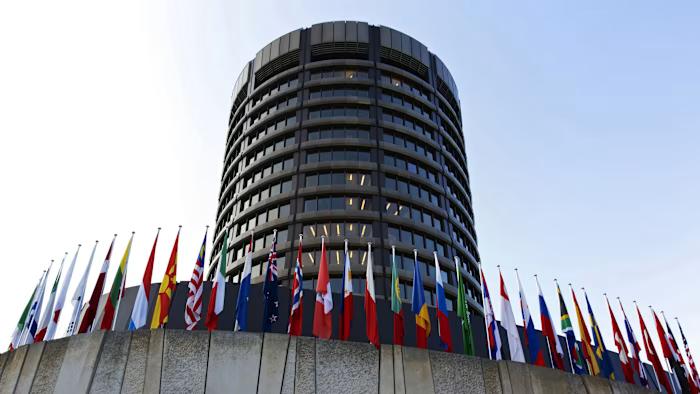
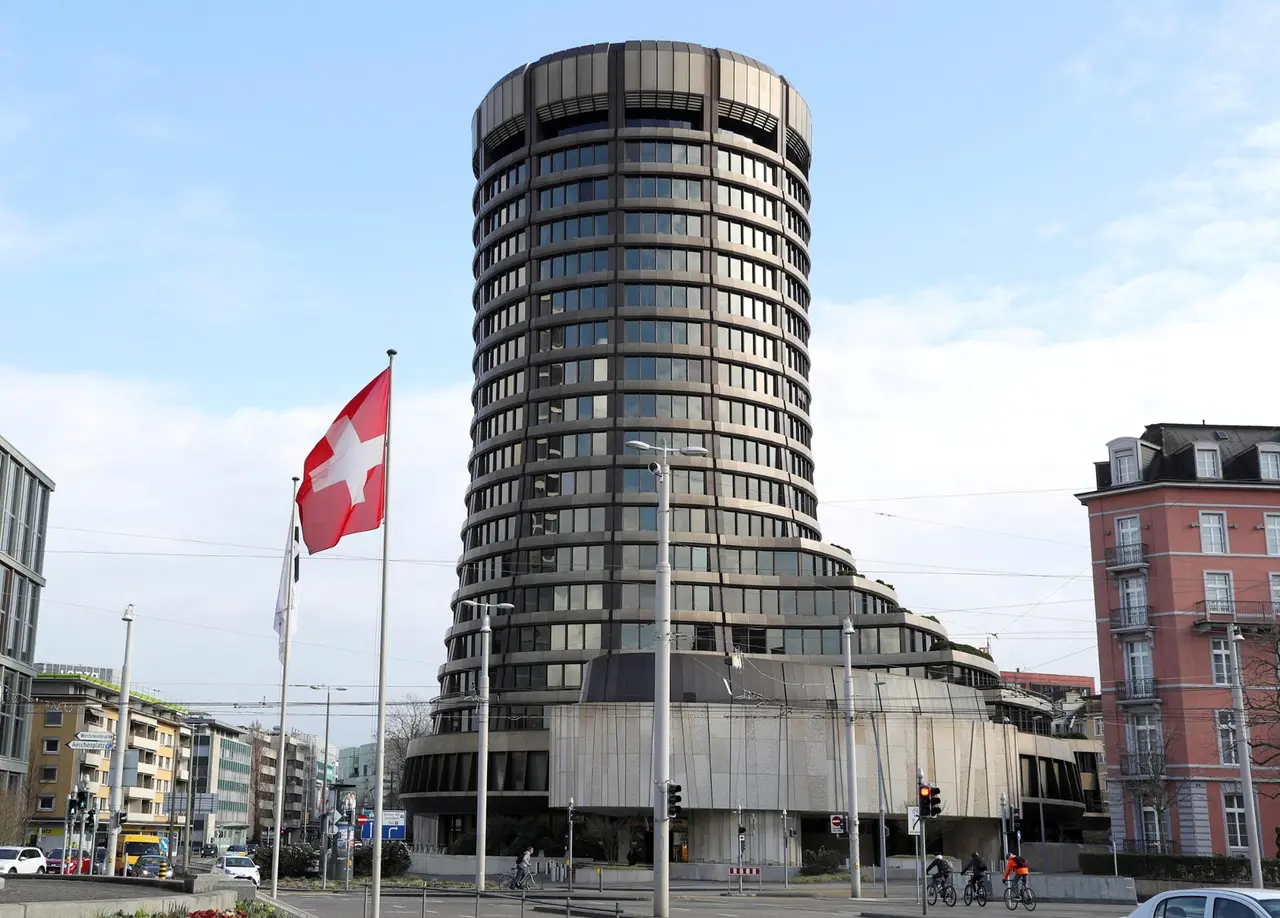
The tower of the headquarters of the Bank for International Settlements (BIS) in Basel, Switzerland / Reuters-Yonhap LONDON -- Global pressures from rising public debt to financial fragilities and the sustainability of the AI boom are increasing risks, underscoring the need for disciplined policymaking, according to the Bank for International Settlements. The central bank umbrella group's Annual Economic Report published on Sunday warned of a complex mix of vulnerabilities, including strained fiscal positions, lingering supply shocks and the risk of a renewed bout of stubbornly high inflation. While economic activity has remained resilient in recent months, policymakers must act decisively, the BIS said, to preserve stability. "Policy actions must reinforce each other to avoid a pull and push on the global economy. Ultimately, success depends on sound fiscal and financial foundations," BIS General Manager Pablo Hernandez de Cos said. The report highlighted four key pressure points. Inflation has picked up again, with the BIS cautioning that more frequent supply disruptions could cause higher inflation expectations to become entrenched among households and businesses. "The readiness to act if the central banks observe that there is the anchoring of inflation expectations is the main message that we want to set," de Cos told reporters. He said the recent ceasefire between the United States and Iran in the Middle East and the reopening of the Strait of Hormuz was "good news" that meant extreme scenarios would be avoided, although it was likely to take time for the oil market to "normalize." Urgent message The BIS also flagged uncertainty over the durability of the current surge in investment tied to artificial intelligence. While AI has boosted confidence and supported growth through expectations of productivity gains, the bank warned it was raising fears about jobs and that supply bottlenecks and intense competition could lead to the kind of overinvestment seen in previous boom-and-bust cycles. For central banks, it was posing fundamental questions about how the economy is likely to function, although de Cos said that for now it would be "unwise" to be prescriptive about how they should react. Financial vulnerabilities remain another area of concern. Elevated asset valuations and signs of investor complacency have left core bond markets more fragile, while the financing of the AI boom also looks increasingly reliant on debt and complex funding structures across the supply chain. At the same time, record-high public debt and sovereign debt markets increasingly dominated by large, highly leveraged hedge funds had created "a new sovereign-financial stability nexus," which poses growing risks. "The new fiscal-financial stability nexus may mean more frequent and sharper drops in sovereign bond values," said Frank Smets, acting head of the BIS monetary and economic department, adding such swings could rapidly tighten financial conditions. De Cos said the BIS' message was one of "urgency" in terms of the need to bring down debt levels in key economies, "because the fact is that today debt is high, and this is financed through non-bank financial intermediaries." The BIS urged policymakers to prioritize price stability, ensure fiscal sustainability, coordinate and strengthen oversight beyond the banking sector and pursue structural reforms. "Policymakers must act now. Delay will only make the necessary adjustments more costly," de Cos said.
Share
Copy Link
The Bank for International Settlements issued an urgent warning about multiple threats to the global economy in its annual report. The central bank umbrella group identified four critical pressure points: renewed inflation risks, uncertainty over AI investment durability, financial fragilities from elevated asset valuations, and record-high public debt. BIS officials called for immediate policy action to prevent these vulnerabilities from amplifying one another.
The Bank for International Settlements has issued a stark warning about mounting global risks that could destabilize the world economy, calling on policymakers to act with urgency before vulnerabilities spiral out of control. In its BIS Annual Economic Report published on Sunday, the central bank umbrella group identified a complex web of threats—from the sustainability of the AI boom to rising public debt and financial fragilities—that collectively pose serious challenges to global financial stability
1
2
.
Source: Korea Times
BIS General Manager Pablo Hernandez de Cos emphasized that "policy actions must reinforce each other to avoid a pull and push on the global economy," stressing that success depends on sound fiscal discipline and financial foundations. The report comes at a critical juncture when economic activity has remained resilient, yet underlying vulnerabilities continue to build beneath the surface.
The BIS identified four significant pressure points that demand immediate attention from central banks and policymakers. First among these concerns is the return of inflation risks, with the bank cautioning that more frequent supply disruptions could cause higher inflation expectations to become entrenched among households and businesses
3
. The recent Middle East conflict, which began with US-Israeli strikes on Tehran on February 28 and resulted in the closure of the Strait of Hormuz, delivered a shock to global energy supplies that has hiked costs for everything from plastics to fertilizers2
.While de Cos noted that the recent ceasefire and reopening of the strait was "good news" that would help avoid extreme scenarios, he acknowledged it would take time for oil markets to normalize. The readiness of central banks to act if they observe anchoring of inflation expectations remains paramount to maintaining price stability, according to BIS officials.
The durability of the current surge in artificial intelligence investment emerged as a major concern in the report. While the AI boom has boosted confidence and supported growth through expectations of productivity gains, the Bank for International Settlements warned that supply bottlenecks and intense competition could lead to the kind of overinvestment seen in previous boom-and-bust cycles
3
.BIS cautioned that the surging AI capital expenditure could prove "unsustainable," with the risk of a financial market correction looming
2
. The bank also highlighted growing fears about job displacement as AI technologies advance. For central banks, the rapid evolution of AI poses fundamental questions about how the economy is likely to function, though de Cos said it would be "unwise" to be prescriptive about how monetary authorities should react at this stage.Related Stories
Elevated asset valuations and signs of investor complacency have left core bond markets increasingly fragile, according to the report. The financing of the AI boom looks increasingly reliant on debt and complex funding structures across the supply chain, adding another layer of vulnerability. At the same time, record-high public debt combined with sovereign debt markets increasingly dominated by large, highly leveraged hedge funds and other non-bank entities has created what Frank Smets, acting head of the BIS monetary and economic department, called "a new sovereign-financial stability nexus"
3
.

Source: Reuters
Smets warned that this new nexus "may mean more frequent and sharper drops in sovereign bond values," adding that such swings could rapidly tighten financial conditions. De Cos emphasized the urgency of bringing down debt levels in key economies, noting that "today debt is high, and this is financed through non-bank financial intermediaries"
3
.Andrea Maechler, BIS deputy general manager, told AFP that while each area of tension might be manageable individually, "taken together, they risk amplifying one another and threatening financial stability"
2
. She cautioned that contagion effects could be set in motion if tensions arise from changes in interest rates or market sentiment.

Source: France 24
The BIS urged policymakers to prioritize price stability, ensure fiscal sustainability, strengthen oversight beyond the banking sector, and pursue structural reforms. Maechler emphasized the need for "adequate regulation also beyond the banking perimeter" to ensure non-bank players can absorb the risks they take
2
. The report also stressed the importance of preserving central bank independence to defend price stability without political interference."Policymakers must act now. Delay will only make the necessary adjustments more costly," de Cos concluded, delivering a message of urgency that underscores the precarious balance facing the global economy.
Summarized by
Navi
25 Jun 2026•Business and Economy

20 Nov 2024•Business and Economy

10 Oct 2025•Policy and Regulation

1
Technology

2
Technology

3
Policy and Regulation