BitTensor TAO Token Plunges 18% as Covenant AI Exits Over Decentralization Concerns


2 Sources
[1]
BitTensor AI Token Plunges as Top Builder Departs Over Decentralization Doubts - Decrypt
Steeves denied the claims, but the market reacted negatively regardless. Tensions between the founder of BitTensor and a prominent firm building on the decentralized AI network have helped put TAO, the native BitTensor token, into a spiral, falling 18.5% in the last 24 hours amid the public
[2]
Covenant AI Leaves Bittensor Amid Decentralization Concerns, TAO Drops 18%
Bittensor subnet developer Covenant AI said Friday that it is leaving the decentralized artificial intelligence network, accusing Bittensor of operating under a concentrated governance structure that undermines its decentralization claims. In a Friday post on X, Covenant AI founder Sam Dare said
Share
Copy Link
Covenant AI, a prominent subnet operator on BitTensor's decentralized AI network, announced its departure amid allegations that founder Jacob Steeves maintains centralized control over the protocol. The governance dispute triggered an 18.5% drop in TAO token price, erasing gains from earlier this year when Nvidia CEO Jensen Huang praised the network's achievements.
Covenant AI Departs BitTensor Amid Governance Clash
Covenant AI announced Friday it is leaving the BitTensor decentralized AI network, triggering an 18.5% plunge in the BitTensor AI Token as tensions between the prominent subnet operator and network founder Jacob Steeves erupted into public view
1
. The firm, one of the best-known builders on the platform, cited fundamental decentralization concerns that it says contradict the network's foundational claims.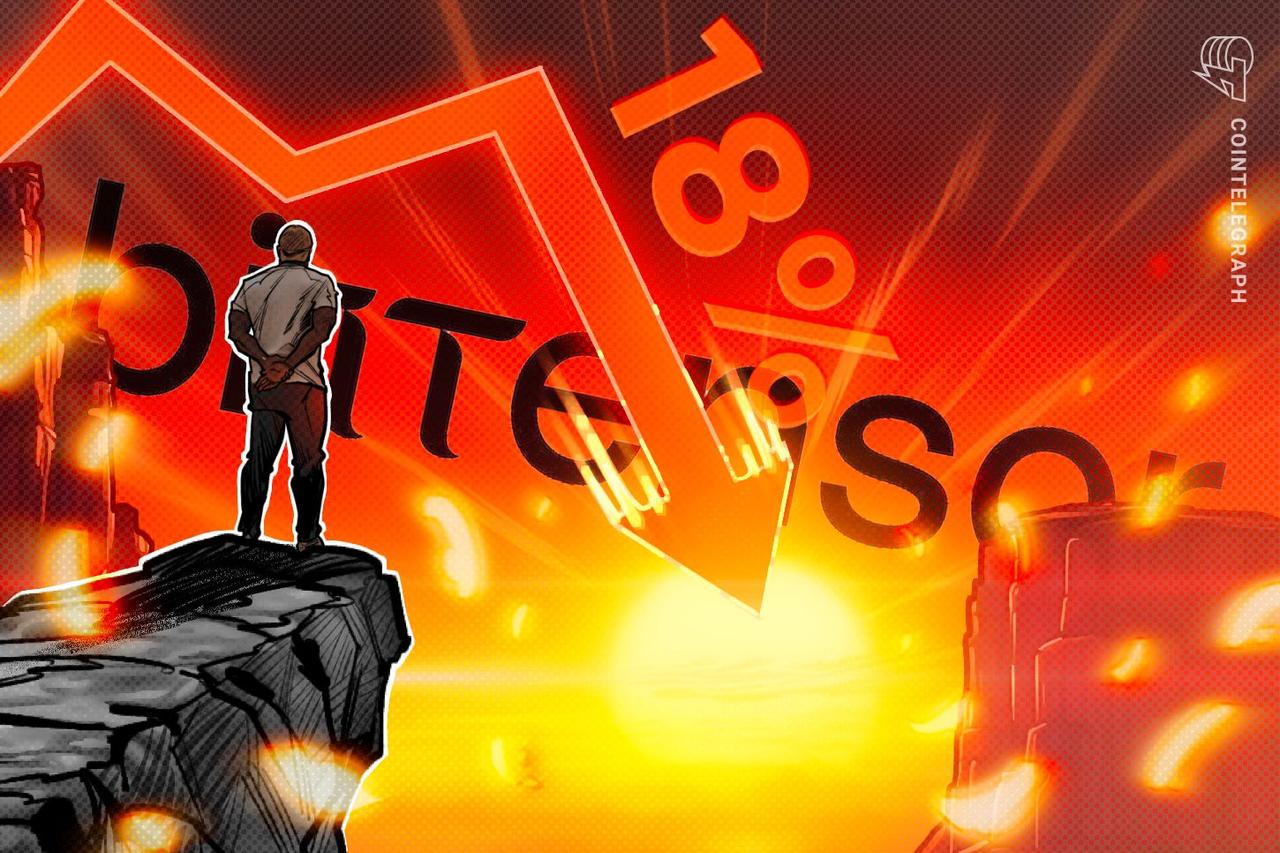
Source: Cointelegraph
"When a single actor can suspend a subnet's emissions, override an owner's authority over their own community spaces, publicly deprecate projects without process, and use token sales as a coercive mechanism to compel compliance, that is not decentralization," Covenant AI founder Sam Dare posted on X
1
. "It is centralized control with decentralized branding," he added, describing the situation as "decentralization theatre"2
.Allegations of Centralized Governance Structure
The governance dispute centers on allegations that Jacob Steeves maintains effective control over BitTensor's operations despite claims of operating a decentralized AI network. Dare alleged that Steeves suspended Covenant's subnet emissions, the method by which TAO distributes tokens to miners and validators for performance within subnets
1
. He also claimed Steeves exerted control over Covenant's community spaces, hampering the firm's ability to communicate with its community.According to BitTensor's governance documents, the network operates under a transitional system where a "Triumvirate" of Opentensor Foundation employees holds root permissions alongside a senate, rather than a fully open governance model
2
. Covenant AI alleged that Steeves "maintains effective control over the triumvirate, resists any meaningful transfer of authority, and deploys changes unilaterally whenever he chooses, without process and without consensus"2
.Founder Denies Claims of Centralized Control
Steeves rejected the allegations, stating he does not have the ability to suspend emissions and holds no privilege beyond what normal TAO holders possess. "I do not have the ability to suspend emissions," Steeves posted on X
1
. He claimed it was Dare who was deprecating community channels and deleting posts.Regarding allegations of economic pressure through token sales, Steeves said he sold some of his holdings on Covenant's three subnets "because they were not running and were on near 100% burn code," which changed emissions the same way "all buys and sells on BitTensor do"
2
. He added that large token sales would have been visible onchain and that he sold "less than 1% of what i had invested in his teams"2
.TAO Token Price Impact and Market Reaction
The TAO token price recently changed hands around $272.70, having erased nearly all gains since Covenant's model training was highlighted on the "All-In Podcast" in March
1
. The token is now down about 64% from its all-time high of $757 from May 2024. Interestingly, sell volume on TAO rose to its highest level since December 2024 approximately 24 hours before Covenant AI announced its departure2
. "If you think that's a coincidence, you don't understand the game you're playing. This was a calculated exit and execution," wrote crypto analyst Ardi2
.
Source: Decrypt
Related Stories

Covenant's Achievements and Subnet Operations
Covenant AI recently gained attention for the permissionless training of the Covenant-72B model, an achievement highlighted by billionaire Social Capital founder Chamath Palihapitiya and detailed to Nvidia CEO Jensen Huang on the "All-In Podcast"
1
. Huang praised the decentralized training run on BitTensor Subnet 3, calling Covenant's milestone of pre-training the largest decentralized LLM a "remarkable technical achievement" during the March 19 podcast2
. Around that time, TAO surged approximately 50%, jumping from $247 on March 19 to $370 just a week later1
.The firm operated three subnets on the network, each dedicated to producing specific AI tasks across the artificial intelligence stack. Its Templar subnet (SN3) focused on decentralized pre-training, while Basilica's (SN39) focus was on decentralized compute
1
. The firm's trio of subnets now show as "deprecated" among other active subnets according to BitTensor block explorer, Taostats1
.Broader Implications for Decentralized AI Projects
"We cannot in good conscience continue to build on a network where the foundational claim we make to our investors, that this infrastructure is decentralized and permissionless, is contradicted by the reality of how the network is actually governed," Dare said in his statement
1
. The dispute raises wider concerns for projects striving for decentralization. David and Daniil Liberman, co-creators of the decentralized layer-1 blockchain Gonka protocol, told Cointelegraph: "Decentralized networks that want serious builders have to answer one question: can the infrastructure you build on be used against you? If the answer is yes, the decentralization is cosmetic"2
. This governance dispute highlights critical questions about what meaningful decentralization looks like in practice and whether projects can maintain developer trust while navigating transitional governance structures.References
Summarized by

Navi
Related Stories
Bittensor completes first TAO halving, cutting daily issuance as decentralized AI network matures
08 Dec 2025•Business and Economy

Anthropic Ban Triggers 30% Surge in Decentralized AI Tokens as Canada Warns of Centralization Risks
16 Jun 2026•Policy and Regulation

Digital Currency Group Launches Yuma to Spearhead Decentralized AI Development on Bittensor Network
21 Nov 2024•Technology

Recent Highlights



Recent Highlights
Today's Top Stories









Don’t drown in AI news. We cut through the noise - filtering, ranking and summarizing the most important AI news, breakthroughs and research daily. Follow topics that matter to you and stay ahead.


