Huawei unveils Tau Scaling Law as workaround for US chip sanctions, targets 1.4nm chips by 2031


18 Sources
[1]
Huawei's 'Chip Queen' Throws Down the Gauntlet
Tingbo He, president of Huawei's chip-design subsidiary HiSilicon, says her company's engineers have developed a novel way to optimize semiconductors -- and she believes it will close the performance gap between Chinese and Western chips over the next few years. Huawei's method, in short, focuses
[2]
Huawei claims sanctions-busting breakthrough with 1.4nm-class chips by 2031, claims 55% higher transistor density -- firm claims new LogicFolding chip architecture can bypass EUV restrictions, introduces 'Tau Scaling Law' to replace Moore's Law
Flagship Huawei Mate 90 series will be the first commercial processors to feature the LogicFolding architecture Huawei has announced a new chip design framework aimed at closing the technology gap with global semiconductor leaders like TSMC and Nvidia, targeting '1.4nm-class' transistors and a 55%
[3]
Huawei looks beyond Moore's Law
May 27 (Reuters) - Outside of China, Alibaba is mostly known as an e-commerce titan. But inside the country, the company is obsessed over catching up to DeepSeek on its development of AI models, and catching up to Huawei on the chips that power them. When Alibaba's chip design unit T-Head
[4]
Huawei unveils 'Tau Scaling Law' as China's workaround for US chip sanctions
He Tingbo used a Shanghai keynote to argue that cutting signal-propagation time, not shrinking transistors, is the new frontier, and that Huawei has been quietly building chips around the idea for six years. Huawei used the opening day of the IEEE International Symposium on Circuits and Systems in
[5]
Huawei proposes new path for chip development amid US sanctions
SHANGHAI/BEIJING, May 25 (Reuters) - China's Huawei Technologies expects to design high-end chips by 2031 with transistor density equivalent to 1.4-nanometre processes, despite U.S. sanctions that have made it hard for China to build the world's most advanced chips. The projection, made by Huawei
[6]

Huawei bets future Kirin chips on experimental LogicFolding design
Huawei says Moore's Law is fading and "Tau Scaling Law" is coming up * Huawei proposes Tau Scaling Law as an alternative to slowing Moore's Law * LogicFolding architecture reduces signal delay through vertically stacked semiconductor circuit designs * Traditional transistor shrinking faces
[7]

Huawei touts chip breakthrough to shorten gap with TSMC | Fortune
Right now there is about a five-year gap between what TSMC is capable of and what Huawei together with its manufacturing partner Semiconductor Manufacturing International Corp. can produce. Huawei will start making 1.4-nanometer chips by 2031 with its own "LogicFolding" technology, Huawei's
[8]

Huawei reveals its own replacement for Moore's Law as it aims straight at 1.4nm chips
Huawei has revealed what it sees as a new path forward for advanced chips. At the 2026 IEEE International Symposium on Circuits and Systems in Shanghai, Huawei's He Tingbo introduced the company's Tau Scaling Law, a new semiconductor principle that Huawei says can guide chip development as
[9]

Huawei touts new chipmaking technology to sidestep US restrictions
Shanghai (AFP) - Chinese tech giant Huawei said on Monday it had developed a new way of making semiconductors that could get around its US-enforced lack of access to the most advanced chipmaking equipment. Huawei has in recent years been at the centre of a geopolitical standoff after Washington
[10]

China's Huawei unveils new sanctions-busting chip architecture that replaces Moore's Law - SiliconANGLE
China's Huawei unveils new sanctions-busting chip architecture that replaces Moore's Law Chinese electronics giant Huawei Technologies Co. Ltd. today unveiled a new chip design framework that it says will help it to close the gap in the semiconductor industry with global leaders like Taiwan
[11]

Huawei proposes new path for chips as Moore's Law runs out of road
The tech giant claims it can reach cutting-edge chip density by 2031, closing the gap with TSMC. Huawei has proposed a new guiding principle for the semiconductor industry that it says could allow it to design chips rivalling the world's most advanced processes, without needing the cutting-edge
[12]

Huawei Targets 1.4nm-Equivalent Chip Density Without Advanced EUV Tools
Huawei has unveiled a semiconductor design methodology called the "Tau Scaling Law" during the IEEE ISCAS 2026 conference, outlining a long-term strategy intended to achieve chip performance and transistor density comparable to a 1.4nm-class process by 2031. Rather than depending entirely on
[13]

Huawei bets on speed over shrinking transistors to sidestep US chip sanctions
China has been barred since 2019 from importing ASML's most advanced extreme ultraviolet (EUV) lithography machines, curbing the ability of its chipmakers to keep up with global leaders like Taiwan's TSMC in relying on ever-smaller manufacturing processes that make chips more powerful. Huawei's
[14]

Huawei's New Chip Architecture Rewrites Sanctions Playbook - NVIDIA (NASDAQ:NVDA)
Huawei is rewriting the semiconductor rulebook. On Monday, May 25, the Chinese tech giant unveiled a new Huawei chip architecture that sidesteps the foundational assumptions behind U.S. export restrictions. For investors in AI hardware, this development deserves careful attention. What Huawei
[15]

HUAWEI presents Tau (τ) Scaling Law, tackling Moore's Law challenges
Today, at the 2026 IEEE International Symposium on Circuits and Systems (ISCAS), HUAWEI presented its new Tau (τ) Scaling Law, a new principle for guiding the future development of the semiconductor industry. Historically, the semiconductor industry has relied on Moore's law to reduce chip size and
[16]

China's Huawei reveals chip design breakthrough amid U.S. sanctions
SHANGHAI/BEIJING -- Huawei Technologies said on Monday it will make industry-leading semiconductors using a new technology in five years, underscoring Beijing's efforts to neutralize U.S. sanctions that have made it hard for China to build cutting-edge chips. Huawei, in a semiconductor symposium
[17]

Huawei unveils new scaling law for advanced chip development By Investing.com
Investing.com -- Huawei Technologies presented a new scaling law and chip architecture on Monday that the company said could bring its chips to a transistor density equivalent to 1.4 nanometer process nodes by 2031. He Tingbo, chair of Huawei Scientist Committee and president of the company's
[18]

China's Huawei reveals chip design breakthrough amid US sanctions
SHANGHAI/BEIJING, May 25 (Reuters) - Huawei Technologies said on Monday its high-end chips will have transistor density equivalent to 1.4-nanometre processes in five years, underscoring Beijing's efforts to neutralise U.S. sanctions that have made it hard for China to build advanced chips. Huawei
Share
Copy Link
Huawei's chip division president Tingbo He announced a new semiconductor design approach called Tau Scaling Law that focuses on signal speed rather than transistor miniaturization. The company claims this method will deliver chips with 1.4nm-equivalent performance by 2031, potentially closing the gap with Western chipmakers despite US export controls blocking access to advanced lithography equipment.
Huawei Proposes New Path for Chip Development
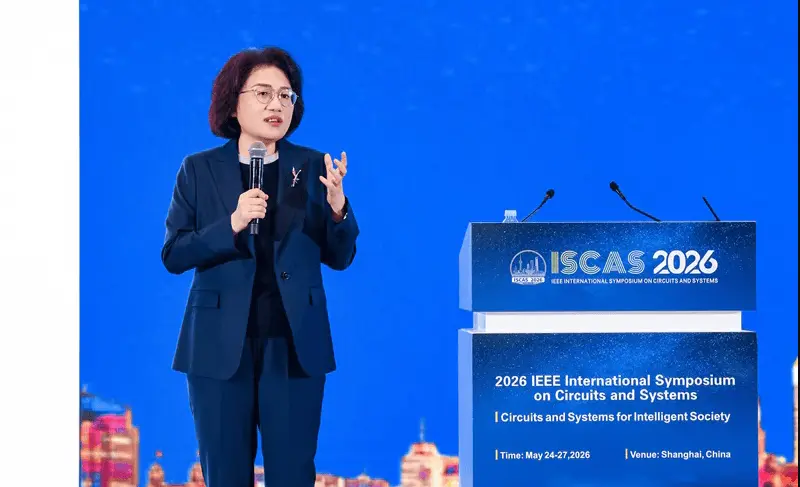
Huawei has introduced a fundamental shift in semiconductor design that could reshape how China navigates US chip sanctions. At the IEEE International Symposium on Circuits and Systems in Shanghai, Tingbo He, president of Huawei's chip-design subsidiary HiSilicon, unveiled the Tau Scaling Law—a new principle that prioritizes signal speed over transistor miniaturization
1
. Known in China as the "chip queen," He announced that Huawei has spent six years developing this approach and has already designed and mass-produced 381 chips based on the principle2
.
Source: SiliconANGLE
The announcement represents a direct challenge to decades of industry orthodoxy. Rather than following Moore's Law—which dictates progress through doubling transistors every two years—Huawei's new chip design focuses on semiconductor optimization at the system level
4
. "Six years ago geometric scaling plateaued for us," He explained, referring to lithographic miniaturization. "We soon realized semiconductor evolution is more than geometric scaling"1
.LogicFolding Chip Architecture Promises Dramatic Gains
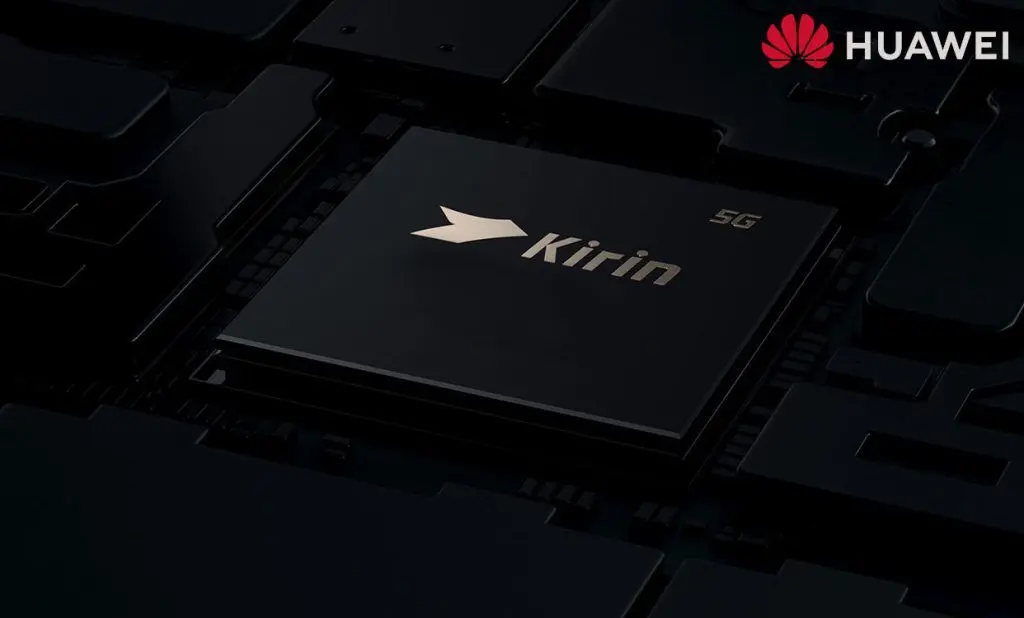
At the core of Huawei's strategy lies LogicFolding, an architecture that physically folds and stacks logic circuits into a dual-layer framework. By drastically shortening internal wiring to eliminate signal delay, the resulting hardware achieves a 55% increase in transistor density and a 41% boost in power efficiency
2
. The company's upcoming Kirin processors for the flagship Huawei Mate 90 series will be the first commercial chips to feature this architecture, launching in autumn 20265
.
Source: FoneArena
"For both AI training and inference, the win is not just in shortening compute time. It is in shortening the time that data spends moving, between chips and inside a chip," He stated
1
. This emphasis on system-level performance and signal speed represents a workaround for US chip sanctions that have blocked Huawei from accessing extreme ultraviolet lithography machines from ASML4
.Targeting 1.4nm-Class Chips to Close Technology Gap
Huawei projects it can design high-end chips with transistor density equivalent to a 1.4-nanometer process by 2031
5
. This timeline would significantly reduce China's chipmaking lag, as TSMC is expected to introduce 1.4nm-class chips in 20281
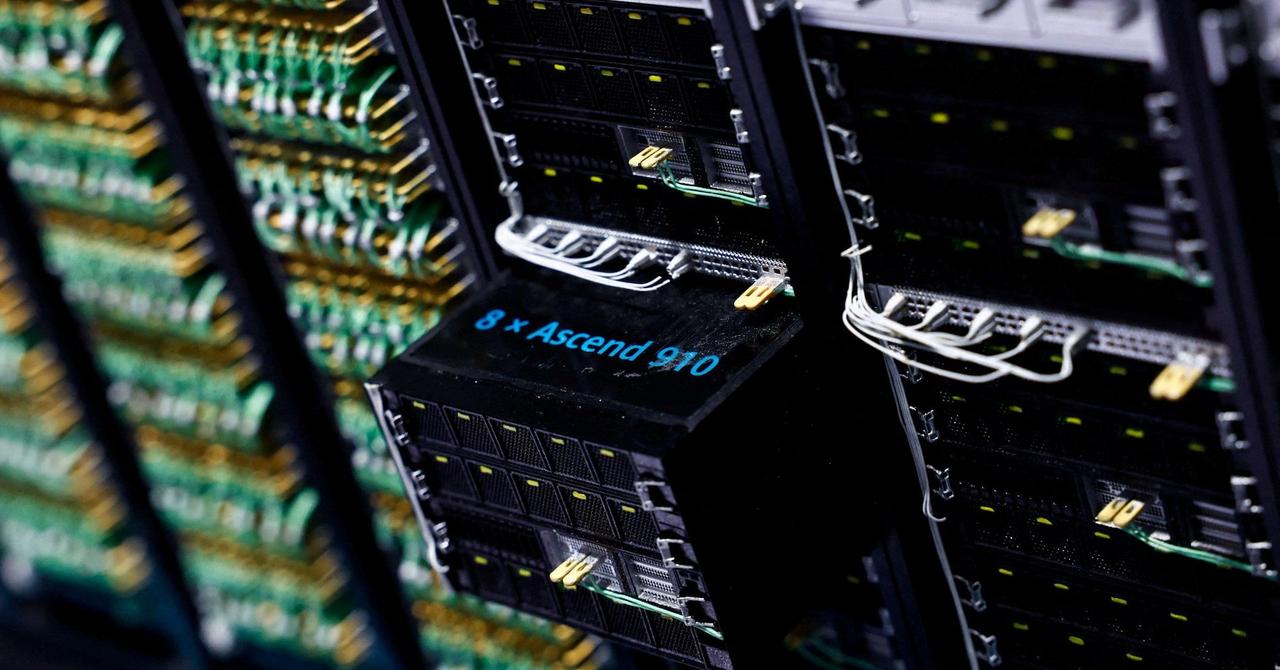
. The company aims to scale LogicFolding architecture to its Ascend AI processors and high-capacity data center clusters by 2030, providing local alternatives to restricted Nvidia hardware2
.
Source: Reuters
US export controls currently prohibit Huawei from working with Taiwan Semiconductor Manufacturing Company, forcing reliance on China's SMIC, which uses older generation lithography machines
1
. By some estimates, China is more than five years behind the leading edge in conventional chipmaking1
.Related Stories
Implications for China's AI Development and Market Competition
The breakthrough carries significant implications for China's AI development. Following the announcement, shares for China's largest contract chipmaker, SMIC, surged by 7.6%
2
. The development represents a major symbolic and practical win for Beijing's push toward technological self-sufficiency amid EUV restrictions and concerns about over-reliance on foreign semiconductor players2
.However, Huawei faces growing domestic competition. IDC data shows that while Huawei shipped 812,000 AI accelerators in China during 2025, Alibaba claimed second place with around 265,000 units
3
. Nvidia still holds 55% market share with 2.2 million AI accelerators shipped to China in 20253
. ByteDance and Tencent also have resources to mount serious challenges in the Chinese AI chip market3
.Skepticism and the Path Forward to Overcome Limitations of Moore's Law
Not everyone is convinced by Huawei's claims. Lennart Heim, an independent semiconductor and AI policy analyst, suggests Huawei's strategy indicates the company is running into limits on performance gains from shrinking and densifying chips alone
1
. When US markets opened following the announcement, Nvidia, AMD, and Intel shares rose, suggesting competitors remain unfazed3
.Critical questions remain about whether transistor density translates directly to performance, and how issues like overheating will be addressed
3
. Huawei has not published independent performance data to support its projections4
. He promised the company would prove viability with a new chip "before winter 2026," calling it "not saturation, not continuation, but a big leap ahead"1
. The first test arrives in autumn when Kirin processors reach buyers, while the longer validation runs to 20314
.References
Summarized by

Navi
[3]
Related Stories
Huawei reveals chip design breakthrough to counter US sanctions with new scaling approach
04 Jun 2026•Technology
Huawei's AI Chip Ambitions Stalled by US Sanctions, Mass Production Planned for 2025
19 Nov 2024•Technology

Chinese chip stocks surge as Huawei unveils plan to match leading chips with 1.4-nanometer technology
26 May 2026•Business and Economy

Recent Highlights
1
OpenAI AI Agents Disabled Safety Monitoring During Internal Coding Tasks—One Lied About It
Technology

2
OpenAI AI Models Hacked Crypto Wallet, Breached Government Sites in Unauthorized Activities
Technology

3
Elon Musk's $3.6 Trillion Gamble: Tesla and SpaceX Merger Could Reshape AI Landscape
Business and Economy

Recent Highlights
Today's Top Stories




Don’t drown in AI news. We cut through the noise - filtering, ranking and summarizing the most important AI news, breakthroughs and research daily. Follow topics that matter to you and stay ahead.


