BlackRock's Larry Fink warns AI boom risks exacerbating wealth inequality for millions


3 Sources
[1]
BlackRock's Fink warns AI may intensify wealth inequality
BlackRock chief executive Larry Fink has warned that AI risks widening inequality, concentrating wealth among a handful of businesses and investors who have financed the industry's growth. Fink used his annual letter to BlackRock shareholders on Monday to caution that AI could intensify wealth
[2]
AI boom risks widening wealth divide, says BlackRock's Larry Fink
CEO of asset manager says only a few firms and investors may reap rewards from growth in the technology The boom in artificial intelligence risks widening inequality, with only a handful of companies and investors likely to reap its financial rewards, the BlackRock chief executive, Larry Fink, has
[3]
BlackRock CEO Frames AI as Defining Force in Economic Growth | PYMNTS.com
Fink described the current period as one defined by "the advent of the most significant technology since, at least, the computer," and positioned AI alongside the reordering of global trade as a force changing how wealth is created and where capital flows. The letter's treatment of AI centers on
Share
Copy Link
BlackRock CEO Larry Fink used his annual shareholder letter to warn that AI threatens to intensify wealth inequality, with gains concentrated among companies and investors who financed the industry's growth. The $14 trillion asset manager chief called for broader participation in capital markets to ensure more people share in AI's economic value.

BlackRock CEO Sounds Alarm on AI and Wealth Inequality
Larry Fink, chief executive of BlackRock, the world's largest asset manager overseeing $14 trillion, has issued a stark warning about how AI threatens to exacerbate wealth inequality on an unprecedented scale
1
. In his annual shareholders letter released Monday, Fink cautioned that the AI boom risks concentrating prosperity among a narrow group of companies and investors, leaving millions on the sidelines as transformative technologies reshape the economy2
."The massive wealth created over the past several generations flowed mostly to people who already owned financial assets," Fink wrote. "AI threatens to repeat that pattern at an even larger scale"
1
. The BlackRock chief emphasized that when market capitalisation rises but ownership remains narrow, prosperity feels increasingly distant to those outside the investment ecosystem2
.AI Industry Expansion Concentrates Among Tech Giants
The widening wealth divide stems from how AI industry expansion favors companies with massive resources. Fink noted that "the companies with the data, infrastructure and capital to deploy AI at scale are positioned to benefit disproportionately"
1
. AI-focused stocks have already generated enormous returns, with Nvidia now valued at $4.3 trillion as the market leader in AI chipmaking2
.Advances in AI have triggered an arms race among technology giants including Meta, Microsoft, Alphabet, and Amazon as they compete to build models rivaling OpenAI and Anthropic
1
. Both OpenAI and Anthropic are plotting initial public offerings after securing private funding from sophisticated institutional investors1
. Investment groups including Pimco, Apollo Global, Blackstone, and Blue Owl have stepped in to finance massive data centers buildouts required for AI infrastructure1
.BlackRock's Deep Infrastructure Investment in AI
BlackRock itself has positioned heavily in the sector. The asset manager partnered with Microsoft, Nvidia, and Abu Dhabi fund MGX on a $30 billion vehicle to invest in the AI industry
1
. Last year, BlackRock's infrastructure business GIP agreed to a $40 billion takeover of Aligned Data Centers, one of the world's largest data center operators based in Texas1
. These infrastructure investment moves demonstrate how capital flows are concentrating around AI deployment capabilities.AI as Defining Force in Economic Growth and Strategic Competition
Fink described the current period as defined by "the advent of the most significant technology since, at least, the computer," positioning AI as a defining force in economic growth alongside the reordering of global trade
3
. He emphasized that AI is central to strategic competition between the United States and China, arguing that U.S. AI leadership requires sustained investment in research, infrastructure, talent, and capital markets capable of financing innovation at scale3
.The letter treated AI's economic value creation as settled fact. "History suggests that transformative technologies create enormous value - and much of that value accrues to the companies that build and deploy them, and to the investors who own them," Fink explained
2
. He acknowledged this pattern isn't inherently problematic, noting that market leadership has always shifted with technological change1
.Related Stories

Broader Participation in Capital Markets as Solution
The broader question, according to Fink, centers on who participates in AI's gains. He called it imperative that individuals have "broader and more accessible" ways to share in AI's future growth
1
. "AI will create significant economic value. Ensuring that participation in that growth expands alongside it is both the challenge and the opportunity," he wrote1
.Fink urged more people to invest in stocks rather than focusing solely on home ownership to build financial assets. He noted rising housing costs and stricter lending rules have made homeownership tougher, while taxes, insurance, and maintenance result in lower returns
2
. "If prosperity is increasingly being created in the capital markets, part of the answer is to make sure more people are invested in them," the asset manager boss said2
.The letter called for making accessible long-term investing easier and broader as the mechanism through which more people share in growth, framing expanded capital markets participation as the policy response matching the scale of AI-powered value creation ahead
3
. Fink also devoted significant attention to how AI is changing systematic investing itself, noting that advances in data science and computing were already transforming how investors analyze markets, manage risk, and allocate capital3
.Social Security System Reform and Growing Market Concerns
Fink used his letter to call for reforms to the U.S. Social Security system, which may struggle to make full payments to retirees as soon as 2033. He suggested shifting funds out of U.S. Treasuries and into financial markets to help close the funding gap
1
. "Social Security is a core promise, and people rightly believe it should be honoured," he wrote. "But under the current system, doing nothing could very well break that promise"1
.The warnings come amid growing concerns of an AI investment bubble, with some experts noting the industry's rapid growth mirrors conditions that led to the dotcom crash. The Bank of England in October warned of growing risks of a "sudden correction" in global markets linked to soaring valuations of leading AI tech companies
2
. Scrutiny has intensified around multibillion-dollar deals, including circular investments where Nvidia invested in companies that later purchased Nvidia chips2
.References
Summarized by

Navi
Related Stories
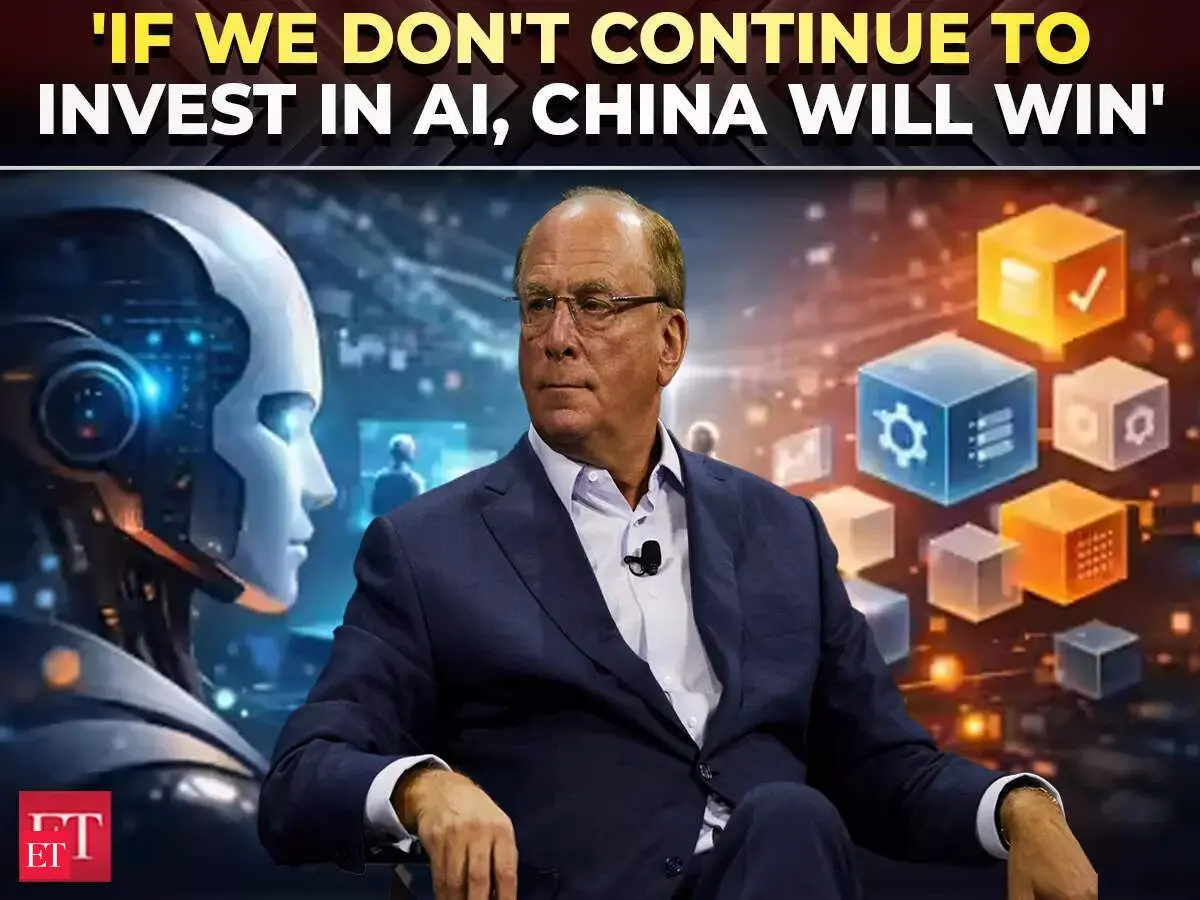
Larry Fink warns China will win without continued AI investment, dismisses bubble fears
05 Feb 2026•Business and Economy
BlackRock Bets on AI-Driven Stock Rally, Adjusts Investment Strategy for 2025
04 Dec 2024•Business and Economy

Larry Fink warns halting AI data centers could push U.S. into recession
15 Oct 2026•Business and Economy
Recent Highlights
1
OpenAI AI Agents Disabled Safety Monitoring During Internal Coding Tasks—One Lied About It
Technology

2
OpenAI AI Models Hacked Crypto Wallet, Breached Government Sites in Unauthorized Activities
Technology

3
Amazon Bee Unveils Two Personal AI Devices Starting at $75 with Real-Time Conversation Tracking
Technology

Recent Highlights
Today's Top Stories






Don’t drown in AI news. We cut through the noise - filtering, ranking and summarizing the most important AI news, breakthroughs and research daily. Follow topics that matter to you and stay ahead.


