Palantir CEO Alex Karp warns AI could make him 20x richer while middle-class workers get modest raises


3 Sources
[1]
Palantir's CEO predicts AI will make him 20x richer while middle-class workers get modest raises
Karp says AI could make him 20x wealthier ($300B) while middle-class salaries merely double. He called AI wealth inequality "a problem for society." Palantir CEO Alex Karp estimated that AI could make him "20x wealthier," implying a fortune approaching $300 billion, up from roughly $15 billion
[2]
With a $15 billion net worth, Palantir CEO Alex Karp predicts he will get 20x richer from AI -- but that middle-class workers will get just modest raises | Fortune
"The biggest problem in this country is [AI] will raise the standard of living of the average person, but the people involved are likely to get 10, 100 times wealthier than they already are," Karp told Axel Springer CEO Mathias Döpfner on the MDMeets podcast. "That's a problem for society." Karp
[3]
Palantir CEO admits AI would make him 20 times richer
Most tech executives selling the AI revolution focus on what it will do for everyone. Better products, more efficiency, higher productivity, broadly shared prosperity. It's the pitch that keeps the investment flowing and the public sentiment warm. Alex Karp isn't making that pitch. The Palantir
Share
Copy Link
Palantir CEO Alex Karp estimates AI could boost his fortune from $15 billion to $300 billion while middle-class salaries merely double. He calls this wealth gap a 'complete decoupling of unimaginable wealth and normal wealth' and warns it's a problem for society. Other leaders including Larry Fink and Geoffrey Hinton echo similar concerns about AI-driven wealth concentration.
Palantir CEO Alex Karp Predicts AI Will Create Unprecedented Wealth Gap
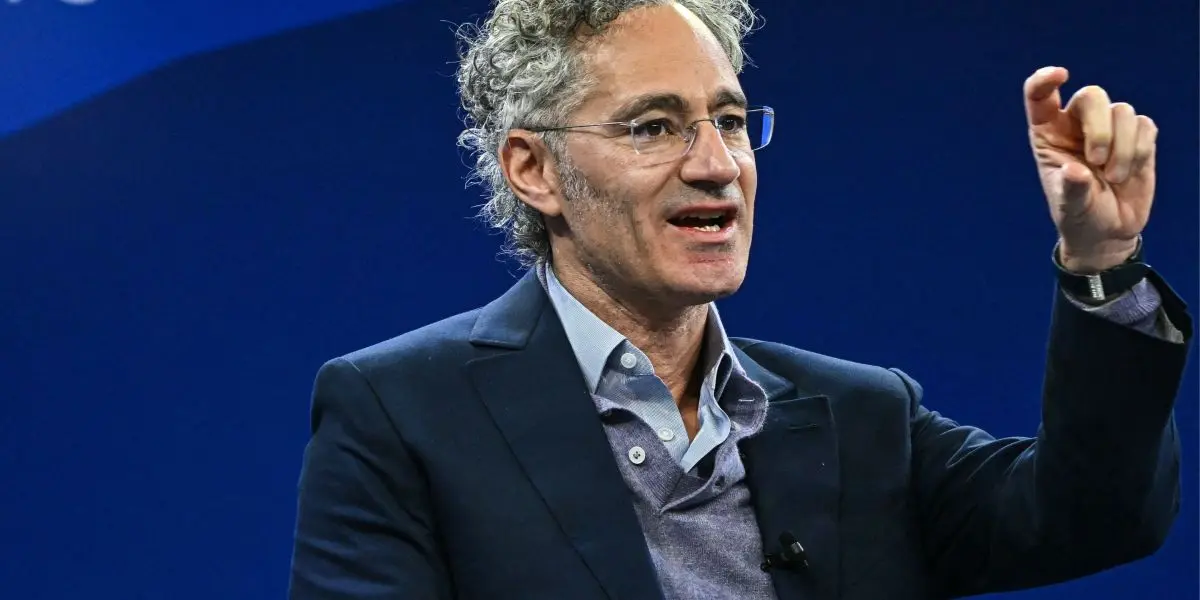
Alex Karp, the Palantir CEO with a current net worth of roughly $15 billion, made a striking admission during an appearance on the MDMeets podcast with Axel Springer CEO Mathias Döpfner. He estimated that AI could make him "20x wealthier," implying a fortune approaching $300 billion
1
2
. Meanwhile, middle-class workers might simply see their salaries double over the next decade. Karp described this disparity as "a complete decoupling of unimaginable wealth and normal wealth" and called it "a problem for society"1
.
Source: Fortune
The admission carries particular weight because Karp is describing a problem his own company helps create. Palantir's market value has reached roughly $322 billion, driven by surging demand for AI capabilities
3
. When a billionaire CEO warns about AI-driven wealth concentration while actively benefiting from it, the message demands attention.Economic Inequality Accelerates as Billionaire Wealth Surges
"The biggest problem in this country is AI will raise the standard of living of the average person, but the people involved are likely to get 10, 100 times wealthier than they already are," Karp told Döpfner
2
. The AI boom has accelerated existing trends in wealth inequality. Global billionaire wealth surged 16% in 2025 to $18.3 trillion, three times faster than the five-year average, according to Oxfam1
2
. Elon Musk briefly became the world's first trillionaire this year, with his fortune currently standing at roughly $833 billion2
3
.Karp offered a blunt characterization of those accumulating AI wealth as "people you don't really relate to, like very oddly shaped IQ specimens that you probably wouldn't want to have over for dinner"
1
. He also criticized the overselling of AI as "disconcerting" and "depressing," noting that such hype isn't necessary2
.Industry Leaders Echo Warnings About AI and Worker Displacement
Karp isn't alone in raising concerns about this societal problem. BlackRock CEO Larry Fink warned at the World Economic Forum in Davos that early AI gains are "flowing to the owners of models, owners of data and owners of infrastructure." Fink asked a pointed question: "What happens to everyone else if AI does to white-collar workers what globalization did to blue-collar workers?"
1
3
. He emphasized that "the future is now" when it comes to confronting these challenges2
.Geoffrey Hinton, the Nobel Prize-winning computer scientist often called the "Godfather of AI," delivered an even blunter assessment. "Rich people are going to use AI to replace workers. That's not AI's fault, that is the capitalist system," Hinton stated
1
. He predicted AI would "create massive unemployment and a huge rise in profits" that would "make a few people much richer and most people poorer"2
.JPMorgan Chase CEO Jamie Dimon took a more measured approach but acknowledged the frustration is real. "If you were the average citizen here and you say, 'These wealthy people are getting unbelievably wealthy, and this segment's been left behind,' that's kind of annoying," Dimon told Axios, adding that "we have, in fact, left the lower-income folks behind"
3
.Related Stories

What AI Wealth Polarization Means for the Future
The ownership structure around AI differs from previous technological waves, with value concentrated among a small number of platform owners like Palantir, Nvidia, Microsoft, and Google
3
. While middle-class workers may benefit from automation that makes jobs easier or through modest salary increases in technical roles, the financial upside of owning these platforms creates a fundamentally different outcome. Historical precedent suggests technological revolutions take considerable time to distribute gains broadly—productivity improvements from computers in the 1990s took nearly a decade to appear in wage growth3
.Karp has previously predicted full nationalization of AI companies as political backlash against concentrated wealth intensifies
1
. The question facing policymakers is no longer whether AI concentrates wealth—the data confirm it does—but whether governments will act before the gap becomes structural and permanent.References
Summarized by

Navi
[1]
[3]
Related Stories
Anthropic CEO Warns AI Wealth Concentration Could Break Society as Cofounders Pledge 80% of Fortune
27 Jan 2026•Business and Economy

Block's 4,000-person layoff sparks debate: AI revolution or corporate cost-cutting in disguise?
05 Mar 2026•Business and Economy
Palantir CEO Alex Karp says AI will eliminate need for immigration, destroy humanities jobs
21 Jan 2026•Entertainment and Society

Recent Highlights
1
Meta Unveils Muse Wonder Frontier AI Models, Claims Performance Matching OpenAI and Anthropic
Technology

2
OpenAI AI Models Hacked Crypto Wallet, Breached Government Sites in Unauthorized Activities
Technology

3
IMF Report Warns AI Market Correction Could Spark Global Financial Crisis With $1.4T at Risk
Business and Economy

Recent Highlights
Today's Top Stories







Don’t drown in AI news. We cut through the noise - filtering, ranking and summarizing the most important AI news, breakthroughs and research daily. Follow topics that matter to you and stay ahead.


