Bland raises $50 million Series C after 180 rejections to automate complex phone calls


2 Sources
[1]
Exclusive: Voice AI startup Bland raises $50 million after being rejected by 180 investors | Fortune
Isaiah Granet was rejected by 180 investors in three weeks during Y Combinator. Their reason: phone calls won't exist in a year. He's raised more than $100 million to prove them wrong. Bland, the San Francisco voice AI company Granet co-founded in 2023 with Sobhan Nejad, closed a $50 million
[2]
Bland raises $50M to automate complex, high-stakes phone calls
Voice artificial intelligence startup Bland today revealed that it had raised $50 million in new funding to expand its research, grow its engineering team and scale its platform into more regulated industries. Founded in 2023, Bland builds AI agents that handle phone calls, SMS and chat. Where
Share
Copy Link
Voice AI startup Bland secured $50 million in Series C funding led by Dell Technologies Capital, bringing total funding past $100 million. The company builds proprietary voice AI models to handle 30-45 minute calls in healthcare and financial services, processing over 3.5 million calls weekly. Founder Isaiah Granet was rejected by 180 investors who claimed phone calls would disappear within a year.
Bland Secures Series C Funding Despite Early Rejections
Bland, a San Francisco-based voice AI startup, closed a $50 million Series C round led by Dell Technologies Capital, bringing its total funding to over $100 million since its 2023 founding
1
. The round included participation from HubSpot Ventures, Archerman, and Tribeca, alongside existing backers Emergence Capital, Upfront Ventures, Scale Venture Partners, and Y Combinator2
. Notable individual investors Max Levchin, Affirm co-founder, ElevenLabs CTO Piotr Dąbkowski, and Twilio founder Jeff Lawson also joined the funding1
.
Source: Fortune
The company's journey began with Isaiah Granet and co-founder Sobhan Nejad facing rejection from 180 investors in three weeks during Y Combinator, with many claiming phone calls would cease to exist within a year
1
. The founders' motivation stemmed from a personal experience when Nejad's aunt was denied medical treatment after being unable to reach her insurance company by phone1
.Proprietary Voice AI Models Set Bland Apart
Unlike competitors who wrap third-party models around scripted interactions, Bland runs exclusively on proprietary voice AI models built in-house
1
. The platform doesn't allow customers to integrate models from OpenAI or Anthropic, a deliberate strategy that Isaiah Granet describes as "one of one in that sense"1
. This approach enables Bland to automate complex phone calls that typically run 30-45 minutes, far longer than the short, scripted calls handled by most voice AI systems2
.Elana Lian, partner at Dell Technologies Capital who led the round, called voice "one of the hardest problems in AI" and pointed to Bland's model ownership as the key differentiator
1
. By owning the models, Bland can tune for challenging aspects of live calls including latency, interruptions, and ambiguity2
.
Source: SiliconANGLE
Scaling High-Stakes Phone Calls in Regulated Industries
Bland now processes more than 3.5 million calls per week and handled over 175 million AI phone calls last year
1
. The company counts over 250 enterprise customers including Samsara, Kin Insurance, and CNO Financial Group1
. In healthcare, a typical interaction might involve walking an elderly patient through a blood pressure reading, troubleshooting errors, and determining in real-time whether to escalate to emergency services1
.The new capital will fund expansion into more regulated industries, grow the engineering team, and advance research
1
. This follows a $16 million Series A in August 2024 and a $40 million Series B led by Emergence in January 20251
.Related Stories

Navigating the Call Center AI Market and Competition
The call center AI market is currently valued at approximately $3 billion and is projected to reach $13.5 billion by 2034
1
. Granet sees even larger potential, noting that the telephony market encompassing Twilio, Genesys, 8×8, and NICE inContact generates roughly $15 billion annually1
. Competition includes PolyAI, which raised $86 million at a $750 million valuation in December, along with Replicant, Observe.ai, Retell AI, and Cognigy1
.Granet argues that most competitors lack a cohesive product and primarily handle short transfer calls rather than long-duration phone calls at scale
1
. However, significant challenges remain beyond competition. Granet acknowledges encountering major New York call centers that have never explored AI-driven automation and still rely on phone trees and legacy systems1
.Regulatory Hurdles in Healthcare and Financial Services
Bland's focus on healthcare and financial services brings strict compliance requirements around HIPAA, AI disclosures, and data retention
1
. The company offers self-hosted deployment for data-sensitive customers, though HIPAA compliance is currently gated to enterprise contracts1
. Granet is candid about the risk: "There's a chance that we're wrong, and we die on that hill. There's also a chance that we're right, and it turns out to be a $100 billion thesis"1
. As AI adoption resistance persists in traditional sectors, Bland's ability to navigate regulatory frameworks while demonstrating value in high-stakes scenarios will determine whether the company can capture the market opportunity Granet envisions.References
Summarized by

Navi
[1]
[2]
Related Stories
Smallest.ai Raises $13M Series A to Build Ultra-Fast Voice AI That Mimics Human Conversation
31 Jul 2026•Technology

PolyAI Raises $86M at $750M Valuation to Scale Conversational AI for Enterprise Call Centers
16 Dec 2025•Startups

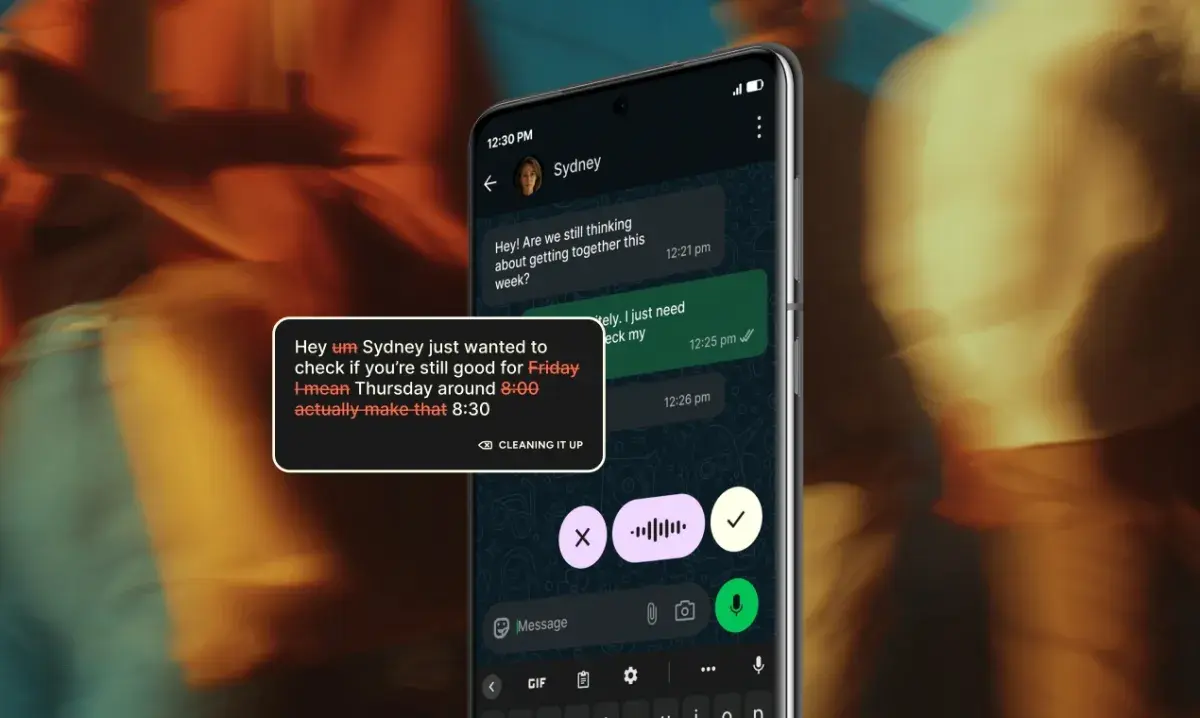
Wispr Secures $280M Series B at $2B Valuation, Unveils Canto Model to Fix Dictation Errors
17 Aug 2026•Startups
Recent Highlights



Recent Highlights
Today's Top Stories








Don’t drown in AI news. We cut through the noise - filtering, ranking and summarizing the most important AI news, breakthroughs and research daily. Follow topics that matter to you and stay ahead.


