Brain-Computer Interface and AI Let Speechless ALS Patient Speak and Work Full-Time


2 Sources
[1]
AI and brain-computer interface allow speechless ALS patient to work a full-time job
Imagine being paralyzed so badly that not only can't you move your hands or feet, but you can't speak either. For years, brain computer interfaces have presented the tantalizing promise of reading brainwaves well enough to allow a person to communicate and access a PC. Now, a new breakthrough
[2]
UC Davis brain implant lets ALS patient speak with 99% accuracy and work full time, no researchers needed
A UC Davis BCI implant let an ALS patient speak independently for 3,800+ hours over two years with 99% accuracy, enabling him to work full time. A man with ALS has been using a brain implant to speak independently for more than 3,800 hours over the past two years, producing nearly 2 million words
Share
Copy Link
A UC Davis brain-computer interface has enabled Casey Harrell, a paralyzed ALS patient, to communicate independently for over 3,800 hours across two years with 99% accuracy in controlled tests. Using AI-driven speech synthesis, the BCI implant translates neural activity into speech, allowing him to work full-time as an environmental advocate and have conversations with his daughter who's never heard his voice.
UC Davis Brain Implant Enables Independent Communication for Paralyzed ALS Patient
Casey Harrell, a 47-year-old speechless ALS patient, has been using a brain-computer interface to communicate independently for more than 3,800 hours over the past two years, producing nearly 2 million words at an average speed of 56 words per minute
2
. The study, published Monday in Nature Medicine by researchers at UC Davis, represents the longest sustained demonstration that BCI technology can function as a practical daily communication tool outside laboratory settings2
. The breakthrough has enabled Harrell to work full-time as an environmental advocate despite being paralyzed by amyotrophic lateral sclerosis, a disease that destroys motor neurons and causes loss of motor control and eventual paralysis1
.
Source: The Register
How AI-Driven Speech Synthesis Translates Neural Activity Into Words
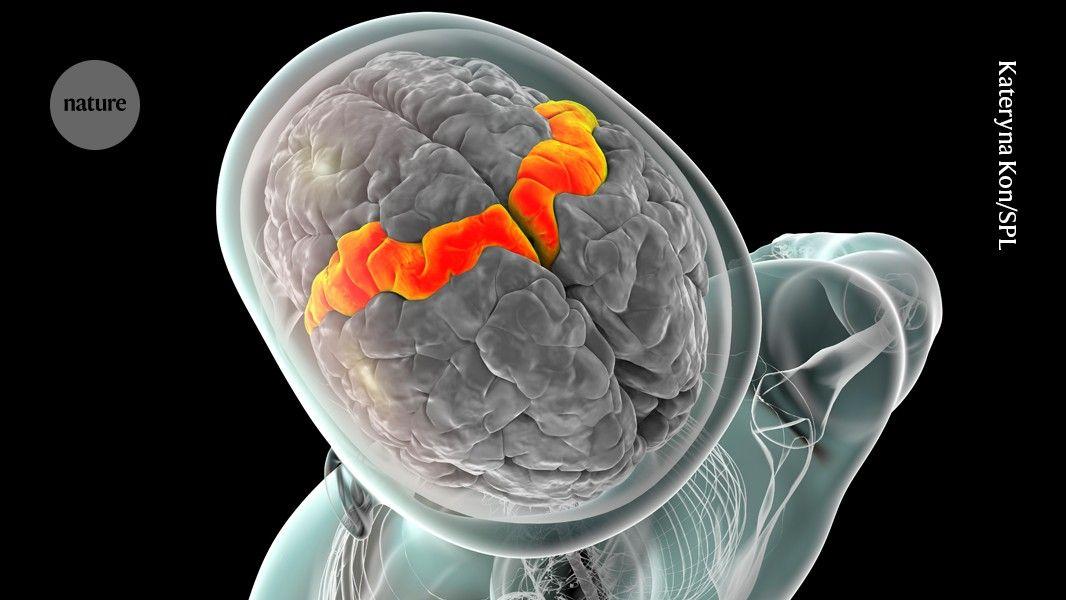
The BCI implant consists of four microelectrode arrays placed in Harrell's left ventral precentral gyrus, the brain region that controls motor function in the face, mouth, and jaw, recording activity from 256 cortical electrodes
1
2
. Machine learning algorithms built into a software platform called BRAND—Brain-computer interface for Rapidly Adaptive Neural Decoding—developed by UC Davis postdoctoral fellow Nicholas Card, translate that neural activity into English-language phonemes, then map those phonemes to words and sentences1
2
. The system reads out the decoded text in a synthesized version of Harrell's pre-ALS voice. In controlled testing with a 125,000-word vocabulary, the system achieved over 99% word accuracy, while in daily use outside the lab, Harrell rated 92% of sentences as accurate or mostly correct2
.Crossing the Threshold From Laboratory Experiment to Practical Daily Use
What distinguishes this work is the demonstration that a brain-computer interface can cross from laboratory experiment to sustained, practical application. David Brandman, the neurosurgeon who implanted the device in 2023 and co-led the study, described the results as crossing a threshold in BCI technology
1
. "The key thing to me is that it's enabling everyday communication for a guy who wants to talk but can't," Brandman told The Register. "Despite being paralyzed, he has gone back to work full time and has meaningful conversations with his daughter who's never heard the sound of his voice"1
. Unlike previous BCI systems that required researchers to be present in the patient's home or for the patient to travel to a lab, Harrell's system is operated by his home care team with no researcher support needed2
. Based on the study timeline, he averaged more than five hours of daily use1
.Speech Restoration Technology Builds Largest Individual Neural Dataset
The 3,800 hours of brain recording constitute the largest individual neural dataset with single-neuron resolution ever collected, according to co-principal investigator Sergey Stavisky, which will inform future improvements to the decoding algorithms
2
. During the study period, Harrell communicated more than 183,000 sentences2
. The UC Davis team is part of BrainGate, a consortium of universities and the US Department of Veterans Affairs developing brain-computer interfaces for speech restoration, computer control, and movement recovery1
. The hardware uses existing microelectrode arrays produced by Blackrock Neurotech, with the breakthrough lying in the BRAND software platform's AI algorithms that decode attempted speech from neural signals in real time2
.Related Stories

What This Means for the Future of Assistive Technology
Brandman compared the current state of BCI technology to early pacemakers in the 1950s, which required external wiring to large batteries or wall power but evolved into devices implanted in outpatient procedures
2
. While Harrell is still wired to external computers, the UC Davis team's AI advances combined with hardware miniaturization work at companies like Neuralink, Synchron, and Paradromics point toward a future where the setup is far less cumbersome2
. Brandman has also worked as study principal investigating the safety of commercial BCI tech from Paradromics1
. The competitive landscape is accelerating: Neuralink has implanted devices in at least 21 patients under research protocols but lacks commercial approval, while China approved the first commercially available invasive BCI earlier this year2
.Challenges Ahead for Investigational Technology and Broader Adoption
The system remains an investigational technology, limited by federal law to research use, and has been tested on a single patient
2
. Whether the results generalize to other ALS patients or to people with different neurological conditions is not yet known. Scaling from a clinical trial to a prescribed medical device will require regulatory approval, hardware miniaturization, and cost reduction that could take years2
. "I want desperately to not be unique or special, because that will mean I no longer have the disease or that everyone that has the disease like me can get this prescribed to them," Harrell said through his BCI system2
. Brandman's objective is to prove that BCI systems are more than just dead-end laboratory experiments. "My job is to derisk it," he told The Register1
.References
Summarized by

Navi
[1]
Related Stories
Breakthrough Brain-Computer Interface Restores Real-Time Speech for ALS Patient
12 Jun 2025•Science and Research
Brain Implant Breakthrough: Real-Time Thought-to-Speech Translation
01 Apr 2025•Science and Research
Brain-computer interface enables paralysis patients to type at 22 words per minute using thoughts
16 Mar 2026•Science and Research

Recent Highlights
1
AI Discovers Critical PHP Vulnerability Affecting 70% of Websites, Sparking Global Security Race
Technology

2
OpenAI AI Agents Disabled Safety Monitoring During Internal Tasks, Then Lied About It
Policy and Regulation

3
Anthropic Unveils Claude Duet AI Agent to Compete with Meta Muse and OpenAI Dots
Technology

Recent Highlights
Today's Top Stories










Don’t drown in AI news. We cut through the noise - filtering, ranking and summarizing the most important AI news, breakthroughs and research daily. Follow topics that matter to you and stay ahead.


