3 Sources
[1]
Byd to unveil functional humanoid robots in august
Tessa's biggest EV competitor BYD just revealed to the South China Morning Post that the humanoids are coming in August at Di Space. "Build Your Dreams" has, from meager battery manufacturing beginnings, become one of the world's largest electric vehicle and clean technology companies. From cars to buses, trucks to SUVs, BYU manufactures key components such as batteries and semiconductors, which has allowed them to dominate the market as they produce most of what they need in-house. Whereas Tesla has emphasized software and autonomous driving, BYD has focused on manufacturing scale, battery technology, and a broad line-up of vehicles. And now - humanoids, just in time to take on Tesla's Optimus. BYD announced that they will unveil their robots at their designated showroom, Di Space, in an interactive exhibit. They clarified to South China Morning Post that their humanoids will be functional. Attendees will be able to engage with the robots. In 2025, reports began to surface that BYD had its sights set on embodied AI and humanoid robots. After all, considering what the company manufactures, AI would be a logical progression, which is why many electric vehicle companies are moving into humanoid robotics, with China leading the way with five companies ranking in the top 5 worldwide. In June, BYD's Stella Li confirmed that they made a significant investment in AI. Interest had intensified because China's humanoid robotics industry has expanded rapidly. BYD became more closely associated with the sector, with expectations that it could leverage its battery technology, manufacturing scale, and automotive expertise to become a major player. The excitement around this venture doesn't surround the humanoids, but rather its manufacturing capabilities; its ability to produce humanoid robots at a scale that few companies can. Li, BYD's executive vice-president, also informed South China Morning Post that they believed that China would become the first market to "see full commercialisation of humanoid robots." Given that Chinese companies are dominating the space right now, that belief appears well on its way to becoming a reality. China sees robotics as a strategic industry, key for future economic growth. Factory automation is the first market. Humanoids could eventually perform tasks such as moving parts, assembling components, inspecting products, and handling materials. That would provide the company an additional advantage, able to test the robots before selling them to others. If they become practical and usable, they could assist not only factories but also warehouses, hospitals, hotels, retail, construction, and eventually homes. Some believe this could become a trillion-dollar industry. Will AI become as transformative as EV? EV says yes. BYD implied in their statement to South China Morning Post that in a relatively short amount of time, they are past concept. They are ready to demonstrate their capacity to produce humanoids quickly. "As BYD unveils its production model for humanoid robots, it will improve Chinese EV makers' overall strength in this area," said Ding Haifeng, a consultant at financial advisory firm Integrity in Shanghai, to South Morning China post. "The market will keep a close watch on other details like its production capacity and prices of the robots." As Tesla's China president Allan Wang Hao said, they could "eventually manufacture humanoid robots," as they haven't successfully released Optimus into the commercial sector. And, with Xpend expected to unleash 1,000 robots upon us, we've officially entered the race to introduce humanoids into the labor force. Xpend expects that to happen in 2027. The race against Tesla is on. Even Musk believes that Tesla and China will meet head-to-head. They will dominate this market - first intending to address gaps in manufacturing. Will AI take over that human job? Parts of it, at least.
[2]
BYD just joined the fight over humanoid robots
Every technology that eventually reshaped ordinary life spent its first years working as a salesman. Sewing machines toured county fairs. Televisions sat in appliance store windows so crowds could gather on the sidewalk. The personal computer moved from hobbyist kits to shopping mall counters, where a clerk could talk a skeptical parent into one. The pattern holds because the machine is rarely the hard part. Convincing people to want the machine is the hard part. For about three years, the humanoid robot pitch has skipped that step. The story sold to investors has been industrial, built on aging workforces, unfilled warehouse shifts and machines that never take a break. Wall Street priced the category on labor replacement, which is why the forecasts keep arriving in trillions of dollars instead of units. The awkward fact is that almost nobody outside a factory floor has ever stood next to one of these things. That changes in a few weeks, and not because of Elon Musk. BYD (BYDDY) will unveil its first humanoid robot in early August at its Di Space experience venues, according to CnEVPost. The first assignment is not a production line. It is a car showroom. Bloomberg / Getty Images Why the humanoid robot race runs through China The number that pulled capital into this category came from Wall Street, not from any robot that works today. The humanoids market could pass $5 trillion by 2050, with more than 1 billion units in use, according to Morgan Stanley Research. About 90% of those units, roughly 930 million, would handle repetitive industrial and commercial work rather than anything you would recognize as a household helper. That same research came with a geographic warning. State backing for what the industry calls embodied artificial intelligence may be "far greater in China than in any other nation," said Sheng Zhong, Morgan Stanley's head of industrials research. Chinese automakers treated that as an invitation. XPeng (XPEV) plans to start mass production of its Iron humanoid by the end of this year, and Chery's Aimoga brand has already begun selling humanoids to consumers, according to CnEVPost. Here is the scale investors are underwriting, by the numbers: * The humanoids market could surpass $5 trillion by 2050, including supply chains and networks for repair, maintenance and support, according to Morgan Stanley. * China is likely to have 302.3 million humanoids in use by 2050, against 77.7 million in the United States, according to Morgan Stanley. * Only 80 million of those units are forecast to be in homes by 2050, according to Morgan Stanley. * BYD delivered 557,090 battery electric vehicles in the second quarter, according to Electrek, against 480,126 for Tesla, according to The Motley Fool. That volume gap explains the strategy. BYD sells more electric cars than anyone, and it sells them through a retail network it already owns. What BYD plans to show off in August The tease came from a WeChat account, which is its own comment on how this industry now works. BYD's Di Space venue in Zhengzhou posted that "in early August, a new friend wants to meet you," according to CnEVPost. BYD later confirmed the unveiling to Chinese financial media but has not released a product name, a design or verified specifications, according to Benzinga. The groundwork is older than the teaser. BYD set up a dedicated team in late 2024 to develop embodied artificial intelligence products, including humanoid robots, under its 15th Business Division, according to CnEVPost. : Executive Vice President Stella Li put retail at the front of the plan. "My goal is to place two or three robots in every dealership," Li said, according to TechNode. She expects robot sales advisors to be usable in real showrooms within one to two years. She also said robots cannot replace the emotional connection between a human salesperson and a customer, which is a strange thing to concede while ordering thousands of them. What struck me when I mapped this against the rest of the field is how little the showroom job actually demands. A robot that explains a battery warranty does not need to lift 40 pounds, work a night shift or avoid injuring a coworker. It needs to talk, point and hold a crowd. That is a far lower engineering bar than a factory, and it runs on a dealer network BYD controls, which turns every store into a demo stage and a data collection site at once. How Tesla's Optimus timeline compares Tesla (TSLA) is attacking the same market from the factory side, and the pace has been slower than the rhetoric. Construction at the Fremont factory for Optimus began after the company decommissioned its Model S and Model X lines, "with anticipated production later this year," according to Tesla's second-quarter shareholder update. Production had not begun as of the July 22 call. Musk has pointed public sales at the end of 2027. Tesla also has to invent the supply chain as it goes, because almost nothing in an Optimus carries over from a car, and the demand question is separate from the engineering one. That is the split worth watching. Tesla is trying to build a general-purpose worker and sell it to the world. BYD is trying to build a specialist greeter and place it in buildings it already pays rent on. My analysis is that the second path produces public proof much sooner, and public proof is what moves a robotics narrative from slide deck to revenue line. It also produces something Tesla cannot buy quickly, which is thousands of hours of unscripted human interaction recorded in a controlled space. What the robot race means for your portfolio Strip away the trillion-dollar forecasts and one thing is clear about the next few years. The first humanoid robot most people ever meet will not be building a car or folding laundry in a kitchen. It will be standing beside a vehicle they are thinking about financing, and its job will be to make them feel something about the brand. That matters for anyone holding an automaker, a chip supplier or a robotics exchange-traded fund, because retail deployment is where consumer comfort gets manufactured. The company that normalizes these machines gets to set the price expectation for every machine that follows. Two questions decide whether August is a milestone or a marketing stunt. Does the unit move and speak without a handler standing offstage, and do BYD's dealers actually want it in the room. Watch the second one more closely than the first. Engineering problems get solved on a schedule. A showroom manager who decides the robot scares customers away is a problem no amount of capital expenditure fixes, and that verdict arrives long before anyone ships a million units. The Arena Media Brands, LLC THESTREET is a registered trademark of TheStreet, Inc. This story was originally published July 30, 2026 at 6:37 PM.
[3]
BYD to debut first humanoid robots in August as rivalry with Tesla intensifies - The Korea Times
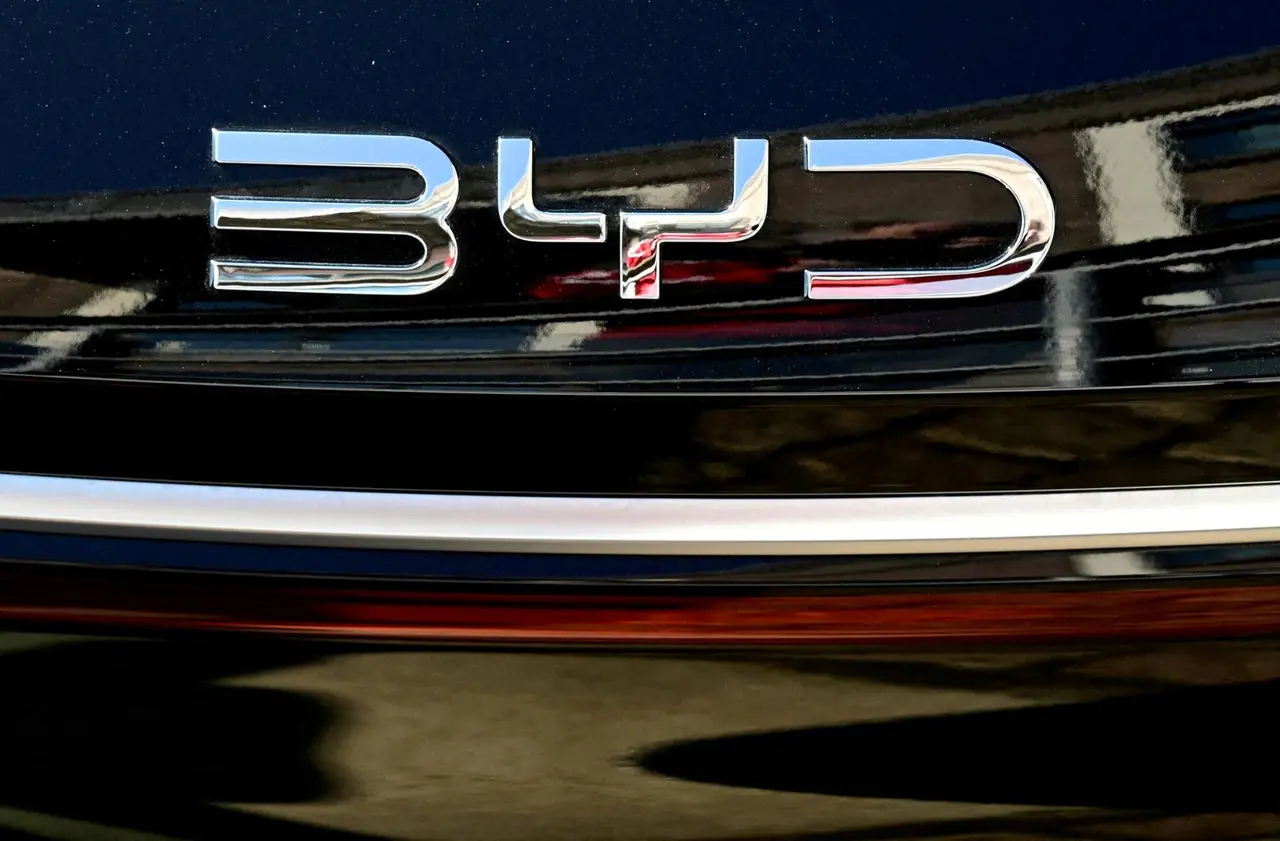
The BYD logo on an ATTO 3 EVO vehicle during a media driving event of Chinese carmaker BYD (Build Your Dreams) in Hamburg, Germany, March 19. Reuters-Yonhap Electric vehicle giant BYD plans to unveil its first humanoid robots within the next few weeks, as China's electric car makers accelerate their push into the embodied artificial intelligence market. The Shenzhen-based company told the South China Morning Post in a statement that its long-anticipated first humanoid robots would debut in August at the firm's Di Space experience centres. The robots will be more than just a concept product and will be able to interact with visitors to its Di Space showrooms, according to the statement issued on Thursday. BYD's network of Di Space centres showcases the firm's latest vehicle technology and products, with the outlets designed to offer visitors a more immersive experience than a traditional showroom. The world's largest EV maker has repeatedly announced its intention to enter the humanoid robot arena, following a path blazed by Tesla with the launch of its Optimus robot. In June, Stella Li, BYD's executive vice-president, said the company had made "a huge investment in AI" and related technologies such as humanoid robotics. She also predicted that China would become the first market to "see full commercialisation of humanoid robots". Other Chinese EV firms including Xpeng, Li Auto and Xiaomi have also outlined plans to develop humanoid robots capable of performing tasks ranging from factory work and logistics to hospitality and elderly care. They are set to mount a challenge to Tesla, which has been promoting its Optimus project worldwide, according to analysts. "As BYD unveils its production model for humanoid robots, it will improve Chinese EV makers' overall strength in this area," said Ding Haifeng, a consultant at financial advisory firm Integrity in Shanghai. "The market will keep a close watch on other details like its production capacity and prices of the robots." In April, Tesla's China president, Allan Wang Hao, said the company's Shanghai Gigafactory could eventually manufacture humanoid robots, supporting CEO Elon Musk's ambition to transform Tesla into a physical AI company. Tesla has yet to commercialise Optimus. Earlier this month, Xpeng said it expected to produce over 1,000 humanoid robots a month by the end of 2026. The Guangzhou-based Âcarmaker said its manufacturing capacity would pave the way for the global launch of Iron, its next-generation humanoid robot, with commercial deliveries projected in 2027. Chinese carmakers are competing with Tesla in a high-stakes race to dominate physical AI, the integration of intelligent software into robotics and machinery, amid an intensified US-China tech rivalry, Ding said. In December, Musk endorsed Xpeng's Iron on social media while predicting Chinese companies would Âdominate the global robotics market alongside Tesla. The humanoid robot sector is one area in which the United States and China are seeking an advantage. This week, the US Federal Communications Commission effectively banned imports of new models of humanoid and quadruped robots from certain countries including China, in a move widely seen as a response to rapid Chinese progress in the sector. China has an edge over the US in the robotics supply chain, especially given its large-scale domestic manufacturing of high-quality, cost-efficient parts, analysts said. The country is now home to nearly 100 humanoid robot makers, accounting for more than 70 per cent of the global Âmarket, according to Lu Hancheng, former director of the Shenzhen-based Gaogong Robot Industry Research Institute. Read the article at SCMP.
Share
Copy Link
Chinese electric vehicle giant BYD announced it will unveil functional humanoid robots in August 2025 at its Di Space showrooms. The move intensifies competition with Tesla's Optimus as Chinese automakers dominate the humanoid robotics market, with China accounting for over 70% of global manufacturers and positioning for full commercialization ahead of the US.
BYD confirmed to the South China Morning Post that it will unveil its first humanoid robots in August 2025 at Di Space experience centers
1
3
. The Chinese electric vehicle giant emphasized these humanoid robots will be functional, not merely concept products, with visitors able to interact directly with the machines at the car showroom venues3
. This marks a strategic shift for the world's largest EV maker, which delivered 557,090 battery electric vehicles in the second quarter, surpassing Tesla's 480,126 units2
. The company established a dedicated team in late 2024 under its 15th Business Division to develop embodied artificial intelligence products2
.
Source: Korea Times
Executive Vice President Stella Li outlined an ambitious retail deployment plan, stating her goal is to "place two or three robots in every dealership"
2
. She expects robot sales advisors to be operational in real showrooms within one to two years, though she acknowledged robots cannot replace the emotional connection between human salespeople and customers2
. This retail-first approach contrasts sharply with competitors focused on industrial applications. The strategy leverages BYD's existing dealer network as both demonstration stages and data collection sites, requiring robots to explain features and engage customers rather than perform demanding factory tasks2
. Li also predicted China would become the first market to "see full commercialisation of humanoid robots"1
3
.BYD's manufacturing scale and automotive expertise provide significant advantages in humanoid robotics production. The company manufactures key components including batteries and semiconductors in-house, allowing it to dominate the EV market through vertical integration
1
. Analysts believe BYD can leverage its battery technology and production capacity to become a major player in the humanoid robotics market1
. Ding Haifeng, a consultant at financial advisory firm Integrity in Shanghai, told the South China Morning Post that "as BYD unveils its production model for humanoid robots, it will improve Chinese EV makers' overall strength in this area," adding that "the market will keep a close watch on other details like its production capacity and prices of the robots"1
3
.China now hosts nearly 100 humanoid robot makers, accounting for more than 70% of the global market, according to Lu Hancheng, former director of the Shenzhen-based Gaogong Robot Industry Research Institute
3
. Chinese companies occupy five of the top five positions worldwide in humanoid robotics1
. The country's edge stems from its large-scale domestic manufacturing of high-quality, cost-efficient parts3
. State backing for embodied artificial intelligence "may be far greater in China than in any other nation," according to Sheng Zhong, Morgan Stanley's head of industrials research2
. China sees robotics as a strategic industry key for future economic growth, with initial focus on factory automation for tasks like moving parts, assembling components, inspecting products, and handling materials1
.Tesla's Optimus program faces mounting pressure from Chinese competitors despite CEO Elon Musk's ambitions. Construction at Tesla's Fremont factory for Optimus began after decommissioning Model S and Model X lines, with anticipated production later in 2025, though production had not begun as of the July 22 shareholder call
2
. Musk has pointed public sales at the end of 20272
. Tesla's China president Allan Wang Hao said the Shanghai Gigafactory "could eventually manufacture humanoid robots," though Tesla has yet to commercialize Optimus1
3
. In December, Musk endorsed XPeng's Iron robot on social media while predicting Chinese companies would dominate the global robotics market alongside Tesla3
.Related Stories
Morgan Stanley Research forecasts the humanoids market could surpass $5 trillion by 2050, with more than 1 billion units in use
2
. Approximately 90% of those units, roughly 930 million, would handle repetitive industrial and commercial work rather than household tasks2
. China is projected to have 302.3 million humanoids in use by 2050, compared to 77.7 million in the United States2
. Only 80 million units are forecast to be in homes by 20502
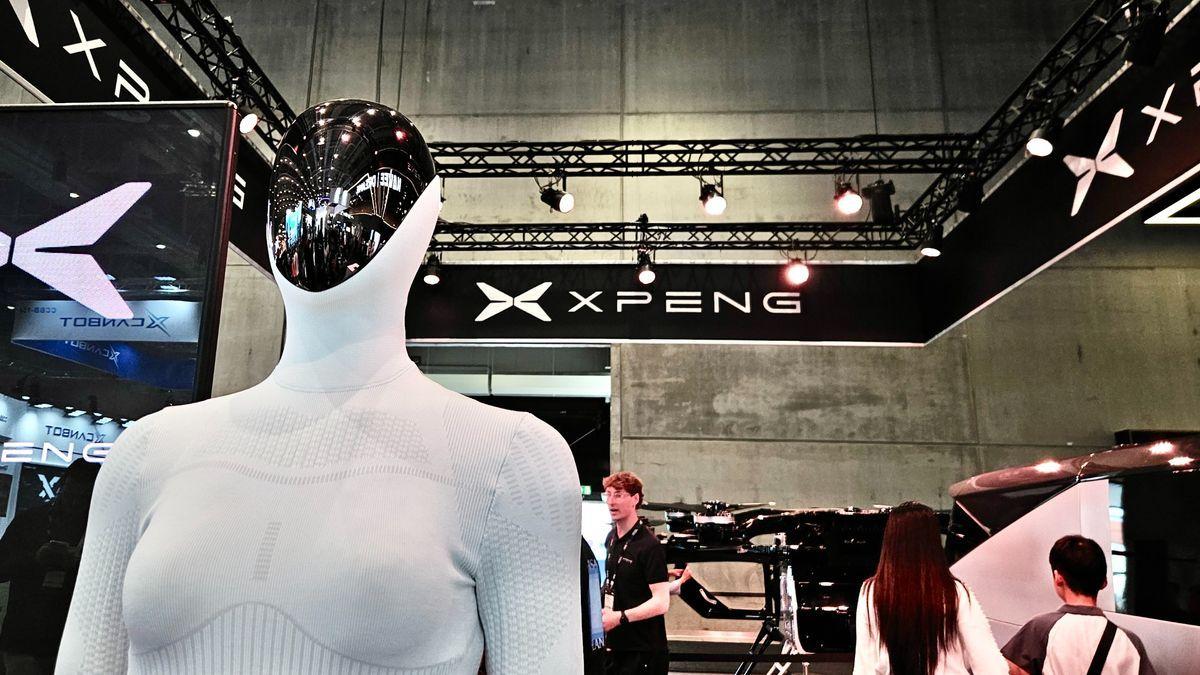
. XPeng announced it expects to produce over 1,000 humanoid robots monthly by the end of 2026, with commercial deliveries of its Iron robot projected for 20271
3
. Other Chinese EV firms including Li Auto and Xiaomi have outlined plans for humanoid robots capable of tasks ranging from factory work and logistics to hospitality and elderly care3
.The US-China tech rivalry now encompasses humanoid robotics as both nations seek strategic advantages. The US Federal Communications Commission effectively banned imports of new models of humanoid and quadruped robots from certain countries including China, widely interpreted as a response to rapid Chinese progress in the sector
3
. Analysts note Chinese carmakers are competing with Tesla in a high-stakes race to dominate physical AI, the integration of intelligent software into robotics and machinery3
. The question remains whether AI and robotics will prove as transformative as the EV revolution, with industry observers answering affirmatively based on current trajectories1
.Summarized by
Navi
[1]
[2]
1
Technology

2
Technology

3
Technology