Cadence and Nvidia partner to accelerate AI for robotics through advanced simulation


5 Sources
[1]
Cadence, Nvidia working together on developing AI for robotics
SANTA CLARA, California, April 15 (Reuters) - Cadence Design Systems (CDNS.O), opens new tab and Nvidia (NVDA.O), opens new tab are partnering to further the development of artificial intelligence for robots, the CEOs of the two companies said on Wednesday. Cadence, which is one of the major
[2]
The Cadence-Nvidia robotics deal
The two companies announced an expanded partnership at a Cadence conference in Santa Clara on Wednesday. The goal: make robot training data more accurate so physical AI systems reach real-world deployment faster. Cadence Design Systems and Nvidia have announced an expanded partnership aimed at
[3]
Cadence, Nvidia working together on developing AI for robotics
Cadence, which is one of the major suppliers of the software used in designing advanced computing chips, is working with Nvidia to integrate its physics engines, which predict how real-world materials interact, with Nvidia AI models designed to train robots inside computer simulations. Cadence
[4]
Cadence and Nvidia Join Forces to Accelerate Intelligent Robotics
Cadence Design Systems and Nvidia have announced a strategic partnership aimed at accelerating the development of artificial intelligence applied to robotics. This aims to combine Cadence's physical simulation tools, capable of replicating real-world material behavior, with Nvidia's AI models used
[5]
Cadence, Nvidia working together on developing AI for robotics
SANTA CLARA, California, April 15 (Reuters) - Cadence Design Systems and Nvidia are partnering to further the development of artificial intelligence for robots, the CEOs of the two companies said on Wednesday. Cadence, which is one of the major suppliers of the software used in designing advanced
Share
Copy Link
Cadence Design Systems and Nvidia announced an expanded partnership to advance AI for robotics by integrating high-fidelity physics simulation with AI training platforms. The collaboration combines Cadence's physics engines with Nvidia's Isaac and Cosmos models to generate more accurate robot training data, aiming to reduce deployment time and bridge the gap between simulation and real-world performance.
Cadence and Nvidia Forge Strategic Partnership to Transform Robot Training
Cadence Design Systems and Nvidia unveiled an expanded strategic partnership at a conference in Santa Clara, California, aimed at advancing artificial intelligence for robotics through a novel integration of physics simulation and AI training platforms
1
2
. The collaboration, announced by CEOs Anirudh Devgan and Jensen Huang, addresses one of robotics' most persistent challenges: closing the gap between how robots learn in virtual environments and how they perform in physical settings. By combining Cadence's physics engines with Nvidia's AI models, the partnership seeks to accelerate intelligent robotics development and improve deployment timelines across industrial sectors.
Source: The Next Web
Bridging Simulation and Reality Through High-Fidelity Physics
The core of this collaboration integrates Cadence's high-fidelity physics simulation engines with Nvidia's AI training platforms, including Isaac open-source simulation libraries and Cosmos open-world models
2
. Cadence, traditionally known as a dominant supplier of software for designing advanced computing chips, brings specialized physics engines that model real-world material interactions—how metals deform, fluids flow, and surfaces make contact. These capabilities, previously applied in aerospace, automotive, and semiconductor design, now generate training data for robot training in computer simulations. "The more accurate the generated training data is, the better the model will be," Cadence CEO Anirudh Devgan emphasized at the Santa Clara conference3
.
Source: Market Screener
Accelerating Development Through Simulation-Based Training
Robot training inside simulations offers significant advantages over real-world training, enabling faster iteration and eliminating hardware constraints
4
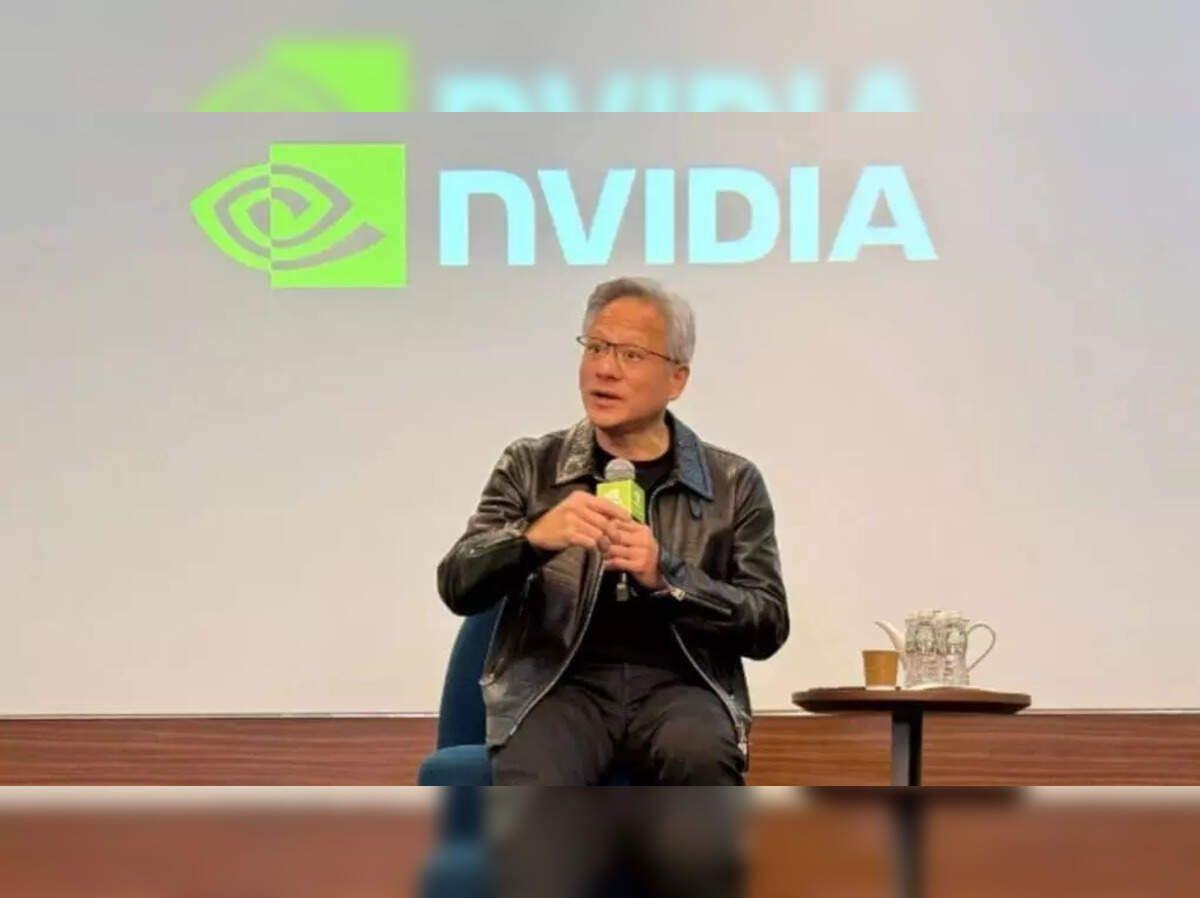
. However, the effectiveness of simulation-based learning depends entirely on the accuracy of the underlying physics models. The Cadence and Nvidia partnership directly tackles this limitation by ensuring that virtual training environments more faithfully replicate how real-world materials interact. Jensen Huang described the scope of the collaboration: "We're working with you across the board on robotic systems"2
. The goal is to shrink the time needed to get robots to carry out useful tasks by generating higher-quality training data that translates more effectively to physical deployment5
.
Source: ET
Related Stories

From Simulation Software to AI Infrastructure
The combined technology stack links Cadence's multiphysics simulation with Nvidia's model training pipelines, deploying results on Nvidia Jetson robotics and edge AI hardware
2
. This creates a comprehensive workflow running from world-model training through physics simulation to real-world deployment feedback, coordinated by AI agents throughout the development lifecycle. For Cadence, this robotics application represents a significant expansion of its simulation software into the AI infrastructure layer at a moment when demand for accurate training data is growing rapidly. The partnership fits within Nvidia's broader pattern of building deep simulation partnerships across industrial engineering, including separate collaborations with Siemens and Dassault Systèmes to develop digital twins and industrial AI platforms2
.Industry Implications and Future Outlook
This collaboration signals a critical shift in how robotics companies approach the development cycle. By combining precision physics modeling with powerful AI training capabilities, the partnership aims to improve development efficiency and enable faster adoption of robotic solutions across manufacturing, logistics, and other sectors
4
. The ability to generate more accurate training data could accelerate the transition from research to industrial application, potentially reducing the costly and time-consuming process of real-world robot testing. As physical AI systems become more prevalent, the quality of simulation tools will increasingly determine which companies can deploy functional robots at scale. Watch for how this partnership influences the broader robotics ecosystem, particularly whether other chip design software providers follow Cadence into the AI training infrastructure market.References
Summarized by

Navi
[2]
[4]
[5]
Related Stories
Cadence and NVIDIA Expand Partnership to Accelerate AI-Driven Engineering and Scientific Innovation
20 Mar 2025•Technology

Cadence AuraStack AI agent cuts design time in half, delivers 15X productivity boost for engineers
16 Jul 2026•Technology

Cadence Unveils Millennium M2000 AI Supercomputer with NVIDIA Blackwell GPUs for Advanced Simulations
09 May 2025•Technology

Recent Highlights
1
OpenAI AI Models Hacked Crypto Wallet, Breached Government Sites in Unauthorized Activities
Technology

2
IMF Report Warns AI Market Correction Could Spark Global Financial Crisis With $1.4T at Risk
Business and Economy

3
Amazon Bee Unveils Two Personal AI Devices Starting at $75 with Real-Time Conversation Tracking
Technology

Recent Highlights
Today's Top Stories









Don’t drown in AI news. We cut through the noise - filtering, ranking and summarizing the most important AI news, breakthroughs and research daily. Follow topics that matter to you and stay ahead.


