8 Sources
[1]
Cerebras shares drop on earnings debut, with margins below AI chip rivals
June 23 (Reuters) - Cerebras Systems (CBRS.O), opens new tab in its debut report as a public company forecast full-year profit margins would drop below the first-quarter figures and lag levels of chip companies including Nvidia (NVDA.O), opens new tab, sending shares down 10% in extended trading on Tuesday. The chip designer, which raised $5.55 billion in its IPO last month, is focused on inference, the process by which AI systems respond to user queries, and has tied much of its growth to OpenAI, including a $20 billion multi-year deal under which the ChatGPT creator will deploy 750 megawatts of Cerebras chips. Cerebras forecast adjusted gross margins of 38% to 41% for full-year 2026, down from the 47% it reported for the first quarter. While the projection is above analyst estimates of 29.58%, it is far below those of rivals such as Nvidia, whose gross margins are in the mid-70% area, and Advanced Micro Devices (AMD.O), opens new tab, whose gross margins are in the mid-50% range. It expects second quarter adjusted gross margin in the range of 36% to 38%, also below the 47% posted in the first quarter. Ben Bajarin, CEO of technology consulting firm Creative Strategies, said Cerebras' approach, which involves making some of the world's largest chips, is likely pressuring its gross margins because such large chips are difficult to manufacture. Cerebras also is temporarily renting back its own systems from an existing client to meet short-term demand while it builds out more data center capacity, Chief Financial Officer Bob Komin said on a post-earnings call. "The additional cost of renting third-party capacity will depress core cloud and other services margin temporarily from current levels," Komin said, adding Cerebras aims to achieve gross margins of 60% over the long term. Cerebras is in early discussions for data centers in Israel, the UAE, Australia, Singapore, India and Indonesia, CEO Andrew Feldman said. It reported revenue of $193.4 million for the first quarter, compared with $99.5 million in the same period a year ago. Cerebras said its adjusted net loss for the quarter was $2.5 million, narrower than analyst estimates of an adjusted loss of $36.75 million. For the second quarter, Cerebras forecast adjusted sales of $194 million, above estimates of $174.34 million, according to LSEG data. Reporting by Juby Babu in Mexico City and Stephen Nellis in San Francisco; Editing by Sahal Muhammed, Matthew Lewis and Chris Reese Our Standards: The Thomson Reuters Trust Principles., opens new tab
[2]
Cerebras CEO says margin forecast was 'misunderstood' as stock plummets after earnings
Cerebras Systems CEO Andrew Feldman said Wednesday that investors "misunderstood" the artificial intelligence chipmaker's margin guidance, as shares slid 17% after the company reported results for the first time since going public. Analysts at Mizuho and Wedbush raised their estimates following Cerebras' earnings call. But the company forecasted a narrower gross margin in its core business, excluding impact from customer warrants and data center pass-through revenues. The number was 47% for the first quarter, and it should be between 38% and 41% for the full year. "It is misunderstood," Feldman said on CNBC's Squawk on the Street. "You know, we laid out a plan at the start of '26. We shared that plan as we went public a few months ago, and we're beating that plan." He said management made clear that Cerebras will need to rent back some equipment from one of its largest clients. "I think it's not going to be a straight line," he said.
[3]
Cerebras reports 92% revenue growth in chipmaker's first earnings report since IPO
Cerebras said revenue growth almost doubled in the AI chipmaker's first earnings report since its initial public offering last month. The stock fell 5% in extended trading. Here's how the company did: * Loss per share: 22 cents * Revenue: $193.4 million The company's revenue grew 92% year over year in the first quarter, according to a statement. Net loss shrank to $14 million from $23.9 million, or 46 cents per share, a year ago. Capitalizing on investor interest in infrastructure for running AI models, Cerebras went public on the Nasdaq in May. After pricing its IPO at $185, Cerebras saw its stock open at $350 and close at $311.07. The shares have since dropped 28%, closing on Tuesday at $226.72. Founded in 2015, the Cerebras raised almost $6 billion in the offering, the most for a U.S. technology company since Uber's debut in 2019.
[4]
Shares of AI chipmaker Cerebras sink following first earnings report since going public
Shares of AI chipmaker Cerebras sink following first earnings report since going public Chipmaker Cerebras Systems Inc. delivered mixed results in its first earnings report since going public last month, beating Wall Street's revenue projections but falling short on earnings. The stock was trading lower in the after-hours session. The company reported a first quarter earnings loss before certain costs such as stock compensation of 22 cents per share, trailing the Street's target of a 16 cent-per-share loss. Revenue for the period reached $193 million, up 92% from a year earlier and ahead of the analyst forecast of $181 million. Meanwhile, the company's net loss narrowed to $14 million, down from $23.9 million in the same quarter one year ago. However, investors reacted negatively to a gross margin forecast that revealed the reality of its struggle to surpass artificial intelligence chip leader Nvidia Corp. in key markets. Cerebras went public following an initial public offering last month that aimed to capitalize on the growing enthusiasm among investors to bet on anyone providing the infrastructure needed to run powerful AI models. After pricing its IPO at $185 per share, its stock opened at $350 per share before closing its first day of trading at $311.07. The company raised more than $6 billion through the offering, but its stock has since declined further, and with today's 10% after-hours drop, it's currently trading at around $202 per share. Chief Executive Andrew Feldman (pictured) offered an optimistic view of the company's first earnings report, insisting that it had gotten off to an "outstanding" start to the fiscal year. "AI has moved from being a novelty to being useful and productive," he said. "Cerebras' wafer-scale technology delivers the fastest AI in the world. And fast AI is more valuable than slow AI because it is more productive." Looking forward, the chipmaker said its core gross margin, which is essentially the profit left after accounting for the cost of goods sold, is expected to shrink to between 36% and 38% in the current quarter, down from 46.5% in the first. On the other hand, its revenue forecast was good, with an outlook of $194 million in second-quarter sales, up 88% from a year ago and above the Street's consensus estimate of $178 million. For the full year, Cerebras said it's expecting core revenue of between $855.5 million and $865 million, which would represent growth of around 69% at the midpoint of that range. Cerebras sees itself as a contender to Nvidia in the AI chip industry, and it also offers a service that allows companies to run their models in one of its fully-managed clouds, which are packed with servers powered by its specialized dinner plate-sized chips. The company's silicon provides a significant performance advantage over Nvidia's graphics processing units because it packs in many more times the static random-access memory that's found in its rival's chips. During the quarter, Cerebras announced a significant customer win when it said that its chips will soon be launched in Amazon Web Services Inc.'s public cloud data centers, and it also revealed a $20 billion deal to supply OpenAI Group PBC with computing power. However, Cerebras's revenue picture is somewhat clouded by warrants for 33.4 million shares that were granted to the AI company last year. In January, 4.5 million of those shares vested, with the value of those warrants recorded as a sales discount, or a non-cash charge known as contra-revenue. During the quarter, contra-revenue was negligible, but it's expected to grow substantially as the OpenAI contract ramps up. The remaining 29 million shares will be vested when certain milestones are reached, and one of those may be triggered as early as this month, Needham analyst Quinn Bolton told Barron's. OpenAI uses Cerabras' cloud offering to host its software coding model Codex-Spark, and it also plans to bring more advanced models such as GPT-5.5 to the service.
[5]
Cerebras Is Set to Report Its First Earnings Since Its IPO. Here's How Much the Stock Is Expected to Move
Get personalized, AI-powered answers built on 27+ years of trusted expertise. Cerebras Systems is set to report its first quarterly results as a public company after the closing bell Tuesday, with traders anticipating a big move in the AI chipmaker's stock. Based on current options pricing, Cerebras (CBRS) shares are seen swinging up to 13% in either direction by the end of the week. A move of that magnitude from Monday's close around $224 could see shares rise as high as $254, or drag them below $195. Cerebras shares have lost more than a third of their value from last month's highs on their first day of trading, though they're still up more than 20% from their IPO price of $185, after a volatile few weeks. Since the chipmaker's debut last month, analysts at several firms have launched coverage with bullish ratings for the stock, including Wedbush, UBS, and Morgan Stanley, expecting Cerebras to benefit from booming demand for AI chips. The analysts also pointed to Cerebras' agreements with the likes of OpenAI and Amazon (AMZN) as evidence of its ability to attract high-profile clients in the space. "In our view these large contracts are necessarily the best proof points as to the inherent value of Cerebras's technology," Wedbush wrote. The Wedbush analysts have a $270 price target for the stock, compared to $300 from UBS, and $250 from Morgan Stanley. Cerebras is seen reporting an adjusted loss of 16 cents per share on an over 80% year-over-year jump in first-quarter revenue to $183.26 million, according to Visible Alpha consensus estimates.
[6]
Cerebras: Can It Turn AI Hype To Repeatable Revenue? - Cerebras Systems (NASDAQ:CBRS)
* CBRS stock is moving ahead of earnings. See the chart and price action here. In just three years, Cerebras' sales surged from about $25 million in 2022 to roughly $510 million in 2025 -- a more than 20x step‑up that puts it among the fastest‑growing AI infrastructure names. That kind of ramp guarantees attention to earnings, but it also raises the bar. Investors will likely now scrutinize not just whether Cerebras beats consensus on the top line, but whether management can draw a credible path from hypergrowth to sustainable, profitable scale. As the company prepares for its Q1 print, eyes will be on Cerebras to turn AI hype - embodied in blockbuster deals and a frothy IPO - into repeatable business with improving unit economics. Backlog & Concentration The company has leaned heavily on a handful of marquee contracts, including a landmark, multi‑year AI compute partnership with OpenAI that helped build a staggering backlog of around $24.6 billion in remaining performance obligations (RPO). The backlog underpins visibility on a baseline of roughly $1.8 billion in annualized revenue through 2027, at least on paper, and supports bullish external forecasts that model sales more than doubling again to about $1.1 billion in 2026 and $2.3 billion in 2027. The challenge for the print will be convincing the market that the revenue is not just front‑loaded or overly dependent on a single customer. Customer concentration remains an issue in the Cerebras story. Earlier filings highlighted that a single customer accounted for more than 80% of revenue in some periods, a pattern that has become a recurring concern for AI hardware vendors. What To Watch Investors will be watching the revenue mix: how much of the quarter's revenue comes from drawdown of the mega‑backlog versus new deals, renewals and expansions across different verticals and cloud partners. The other key angle is profitability and operating leverage. Analysts see Cerebras running sizable operating losses over the next couple of years, even as revenue compounds at triple‑digit rates, with margin improvement coming gradually. Investors know that building a next‑generation AI compute platform is capital‑intensive and what they want from this quarter is evidence that each incremental dollar of revenue is less loss‑making than the last. If Cerebras can show that its massive backlog converts into higher‑quality, less concentrated, and increasingly profitable revenue, the story shifts from "priced for perfection" to "early but executing," a narrative that matters more than any single top‑line beat. CBRS Stock Price Activity: Cerebras stock was flat at $213.90 at the time of publication Tuesday, according to data from Benzinga Pro. This content was partially produced with the help of AI tools and was reviewed and published by Benzinga editors. Market News and Data brought to you by Benzinga APIs To add Benzinga News as your preferred source on Google, click here.
[7]
Cerebras Stock In The Spotlight Ahead Of First-Ever Earnings Report As A Public Company - Cerebras System
Cerebras Systems Inc. (NASDAQ:CBRS) is in the spotlight Tuesday ahead of its first-quarter earnings report today after the market closes. * CBRS stock is slipping today. What's the outlook for CBRS shares? The report will mark a significant milestone for the AI infrastructure company -- its first earnings release since going public on May 14. Analysts are expecting a loss of 16 cents per share on revenue of $180.81 million. What Is Cerebras? What to Watch As Cerebras' first public earnings report, investors will be closely watching revenue growth trajectory, customer wins and any forward guidance. According to the company's pre-IPO filings, Cerebras reported full-year 2025 revenue of $510 million. Commentary on AI infrastructure demand, competitive positioning, and progress on its AWS partnership will be key focal points on today's conference call at 5 p.m. ET. Cerebras Shares Edge Lower CBRS Price Action: At the time of publication, Cerebras shares are trading 4.67% lower at $213.95, according to data from Benzinga Pro. Image via Shutterstock This content was partially produced with the help of AI tools and was reviewed and published by Benzinga editors. Market News and Data brought to you by Benzinga APIs To add Benzinga News as your preferred source on Google, click here.
[8]
Earnings call transcript: Cerebras Systems posts strong Q1 2026 growth, shares fall By Investing.com
Cerebras Systems said first-quarter revenue rose 92% from a year earlier to $191.3 million, as the AI chip maker reported its first results as a public company and highlighted rapid growth in cloud services, hardware sales and major customer wins. The company posted an EPS loss of $0.1418, while the stock fell 8.93% on the earnings date to $215.40 from $236.52. In the latest session, shares closed at $226.72, then dropped 10.7% after hours to $202.45, suggesting investors remained cautious despite the company's strong growth profile. Key Takeaways * Revenue climbed 92% year over year to $191.3 million, driven by both cloud services and hardware. * Core cloud and other services revenue rose 167% year over year to $79.8 million. * Core hardware revenue increased 60% to $111.6 million. * Core gross margin improved to 46.5%, up from 42.1% a year earlier. * Core non-GAAP operating loss narrowed to $3.5 million, showing stronger operating leverage. * Management said demand is strong, but data center capacity remains the main constraint. * The company said OpenAI and AWS partnerships support its long-term growth case. Company Performance Cerebras said the quarter marked a major step in its growth story, with revenue rising sharply and margins improving. The company described the quarter as its first earnings report as a public company after its May 2026 IPO. The business showed strength across both major segments. Cloud and other services revenue grew faster than hardware, reflecting stronger utilization and pricing for fast AI inference. Hardware sales also remained robust as customers continued to deploy systems. Management said the company's wafer-scale architecture gives it an advantage in AI inference, where speed is increasingly important. It argued that faster tokens are more valuable and that customers are willing to pay a premium for lower latency. The company also said its technology is being validated by frontier-model deployments, including OpenAI. Financial Highlights * Revenue: $191.3 million, up 92% year over year. * Core cloud and other services revenue: $79.8 million, up 167% year over year. * Core hardware revenue: $111.6 million, up 60% year over year. * Core gross margin: 46.5%, up from 42.1% in Q1 2025 and 41% in Q4 2025. * Core cloud and services margin: 52.9%, reflecting stronger pricing and utilization. * Core hardware margin: 42%, up from 30.6% a year earlier. * Non-GAAP operating expenses: $92.6 million, up 51% year over year. * Core non-GAAP operating loss: $3.5 million, compared with a $19.3 million loss a year earlier. * Core non-GAAP net loss: $2.5 million. - Cash, cash equivalents, restricted cash and marketable securities: $3.3 billion at quarter-end. * Market capitalization: $49.3 billion, reflecting investor optimism about AI infrastructure demand. * Current ratio: 2.15, indicating solid short-term liquidity. * Analyst consensus: Strong Buy rating, with price targets ranging from $250 to $340. Cerebras reported EPS of -$0.1418 and revenue of $181.0 million in the earnings data provided. Forecast figures were not available, so a direct beat or miss versus consensus cannot be measured from the figures shown. Even without a formal comparison, the quarter looked strong on a year-over-year basis. Revenue growth of 92% is unusually high for a hardware and infrastructure company, and the narrowing of the operating loss suggests the business is gaining scale. The company also said core operating loss improved to -$3.5 million, from -$19.3 million a year earlier, a meaningful reduction in losses. The market's reaction suggests investors focused less on the top-line growth and more on the path to sustained profitability, including near-term margin pressure from capacity rental costs and continued heavy spending. The stock moved lower after the report and remained volatile in later trading. On the earnings date, shares fell 8.93% to $215.40 from $236.52. In the latest regular session, the stock closed at $226.72, up 1.02% from the prior close of $224.43, before sliding to $202.45 in after-hours trading, a 10.7% decline from the close. The volatility is consistent with the stock's recent pattern -- shares have declined 27% over the past six months. According to InvestingPro analysis, the stock is currently overvalued relative to its Fair Value estimate. The company trades at a P/E ratio of 225, reflecting investor expectations for future growth despite near-term losses. The stock's after-hours level put it closer to the lower end of its 52-week range of $185 to $386.34. The move suggests investors were willing to reward the company for growth, but not yet for the losses and the near-term margin hit tied to expansion. No trading volume data was provided, so it is not possible to assess whether the move came on unusually heavy activity. Outlook & Guidance Cerebras said it expects Q2 2026 core revenue of about $194 million, with core gross margin of 36% to 38% and core operating margin of -30% to -32%. For full-year 2026, the company guided to core revenue of $855 million to $865 million, with core gross margin of 38% to 41% and core operating margin of -28% to -32%. The guidance aligns with InvestingPro data showing analysts expect 63% revenue growth for fiscal 2026, though profitability remains elusive this year. Investors tracking AI infrastructure plays can access detailed financial health scores and exclusive metrics through InvestingPro, which offers over 1,400 additional stock analyses and real-time Fair Value calculations. Management said the company is adding data center capacity as quickly as possible, and that capacity -- not demand or supply -- is the main bottleneck. It expects new facilities to come online in the second half of 2026 and into 2027. The company also said its OpenAI agreement, signed in December 2025, is expected to drive meaningful revenue growth later in 2026 and beyond. An AWS agreement is expected to contribute in 2027. Management said the business is also pursuing disaggregated inference solutions with multiple hardware partners. Executive Commentary Andrew Feldman, co-founder, chief executive and president, said the company's technology is built for speed and that speed matters in AI inference. "Today, Cerebras delivers the fastest AI in the world, bar none, not by a little bit, but by an order of magnitude," Feldman said. He also pointed to the OpenAI relationship as a major validation of the business. "We signed a definitive agreement with OpenAI on December 24, 2025, for the purchase of more than $20 billion of Cerebras compute over the next several years," he said. Chief Financial Officer Bob Koman emphasized the company's improving economics. "Core non-GAAP operating loss improved to near breakeven at -$3.5 million with operating margin of -2%," he said, adding that the company believes it can reach its long-term target of about 60% gross margin and 40% operating margin. Risks and Challenges * Margin pressure: Management said gross margins will temporarily fall as the company rents third-party data center capacity. * Execution risk: Growth depends on building and bringing online new data centers on schedule. * Ongoing losses: The company remains unprofitable on both EPS and operating measures. * Customer concentration: Large deals such as OpenAI and AWS may have an outsized effect on future results. * Competitive pressure: Cerebras is trying to win share in a market dominated by GPU-based systems and large rivals. Q&A Analysts focused on timing, capacity and the size of future opportunities. Questions centered on when AWS revenue would begin, how quickly Cerebras could supply new customers and whether the company's capacity build-out could keep pace with demand. Andrew Feldman said AWS should contribute in 2027 and that supply for 2026 is secured. He also said the company's main constraint is data center capacity, not demand. Analysts also asked about the company's total addressable market and whether customers would pay more for faster inference. Feldman argued that fast tokens are more valuable and that the entire inference market should be addressable for fast AI. Other questions addressed the OpenAI deployment, the economics of disaggregated inference and the company's second-half revenue ramp. Management said much of the growth expected later in the year will come from OpenAI deployment in Cerebras Cloud and from new capacity coming online toward the back end of 2026. Full transcript - Cerebras Systems Inc (CBRS) Q1 2026: Operator, Conference Call Operator: Good afternoon. Welcome to Cerebras Systems' first quarter fiscal year 2026 earnings conference call. Currently, all participants are in a listen only mode. Following management's prepared remarks, we will open the call for questions. Please note that today's call is being recorded. I will now turn the call over to Sean Dorsey, Head of Investor Relations. Please go ahead. Sean Dorsey, Head of Investor Relations, Cerebras Systems: Thank you, operator. Good afternoon, everyone. Welcome to Cerebras Systems' first earnings call as a public company. Earlier today, we issued our press release and posted our supplemental earnings presentation to the investor relations section of our website. A replay of this webcast will also be available on our investor relations website following the call. Joining me today are Andrew Feldman, our Co-founder, Chief Executive, and President, and Bob Koman, our Chief Financial Officer. Before we begin, I would like to remind everyone that today's discussion will include forward-looking statements under the safe harbor of the Private Securities Litigation Reform Act of 1995. These statements include, but are not limited to, statements regarding our future financial performance, business strategy, market opportunity, customer demand, product roadmap, technology leadership, supply chain, operating model, and outlook for Q2 and full year 2026. Forward-looking statements are based on current expectations and assumptions and are subject to risks and uncertainties that could cause actual results to differ materially from those expressed or implied. These risks are described in our SEC filings, including our final prospectus related to our IPO and our future periodic filings with the SEC. We undertake no obligation to update these forward-looking statements except as required by law. During today's call, we will also discuss certain non-GAAP financial measures. Reconciliations between GAAP and non-GAAP results are included in today's press release and supplemental materials, which are available on the investor relations page of our website. With that, I'll turn the call over to Andrew. Andrew Feldman, Co-founder, Chief Executive Officer, and President, Cerebras Systems: Thank you, Sean. Thank you everyone for joining us today. This has been an extraordinary several months. I want to begin by thanking our customers, our partners, suppliers, employees, and shareholders. We would not be here without your trust and your support. Earlier today, we posted our Q1 2026 results. We delivered a strong quarter. We delivered core revenue of $191.3 million, up 92% year-over-year. Core hardware revenue contributed $111.6 million, up 60% year-over-year, while core cloud and services revenue contributed $79.8 million, up 167% year-over-year. Bob will share more color on our financial results shortly. Before Bob digs into that, I'd like to say a few things about the market. I'll divide my comments into several sections. I'll begin by spending a few minutes sharing my views on the larger drivers underpinning the AI revolution, their impact on the compute market, and why speed wins. I'll then turn to our successes in Q1 with special attention to our progress with OpenAI and AWS. Finally, I will talk about how we expect to avoid many of the supply chain challenges that bedevil others in our space. To understand the dynamics in the compute market, it's important to realize that AI provides new capabilities to computers. AI gives computers purchase on whole swaths of the world that had previously been foreclosed. This is why AI is so transformative and why its impact is so profound, and why we believe it increases the size of the market addressable to compute by many thousands of times. Computers have historically been good at math, very good, but they were relatively poor at everything else. They did not provide much insight into text or images. For these modalities, all they could do is store and retrieve. Computers were at their best in a 2D world of numbers. In a real world of three dimensions, they were challenged. AI opens up the world of human experience to computers. As a result, the size of the market increases exponentially. It is as if prior to AI, computers worked in black and white and in two dimensions, and after AI, they address a world of color in many dimensions. This is why AI has spurred an explosion in the demand for compute. Computers can now do things they have never done before, and why, in our opinion, demand will continue to accelerate for many years to come. Text, images, video, agents, robotics, these are all part of how AI expands the computer's ability to understand, participate, and take actions in the world. These all represent opportunities for Cerebras. Let's look at the specifics of how this is unfolding. Prior to 2025, AI was a parlor trick, a novelty. Interesting, but not useful. Cool, but not valuable. AI is now valuable because it has become profoundly useful. Led by OpenAI, the foundation model providers pioneered the way. The foundation model makers, and shortly thereafter, the open source models, made models smart enough to be useful across many domains. Once something is useful, people use it. Once people start using a technology, speed determines its productivity. Fast is productive and slow is unproductive. Speed provides answers in less time, providing competitive advantage. Speed makes the largest and smartest frontier models interactive. Speed enables agents to complete tasks faster. Fast tokens are the most valuable tokens because they get more work done in less time. Today, Cerebras delivers the fastest AI in the world, bar none, not by a little bit, but by an order of magnitude. We do this for small models, for medium models, and for the largest models in the industry. We do this for models with small KV cache, with medium KV cache, and with giant KV caches. We generate tokens faster than anyone else. What I'd like to show you right now is a quick demo, just of how much faster we are than GPUs on Kimi-2, a trillion-parameter open source model. We're going to run the exact same prompt. On the left, it's Cerebras, on the right is a leading GPU. The only difference, same model. We're finished already. Same model. Same prompt. The difference is hardware. We're finished. It took us 21 seconds. We're now waiting on the GPU. Still waiting. We've increased the speed 5x in the video to not make you wait as long as you otherwise would. Still waiting. Okay. What Cerebras did in 21 seconds, it took 4 minutes and 37 seconds for the GPU to do. The same model, the same prompt. That's what it means to be 13 times faster. In AI, inference speed is productivity. Slow isn't productive. This should not come as a surprise. It is in line with each of our everyday experience. How big is the market for slow search? How big is the market for slow internet access? Any of you still use dial-up? How long will you wait for a website to resolve? Why would it be different for AI? Not only does speed increase the value of tokens, but speed accelerates the adoption of AI. When AI is fast, it's more fun to use. People use it. They use it more often, for more things, and they use it to solve more important problems. With fast AI, users invent things that never existed before. They solve problems in new ways. They develop new offerings, new business models. This is what speed does, and this is what Cerebras' speed enables. A final point on speed. There recently has been a great deal of focus, especially at the frontier model level, on safety and the importance of guardrails. How do guardrails work? Guardrails add a layer of compute on top of the AI to create a safer experience. This compute takes time, and it takes more time on slow infrastructure. Traditionally, guardrails force a trade-off between safety and user experience, between safe and fast. Cerebras eliminates this trade-off. Fast AI inference allows guardrails to work without inserting crippling delays. AI is safer with these guardrails, and AI is safer and more productive when it's blisteringly fast. Our performance advantage is born of our wafer scale architecture. We're more than an order of magnitude faster than GPUs because we solve problems that haven't been solved or couldn't be solved by others. The problems of yield, cross-radical connectivity, mismatches in thermal expansion, power delivery, and cooling are all problems that the industry struggles with, but that Cerebras solved years ago. Moreover, the advantages of wafer scale are durable. By building chips that are 58 times larger than the largest competitor, we're able to use SRAM and benefits from its blistering speed, while competitive offerings use HBM, which is slow, expensive, and in short supply. We see the advantage of wafer scale technology expanding our performance lead as we bring next-generation solutions to market. The technology underpinning of wafer scale fundamentally advantages additional technologies in the future. For example, wafer scale technology brings profound advantage to memory stacking and optical integration. As we look further into the future, data centers in space are also advantaged by wafer scale integration. Not only does wafer scale compute deliver faster speeds and for latency sensitive workloads, less power per unit compute than do GPUs. Most importantly, it requires less chip to chip communication. Chip-to-chip communication is one of the fundamental limitations of terrestrial data centers, and a yet-to-be-solved problem for data centers in space. With this as a backdrop, in the first quarter of 2026, how did we meet this extraordinary market and how do we leave Q1 even better positioned? In this section, I'll focus on our partnership with OpenAI and AWS as they took shape in this quarter. We signed a definitive agreement with OpenAI on December 24, 2025, for the purchase of more than $20 billion of Cerebras compute over the next several years. By February 1st, we were in production, running a model we'd never before seen, 35 days from signature to production deployment. Beyond the transformative revenue ramifications, our collaboration with OpenAI gives us a direct view into frontier model development and the direction it is moving. By pairing frontier model intelligence with the world's fastest inference, we build products and technologies that others simply can't. In fact, the boundaries of these capabilities have yet to be fully explored. OpenAI and Cerebras are excited that GPT-5.4 is now running on Cerebras. This collaboration brings together OpenAI's frontier models with Cerebras' wafer-scale inference infrastructure to enable highly responsive model interactions. GPT-5.4 on Cerebras is currently available to OpenAI engineers and to select OpenAI customers as part of OpenAI's strategic rollout. OpenAI and Cerebras are also actively working to bring GPT-5.5 onto Cerebras as part of the next phase of this rollout, and expect to share more shortly. In March, continuing this trend, we signed a binding term sheet with AWS to deploy Cerebras in AWS data centers. Our solutions will combine AWS's leading Trainium3 chips with Cerebras' CS-3 in a disaggregated solution that is expected to be an order of magnitude faster. Trainium will do prefill and Cerebras will be decode, and together the solution is expected to deliver the fastest tokens at massive throughput. Remember, disaggregated solutions are a significant opportunity for Cerebras. The technical strategy is one of divide and conquer. It is based on the recognition that inference has two computational components. The first is where we process the prompt. This is called prefill and is highly parallelizable. The second is where we generate the response. This is called decode and is strictly sequential. By using different processors for the prefill and for the decode, we can deliver truly exceptional results. We are also proud to announce that we have, as of this week, completed a definitive agreement with AWS that will begin our technical collaboration as well as prepare for deployments in their data centers. As you all know, AWS is a leading cloud compute company and one of the most important providers in the world for developers and enterprises. Many enterprises want to run AI where they store their data and where they have existing agreements, and where the environment is familiar and is secure. As a result, AWS provides an easy way for Cerebras solutions to meet the world's enterprises where they already are. Let's for a minute now turn to supply chain. Keeping up with this extraordinary market growth has brought supply chain challenges to many in our industry. At Cerebras, we have several fundamental advantages. First, the binding constraint in the market right now is HBM memory. It's in short supply, it's expensive, and we don't use it. We avoid this constraint entirely. We use SRAM, and SRAM is printed on our logic wafer. It's not a separate chip. As long as you can make the chip, you can make SRAM. Its supply is approximately infinite. The second binding constraint is the CoWoS process at TSMC. We don't use it. Again, we sidestep this constraint. Third, 3 nanometer capacity at TSMC is a constraint, and again, we don't use it. We're the fastest in the world, and happily at the 5 nanometer node where there is less contention for fab resources and where manufacturing is less expensive. Our partnership with TSMC deserves special mention, as they know more about chip making than just about anyone else on Earth. They believed in the wafer scale approach from the time we were a tiny team with nothing but a PowerPoint slide, and they've been with us along the way. They have proven themselves to be an extraordinary partner. Just as a reminder, our saleable unit is not our wafer, but our CS-3 system. We sell the CS-3 for on-premise deployments or time on the CS-3 through our Cerebras Cloud or through our partner's cloud. We manufacture our CS-3s in the U.S. and in fact, to the best of my knowledge, we are the only accelerator maker to manufacture exclusively in the U.S. We have added hundreds of thousands of square feet of manufacturing and clean room space to support our growth. We've expanded our partnership with Flex and are proud to have added Sanmina as our second major contract manufacturer to assist us in managing our expansion. Finally, it's no secret that data center capacity is at a premium. It's a dog fight out there. Despite this, we've added data centers around the world. We've added data centers across the U.S. and Canada, Europe, including France and the Nordics, and we're in early discussions for data centers in Israel, the UAE, Australia, Singapore, India, and Indonesia. We're expanding the capacity we need to serve customers, and we're doing it with urgency. The demand environment is strong, but this is not just about demand, it's about building the infrastructure required for the next phase of AI. To wrap up, there's a tectonic shift in compute demand brought about by AI's ability to make the world around us tractable for computers. As a result, the market will need vastly more compute, in my view, for decades. AI power users represent today a tiny fraction of the world's population, by some estimates less than 1%, and compute and memory is already in tight supply. Just imagine. To this AI revolution, we bring leadership technology, which in turn enables us to deliver the fastest AI inference in the world by more than an order of magnitude. Fast tokens are more valuable tokens, and Cerebras tokens are the fastest. The result was a record quarter. With that, I'll turn things over to Bob, and he can provide more color on the financial results. Bob? Bob Koman, Chief Financial Officer, Cerebras Systems: Thank you, Andrew, and good afternoon, everyone. I want to also add my thanks to our customers, partners, team Cerebras, and the investment community, both new and who have gotten to know us over the last several years. Cerebras is more than 10 years into the journey, and we're still just at the very beginning. I want to thank everyone for joining us today on our first earnings call operating as a public company. The opportunities we see ahead for us with FastAI are massive, and we appreciate everyone who has chosen to join us for the road ahead. Today, I want to describe the financial framework we will use to discuss our results. It's the same way that we evaluate our financial performance and make resource allocation decisions internally. Provides additional visibility to amounts that are embedded in our reported GAAP revenue and cost of revenue that we believe provide more transparency as well as direct comparability to our prior historical results to better analyze our trends. Beginning in Q1 2026, we have data center costs, which our contract with OpenAI has us pass through to them with a 3% markup. These data center pass-through items are reported gross, so they increase both our cloud and other services revenue and cost of services but are at a significantly lower margin than the rest of our business. These amounts start out small in Q1, but they'll become more significant over time. OpenAI has the option to choose whether to receive its future committed amounts in our cloud or in its own data centers, which would mean there would be no future corresponding pass-through amounts for that capacity. Because these amounts can be highly variable and are outside of our control, we're excluding them from our core business metrics. We also now have non-cash amortization of customer warrants that is recorded as a reduction in revenue for both our hardware and cloud and other services GAAP revenue line items, depending on the related services the customer is purchasing. We're adjusting our GAAP numbers to exclude the impact of these items and a few other common ones like stock-based compensation and one-time items, and we define the resulting non-GAAP amounts as our core business metrics. I will only be discussing these core metrics today. Reconciliations to GAAP for all of our non-GAAP items are available in today's earning material and on our website. I'd like to start with revenues. Q1 was another record quarter for Cerebras. Our core total revenue was $191.3 million, representing 92% year-over-year growth. Looking at revenue by type. Core cloud and other services revenue reached $79.8 million and grew 167% year-over-year. Market demand for Cerebras Inference Cloud remains incredibly strong. We are ramping our capacity rapidly, and we saw a meaningful pickup in revenue across Q1 as we began our ramp with OpenAI in February, as well as from other customers using the Cerebras Cloud. We expect increasing year-over-year growth rates for each quarter in 2026, with more of this revenue coming later in the year as the ramp in our cloud capacity deployments accelerates. Core hardware revenue was $111.6 million, up 60% year-over-year. We plan to see decreasing hardware revenue for the next few quarters as our existing POs are delivered and our mix shifts towards the majority of our hardware production being deployed in Cerebras Cloud to fulfill our significant contracts. This trend could change relatively quickly, however, as OpenAI and AWS, as well as other customers, make decisions about when and how they prefer to deploy our hardware solutions in our data centers or theirs. Now moving on to gross margin. Core gross margin was 46.5% in the quarter, compared to 42.1% in the prior year period, and 41% last quarter. Core Cloud and services margin improved significantly to 52.9% in the quarter from lower levels we saw last year as we launched the Cerebras Cloud service. The primary reasons for the increase were higher pricing as the market is now valuing higher speed inference at a premium and market demand exceeds supply. The utilization of our systems that we began to deploy in late 2025 improved quickly, and there was a small amount of rent backs, relatively speaking, to increase capacity from a customer. For the rest of 2026, in order to accelerate our ability to service the significant near-term demand in our contracted backlog, we've chosen to make more capacity available sooner by temporarily renting our own systems back from an existing customer while we aggressively build out and deploy our own data center capacity. The additional cost of renting third-party capacity will depress core Cloud and other services margin temporarily from current levels. We expect the impact to be a decrease of 10-15 margin points based on the volumes we are now anticipating before beginning to ramp back towards our target margin of 60% plus as we transition away from our rented systems. Core hardware margin was 42% compared to 30.6% in Q1 2025. Over the last few quarters, we've benefited from the timing of incremental performance-based incentive pricing after the target was achieved but was recognized prospectively for the remaining systems that had not yet been shipped. We expect core hardware margin to be more similar to the first half of 2025 and return to the low 30s as this contract pricing normalizes. As a reminder, when we sell hardware systems and recognize that revenue up front, we also include support and other services which have significantly higher margins. As a result, total profitability over the life of the individual contracts is much closer to our target overall gross margin. These additional elements of revenue are required to be recognized over the contracted life of the services and are recorded as core Cloud and other services, so are not included in our core hardware revenue and gross margin. We are focused on improving gross margin over time through scale economies, improved product throughput and performance, manufacturing efficiency, utilization of cloud capacity, and performance-driven pricing improvements to achieve our long-term overall gross margin target of 60%. At the same time, we will continue to be aggressive and creative, including potentially investing ahead of demand when we see attractive long-term opportunities to gain key customers, accelerate revenues, and drive gains in market share. Now I'm going to talk about operating expenses. Our non-GAAP operating expenses were $92.6 million, up 51% from a year ago at just more than half the rate of core revenue growth of 92%, demonstrating the strong operating leverage available as we grow our business. R&D was our largest area of investment at $69.8 million. We believe sustained R&D investment is essential to maintaining our technology leadership and requires being at the frontier of AI across silicon, systems, software, models, and cloud infrastructure to deliver the fastest performance. We have an exciting product roadmap to bring to market over the next several years, including near-term innovations such as the implementation of disaggregated inference solutions with multiple hardware partners, which we expect to begin to deliver in the second half of this year. Sales and marketing expense was $12.9 million, reflecting continued investment in customer engagement, field capacity, developer adoption, and go-to-market infrastructure to support increasing market demand. G&A expense was $9.9 million and will continue to step up significantly next quarter due to incremental costs associated with operating as a public company and rapid growth in the size of the business. Moving on to profitability. Core non-GAAP operating loss improved to near breakeven at -$3.5 million with operating margin of -2%, a significant improvement from a year ago when core operating loss was -$19.3 million and operating margin was -19%. It was also a nice improvement sequentially from Q4 2025 when operating margin was -10%. Core non-GAAP net loss was $2.5 million. While the temporary reduction in gross margin I described earlier that will result from renting back our systems until we deploy significant capacity in our own data centers will cause these metrics to regress somewhat for the next few quarters. We believe the steady improvement that we delivered over the past several quarters highlights our ability to achieve our target profitability profile of approximately 60% gross margin and 40% operating margin in the medium to long term. Moving on to our current cash position. We ended the quarter with $3.3 billion in cash equivalents, restricted cash and marketable securities. We've accelerated the pace of our fundraising over the last several quarters to support our increasing growth rate and provide us with the liquidity we need to scale. As a reminder, we raised $1 billion in Series G equity in September 2025, another $1 billion in Series H equity in February 2026, added a revolving credit facility for up to $850 million in April 2026, and then just a few weeks ago completed the largest semiconductor IPO in history, raising another $6.4 billion. We are well-positioned with the financial flexibility to accelerate the sourcing and deployment of data centers and our supply chain to support significant near-term growth of our cloud business. Now turning to our outlook. We'll typically provide quarterly guidance, but since this is our first earnings call, we'll also provide some color on the year. In our core business in Q2, we expect core revenue of approximately $194 million, representing year-over-year growth of 88%. Core gross margin in the range of 36%-38%. Core operating margin in the range of -30%--32%. For the full year 2026, we currently project core revenue in the range of $855 million-$865 million, representing year-over-year growth of 69% at the midpoint. Core gross margin in the range of 38%-41%, and core operating margin in the range of -28%--32%. In summary, we made significant progress in our business during the first quarter. We delivered strong revenue growth, gross margin improvement, and meaningful customer momentum. We significantly strengthened our balance sheet through our IPO and our fundraising activities. We're poised to continue executing on the enormous amount of opportunity we see. We're working hard to bring more data center capacity online as soon as possible to meet robust demand. With that, I'll turn the call back to Andrew for closing remarks. Andrew? Andrew Feldman, Co-founder, Chief Executive Officer, and President, Cerebras Systems: Thank you, Bob. Cerebras was founded on the belief that AI infrastructure needed a new approach, one that was built from a clean sheet. The progress we report today reinforces this belief. The world needs faster AI. Faster AI, like faster versions of all technologies before it, drive adoption, usage, and customer experience. When given the choice, who wants slow? We're built to deliver fast AI. That's what we do. As AI continues to expand its footprint, so will we. We're proud to be a public company. We're redoubling our effort on the work ahead to continue to fuel our culture with fearless engineering and with the ability to delight our customers with experiences that are unavailable elsewhere. We also will work diligently to communicate with our stakeholders and our investors, to do so with transparency and with discipline. We thank you for joining us today. Operator, please open the line for questions. Operator, Conference Call Operator: Thank you. As a reminder, to ask a question, you will need to press star one one on your telephone. To remove yourself from the queue, you may press star one one again. Please limit yourself to one question and one follow-up to allow everyone the opportunity to participate. Please stand by while we compile the Q&A roster. Our first question comes from the line of Timothy Arcuri of UBS. Please go ahead, Timothy. Timothy Arcuri, Analyst, UBS: Thanks a lot. Andrew, now that you have the definitive agreement with AWS, can you just sort of help us to think about the timing on this and your ability to supply that customer? I know you had to put in your wafer orders back in February. Can you just give us a little bit of help in terms of when you can start to ship to them? Thanks. Andrew Feldman, Co-founder, Chief Executive Officer, and President, Cerebras Systems: Sure. I think TSMC has been extremely good to us. We are in the happy position of having supply for our plan and beyond in 2026. I think you should expect to see AWS's impact in 2027. Timothy Arcuri, Analyst, UBS: Got it. If I could ask a quick follow-up. I also heard, Andrew, you talked about multiple partners for disaggregating solutions. Does this imply that there's another customer beyond AWS? I guess I ask because I did see that Cerebras had a presence at Microsoft Build. I'm just wondering what you mean by the multiple partners. Thanks. Andrew Feldman, Co-founder, Chief Executive Officer, and President, Cerebras Systems: I think the opportunity to provide decode for people who have GPUs is real and in front of us. I think that's exciting. I think that the GPU as an architecture struggles with the sequential nature of decode We are extraordinary at it. It makes sense to explore partnerships on that vector. Operator, Conference Call Operator: Thank you. Our next question comes from the line of Thomas O'Malley of Barclays. Your line is open, Tom. Thomas O'Malley, Analyst, Barclays: Thanks, guys, for taking my question, and congrats on the nice results. Andrew, I wanted to ask you a question on your TAM. I think that during the process, there was a lot of conversation about your ability to handle larger models. When you look at Kimi, that's one example of a large model. You're again showing a demonstration today about attacking larger models as well. Jensen spent time talking about 25% of the inferencing market is fast inferencing, and maybe even took a step back from that on the last call. What do you think your TAM is when you look at the broader AI market? Would love to get your opinion there. Andrew Feldman, Co-founder, Chief Executive Officer, and President, Cerebras Systems: Thanks for the question. We look out into technologies and can't find examples of where slow has owned meaningful portions of the market over medium periods of time. I think you should think very carefully about the example of search. There is no slow search because nobody wants it. There's no more dial-up because nobody wants it. I think when given the choice on the same model between fast and slow, I don't think it's a very hard decision. When we look out at the space, we see the entire inference market as available to us for fast inference. I mean, who doesn't want answers in less time? Who doesn't want more productive agents? That's what we see. I know that's at odds with GPU makers. Both of our arguments are, I think in some way, self-interested. We build fast and think the market's big for fast. I'm not surprised at that. Thomas O'Malley, Analyst, Barclays: Super helpful. We might find this out in the filings, just wanted to give it a crack on the call. Did you have any top 10% customers, and are you willing to share on the call how large they were? Thank you. Andrew Feldman, Co-founder, Chief Executive Officer, and President, Cerebras Systems: I don't think we should share on the call. I think you'll see in the filings. Thomas O'Malley, Analyst, Barclays: Thanks, guys. Congrats on the results. Andrew Feldman, Co-founder, Chief Executive Officer, and President, Cerebras Systems: Appreciate it. Operator, Conference Call Operator: Thank you. Our next question comes from the line of Quinn Bolton of Needham & Company. Your line is open, Quinn. Quinn Bolton, Analyst, Needham & Company: Thank you, Andrew, Bob, congratulations on your first call as a public company. Andrew, I wanted to follow up on the inference TAM question. Just obviously, you guys are addressing the fast inference portion of the market, which you think allows you to address the entire market, but your tokens may be more expensive. Just wondering if you could address the higher token cost for fast inference. How much of the market do you think is willing to pay a premium for fast inference? Then I've got a follow-up on the roadmap. Andrew Feldman, Co-founder, Chief Executive Officer, and President, Cerebras Systems: I think today, in many instances, fast is priced at a premium. I think you saw Anthropic offer a service. In fact, most now offer services in which fast tokens are sold at a premium. I think they're sold at a premium because they're more valuable. Right? I think you can look to your own experience with your internet provider. If dial-up were free, do you want it? I think the answer there is quite the contrary. You'd have to pay quite a bit of money to get someone to take dial-up. I think that the reason right now that there's a premium is because people prefer fast. It's more valuable. I think we'll see over time how that shapes out. Quinn Bolton, Analyst, Needham & Company: Got it. The question, just with the AWS definitive agreement now signed, if you look across the compute spectrum, oftentimes these AI compute deals can extend into the gigawatt range. Just wondering, can you give us any sense of the scale? Is this tens of megawatts, hundreds of megawatts? Could it reach a gigawatt? Just any sense on the size of the AWS partnership and definitive agreement? Andrew Feldman, Co-founder, Chief Executive Officer, and President, Cerebras Systems: I don't think we're sharing that at this time. Quinn Bolton, Analyst, Needham & Company: Understood. Thank you. Andrew Feldman, Co-founder, Chief Executive Officer, and President, Cerebras Systems: Sure enough. Operator, Conference Call Operator: Thank you. Our next question comes from the line of Atif Malik of Citi. Your line is open, Atif. Atif Malik, Analyst, Citi: Thank you for taking my questions, congratulations on the debut. Andrew, on the OpenAI and AWS partnerships, what is the decision tree for them to take the future commitments in cloud or as hardware and data centers? Andrew Feldman, Co-founder, Chief Executive Officer, and President, Cerebras Systems: First, greetings, Atif. Good to hear from you again. Second, with AWS, they are deployed in AWS data centers. That's the deal. I think OpenAI has a choice. They can deploy it in their data centers, in a model where they buy the hardware, or they can receive the compute via cloud service. I think it will depend on OpenAI's portfolio decision of their data centers and their various capacity versus what we can bring in data centers. I think that's likely to be the determining factor, but I think that's really an important question for them. Atif Malik, Analyst, Citi: Got it. Bob, as a follow-up, Andrew talked about the dogfight in terms of data centers and power availability and whatnot. When you look at your full-year outlook, and thank you for providing that on this call, how much of that is new data centers or new power shells versus renting back from your existing G42 customer or your Cerebras Cloud? Andrew Feldman, Co-founder, Chief Executive Officer, and President, Cerebras Systems: This is Andrew. We're trying to add data center space as fast as we can. We're engaged with builders throughout North America, data center operators in Europe, in the Middle East. We have new data centers coming on board in Q3, Q4, Q1, Q2, Q3, Q4 of next year, and are adding more. We're in discussions with literally dozens of different data center owner operators. I think the answer is all of the above. The demand for our product right now is so significant, we are seeking data center capacity around the world as quickly as we can. Operator, Conference Call Operator: Thank you. Our next question comes from the line of Joe Moore of Morgan Stanley. Your line is open, Joe. Joe Moore, Analyst, Morgan Stanley: Yeah, thank you. On the same lines as the last question, is the constraint on your growth five nanometer wafer capacity? Is it space and power and the kind of build-out of your cloud? Or are there some other constraints that we should be thinking of? It feels like demand is not the constraint here, it's how quickly you can ramp. Andrew Feldman, Co-founder, Chief Executive Officer, and President, Cerebras Systems: Demand is not the constraint. Supply is not the constraint. The constraint is data centers. Joe Moore, Analyst, Morgan Stanley: Okay, that's helpful. To the extent that your gross margins are better than we had modeled, is that a function of sort of a quicker ramp of that internal capacity versus the G42 rental or just what are the dynamics of gross margin through the rest of this year? Bob Koman, Chief Financial Officer, Cerebras Systems: Thanks, Joe. There's a few things going on. One is actually higher pricing. Because there's tremendous demand, we've been able to see higher pricing from existing customers. Even as OpenAI is starting to ramp, that's been an upside to our gross margin profile and something that we're reflecting now in the outlook for the rest of the year. Another way to think about it is the competition has also increased in price. They have higher costs for HBM and other things. I think the floor in the marketplace has come up a bit. Then we've been able to look at the timing of the amount of capacity that we need to bring on and the economics around it, which we were estimating a couple of quarters ago. That's also turned out to be a bit more favorable, both in terms of how much is coming on when, and also the amount that we're paying. I think all of those factors, as they play out for the rest of the year, will allow us to be at higher gross margins than what we had predicted at the beginning. Operator, Conference Call Operator: Thank you. Our next question comes from the line of Joshua Buchalter of TD Cowen. Your line is open, Joshua. Joshua Buchalter, Analyst, TD Cowen: Hey, guys, thanks for taking my question, and welcome to the fun world of earnings calls. Sorry to keep pulling at this thread. I wanted to follow up on sort of Tom and Quinn's earlier questions about the ability to service some of the larger models. Maybe using the demo that you guys provided of the supporting the trillion parameter Kimi model. Any details you can give on the specs that were in that benchmark you showed, like how many CS3s were used to support Kimi and maybe what the competing GPU-based rack architecture was? Thank you. Andrew Feldman, Co-founder, Chief Executive Officer, and President, Cerebras Systems: By way of comparison, we used a leading inference cloud. We tried to do our best to compare top of tree to top of tree. My understanding is that they're using B300 to serve as an endpoint for this model, but I can double-check that for you. I think there is a fundamental misunderstanding propagated by some analysts who just didn't understand that our architecture was perfectly suited for these models of large size, small size, medium, with big caches and small caches, and that we can do them and are doing them, not just in this demo, but for OpenAI at frontier models. Bob Koman, Chief Financial Officer, Cerebras Systems: Right. There are only two hardware vendors that currently serve OpenAI models, and we're one of them. It is sort of a proof point, right? An empirical validation that big models work just fine on us, and we have the same advantage as small models. Joshua Buchalter, Analyst, TD Cowen: Okay, understood. Thank you for the detail there. Maybe for Bob, as we think about the annual guide you gave, I think it implies sort of 20%+ half-over-half growth. Any help you can give us on how much of the second half growth is from pricing? Or maybe OpenAI contribution that we should expect as you build up to that first 250 megawatt build. Thank you. Bob Koman, Chief Financial Officer, Cerebras Systems: Yeah. Look, I think this initial guide coming out, which is really focused on the first quarter and looking forward for the rest of the year, where we have data centers coming on largely in the back end of the year. A lot of the improvement is going to come from OpenAI being deployed in our cloud, and it's back end loaded. As I mentioned in my remarks at the beginning, we actually have in the forecast that hardware will come down a little bit sequentially for the rest of the year. I'm being conservative for the second half as we're still pretty early in the year. Data center capacity is coming on, and as we move throughout the year, we'll update you as we have more information about the progress and timing. Operator, Conference Call Operator: Thank you. Our next question comes on the line of Matt Bryson of Wedbush Securities. Your line is open, Matt. Matt Bryson, Analyst, Wedbush Securities: Hey, thanks for taking my question. Just going back to trying to figure out the market. It sounds like there's some more opportunity for what we're seeing with Amazon, where they're using Cerebras solution as decode. We're thinking about the amount of value that you're capturing in that type of architecture versus prefetch. Is there any chance you could take a swag at kind of what portion of the value is in the Cerebras system? Bob Koman, Chief Financial Officer, Cerebras Systems: Not exactly. Let me share maybe a different crack at the problem. A decode prefill, a disaggregated solution is really good in some instances, and in particular, if you know the shape of the work it's intended to support. When you specialize, right, when you buy some hardware for prefill and some for decode, you embed in your hardware deployment an assumption about the shape of the traffic. If the traffic looks different, then you have stranded compute and low utilization and higher cost. This is obviously a huge opportunity for a hyperscaler like AWS because they have technology that can drive traffic, right, of the shape they expected to their disaggregated solution and route it to other solutions if it's different from that assumption. Right? The value of the solution is highest to a hyperscaler. The exact split of value between us and Trainium is very difficult to say, as nobody has yet deployed a true disaggregated solution, we have a lot to learn in the market still. Matt Bryson, Analyst, Wedbush Securities: Understood. That's helpful. Then just one for you, Bob. When we're thinking about you renting out capacity from a customer to fill that OpenAI demand, is the full rental requirement baked into your quarterly guide? Or is there any chance that there's a further impact on gross margins in Q3? Basically, I'm trying to figure out if gross margins in Q2 are trough. Bob Koman, Chief Financial Officer, Cerebras Systems: The rental costs that we're assuming for the rest of the year are baked into Q2 and the annual guide. Matt Bryson, Analyst, Wedbush Securities: Awesome. Thank you. Operator, Conference Call Operator: Thank you. Our next question comes on the line of Vijay Rakesh of Mizuho. Your line is open, DJ. Vijay Rakesh, Analyst, Mizuho: Yeah. Hi. Thanks, Andrew and Bob. Congratulations on a good quarter guide here. Just wondering, you mentioned 50 megawatt per month ramp for Q26. I'm just wondering how that is going and how do you see that scaling into 2027? I have a quick follow-up. Andrew Feldman, Co-founder, Chief Executive Officer, and President, Cerebras Systems: I don't think I mentioned that. Maybe I didn't hear the question right. Could you repeat the question? Vijay Rakesh, Analyst, Mizuho: I think you had talked about a 50 megawatt per month ramp into full Q26. Just wondering how that is going and how you see that beyond, and how that capacity ramping into 2027. Andrew Feldman, Co-founder, Chief Executive Officer, and President, Cerebras Systems: Yeah. Okay. I don't remember giving specifics on the monthly ramp. We are seeking, on average, to put a huge amount of capacity in through the end of 2026 and into 2027. As you know, we signed our agreement with OpenAI at the end of 2025, which means you probably need six or eight or 10 months at a minimum to bring on vastly more capacity. As our business ramps, we are signing large deals as well, many of which will come on in the first part of 2027. I think we announced 120 megawatt deal with Bell Canada, for example, in a facility there that does have room to expand. I think while we haven't given specifics, we are working our hardest to add as much capacity as we can between now and the end of 2027. Vijay Rakesh, Analyst, Mizuho: Got it. Obviously you mentioned fast inference is very disruptive. You probably see a lot of LLM front-end model guys try to move to fast inference. I'm just wondering on how you see your customer pipeline broadening out into 2027, if you were to look out beyond OpenAI and AWS. Thanks. Andrew Feldman, Co-founder, Chief Executive Officer, and President, Cerebras Systems: Sure. Look, we're pleased with the way the customer pipeline's going. I think obviously deals of the size of OpenAI or the size that AWS could do are few and far between. The business is robust, and we're happy at the rate at which we're signing new customers. We're also happy at the rate at which existing customers are doubling down, growing their footprint, and the rate at which their token consumption is up into the right. On all fronts, we're pretty pleased. Operator, Conference Call Operator: Thank you. Our next question comes from the line of Richard Shannon of Craig-Hallum Capital Group. Your line is open, Richard. Richard Shannon, Analyst, Craig-Hallum Capital Group: Thanks, Andrew and Bob, for letting me ask a couple questions. Congrats on the first quarter call here. Andrew, my first question is following up on a couple of your different comparative remarks regarding OpenAI. You talked about stepping up a new model under 35 days here. You also mentioned about doing some work with GPT-5.4. Love to hear about your experience in bringing up the first model, the Codex-Spark, and what you've learned from that, and how you applied that to working with the GPT-5 that you might be going forward with OpenAI and/or other customers. Andrew Feldman, Co-founder, Chief Executive Officer, and President, Cerebras Systems: I think foundation model providers are fundamentally different. They are at the absolute cutting edge. What you see when you engage with them is really quite extraordinary. The amount of work that goes into a foundation model, and the visibility that we have is really one of the exceptional advantages that we get from this partnership. I think beginning with Spark, we got better. I think it improved us. It challenged us. We were up to the task. We very much enjoy working with their engineering team, and I think from the feedback we've gotten, they found kindred spirits and enjoy working with our team as well. I think the way to temper metal is with fire, and I think we're proud of our work with them and our continued work. I think it's a really thoughtful question. I think having access to extraordinary customers and partners is a fundamental and long-term differentiator. Richard Shannon, Analyst, Craig-Hallum Capital Group: Thanks for that, Andrew. My follow-on question is regarding AWS. There are media reports out there that Amazon may be trying to sell the Trainium-based hardware externally and not just in their own data centers. Do you view this as an opportunity for Cerebras? Andrew Feldman, Co-founder, Chief Executive Officer, and President, Cerebras Systems: I do. Richard Shannon, Analyst, Craig-Hallum Capital Group: Okay, great. Thank you, Andrew. Andrew Feldman, Co-founder, Chief Executive Officer, and President, Cerebras Systems: Thank you. With that, I think we'll wrap up. Operator, Conference Call Operator: Yes, sir. We have reached the end of the Q&A session, and that does conclude today's conference call. Thank you for participating. You may now disconnect. This article was generated with the support of AI and reviewed by an editor. For more information see our T&C.
Share
Copy Link
Cerebras Systems delivered strong 92% revenue growth in its first earnings report since going public, but investor concerns over shrinking gross margins sent shares tumbling 17%. The AI chipmaker forecast full-year margins of 38-41%, significantly below rivals like Nvidia, highlighting the financial pressures of manufacturing wafer-scale AI chips despite securing major deals with OpenAI and Amazon.
Cerebras Systems posted impressive financial performance in its debut as a public company, reporting revenue of $193.4 million for the first quarter, representing 92% revenue growth compared to $99.5 million in the same period a year ago
1
3
. The AI chipmaker exceeded analyst expectations of $181 million, while its net loss narrowed to $14 million from $23.9 million a year earlier4
. Despite these positive indicators, the company's stock plummets, falling 17% as investor concerns over profitability overshadowed the strong top-line numbers2
.
Source: Benzinga
The earnings report comes just weeks after Cerebras raised $5.55 billion in its IPO last month, pricing shares at $185 before opening at $350 and closing the first day at $311.07
1
. The offering represented the largest for a U.S. technology company since Uber's 2019 debut3
. However, shares have since experienced significant stock volatility, dropping 28% from their IPO debut to close at $226.72 before the earnings announcement3
.The primary driver behind the stock decline was Cerebras Systems' forecast for gross margins, which revealed the competitive challenges the company faces in the AI chip market. The AI chipmaker projected adjusted gross margins of 38% to 41% for full-year 2026, a significant drop from the 47% reported in the first quarter
1
. While this projection exceeds analyst expectations of 29.58%, it falls far below rivals like Nvidia, whose gross margins hover in the mid-70% range, and Advanced Micro Devices, which maintains margins in the mid-50% range1
.Ben Bajarin, CEO of technology consulting firm Creative Strategies, explained that Cerebras' approach of manufacturing wafer-scale AI chips—some of the world's largest chips—likely pressures its gross margins because such large chips are difficult to manufacture
1
. The company's second quarter adjusted gross margin is expected to range between 36% and 38%, continuing the downward trend from the first quarter's 46.5%4
.Cerebras CEO Andrew Feldman pushed back against the negative market reaction, claiming on CNBC's Squawk on the Street that investors "misunderstood" the margin guidance
2
. "We laid out a plan at the start of '26. We shared that plan as we went public a few months ago, and we're beating that plan," Feldman stated2
. He emphasized that the company's trajectory would not follow a straight line and pointed to temporary factors affecting margins.
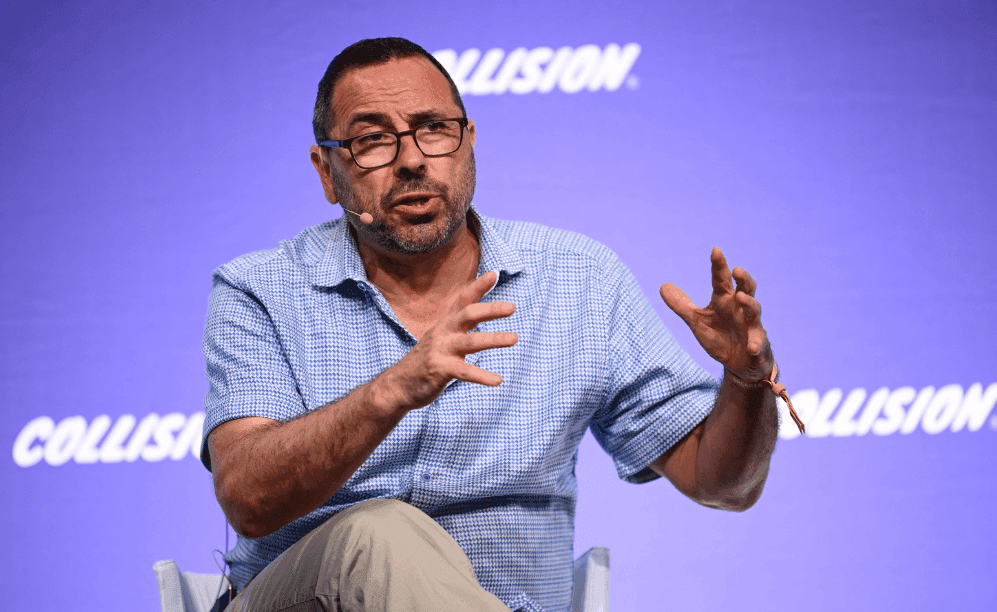
Source: SiliconANGLE
Chief Financial Officer Bob Komin revealed during the earnings call that Cerebras is temporarily renting back its own systems from an existing client to meet short-term demand while building out more data center capacity
1
. "The additional cost of renting third-party capacity will depress core cloud and other services margin temporarily from current levels," Komin explained, adding that Cerebras aims to achieve gross margins of 60% over the long term1
.Despite the margin pressures, Cerebras has secured significant contracts that position it well in the AI infrastructure market. The company announced a $20 billion multi-year deal with OpenAI, under which the ChatGPT creator will deploy 750 megawatts of Cerebras chips
1
. OpenAI uses Cerebras' cloud offering to host its software coding model Codex-Spark and plans to bring more advanced models such as GPT-5.5 to the service4
.The company also announced that its chips will launch in Amazon Web Services' public cloud data centers
4
. Andrew Feldman revealed that Cerebras is in early discussions for data centers in Israel, the UAE, Australia, Singapore, India and Indonesia1
. For the second quarter, the AI chipmaker forecast adjusted sales of $194 million, above analyst expectations of $174.34 million, representing 88% growth year-over-year1
4
.Following the earnings call, analysts at Mizuho and Wedbush raised their estimates, suggesting some confidence in Cerebras' long-term prospects
2
. Prior to the earnings report, several firms including Wedbush, UBS, and Morgan Stanley had launched coverage with bullish ratings, with price targets ranging from $250 to $3005
. These analysts pointed to Cerebras' agreements with OpenAI and Amazon as evidence of its ability to attract high-profile clients.However, the company's revenue picture faces complexity due to warrants for 33.4 million shares granted to OpenAI last year
4
. While contra-revenue was negligible during the quarter, it's expected to grow substantially as the OpenAI contract ramps up, with one milestone potentially triggering as early as this month according to Needham analyst Quinn Bolton4
. For the full year, Cerebras expects core revenue between $855.5 million and $865 million, representing approximately 69% growth at the midpoint4
.Summarized by
Navi
[4]
1
Policy and Regulation

2
Policy and Regulation

3
Policy and Regulation