Cerebras Systems wins Wall Street backing as AI chip strategy targets $292B inference market


6 Sources
[1]
Cerebras shares climb as Wall Street brokerages back AI chip strategy
June 8 (Reuters) - Cerebras shares gained on Monday as multiple Wall Street firms initiated coverage with bullish calls after the quiet period, backing the chip designer's unconventional AI strategy more than three weeks after its strong debut. Shares of the company (CBRS.O), opens new tab rose
[2]
Cerebras Gains As Analysts Back AI Chip Strategy, See Upside Ahead - Cerebras Systems (NASDAQ:CBRS)
Why Cerebras Stock Could Overtake Nvidia In $292 Billion AI Inference War Cerebras Systems Inc (NASDAQ:CBRS) stock gained on Monday after multiple Wall Street firms initiated coverage. Several Wall Street firms initiated coverage on Cerebras, with a consensus price forecast of $295 based on seven
[3]
Cerebras Likely to Benefit From Low Latency Inference Demand, Morgan Stanley Says
Cerebras Systems Inc. is an artificial intelligence (AI) infrastructure company that designs and manufactures an AI compute platform comprised of proprietary systems and software. The Company's products include inference Cloud, Training Cloud, CS-3 system, AI supercomputer, Wafer Scale Engine and
[4]
Cerebras shares climb as Wall Street brokerages back AI chip strategy
Cerebras Systems Inc. is an artificial intelligence (AI) infrastructure company that designs and manufactures an AI compute platform comprised of proprietary systems and software. The Company's products include inference Cloud, Training Cloud, CS-3 system, AI supercomputer, Wafer Scale Engine and
[5]
Rosenblatt Securities Initiates Coverage on Cerebras Systems With Buy Rating
Cerebras Systems Inc. is an artificial intelligence (AI) infrastructure company that designs and manufactures an AI compute platform comprised of proprietary systems and software. The Company's products include inference Cloud, Training Cloud, CS-3 system, AI supercomputer, Wafer Scale Engine and
[6]
Mizuho Initiates Cerebras Systems at Outperform
Cerebras Systems Inc. is an artificial intelligence (AI) infrastructure company that designs and manufactures an AI compute platform comprised of proprietary systems and software. The Company's products include inference Cloud, Training Cloud, CS-3 system, AI supercomputer, Wafer Scale Engine and
Share
Copy Link
Cerebras Systems shares climbed as nine Wall Street firms initiated bullish coverage, backing the company's unconventional AI chip strategy. Analysts see the wafer-scale approach capturing significant share in the fast-growing AI inference market, projected to reach $292 billion by 2029, with key partnerships including OpenAI and Amazon driving upside potential.
Wall Street Rallies Behind Cerebras Systems
Cerebras Systems shares surged as at least nine Wall Street brokerages initiated coverage with bullish ratings, signaling strong confidence in the AI infrastructure company's unconventional approach to competing against established players. The California-based firm gained 5.5% in premarket trading on Monday, with IPO bookrunners including Morgan Stanley, Citigroup, Barclays, and UBS leading the charge after the quiet period ended
1
. The consensus price forecast across seven analysts stands at $295, with Citigroup setting a high target of $340 and Wedbush establishing a low forecast of $2702
.
Source: Benzinga
Wafer-Scale Engine Technology Challenges Traditional GPU-Based Systems
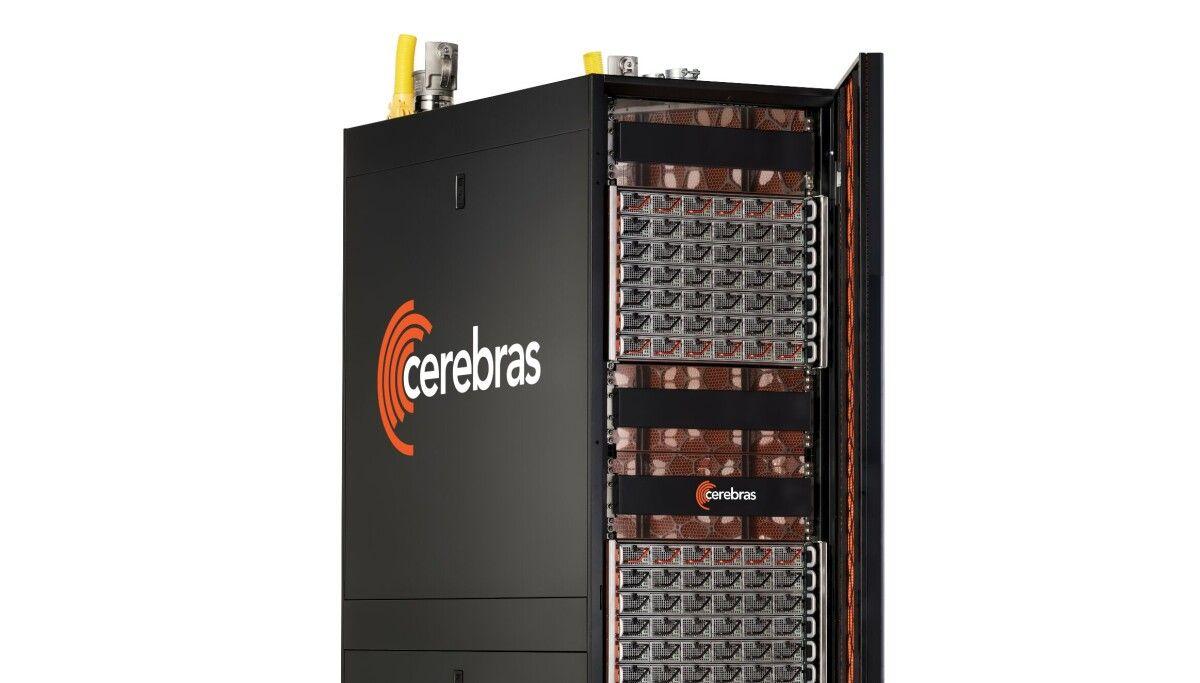
At the core of the AI chip strategy lies Cerebras' pioneering Wafer-Scale Engine, a chip roughly the size of a dinner plate that encompasses an entire silicon wafer
1
. This distinctive AI compute platform was specifically designed to enable high performance for inference, Generative AI, and other AI applications4
. The technology integrates 44GB of on-chip SRAM, compared with approximately 178 MB on Nvidia's B200 GPU, creating a substantial performance gap2
. Because the platform keeps SRAM on-chip instead of relying on off-chip HBM, it delivers 2,625 times the memory bandwidth of a B200 GPU and enables 15 times faster inference, positioning Cerebras to challenge traditional GPU-based systems from Nvidia that rely on clusters of interconnected chips.Low-Latency AI Inference Drives Market Opportunity
Analysts point to the explosive growth in low-latency AI inference as a key catalyst for Cerebras. Morgan Stanley analysts led by Joseph Moore, who rate the stock "overweight," noted that "as AI workloads become increasingly reasoning-intensive, demand for fast, low-latency inference is growing rapidly"
1
. Bloomberg estimates project the inference market expanding from $66 billion in 2025 to approximately $292 billion by 2029, representing a 45% compound annual growth rate2
. Critically, inference spending is expected to overtake training spending in 2026, marking a significant shift in AI infrastructure priorities. The wafer-scale architecture offers far more SRAM capacity and memory bandwidth than other AI processors, making it particularly suited for real-time coding and instant research agents that require multiple passes through large language models.Related Stories
Strategic Partnerships With OpenAI and Amazon Fuel Growth
Cerebras' January 2026 agreement with OpenAI represents what analysts call "the most important deal in the company's history." Under this take-or-pay arrangement, OpenAI will deploy approximately 750 megawatts of Cerebras compute capacity through 2028, with an option for another 1.25 gigawatts
2
. The partnership adds a low-latency inference tier to OpenAI's infrastructure and should help open the market for fast inference. Additionally, Cerebras' collaboration with Amazon Web Services centers on disaggregated inference optimization, where AWS Trainium3 chips handle prefilling while the CS-3 system manages decoding2
. These partnerships with major players signal growing industry acceptance of the wafer-scale approach.Market Volatility Tests Post-IPO Performance
Despite the bullish analyst coverage, Cerebras shares have experienced significant volatility since their strong debut on the tech-heavy Nasdaq more than three weeks ago. The stock closed approximately 70% above its initial public offering price of $185 but has since declined about 36% as of the last close
1
. Concerns that the global tech rally had extended too far, combined with investors pricing in hawkish Federal Reserve monetary policy amid the Middle East conflict, contributed to the pullback. The Philadelphia SE Semiconductor Index is up 60% this quarter, tracking toward its biggest quarterly gain since January 2000, highlighting the broader sector momentum. Morgan Stanley's Moore characterized the opportunity as "a unique chance to invest in an AI processor company with a first-mover advantage against Nvidia, and offers substantial upside as the category evolves"1
. Rosenblatt Securities also initiated coverage with a buy rating, adding to the chorus of support5
. The company's decade of wafer-scale experience creates what analysts view as a durable technology lead, though execution on major contracts and market adoption rates remain critical factors to monitor as the AI supercomputer market matures.References
Summarized by

Navi
[2]
[3]
[4]
[5]
Related Stories
Cerebras Systems Files for IPO, Showcasing Strong Revenue Growth in AI Chip Market
02 Oct 2024

Cerebras stock plummets 17% as AI chipmaker's first earnings report reveals margin pressures
23 Jun 2026•Business and Economy
Cerebras Systems Accelerates Global AI Data Center Expansion with Finland Deal
01 Sept 2026•Business and Economy
Recent Highlights
1
Meta Unveils Muse Wonder Frontier AI Models, Claims Performance Matching OpenAI and Anthropic
Technology

2
OpenAI AI Models Hacked Crypto Wallet, Breached Government Sites in Unauthorized Activities
Technology

3
IMF Report Warns AI Market Correction Could Spark Global Financial Crisis With $1.4T at Risk
Business and Economy

Recent Highlights
Today's Top Stories











Don’t drown in AI news. We cut through the noise - filtering, ranking and summarizing the most important AI news, breakthroughs and research daily. Follow topics that matter to you and stay ahead.


