DeepSeek and MiniMax Clear China AI Export Controls for Global AI Expansion


7 Sources
[1]
DeepSeek and MiniMax clear China AI export controls for overseas use
A CCTV-linked account says the China AI export controls target data, sensitive uses and computing power. APIs, apps and SaaS stay outside, and most AI remains free to export. "Since the policy was announced, two leading companies, DeepSeek and MiniMax, have successfully completed the registration
[2]
China AI export curbs: China's new export curbs draw a line around its AI crown jewels
China's proposed artificial intelligence export curbs will push a business model favoured by Beijing and the industry's biggest players: keeping valuable technology at home while selling access to it abroad as rivalry with the US intensifies. The draft rules, released on October 16, distinguish
[3]
China's new export curbs draw a line around its AI crown jewels
China's proposed artificial intelligence export curbs will push a business model favoured by Beijing and the industry's biggest players: keeping valuable technology at home while selling access to it abroad as rivalry with the US intensifies. The draft rules, released on October 16, distinguish
[4]
China won't stop its AI from going global, but it wants control over how it travels
Proposed rules from China have raised concerns that it could make it harder for its AI companies to take their models overseas, at a time when developers globally were turning to Chinese models as a cheaper alternative to US offerings. A state media-affiliated account in China said on October 22
[5]
China Clears DeepSeek, MiniMax for Overseas AI Rollout
China cleared DeepSeek and MiniMax to open-source, license and deploy AI models overseas. The approval follows Beijing's proposed export controls on 23 AI technologies and signals continued support for global AI expansion. China approved DeepSeek and MiniMax to deploy their artificial intelligence
[6]
China's DeepSeek, MiniMax win approval for AI global use, state media-affiliated entity says
Major Chinese AI developers DeepSeek and MiniMax have won state approval for global use of their AI models, according to a post on Thursday on a social media account affiliated with state broadcaster CCTV. In a separate social media post on Friday, the social media account, Yuyuan Tantian, said
[7]
China's new export curbs draw a line around its AI crown jewels
SINGAPORE/BEIJING, Oct 28 (Reuters) - China's proposed artificial intelligence export curbs will push a business model favoured by Beijing and the industry's biggest players: keeping valuable technology at home while selling access to it abroad as rivalry with the US intensifies. The draft rules,
Share
Copy Link
China approved DeepSeek and MiniMax for overseas deployment under new AI export restrictions covering 23 technologies. The move signals Beijing's strategy to balance global expansion of its AI sector with national security concerns while keeping intellectual property onshore.
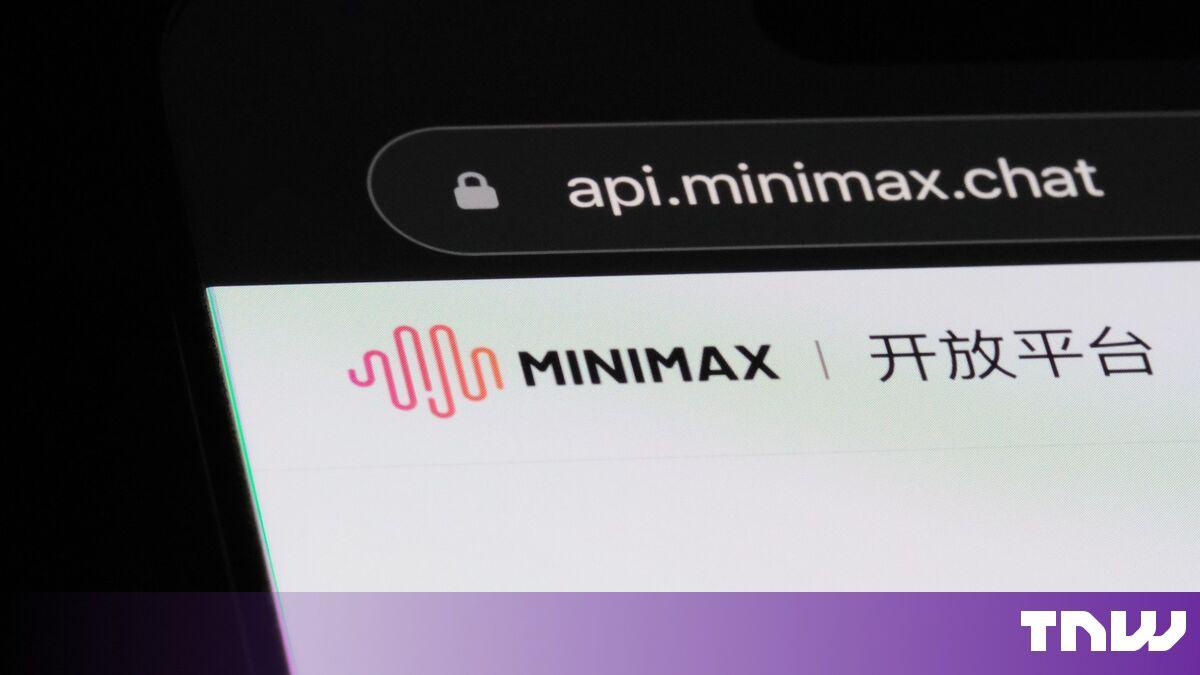
DeepSeek and MiniMax Secure Overseas Licensing Rights
DeepSeek and MiniMax have completed the registration process and obtained licensing rights for overseas use under China AI export controls, according to Yuyuan Tentian, a WeChat account affiliated with state broadcaster CCTV
1
. The announcement came days after Beijing proposed export restrictions on 23 AI-related technologies on 16 October, including large language models, AI agents, computing clusters and chip-design tools2
. DeepSeek reportedly raised $15bn from Tencent and CATL this week, though this has not been independently verified1
. The clearance positions both companies to continue their overseas AI rollout while complying with China's new regulatory frameworks.How China's New Export Curbs Actually Work
China's new export curbs draw a sharp distinction between providing access to Chinese AI services and transferring underlying AI technology. The rules target three specific areas: data security, sensitive applications, and computing power
1
. Models trained on China's "core data" face export bans, while those using "important data" encounter restrictions regardless of size1
. The catalogue sets clear thresholds for advanced AI models: training compute above 10 to the power of 26 floating-point operations, more than 2 trillion parameters, or ranking among the global top 10 in performance assessments2
. AI agents above certain performance levels face restrictions, while those built primarily for critical infrastructure, defense or core government affairs face outright bans1
.What Stays Outside the AI Export Restrictions
Offering restricted models through APIs, apps, web pages, cloud platforms or lightweight local deployment does not constitute a technology export under the proposed rules
1
. "Simply put, AI companies can continue with their commercialization efforts as usual," the CCTV-affiliated account stated1
. Open-source models receive automatic licensing described as "immediate reporting and export"1
. Chinese companies operating their own computing centers abroad also get simplified approvals2
. Technology already public through open-source releases or academic papers falls entirely outside the restrictions1
. This approach allows overseas users to access Chinese AI through websites and cloud platforms while subjecting transfers of underlying technology to government approval3
.Companies Seek Clarity on Implementation Details
Leading Chinese AI firms including DeepSeek, Moonshot and Z.AI are seeking clarification on how the rules affect their operations
2
. Researchers at major Chinese AI labs want clarity on whether they can train or run their most advanced models on foreign-owned overseas servers, according to sources familiar with the discussions3
. In a worst-case scenario, developers might need to maintain separate domestic and overseas versions of downloadable models3
. Liu Jing, senior partner at Beijing Dacheng Law Offices who participated in policy consultations, said companies wanted more clarity on the tests determining which models fall under controls2
. Law firm Han Kun questioned how regulators would count the size of models that activate only some components for each task3
. The proposals remain open for public comment until 15 November, with China expected to adopt final rules by year-end and issue implementation guidelines later3
.Related Stories

Beijing's Strategy: Keep IP Home, Sell Access Abroad
The structure reflects a business model Beijing and the industry's biggest players already favor: keeping intellectual property and R&D onshore while selling operations and access abroad, according to Alfredo Montufar-Helu, Beijing-based managing director at consultancy Ankura
2
. This distinction matters for developers relying on computing facilities abroad to access powerful chips constrained by US export restrictions on China2
. National security concerns, including keeping powerful cyberattack capabilities and sensitive data in China, accompany the commercial aim to retain valuable technological advantages, Montufar-Helu noted3
. Registration requirements effective from 16 October cover transfers putting Chinese technology under foreign ownership or control, including qualifying transactions already underway2
. Beijing's earlier order for Meta to unwind its more than $2 billion acquisition of Chinese-founded AI startup Manus demonstrated the risks facing foreign buyers3
.What This Means for Global AI Users
Ordinary users face little indication they will lose access to these models, as most AI technologies remain freely exportable with automatic licensing for open-source releases
4
. Accessing models through online services should remain straightforward, while exporting, licensing or deploying underlying technology overseas could involve additional regulatory requirements4
. This matters because Chinese open-weight models have become important resources for developers and research institutions seeking alternatives to US AI systems4
. The clearance of DeepSeek and MiniMax suggests Beijing wants leading Chinese AI developers to keep expanding abroad despite new safeguards5
. The move may ease concerns that proposed controls would cut off overseas access to Chinese open-weight models while signaling Beijing's intent to separate routine commercial deployment from export of sensitive AI capabilities5
.References
Summarized by

Navi
[5]
Related Stories
China Proposes Export Controls on 23 AI Technologies Amid US-China Rivalry
16 Oct 2026•Policy and Regulation
China weighs export controls on AI models and chips to prevent Western acquisition
21 Jul 2026•Policy and Regulation
US-China AI tensions reach new heights as both nations move to restrict each other's models
03 Jul 2026•Policy and Regulation
Recent Highlights


Recent Highlights
Today's Top Stories




Don’t drown in AI news. We cut through the noise - filtering, ranking and summarizing the most important AI news, breakthroughs and research daily. Follow topics that matter to you and stay ahead.


