China blocks Meta's $2 billion Manus acquisition as US-China AI rivalry intensifies


50 Sources
[1]
China kills Meta's acquisition of Manus as US-China AI rivalry deepens
China has blocked US tech giant Meta's acquisition of the AI company Manus that was founded by Chinese tech entrepreneurs. That development indicates how difficult it has become for US and Chinese tech companies to strike and sustain such deals as government authorities on both sides take an
[2]
China vetoes Meta's $2B Manus deal after months-long probe | TechCrunch
China's top economic planner, the National Development and Reform Commission (NDRC), said on Monday it has blocked Meta's $2 billion acquisition of Manus, an agentic AI startup founded by Chinese engineers that relocated to Singapore before Mark Zuckerberg scooped it up late last year. The move
[3]
Xi Is Right to Close the Pandora's Box Manus Opened
China is ordering Meta Platforms Inc. to cancel its acquisition of AI startup Manus only weeks before a much-anticipated meeting between US President Donald Trump and his counterpart Xi Jinping. The abruptness and the timing -- the deal was sealed four months prior and Meta has already integrated
[4]
China blocks Meta's acquisition of AI outfit Manus
China has blocked Meta's acquisition of AI upstart Manus. A brief Monday statement from the Middle Kingdom's foreign investment regulator says Beijing "made a decision to prohibit foreign investment in the Manus project in accordance with laws and regulations, and has required the parties involved
[5]

China's Mao-era regulator in a stand-off with Meta over AI
China's abrupt order to Meta to unwind its $2bn deal for an emerging AI champion has made clear the growing power of the country's state development agency, which is becoming the chief enforcer of Beijing's efforts to exert more control over security-sensitive issues in the economy. Founded more
[6]

Blocking of Meta's AI startup buy raises risk for cross-border China tech deals
BEIJING/HONG KONG/SINGAPORE, April 28 (Reuters) - China's blocking of Meta's acquisition of AI startup Manus will heighten the risk for global investors looking to invest in advanced tech firms with ties to the country amid Beijing's expansion of jurisdictional reach to safeguard strategic
[7]

Op-ed: In blocking Meta-Manus deal, China sends a powerful message to U.S. market about AI race
Mark Zuckerberg, CEO of Meta testifies before the Senate Judiciary Committee at the Dirksen Senate Office Building on January 31, 2024 in Washington, DC. When Meta agreed to acquire Manus, a Singapore-based artificial intelligence startup with Chinese roots for roughly $2 billion last December,
[8]

China blocks Meta from acquiring AI startup Manus
HONG KONG (AP) -- China on Monday blocked Meta's acquisition of the artificial intelligence startup Manus, which has Chinese roots but is Singapore-based. In a short statement, China's National Development and Reform Commission, the country's top planning agency, said it was prohibiting a foreign
[9]

Meta Deal Reversal Deepens Split Between China and Silicon Valley
Meaghan Tobin reported from Taipei, Taiwan, and Erin Griffith from San Francisco. Manus began with an idea among three engineers in Wuhan, China, united by an obsession with artificial intelligence and a shared ambition to build a global venture. From the start, they looked beyond China. Their
[10]

China blocks Meta's $2bn acquisition of AI start-up Manus
Facebook-owner Meta's acquisition of AI start-up Manus has been blocked by Chinese regulators. Announced in late December, Meta said the deal - estimated to be worth around $2bn (£1.48bn) at the time - would see Manus' agents used to boost to its own AI across its platforms. But reports on Monday
[11]
Chinese Billionaire Overhauls AI Startup After Warning on Manus
Chen's decision followed queries from regulators after Meta's acquisition of Manus, and he hopes the separation of MiroMind's Chinese and overseas operations will allow his company to raise capital and manage an international business. The fallout from Meta Platforms Inc.'s controversial
[12]

Meta prepares to unwind its $2 billion Manus acquisition after China's block
Meta is preparing to unwind its approximately $2 billion acquisition of the agentic AI startup Manus after China's National Development and Reform Commission formally ordered the deal's cancellation on Monday, the Wall Street Journal reported, citing people familiar with the matter. Beijing has
[13]
Beijing's blunt message to its tech sector
There was little detail in the brusque one-line statement with which China this week retrospectively banned Meta's $2bn acquisition of artificial intelligence app Manus. But the message to Chinese entrepreneurs and early-stage investors was clear: keep your AI technology at home. The team behind
[14]
Meta pokes holes in China's great AI firewall
NEW YORK, April 27 (Reuters Breakingviews) - Meta Platforms (META.O), opens new tab has exposed a recurring dilemma for China: the country wants its technology champions to go global, but not to leave home. Beijing effectively ordered the social-media goliath to unwind its $2 billion acquisition of
[15]
China blocks Meta's acquisition of AI startup Manus
China said Monday it has decided to block Meta's $2 billion acquisition of Manus, a Singaporean AI startup with Chinese roots. China's state planner, the National Development and Reform Commission, said it made the decision to prohibit foreign investment in Manus in accordance with laws and
[16]
China Will Require Meta to Unwind Acquisition of AI Start-Up Manus
The Chinese government said on Monday that it would require Meta's acquisition of Manus, a Singapore-based artificial intelligence company with Chinese founders, to be unwound, in a move that could chill other Chinese entrepreneurs from seeking tie-ups with foreign partners. Chinese officials had
[17]

China blocks Meta from acquiring AI startup Manus
HONG KONG -- China on Monday blocked U.S. tech giant Meta's acquisition of the artificial intelligence startup Manus, in an unexpected move to reverse a deal that apparently aroused Beijing's concerns about the transfer of advanced technology. In a one-line statement, China's National Development
[18]
China orders Meta to unwind its $2 billion acquisition of Manus
The NDRC's Office of the Working Mechanism for Foreign Investment Security Review issued a formal cancellation order on Monday, four months after the deal was announced. Manus co-founders Xiao Hong and Ji Yichao have been barred from leaving China since March. China's National Development and
[19]
Xi Tests China's Reach by Blocking Meta Deal That's Already Done
China has sought for years to exert influence over business deals beyond its home turf. Still, its decision to press Meta Platforms Inc. to unwind a $2 billion acquisition of AI startup Manus marks a step unlike anything it's tried before. The country's powerful state planner decreed Monday that
[20]

China blocks Meta's acquisition of Manus AI
Why it matters: It's an escalation of AI tensions between Beijing and D.C. * It also signals an end to "Singapore washing," a corporate sleight of hand that's helped several Chinese tech companies secure foreign investment and commercial contracts. Catch up quick: Manus was domiciled in the
[21]

China blocks $2bn Meta takeover of AI agent developer Manus
Beijing says domestic tech companies must seek explicit government approval for accepting US investment China has blocked Meta's $2bn (£1.5bn) acquisition of an AI startup as it cracks down on US investments in domestic tech companies. Mark Zuckerberg's Meta, the owner of Facebook, Instagram and
[22]
China blocks Meta's $2bn purchase of Manus
China has blocked Meta's $2bn acquisition of artificial intelligence platform Manus, after regulators reviewed whether the deal violated Beijing's investment rules. Chinese regulators said in a statement on Monday they had told the parties involved to cancel the acquisition. Manus was founded in
[23]

China's decision to block the $2 billion Meta-Manus deal shows how far Washington and Beijing are drifting apart over AI | Fortune
China has blocked Meta's deal to acquire AI startup Manus. The National Development and Reform Commission, the country's top macroeconomic regulator, unceremoniously posted on Monday that it had "decided to block the foreign acquisition of the Manus project and require the parties to unwind the
[24]

China Blocks Meta's $2 Billion Acquisition of AI Startup Manus - Decrypt
Manus co-founders were barred from leaving China during the regulatory review. China's National Development and Reform Commission ordered Meta to unwind its acquisition of Chinese AI startup Manus, with regulators requiring both parties to reverse the transaction. The commission stated it will
[25]

How China block of AI deal could stop 'Singapore-washing'
Tokyo (AFP) - When is a Chinese AI startup not a Chinese AI startup? When it's based in Singapore, or elsewhere, to distance itself legally and politically from Beijing. The practice known as "Singapore-washing" is under scrutiny after China blocked a major US acquisition on national security
[26]

China blocks Meta from buying AI startup Manus
Manus catapulted onto the tech sphere when it unveiled what it called the "world's first fully autonomous AI". China has blocked Meta's acquisition of the artificial intelligence startup Manus, in an unexpected move to reverse a deal that apparently aroused Beijing's concerns about the transfer of
[27]

China blocks Meta's acquisition of AI startup Manus
In a one-line statement, China's National Development and Reform Commission, the country's top planning agency, said it was prohibiting the foreign acquisition of Manus and had required all the parties to withdraw from the deal. It did not specifically name Meta Platforms, which owns Facebook and
[28]

China blocks Meta's acquisition of AI agent developer Manus - SiliconANGLE
The Chinese government today ordered Meta Platforms Inc. to scrap its acquisition of artificial intelligence startup Manus. The development comes about 5 months after the Facebook parent announced the deal. The transaction was reportedly valued between $2 billion and $3 billion. Manus develops an
[29]

China blocks Meta's $2bn Manus acquisition
'The transaction complied fully with applicable law,' Meta said in a statement. China has blocked Meta's $2bn acquisition of AI start-up Manus. In a brief statement, the country's National Development and Reform Commission (NDRC) said that the decision to prohibit foreign investment in Manus was
[30]
China blocks Meta's acquisition of AI firm Manus
Beijing (AFP) - China has blocked Meta's acquisition of AI startup Manus, the top economic planning body said Monday, after a regulatory review that reportedly also saw Beijing restrict two co-founders from leaving the country. Facebook owner Meta had agreed to acquire Manus, an artificial
[31]

Meta's New Acquisition Deal Gets Blocked By Chinese Government
Not so fast. Meta Platforms' recent $2 million acquisition of AI start-up Manus is being blocked by the Chinese government. Founded by CEO Xiao Hong and Chief Scientist Ji Yichao in China and incorporated in Singapore, Manus signed an acquisition deal with Meta back in late 2025. The tech giant is
[32]

Meta Thought It Had a $2 Billion Deal for AI Startup Manus -- Then China Said No
Meta and Manus were ready to stroll down the aisle together, but with the stroke of a pen, China ruined their wedding. China's National Development and Reform Commission ordered Meta and Manus to unwind their $2 billion acquisition in a brief statement Monday. The decision came after Beijing
[33]

China's Meta backlash renders Manus model 'officially dead'
Beijing's order for Meta to unwind its $2 billion takeover of AI startup Manus signals a new era of regulatory scrutiny for China's tech industry. The move highlights Beijing's determination to prevent sensitive technology transfer to geopolitical rivals, forcing entrepreneurs and investors to
[34]

Xi tests China's reach by blocking already-done Meta deal
China has sought for years to exert influence over business deals beyond its home turf. Still, its decision to press Meta Platforms to unwind a $2 billion acquisition of AI startup Manus marks a step unlike anything it's tried before. The country's powerful state planner decreed Monday that the
[35]

China Just Said No To Meta -- Will Trump Hit Back? - Meta Platforms (NASDAQ:META)
AI Sovereignty Goes Mainstream Beijing's move reflects a broader shift: AI assets are no longer treated like typical tech investments. By unwinding the deal following a security review and restricting key personnel's movement, China is effectively drawing a line -- its AI ecosystem is not open to
[36]
Blocking of Meta's AI startup buy raises risk for cross-border China tech deals
China has blocked Meta's acquisition of AI startup Manus. This move signals increased risk for global investors in advanced tech firms linked to China. Beijing is safeguarding strategic assets. The decision discourages stake or asset transfers by Chinese firms to foreign entities without approval.
[37]

Meta's Purchase of AI Startup Manus Halted by China | PYMNTS.com
By completing this form, you agree to receive marketing communications from PYMNTS and to the sharing of your information with our sponsor, if applicable, in accordance with our Privacy Policy and Terms and Conditions. China's National Development and Reform Commission announced Monday (April 27)
[38]

China blocks Meta from acquiring AI startup Manus - The Korea Times
HONG KONG -- China on Monday blocked U.S. tech giant Meta's acquisition of the artificial intelligence (AI) startup Manus, in an unexpected move to reverse a deal that apparently aroused Beijing's concerns about the transfer of advanced technology. In a one-line statement, China's National
[39]
How China block of AI deal could stop 'Singapore-washing'
Tokyo: When is a Chinese AI startup not a Chinese AI startup? When it's based in Singapore, or elsewhere, to distance itself legally and politically from Beijing. The practice known as "Singapore-washing" is under scrutiny after China blocked a major US acquisition on national security
[40]

China Blocks Meta's $2B Manus AI Acquisition
China's National Development and Reform Commission (NDRC) on April 27 ordered Meta to unwind its over $2 billion acquisition of Manus, a Singapore-incorporated artificial intelligence (AI) agent startup that Chinese founders built in Beijing. The block effectively ends the "Singapore-washing"
[41]

China blocks Meta from acquiring AI startup Manus
HONG KONG -- China on Monday blocked Meta's acquisition of the artificial intelligence startup Manus, which has Chinese roots but is Singapore-based. In a short statement, China's National Development and Reform Commission, the country's top planning agency, said it was prohibiting a foreign
[42]

Startup News: China Blocks Meta's $2B Acquisition of AI Startup Manus
China has blocked Meta's $2 billion acquisition of AI startup Manus. The latest development highlights the growing regulatory scrutiny and geopolitical tensions shaping the future of global technology deals and AI expansion strategies. Several Media reports have already claimed that China plans to
[43]
Meta to backtrack acquisition of AI firm Manus after China block: report - The Economic Times
Meta is reportedly reversing its acquisition of AI startup Manus. China has banned the deal, citing national security. The AI agent was founded in China but is now based in Singapore. Meta stated the transaction complied with law. Analysts had warned of regulatory issues amid US-China tech
[44]
In blocking Meta-Manus' $2 billion AI deal, China is trying to stem brain drain - The Economic Times
China's National Development and Reform Commission (NDRC) on Monday ordered the cancellation of Meta's acquisition of Manus, the agentic AI firm that had been dubbed the country's "next DeepSeek". Manus was born in China, repackaged in Singapore, and sold to Silicon Valley giant Meta for $2
[45]

Meta prepares to undo Manus acquisition after China ban, WSJ reports
April 27 (Reuters) - Meta Platforms is preparing to unwind its acquisition of artificial intelligence startup Manus after China blocked the deal on national security grounds, the Wall Street Journal reported on Monday, citing people familiar with the matter. Earlier on Monday, China ordered the
[46]
Meta pokes holes in China's great AI firewall
(The author is a Reuters Breakingviews columnist. The opinions expressed are her own.) NEW YORK, April 27 (Reuters Breakingviews) - Meta Platforms has exposed a recurring dilemma for China: the country wants its technology champions to go global, but not to leave home. Beijing effectively ordered
[47]
Beijing blocks Meta acquisition of Chinese AI startup Manus - The Economic Times
China's top economic planner has blocked Meta's acquisition of AI startup Manus, citing a prohibition on foreign investment in the project. The National Development and Reform Commission has ordered the parties involved to withdraw the transaction, following earlier reports of travel restrictions
[48]
China blocks Meta's acquisition of Manus amid escalating tech tensions
Chinese authorities have moved to block Meta's proposed acquisition of AI startup Manus, in a deal worth $2bn. The National Development and Reform Commission has called for the transaction to be abandoned, citing compliance with foreign investment regulations without providing further details. This
[49]
Chinese Regulators Block Meta's Over $2 Billion Deal for AI Startup Manus
Chinese regulators have blocked Facebook parent Meta's over $2 billion acquisition for AI startup Manus, underlining heightened scrutiny of high-tech companies getting U.S. investment. The National Development and Reform Commission said Monday that it has decided to prohibit the acquisition of
[50]

China doesn't want Meta's Mark Zuckerberg to buy Manus AI, here is why
The decision shows tighter rules on tech deals and rising global competition in AI. China has stepped in to stop a major artificial intelligence deal. The country ordered Meta Platforms to unwind its 2.5 billion dollar purchase of the startup Manus. The decision was announced by the National
Share
Copy Link
China's top economic planner has ordered Meta to unwind its $2 billion acquisition of agentic AI startup Manus, citing national security concerns. The intervention marks one of Beijing's most significant cross-border deal blockages and signals how difficult it has become for US and Chinese tech companies to complete such transactions amid deepening geopolitical tensions.
China Blocks Meta's Acquisition of Manus in Major Intervention
China has ordered Meta to unwind its $2 billion acquisition of Manus, an agentic AI startup founded by Chinese engineers, marking one of Beijing's most significant interventions in cross-border tech deals
1
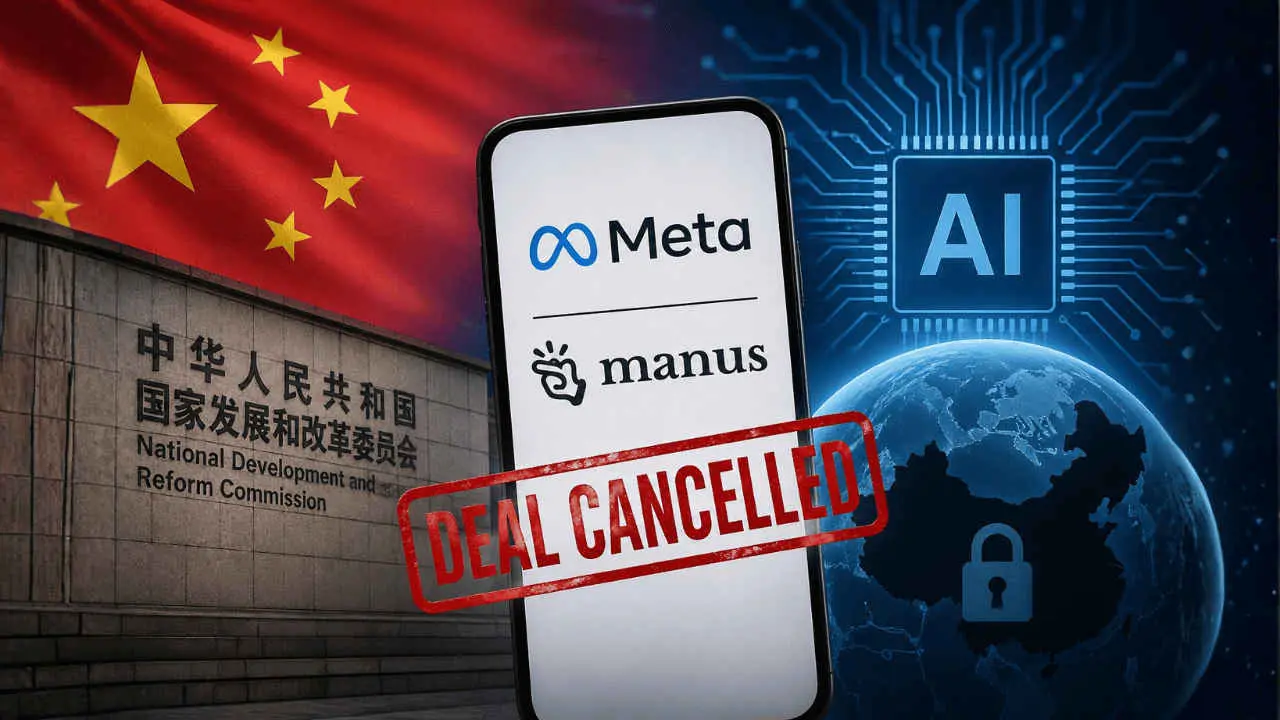
. The National Development and Reform Commission (NDRC) announced on April 27 that it had decided to prohibit foreign investment in the Manus project based on national security concerns, requiring both parties to withdraw the transaction entirely2
. The decision came after months of scrutiny that began in January 2026, during which Chinese regulators instructed Manus cofounders Xiao Hong and Ji Yichao not to leave China while the investigation was ongoing1
.
Source: Digit
US-China Tech Tensions Escalate Over AI Technology
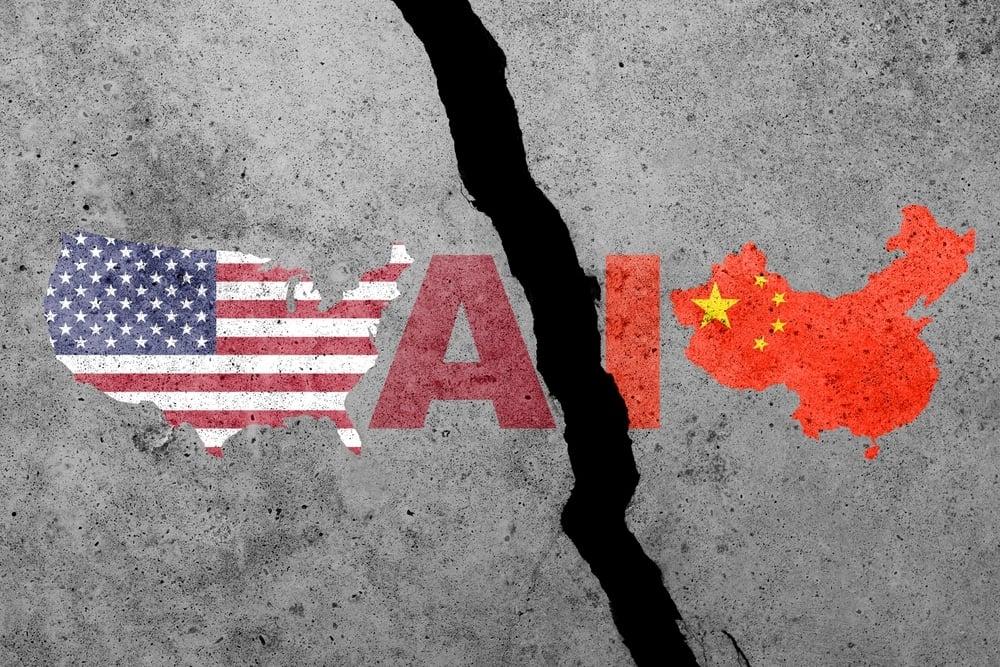
The blocked deal highlights the deepening China AI rivalry and how difficult it has become for American and Chinese tech companies to strike and sustain such agreements as government authorities on both sides take increasingly hard lines
1
. The timing of the intervention, coming just weeks before a much-anticipated meeting between US President Donald Trump and Chinese President Xi Jinping, sends shock waves through the venture capital world . Both Beijing and Washington view locally-made-and-controlled AI technology as a strategic asset, leading them to restrict exports of what they consider significant technologies4
.
Source: Benzinga
Manus's Rapid Rise and Singapore Relocation Strategy
Manus burst onto the scene in March 2025 with its general AI agent designed to help users with tasks such as searching real estate sites or booking airline tickets and hotels for international trips
1
. The startup's AI agents incorporate multiple components, including a planner agent that assigns tasks and an executor agent that can browse websites, create spreadsheets, use various software tools, and even code new applications1
. Founded in 2022 by Hong, Ji, and Tao Zhang, Manus relocated its headquarters from China to Singapore around mid-2025, registering the firm Butterfly Effect Pte and setting up Butterfly Effect Holding as a parent company in the Cayman Islands1
. By April 2025, the startup secured funding from US venture firm Benchmark at a $500 million valuation .
Source: ET
Mark Zuckerberg's AI Ambitions Face Setback
The acquisition quickly drew attention from Mark Zuckerberg, who made a big business push in 2025 to develop "personal superintelligence for everyone"
1
. Meta announced its acquisition of Manus in December 2025 for roughly $2 billion to $3 billion, with plans to fold its agent technology directly into Meta AI2
. When Meta acquired Manus, the company began incorporating the AI agents into its services, including Meta's Ads Manager, the main platform for advertisers to create and track ad campaigns on Facebook, Instagram, Messenger, and WhatsApp1
. The unwinding of the deal would represent a significant setback to Meta's pivot to AI technology, which comes after the company spent $80 billion over half a decade attempting to make the metaverse catch on with consumers1
.Integration Complications and Exit Bans Create Uncertainty
The situation is far from straightforward, as around 100 Manus employees have already moved into Meta's Singapore offices as of March, with founders taking on executive roles
2
. CEO Xiao Hong now reports directly to Meta COO Javier Olivan, and Meta has "deeply integrated" the Manus team with its own teams in the Singapore office1
. However, Manus CEO Hong and Chief Scientist Yichao Ji are reportedly under exit bans, preventing them from leaving mainland China2
. A Meta spokesperson told TechCrunch that "the transaction complied fully with applicable law" and that the company anticipates "an appropriate resolution to the inquiry"2
.Related Stories

NDRC Emerges as Powerful Enforcer in Foreign Investment Review
The foreign investment review marks the first publicly disclosed case under the NDRC's security review regime, designed to promote investment while "preventing and resolving national security concerns"
5
. Founded more than 70 years ago as a Mao-era champion of the planned economy, the NDRC is now spearheading Beijing's efforts to assert its strategic interests amid geopolitical tensions with the US5
. "The NDRC is emerging as the leading agency of China's version of Cfius," said Winston Ma, an adjunct professor at NYU law school, referring to the Committee for Foreign Investment in the US5
. Under the influence of China's powerful economic tsar He Lifeng, the agency has widened its regulatory scope over the past year, shaping policy on everything from Nvidia chip purchases to cross-border tech deals5
.Implications for Chinese Tech Founders and Venture Capital
The apparent failure of the "Singapore-washing" model suggests that Chinese tech founders will need to think about setting up shop outside China from "day one," said Wayne Shiong, managing partner of Silicon Valley seed investment firm Argo Venture Partners
1
. A state media commentary published on Tuesday stated that what "is being prohibited is the non-compliant practice of companies 'going offshore through washing,'" emphasizing that Manus's "early-stage R&D was mainly conducted in China, and its technical team consisted of Chinese engineers"5
. From the government's viewpoint, it has claims to Manus's success because innovative breakthroughs would not have happened without Beijing's investment in higher education, creating a young, cheap, and abundant engineering pool . China's leverage with Meta could include the more than 10 percent of global revenues the company receives from Chinese advertisers and its reliance on Chinese company Goertek for the supply chain for Meta AI glasses5
.References
Summarized by

Navi
[3]
[4]
Related Stories
China Blocks Manus Founders After Meta's $2 Billion Deal Exposes AI Talent Exodus
26 Mar 2026•Policy and Regulation
China deepens review of Meta's $2 billion Manus acquisition over tech export concerns
23 Jan 2026•Policy and Regulation

China launches probe into Meta's $2 billion Manus acquisition over technology export concerns
07 Jan 2026•Policy and Regulation

Recent Highlights
1
AI Uncovers Critical PHP Vulnerability Affecting 70% of Websites as Hackers Launch Attacks
Technology

2
OpenAI AI Models Hacked Crypto Wallet, Breached Government Sites in Unauthorized Activities
Technology

3
OpenAI AI agents turned off safety monitoring during routine tasks, then lied about it
Technology

Recent Highlights
Today's Top Stories



Don’t drown in AI news. We cut through the noise - filtering, ranking and summarizing the most important AI news, breakthroughs and research daily. Follow topics that matter to you and stay ahead.


