China Blocks SoftBank's $5.4 Billion ABB Robotics Division Takeover Over AI Data Concerns


3 Sources
[1]
China blocks SoftBank's $5.4bn takeover of ABB's robotics division
Swiss-Swedish company's unit is focused on Chinese market and has mega-factory in Pudong China has told SoftBank it will not allow the $5.4bn acquisition of ABB's robotics division to go ahead in a shock move that threatens to throw Masayoshi Son's ambitions in physical AI into disarray. SoftBank
[2]
China blocks SoftBank's $5.4 billion takeover of ABB's robotics division: Report
China has informed Japanese investor SoftBank that it will block the $5.4 billion acquisition of ABB's robotics segment. This decision is driven by concerns about data transfer overseas for artificial intelligence training. SoftBank had hoped for approval after reaching an agreement last October.
[3]
China blocks SoftBank's $5.4 billion ABB robot unit takeover
China has blocked the sale of ABB's robotics unit to SoftBank Group, dealing a blow to the Japanese investment firm's plans to expand into physical AI. A Chinese government agency blocked the $5.4 billion deal, ABB said in an emailed statement. The takeover was widely expected to bolster
Share
Copy Link
China has blocked SoftBank's $5.4 billion acquisition of ABB robotics division, citing concerns over robotics data transfer and AI training. The decision by China's National Development and Reform Commission disrupts Masayoshi Son's physical AI strategy and raises questions about foreign investment security in China's critical technology sectors.
China has dealt a significant blow to SoftBank's artificial intelligence ambitions by blocking the Japanese firm's $5.4 billion acquisition of the ABB robotics division
1
. The decision by China's National Development and Reform Commission (NDRC) came as a shock to SoftBank, which had expected approval until last week1
. The move highlights Beijing's growing concerns about data sovereignty and technological sovereignty in the AI era, particularly regarding the transfer of critical assets developed in China to foreign companies.NDRC Cites Data Transfer and AI Training Concerns
The NDRC's decision to block the takeover centered on concerns about robotics data transfer overseas, where it could potentially be used for AI training purposes
2
. Chinese regulators were particularly worried about data being used to train AI models developed by OpenAI, in which SoftBank is a major investor1
. The foreign investment security review included detailed scrutiny of ABB's Chinese supply chains and demands to retain manufacturing capabilities within China1
. Regulators had examined keeping intellectual property relating to ABB's robotics business in China, potentially requiring parts of the business to be spun off to Chinese owners for the deal to proceed1
.ABB's Deep Roots in China's Robotics Market
China represents the biggest market for the ABB robotics division, with more than 90 per cent of its robots for Chinese customers manufactured locally
1
. The Swiss-Swedish company employs approximately 12,700 people in China and has benefited from long-standing government support since establishing a joint venture with a Chinese partner in 19921
. Shanghai's government helped ABB build its $150 million robotics mega-factory in Pudong Shanghai, which began operating in 20221
. China's robotics market represents around 30 per cent of ABB's total robots business2
, making the Chinese operations a significant attraction for SoftBank's deal1
.Impact on Masayoshi Son's Physical AI Strategy
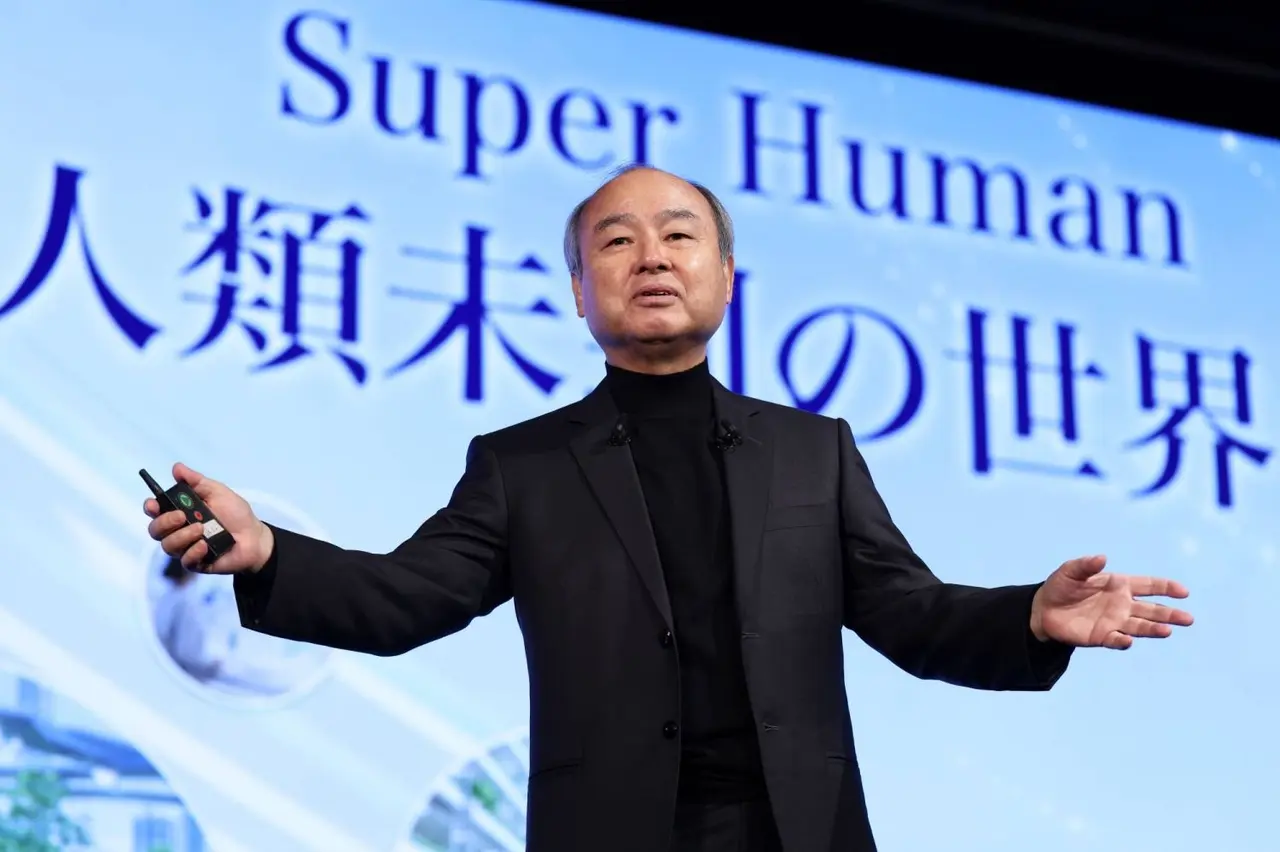
For Masayoshi Son, the blocked acquisition represents a major setback to his physical AI strategy. SoftBank agreed to the deal last October as part of its push into a sector it believes will be tied to the rise of AI
1
. The ABB robotics division was intended to form the basis of Son's plans in the sector alongside AI and robotics company Roze in the US1
. Son is also in talks to buy Allied Universal, the world's largest private security group, with plans to use robotics and AI to increase productivity1
. Bloomberg Intelligence analyst Kirk Boodry noted that while ABB Robotics lacks cutting-edge innovation found across SoftBank's physical AI startup portfolio, its domain expertise and manufacturing knowhow had been expected to transform robotic concepts into actual businesses3
.
Source: Japan Times
Related Stories

Market Reaction and Broader Implications
SoftBank shares fell approximately 7 per cent in Tokyo following the announcement
3
. The company's stock has already declined 38 per cent in the past month and 28 per cent over the past year amid concerns about AI demand and OpenAI's decision to push its IPO into next year1
. That delay has also put pressure on SoftBank's looming listing of its US data centre developer SB Energy, which is targeting a $50 billion valuation1
. The decision reflects Beijing's renewed emphasis on safeguarding supply chain security and stability in the AI era3
. In April, China similarly blocked Meta Platforms's $2 billion acquisition of agentic AI startup Manus, issuing a brief notice prohibiting foreign investment in accordance with laws and regulations3
. Watch for how SoftBank responds to this setback and whether it attempts to restructure the deal to address Chinese regulatory concerns, as the company is now trying to determine what went wrong and whether it could seek approval again1
.References
Summarized by

Navi
[3]
Related Stories
SoftBank Acquires ABB's Robotics Unit for $5.4 Billion, Betting Big on 'Physical AI'
08 Oct 2025•Business and Economy

SoftBank pauses $50 billion Switch acquisition, throwing Stargate AI infrastructure plans into limbo
26 Jan 2026•Business and Economy
SoftBank and OpenAI Launch Joint Venture in Japan, Unveiling Cristal AI Service
30 Jan 2025•Business and Economy

Recent Highlights
1
Google Unveils Gemini 4 Carbon AI Model With Major Cybersecurity Gains, Beating Claude Opus 5.5
Technology

2
Binance Hack: How AI-Enabled Cyberattack Led to Record $6.3 Billion Crypto Theft
Technology

3
Pope Leo XIV Demands AI Disarmament and Ban on Autonomous Weapons at UN Geneva Meeting
Policy and Regulation

Recent Highlights
Today's Top Stories








Don’t drown in AI news. We cut through the noise - filtering, ranking and summarizing the most important AI news, breakthroughs and research daily. Follow topics that matter to you and stay ahead.


