China Launches First AI Satellite Cluster for Space-Based Supercomputing Constellation


3 Sources
[1]
China is building a constellation of AI supercomputers in space -- and just launched the first pieces
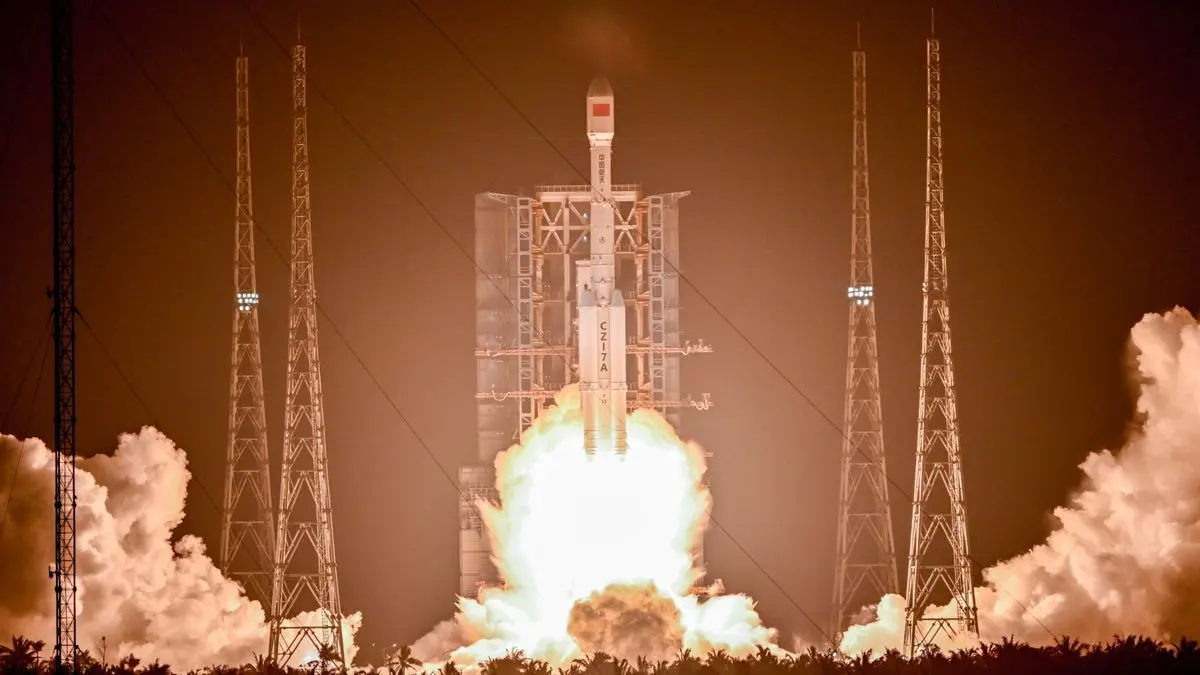
China launches a Long March rocket carrying communication equipment from Wenchang Space Launch Site on May 20, 2025. (Image credit: VCG/VCG via Getty Images) China has launched its first cluster of satellites for a planned artificial intelligence (AI) supercomputer constellation in space. The 12
[2]
China Is Building an AI-Powered Supercomputer Network in Space
China is launching a space-bound AI supercomputer -- and the first batch of the satellites it's comprised of was just sent up. As the South China Morning Post reports, the so-called "Three-Body Computing Constellation" project launched the first 12 of its planned 2,800 satellites last week from
[3]
China's First AI Satellite Cluster Takes Supercomputing to Space
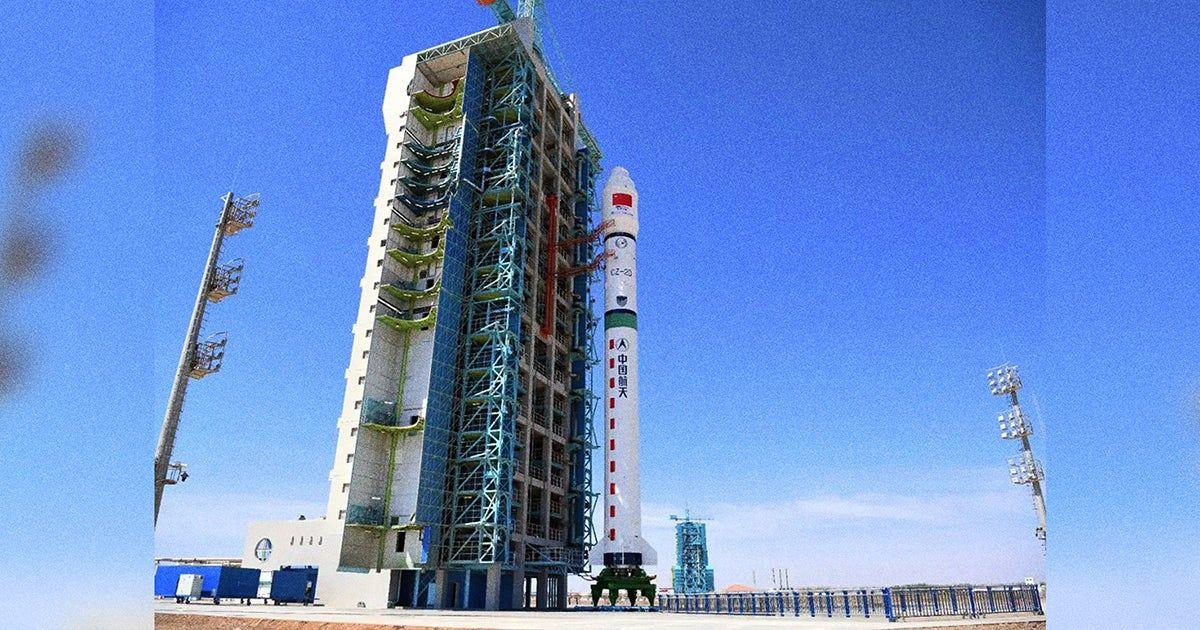
Satellites use laser links and space cooling to cut energy use China has successfully launched the first cluster of 12 satellites of its ambitious Three-body computing constellation on May 14 from the Jiuquan Satellite Launch Center aboard a Long March 2D rocket. The complete supercomputing
Share
Copy Link
China has successfully launched the first 12 satellites of its ambitious Three-Body Computing Constellation, aiming to create a space-based AI supercomputer network that will revolutionize data processing in orbit.
China's Ambitious Space-Based AI Supercomputer Project
In a groundbreaking move, China has successfully launched the first cluster of 12 satellites for its ambitious Three-Body Computing Constellation project. This initiative, led by ADA Space and Zhejiang Lab, aims to create a space-based artificial intelligence (AI) supercomputer network comprising 2,800 satellites
1
2
3
.Launch Details and Project Scale

Source: Gadgets 360
The initial 12 satellites were launched on May 14, 2023, from China's Jiuquan Satellite Launch Center aboard a Long March 2D rocket
1
3
. This launch marks the beginning of a project that, when completed, will deliver a combined computing capacity of 1,000 peta (1 quintillion) operations per second (POPS)3
.Advanced Satellite Capabilities
Each satellite in the constellation is equipped with an 8 billion-parameter AI model capable of performing 744 tera operations per second (TOPS)
1
3
. The satellites are interconnected through high-speed laser communication links, enabling data transfer at up to 100 gigabits per second3
. One satellite is also equipped with an X-ray polarization detector for studying cosmic phenomena such as gamma-ray bursts1
.Innovative Space-Based Computing
The Three-Body Computing Constellation represents a significant shift in data processing methodology. Traditionally, satellites collect raw data and transmit it back to Earth, limited by narrow bandwidths and transmission windows. This new approach aims to process data directly in space, reducing data loss and processing delays
1
3
.Environmental and Energy Considerations
By leveraging the cold vacuum of space as a natural cooling system and utilizing solar power, the project aims to significantly reduce energy consumption and environmental impact compared to terrestrial data centers
1
2
. This approach addresses growing concerns about the increasing energy demands of ground-based data centers, which are projected to consume as much energy as Japan by 20262
.Related Stories
International Collaboration and Competition
Wang Jian, director of Zhejiang Lab, has emphasized the project's openness to international participation, encouraging other countries and organizations to contribute to its development
1
3
. While the United States and Europe have conducted tests on space computers, China's array is the first to be deployed at an operable scale1
2
.Future Implications and Industry Trends
Source: Live Science
The success of this project could have far-reaching implications for various industries, including emergency services, climate monitoring, and telecommunications
2
. It also represents a significant advancement in the ongoing space race between major powers, particularly China and the United States2
.As the project progresses, it will be crucial to monitor its impact on global computing capabilities, space exploration, and international technological cooperation. The Three-Body Computing Constellation has the potential to reshape our approach to data processing and AI applications in space, opening new frontiers in scientific research and technological innovation.
Source: Futurism
References
Summarized by

Navi
[1]
Related Stories
Google Announces Project Suncatcher: Ambitious Plan for AI Data Centers in Space
04 Nov 2025•Technology

Google Plans Space Data Centers to Power AI with Solar Energy, Targets 2027 Launch
02 Dec 2025•Technology
Google Launches Project Suncatcher to Test AI Data Centers in Space with TPUs Aboard SpaceX Rocket
01 Oct 2026•Technology

Recent Highlights



Recent Highlights
Today's Top Stories



Don’t drown in AI news. We cut through the noise - filtering, ranking and summarizing the most important AI news, breakthroughs and research daily. Follow topics that matter to you and stay ahead.


