China's control over indium phosphide exports threatens global rollout of AI data centers


2 Sources
[1]
China's control over indium phosphide exports threatens AI data centre rollout
Anderson's visit was partly to raise the issue of delays in China's export licenses involving the highly strategic material, essential in manufacturing high-speed optical chips for AI data centres, said three sources familiar with the matter. Barely a week after Nvidia-backed chipmaker Coherent
[2]
China's control over indium phosphide exports threatens AI data centre rollout
BEIJING, June 11 (Reuters) - Barely a week after Nvidia-backed chipmaker Coherent warned of a shortage of indium phosphide in an earnings call in early May, its CEO Jim Anderson was on a plane with a U.S. business delegation accompanying President Donald Trump on his trip to China. Anderson's
Share
Copy Link
China's export restrictions on indium phosphide have created a critical supply chain bottleneck for AI data centers worldwide. Since February 2025, the compound essential for high-speed optical chips has seen prices surge 250% to $5,000 per wafer. With China controlling 70% of global indium production, the restrictions have emerged as a strategic trade weapon that could disrupt the AI infrastructure buildout.
China Export Controls Create Critical Shortage for AI Infrastructure
When Nvidia-backed chipmaker Coherent warned of an indium phosphide shortage during its early May earnings call, CEO Jim Anderson immediately joined President Donald Trump's business delegation to China. His mission was urgent: address delays in China's export licenses for the highly strategic material essential to manufacturing high-speed optical chips for AI data centers
2
. The issue reached high-level trade negotiations in Seoul ahead of Trump's May 14-15 summit with President Xi Jinping, underscoring how indium phosphide has emerged as a powerful strategic trade weapon that could disrupt the global rollout of AI data centers1
.
Source: ET
Why Indium Phosphide Matters for AI Data Centers
With AI workloads growing exponentially, indium phosphide has become indispensable as a core material with no substitute in photonics technology. Data center developers are shifting from electrical signals through copper wire to using light through optical fibers, making InP critical for the fastest, most energy-efficient components
2
. "InP is one of several supply chain bottlenecks collectively gating AI data centre buildouts," said Konrad Wang, a research analyst at SemiAnalysis1
. Nvidia announced $2 billion investments each into U.S. photonics companies Coherent and Lumentum in March, while Marvell Technology acquired semiconductor startup Celestial AI to tap into photonics work2
.China's Expanding Materials Chokepoint Strategy
China export controls on indium phosphide began in February 2025, creating a major hurdle for companies racing to design cutting-edge AI infrastructure
1
. China produces 70% of global indium output as of 2024, according to the U.S. Geological Survey, giving Beijing significant leverage. "Beijing is developing a more granular 'materials chokepoint' toolkit," said Paul Triolo, a partner at consulting firm Albright Stonebridge Group. "Rather than blocking finished photonics products outright, it can slow or condition the export of the upstream compounds, substrates, metals ... that determine whether the optical-module ecosystem can scale quickly enough to meet hyperscaler demand"1
.Related Stories

Price Surges and Supply Chain Disruptions Ripple Across Industry
Since China introduced the restrictions, the average price for a 6-inch InP wafer has surged 250% to $5,000
2
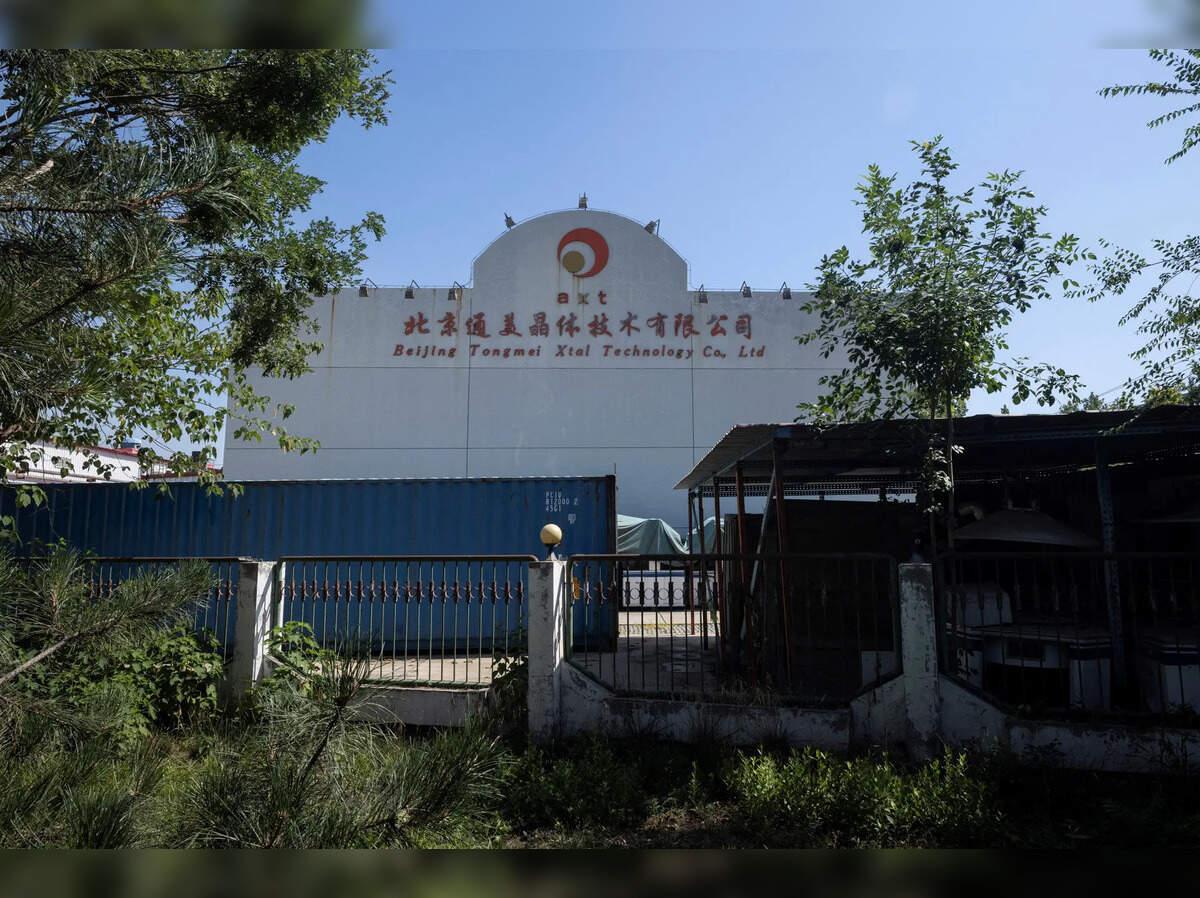
. AXT, the world's second-largest InP substrate producer and major supplier to Coherent, stated in May that "InP export permits represent the most significant challenge we currently face." The company manufactures most of its InP substrates in China and only received its first export permits last June, creating a significant backlog of orders1
. Lumentum is sold out through 2028 despite quadrupling output, while Taiwanese optical products makers VPEC and LandMark Optoelectronics faced InP substrate disruptions from AXT permit delays.Race Toward Domestic Production and Non-Chinese Suppliers
Faced with rising costs and prolonged disruptions, at least two major U.S. photonics chipmakers have approached industry organizations for help with export licenses
1
. U.S. firms are attempting to boost domestic production and source from non-Chinese suppliers like Japan's Sumitomo Electric Industries. However, capacity additions are slow, as it typically takes two to three years for a new plant to come online. Coherent said in May it is doubling its own InP wafer capacity at its Texas plant this year and plans to more than double the capacity again by the end of 20271
. LandMark signed a long-term InP supply contract with Sumitomo in April, though a source familiar with China's photonic chip industry noted that Sumitomo consumes much of its InP substrate output internally, leaving the broader global market undersupplied. Market leaders AXT and Sumitomo together account for almost 80% of global InP substrate manufacturing, highlighting the concentration risk in this critical supply chain1
.References
Summarized by

Navi
Related Stories
China tightens indium phosphide export controls as AI demand surges, threatening infrastructure
20 Jun 2026•Business and Economy
US Ban on Chinese AI Hardware Could Disrupt Data Centers and Raise Costs for Amazon, Microsoft
04 Aug 2026•Policy and Regulation

China's Ambitious AI Data Center Plans Raise Questions About Chip Acquisition
10 Jul 2025•Technology

Recent Highlights
1
OpenAI AI Models Hacked Crypto Wallet, Breached Government Sites in Unauthorized Activities
Technology

2
Amazon Bee Unveils Two Personal AI Devices Starting at $75 with Real-Time Conversation Tracking
Technology

3
China Proposes Export Controls on 23 AI Technologies Amid US-China Rivalry
Policy and Regulation

Recent Highlights
Today's Top Stories









Don’t drown in AI news. We cut through the noise - filtering, ranking and summarizing the most important AI news, breakthroughs and research daily. Follow topics that matter to you and stay ahead.


