3 Sources
[1]
This professor asked his robot clone about the future: 'I think robots will coexist with people. Robots are the mirror of human beings' | Fortune
Mechanical hands dexterous enough to thread a needle, childlike dancing robots and adult-sized ones to help with deliveries were on display Thursday as the Humanoids Summit Tokyo opened. Among the dozens of companies taking part, including well-known players like Boston Dynamics and Toyota Motor Corp., the big stars now were clearly the Chinese. Chinese newcomers, like Booster Robotics and LimX Dynamics, took the technology initially developed in Japan and the U.S. and fine-tuned it, often for cheaper mass production. It's a repeat of what happened in other Japanese industries, from consumer electronics to cellphones and electric vehicles. In humanoids, Japan was initially ahead but then failed to produce major commercial solutions. Tim Hornyuk, author of "Loving the Machine: The Art and Science of Japanese Robots," who was at the event, categorized it as the so-called "Galapagos syndrome," referring to how innovative Japanese products evolve in isolation and end up not translating for the international market. "I really hope that Japan can come up with a Ford Model T-version of humanoid roots. But I think China has already stolen their lunch. It's a bit too little too late," he said. The dancing and wiggling Mini Pi Plus robot from High Torque of China, for instance, still can't help at an auto plant or do your dishes. But it's cute. And it doesn't come with an eye-popping price tag, starting at $5,500. Chinese robots are dominating One telling example of Chinese robotics use in Japan was GMO, a Tokyo-based AI and robotics company working on a humanoid with camera eyes that will help with Japan Airlines cargo and other chores at an airport. The key is to have the robot do the work in the same way as people so they would be interchangeable, an initiative meant to tackle the labor shortage problem that is increasingly serious in Japan. The inner robotics workings were all courtesy of Unitree, a Chinese outfit, which is also working on a four-legged dog-like "stellar explorer." Experts say Japan, with its finesse in manufacturing, proved a good breeding ground for robotics development. The sociological backdrop of a public receptive to robotics also helped. A recent Pew global survey showed that people in Japan are highly aware of AI but are less anxious about it, at about 28%, than people in the U.S. at 50%. Japanese automaker Honda Motor Co., a leader in robotics with its walking humanoid Asimo, first shown in 2000, was demonstrating a motorized four-fingered robotic hand that could screw on and off tiny bolts, or thread a needle. It didn't seem to bother Keisuke Tsuta, assistant chief engineer, that similar mechanical hands were on display galore near his booth, many of them from Chinese makers. Japanese robotics show their prowess The technology Honda had developed is more durable and powerful than rival offerings, and the Japanese have historically shown they can excel at quality mass production, according to Tsuta. The looming threat of a Chinese robotics domination didn't seem to phase Osaka University Professor Hiroshi Ishiguro, who has worked on humanoids for decades, including one that's his clone. "What's significant is that Japan has a culture that's receptive to robotics. If we're going to really start using robots in society, Japan is the ideal place," he said, stressing that Japanese don't discriminate against robots. His robotic counterpart, dressed all in black like the professor, did as good a job, if not better, of answering a key existentialist question on the meaning of robots. "I think robots will coexist with people. Robots are the mirror of human beings," the robot replied in a slightly monotonous but human-like voice. Earlier, the professor had answered a similar question, but a bit differently. "No one is interested in me. All everyone cares about is my robot," he said, sitting next to his twin-like humanoid. "As long as people identify with what I have produced, I am a success," he added.
[2]
Humanoids Dance and Thread Needles as Japanese Robotics Developers Look to Outdo Chinese
TOKYO (AP) -- Mechanical hands dexterous enough to thread a needle, childlike dancing robots and adult-sized ones to help with deliveries were on display Thursday as the Humanoids Summit Tokyo opened. Among the dozens of companies taking part, including well-known players like Boston Dynamics and Toyota Motor Corp., the big stars now were clearly the Chinese. Chinese newcomers, like Booster Robotics and LimX Dynamics, took the technology initially developed in Japan and the U.S. and fine-tuned it, often for cheaper mass production. It's a repeat of what happened in other Japanese industries, from consumer electronics to cellphones and electric vehicles. In humanoids, Japan was initially ahead but then failed to produce major commercial solutions. Tim Hornyuk, author of "Loving the Machine: The Art and Science of Japanese Robots," who was at the event, categorized it as the so-called "Galapagos syndrome," referring to how innovative Japanese products evolve in isolation and end up not translating for the international market. "I really hope that Japan can come up with a Ford Model T-version of humanoid roots. But I think China has already stolen their lunch. It's a bit too little too late," he said. The dancing and wiggling Mini Pi Plus robot from High Torque of China, for instance, still can't help at an auto plant or do your dishes. But it's cute. And it doesn't come with an eye-popping price tag, starting at $5,500. Chinese robots are dominating One telling example of Chinese robotics use in Japan was GMO, a Tokyo-based AI and robotics company working on a humanoid with camera eyes that will help with Japan Airlines cargo and other chores at an airport. The key is to have the robot do the work in the same way as people so they would be interchangeable, an initiative meant to tackle the labor shortage problem that is increasingly serious in Japan. The inner robotics workings were all courtesy of Unitree, a Chinese outfit, which is also working on a four-legged dog-like "stellar explorer." Experts say Japan, with its finesse in manufacturing, proved a good breeding ground for robotics development. The sociological backdrop of a public receptive to robotics also helped. A recent Pew global survey showed that people in Japan are highly aware of AI but are less anxious about it, at about 28%, than people in the U.S. at 50%. Japanese automaker Honda Motor Co., a leader in robotics with its walking humanoid Asimo, first shown in 2000, was demonstrating a motorized four-fingered robotic hand that could screw on and off tiny bolts, or thread a needle. It didn't seem to bother Keisuke Tsuta, assistant chief engineer, that similar mechanical hands were on display galore near his booth, many of them from Chinese makers. Japanese robotics show their prowess The technology Honda had developed is more durable and powerful than rival offerings, and the Japanese have historically shown they can excel at quality mass production, according to Tsuta. The looming threat of a Chinese robotics domination didn't seem to phase Osaka University Professor Hiroshi Ishiguro, who has worked on humanoids for decades, including one that's his clone. "What's significant is that Japan has a culture that's receptive to robotics. If we're going to really start using robots in society, Japan is the ideal place," he said, stressing that Japanese don't discriminate against robots. His robotic counterpart, dressed all in black like the professor, did as good a job, if not better, of answering a key existentialist question on the meaning of robots. "I think robots will coexist with people. Robots are the mirror of human beings," the robot replied in a slightly monotonous but human-like voice. Earlier, the professor had answered a similar question, but a bit differently. "No one is interested in me. All everyone cares about is my robot," he said, sitting next to his twin-like humanoid. "As long as people identify with what I have produced, I am a success," he added. ___ Yuri Kageyama is on Threads: https://www.threads.com/@yurikageyama
[3]
Humanoids dance and thread needles as Japanese robotics developers look to outdo Chinese
Mechanical hands dexterous enough to thread a needle, childlike dancing robots and adult-sized ones to help with deliveries were on display Thursday as the Humanoids Summit Tokyo opened. Among the dozens of companies taking part, including well-known players like Boston Dynamics and Toyota Motor Corp., the big stars now were clearly the Chinese. Chinese newcomers, like Booster Robotics and LimX Dynamics, took the technology initially developed in Japan and the U.S. and fine-tuned it, often for cheaper mass production. It's a repeat of what happened in other Japanese industries, from consumer electronics to cellphones and electric vehicles. In humanoids, Japan was initially ahead but then failed to produce major commercial solutions. Tim Hornyak, author of "Loving the Machine: The Art and Science of Japanese Robots," who was at the event, categorized it as the so-called "Galapagos syndrome," referring to how innovative Japanese products evolve in isolation and end up not translating for the international market. "I really hope that Japan can come up with a Ford Model T-version of humanoid roots. But I think China has already stolen their lunch. It's a bit too little too late," he said. The dancing and wiggling Mini Pi Plus robot from High Torque of China, for instance, still can't help at an auto plant or do your dishes. But it's cute. And it doesn't come with an eye-popping price tag, starting at $5,500. Chinese robots are dominating One telling example of Chinese robotics use in Japan was GMO, a Tokyo-based AI and robotics company working on a humanoid with camera eyes that will help with Japan Airlines cargo and other chores at an airport. The key is to have the robot do the work in the same way as people so they would be interchangeable, an initiative meant to tackle the labor shortage problem that is increasingly serious in Japan. The inner robotics workings were all courtesy of Unitree, a Chinese outfit, which is also working on a four-legged dog-like "stellar explorer." Experts say Japan, with its finesse in manufacturing, proved a good breeding ground for robotics development. The sociological backdrop of a public receptive to robotics also helped. A recent Pew global survey showed that people in Japan are highly aware of AI but are less anxious about it, at about 28%, than people in the U.S. at 50%. Japanese automaker Honda Motor Co., a leader in robotics with its walking humanoid Asimo, first shown in 2000, was demonstrating a motorized four-fingered robotic hand that could screw on and off tiny bolts, or thread a needle. It didn't seem to bother Keisuke Tsuta, assistant chief engineer, that similar mechanical hands were on display galore near his booth, many of them from Chinese makers. Japanese robotics show their prowess The technology Honda had developed is more durable and powerful than rival offerings, and the Japanese have historically shown they can excel at quality mass production, according to Tsuta. The looming threat of a Chinese robotics domination didn't seem to phase Osaka University Professor Hiroshi Ishiguro, who has worked on humanoids for decades, including one that's his clone. "What's significant is that Japan has a culture that's receptive to robotics. If we're going to really start using robots in society, Japan is the ideal place," he said, stressing that Japanese don't discriminate against robots. His robotic counterpart, dressed all in black like the professor, did as good a job, if not better, of answering a key existentialist question on the meaning of robots. "I think robots will coexist with people. Robots are the mirror of human beings," the robot replied in a slightly monotonous but human-like voice. Earlier, the professor had answered a similar question, but a bit differently. "No one is interested in me. All everyone cares about is my robot," he said, sitting next to his twin-like humanoid. "As long as people identify with what I have produced, I am a success," he added.
Share
Copy Link
The Humanoids Summit Tokyo showcased the shifting landscape of humanoid robotics, with Chinese robotics companies like Booster Robotics and LimX Dynamics demonstrating cost-effective solutions that challenge Japan's legacy in the field. Professor Hiroshi Ishiguro's robot clone offered a philosophical take: robots will coexist with people as mirrors of humanity, even as experts warn Japan risks falling behind in commercializing innovations.
The Humanoids Summit Tokyo opened Thursday with mechanical hands threading needles, dancing robots, and delivery-ready humanoids on full display, but the spotlight belonged to Chinese robotics companies rather than Japan's traditional robotics leaders
1
. Among dozens of exhibitors including Boston Dynamics and Toyota Motor Corp., Chinese newcomers like Booster Robotics and LimX Dynamics demonstrated how they've refined technology initially developed in Japan and the U.S., optimizing it for cheaper mass production of robots2
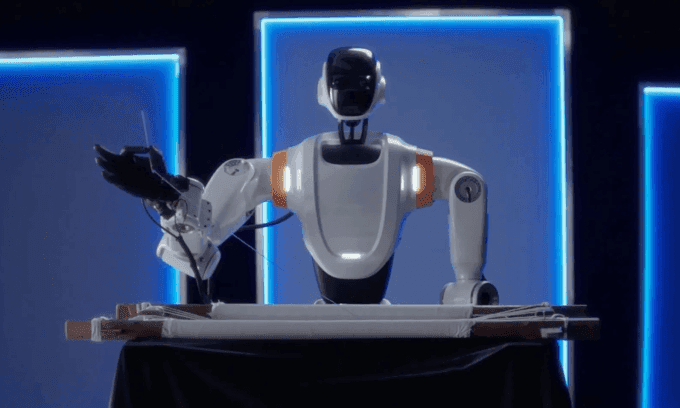
. The Mini Pi Plus robot from High Torque of China exemplified this shift with its dancing and wiggling capabilities at a starting price of $5,500, offering cost-effectiveness that Japanese competitors struggle to match3
.
Source: VnExpress
The humanoid robotics arena now mirrors what happened in other Japanese industries, from consumer electronics to cellphones and electric vehicles, where Japan was initially ahead but failed to commercialize innovations into major commercial solutions
1
. Tim Hornyak, author of "Loving the Machine: The Art and Science of Japanese Robots," categorized this phenomenon as Galapagos syndrome, where innovative Japanese products evolve in isolation and don't translate for the international market. "I really hope that Japan can come up with a Ford Model T-version of humanoid roots. But I think China has already stolen their lunch. It's a bit too little too late," Hornyak said at the event . GMO, a Tokyo-based AI and robotics company, exemplifies this trend by working on a humanoid with camera eyes for Japan Airlines cargo operations, but the inner robotics workings come entirely from Unitree, a Chinese outfit3
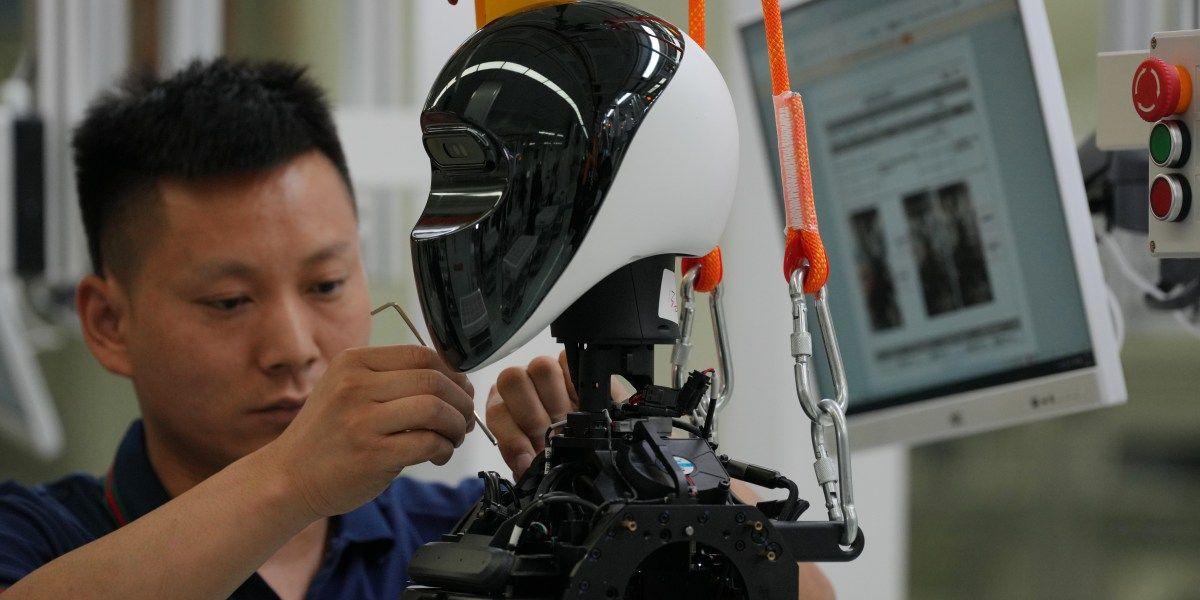
.Despite competitive pressures, Japanese robotics developers maintain confidence in their technical prowess and cultural advantages. Honda Motor Co., a leader with its walking humanoid Asimo first shown in 2000, demonstrated nimble mechanical hands with a motorized four-fingered robotic hand that could screw on and off tiny bolts or thread a needle
1
. Keisuke Tsuta, Honda's assistant chief engineer, emphasized that the technology they've developed is more durable and powerful than rival offerings, and Japanese manufacturers historically excel at quality mass production . Japan's receptive culture towards robotics provides a unique advantage, with a recent Pew global survey showing people in Japan are highly aware of AI but less anxious about it at about 28%, compared to 50% in the U.S.3
.Related Stories
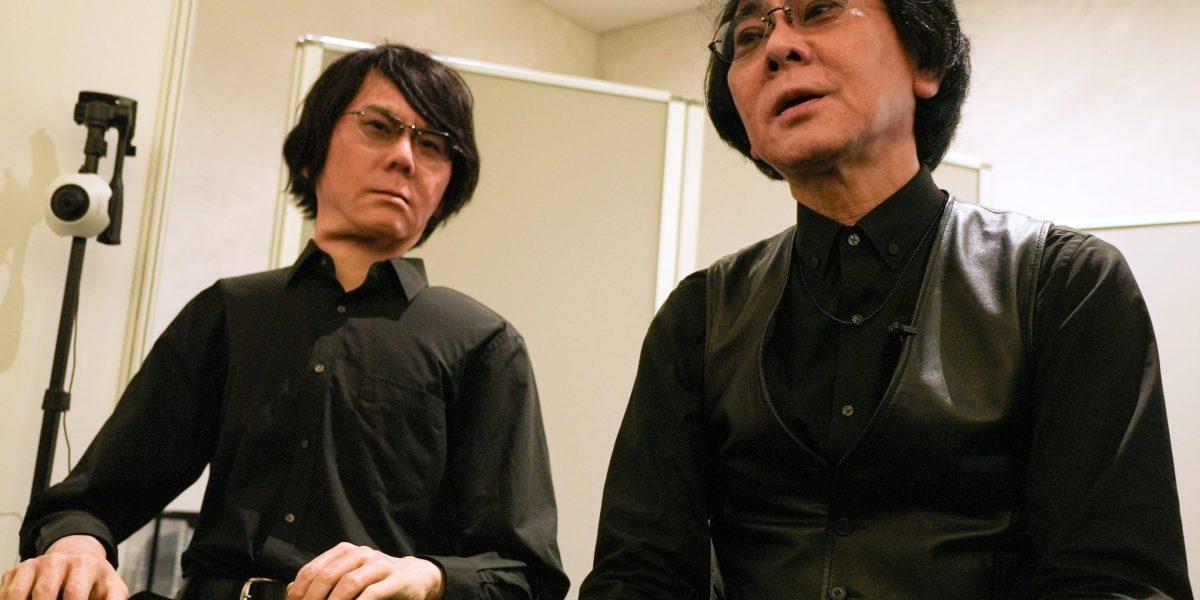
Osaka University Professor Hiroshi Ishiguro, who has worked on humanoids for decades including a robot clone of himself, remains unfazed by Chinese robotics domination. "What's significant is that Japan has a culture that's receptive to robotics. If we're going to really start using robots in society, Japan is the ideal place," Ishiguro said, stressing that Japanese don't discriminate against robots
1
. His robotic counterpart, dressed all in black like the professor, offered a philosophical perspective on the future of human-robot coexistence: "I think robots will coexist with people. Robots are the mirror of human beings," the robot clone replied in a slightly monotonous but human-like voice . The professor himself acknowledged the irony of his creation's success: "No one is interested in me. All everyone cares about is my robot. As long as people identify with what I have produced, I am a success"3
. The initiative to deploy robots to address labor shortages remains critical for Japan, with humanoids designed to work interchangeably with people in settings from auto plants to airports.
Source: Fortune
Summarized by
Navi
[2]
09 Jan 2026•Technology

01 Mar 2026•Technology

20 Jan 2026•Technology

1
Business and Economy

2
Technology

3
Policy and Regulation