CoreWeave explores Wall Street playbook to hedge against volatile memory chip prices


3 Sources
[1]
AI cloud company CoreWeave explores Wall Street playbook to hedge memory-chip price risk
SAN FRANCISCO, July 14 (Reuters) - AI cloud computing company CoreWeave (CRWV.O), opens new tab is exploring the use of financial derivatives as a potential hedge against a future drop in memory and storage chip prices, according to a person familiar with the matter. The unusual move underscores
[2]
CoreWeave looks to Wall Street to hedge memory chips, an asset with no market
The AI cloud company locked in DRAM supply with price floors. It is now exploring put options, in a market that has almost nothing to trade. Memory chips have roughly doubled in price this year, a squeeze that has emptied Apple's shelves and rewritten data centre budgets. CoreWeave is now working
[3]
AI cloud company CoreWeave explores Wall Street playbook to hedge memory-chip price risk
SAN FRANCISCO, July 14 (Reuters) - AI cloud computing company CoreWeave is exploring the use of financial derivatives as a potential hedge against a future drop in memory and storage chip prices, according to a person familiar with the matter. The unusual move underscores how deeply the AI boom
Share
Copy Link
AI cloud company CoreWeave is exploring financial derivatives like put options to protect against falling memory chip prices after signing long-term supply agreements with price floors. The move highlights how deeply AI infrastructure demand has entangled cloud providers with volatile chip markets, as memory prices have nearly doubled this year but historically collapse when new manufacturing capacity comes online.
CoreWeave Turns to Financial Derivatives Amid Memory Price Volatility
CoreWeave is exploring the use of financial derivatives as a potential hedge against future drops in memory chip prices, according to a person familiar with the matter
1
. The AI cloud company has held early-stage discussions about implementing put options and other derivative instruments to manage exposure from long-term supply agreements it signed with chipmakers including Micron and SanDisk3
. No hedges have been executed yet, but the conversations underscore how AI infrastructure demand has created new financial risks for cloud operators navigating volatile chip markets.
Source: Reuters
Price Floors Create Asymmetric Risk for Cloud Providers
To lock in supply amid soaring demand driven by AI infrastructure construction, cloud operators including CoreWeave have signed long-term agreements with memory and storage makers that guarantee suppliers a price floor for dynamic random access memory (DRAM) and storage chips
1
. While these arrangements protect chipmakers from downturns, they leave cloud companies exposed if memory chip prices fall and they remain stuck paying well above the going rate. The stakes are substantial for CoreWeave, which raised the low end of its 2026 capex budget to $31 billion to $35 billion in May specifically because of component prices, according to CFO Nitin Agrawal2
. The buildout is financed largely with debt, though borrowing costs have fallen from 10% to 7% in six months.Memory Markets Show Extreme Cyclical Swings
Memory chip prices have roughly doubled this year, creating supply chain challenges across the industry
2
. Conventional DRAM contract prices rose 93% to 98% quarter-on-quarter in the first quarter, lifting industry revenue 81% to $97 billion, with forecasts calling for another 58% to 63% increase in the second quarter, according to TrendForce data. However, the cyclical nature of the memory industry means elevated prices often collapse after new manufacturing capacity becomes active. Memory companies such as SK hynix and Micron have indicated they expect fully ramped up new manufacturing capacity in early 20281
, which is when the price of chips CoreWeave has already agreed to buy stops being hypothetical.Related Stories

Limited Trading Options Complicate Hedging Strategy
What CoreWeave would actually trade to hedge memory-chip price risk remains unclear. Exchanges have spent the year building markets for compute, but CME Group and Intercontinental Exchange contracts track GPU rental rates rather than memory
2
. The first futures to reference DRAM, announced by Architect Financial Technologies and index provider Ornn in January, are still waiting on regulatory approval. This leaves equities as the most liquid option, with the Roundhill Memory ETF (ticker DRAM) launching on April 2 and pulling in $6.5 billion within 27 trading days. Roughly three-quarters of the fund consists of SK hynix, Samsung, and Micron, with both Micron and SanDisk—the two suppliers named in CoreWeave's long-term agreements—among its holdings2
.Wall Street Playbook Carries Its Own Risks
Other industries such as energy and airlines have used hedging strategies to ensure rising or falling oil prices do not have an outsized impact on business operations, though U.S. airlines have been burned in the past after such hedging efforts
3
. The comparison is apt: hedging an input is an old idea but not reliably successful. For CoreWeave, the challenge is compounded by the lack of established derivative markets specifically tied to memory components. CEO Mike Intrator told analysts the company has "an incredible capacity to navigate the supply chain," and demand remains strong with a $99.4 billion backlog that has since grown with customers including Jane Street on a $6 billion cloud deal2
. Yet as the AI boom deepens the entanglement between cloud providers and chip markets, financial innovation may become as critical as technical infrastructure.References
Summarized by

Navi
Related Stories
CoreWeave Stock Performance Plunges 56% as CEO Defends AI Infrastructure Strategy Amid Bubble Fears
10 Dec 2025•Business and Economy

CoreWeave's Meteoric Rise in AI Infrastructure: Opportunities and Challenges
25 Sept 2025•Technology
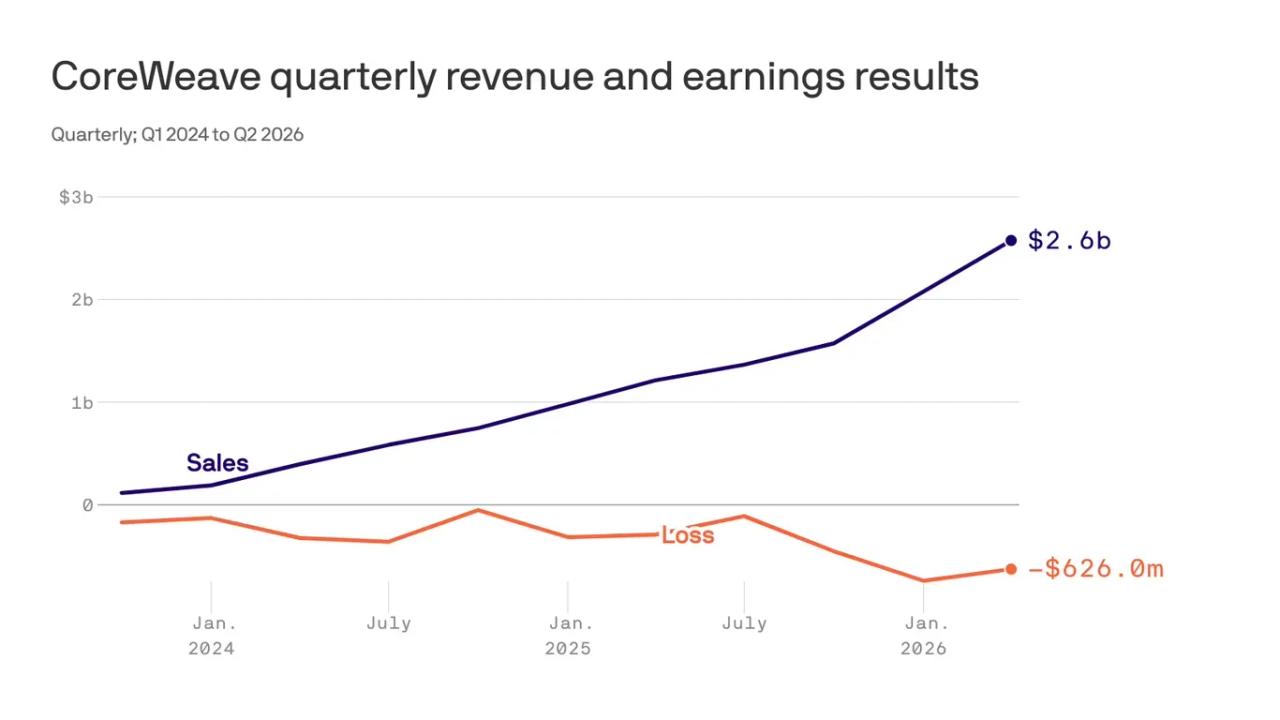
CoreWeave Revenue Doubles to $2.58 Billion as AI Infrastructure Demand Surges Despite Rising Debt
12 Aug 2026•Business and Economy
Recent Highlights
1
Meta Unveils Muse Wonder Frontier AI Models, Claims Performance Matching OpenAI and Anthropic
Technology

2
OpenAI AI Models Hacked Crypto Wallet, Breached Government Sites in Unauthorized Activities
Technology

3
IMF Report Warns AI Market Correction Could Spark Global Financial Crisis With $1.4T at Risk
Business and Economy

Recent Highlights
Today's Top Stories







Don’t drown in AI news. We cut through the noise - filtering, ranking and summarizing the most important AI news, breakthroughs and research daily. Follow topics that matter to you and stay ahead.


