3 Sources
[1]
This bank CEO let his AI clone handle an earnings call -- now he's signing an OpenAI deal
Nearly half an hour into a conference call on Friday to discuss first-quarter results with analysts, Customers Bank CEO Sam Sidhu revealed something unusual -- up until that point, he hadn't actually been speaking. "The prepared remarks you heard on my behalf today were delivered by my AI clone, not read by me," Sidhu said, calling it a potential first for a public company earnings call. The point of the stunt, he said, was to underscore a broader shift happening as Customers Bank, a $25.9 billion asset lender catering to startups and small businesses, embraces artificial intelligence. Customers Bank has signed a multiyear partnership with OpenAI in which the AI giant will embed engineers at the company to help it automate lending and client onboarding, CNBC has learned exclusively. The deal is part of Sidhu's effort to get ahead of other banks in the industry's race to transform itself using AI agents as a new digital workforce. His strategy hinges on automating core banking processes -- slashing loan timelines from weeks to days, for instance -- and scaling growth without adding staff at the same pace. While many bankers have described AI in broad terms like productivity gains, Sidhu is tying it directly to financial targets. Sidhu told CNBC that the project will improve the firm's efficiency ratio from about 49 to the low 40s, boosting the bank's returns starting next year. The relationship with OpenAI -- which has targeted finance as one of its core industries -- will be a symbiotic one for the AI giant, according to the bank CEO. "We're going to be co-creating enterprise solutions they could potentially sell to other banks in the future," Sidhu said. "The goal here is end-to-end, automated agentic led workflow" for lending, deposits and payments. OpenAI said it was proud to help Customers Bank "as they build a more intelligent operating model that empowers employees, strengthens client service, and sets a new standard for regional banking," chief revenue officer Denise Dresser said in a statement provided to CNBC.
[2]
Banking on Intelligence: Customers Bank and OpenAI's Strategic Partnership | bobsguide
Customers Bank has launched a multiyear strategic collaboration with OpenAI to embed "frontier models" into the heart of its commercial operations. From reducing loan closing times to just seven days to creating "digital workers" for 24/7 productivity, this move signals a new era for regional banking. However, as the sector pivots to AI-native models, institutions must navigate complex regulatory scrutiny regarding model explainability and systemic concentration risks. The financial services sector is currently navigating a period of rapid technological evolution, where the integration of artificial intelligence (AI) has moved from experimental chatbots to core operational infrastructure. Historically, mid-sized and regional banks have faced significant hurdles in competing with the massive technology budgets of global tier-one institutions. This article examines the strategic collaboration between Customers Bank and OpenAI, a partnership that represents a fundamental shift in how commercial banking operations are conducted. By deploying "frontier models" across lending, onboarding, and internal workflows, this initiative serves as a litmus test for the viability of AI-native banking in a highly regulated environment. The collaboration between Customers Bank and OpenAI marks a significant milestone in the digital transformation of the commercial banking sector. By moving beyond basic generative AI applications to a full-scale deployment across its commercial operations, Customers Bank is attempting to redefine the traditional banking model through an AI-native lens. Operational Transformation The deployment of OpenAI's technology is designed to fundamentally alter the speed and efficiency of the commercial banking lifecycle. This shift is characterised by three primary operational changes: * Accelerated Credit Cycles: By automating the collection of complex data and the initial drafting of credit memoranda, the partnership aims to reduce the timeframe for commercial loan approvals from several weeks to just a few days. * Rapid Client Onboarding: Automated systems now handle the heavy lifting of KYC (Know Your Customer) and document verification. This allows for the opening of complex commercial accounts in minutes rather than days, significantly improving the client experience for US and UK-based corporate entities. * Enhanced Developer Productivity: Internal data suggests that AI is already assisting in writing nearly half of the bank's new software code. This has resulted in a cumulative saving of tens of thousands of work hours, allowing the institution to scale its digital infrastructure without a linear increase in headcount. Opportunities for Regional Institutions For regional banks in the US and the UK, this partnership provides a blueprint for maintaining competitiveness against larger global players. * Efficiency Ratios: The primary opportunity lies in the decoupling of revenue growth from human capital expenses. By utilising "digital workers" for administrative and repetitive tasks, banks can achieve higher margins while keeping their human staff focused on high-value advisory roles. * Data-Driven Decisioning: The integration of AI allows for the analysis of vast amounts of proprietary data that previously remained siloed. This leads to more precise risk assessments and the ability to identify new market opportunities before competitors. Navigating Risks and Regulatory Hurdles Despite the clear operational advantages, the deployment of AI at this scale introduces a new set of risks that require rigorous management. * Model Explainability: Regulators, including the Financial Conduct Authority (FCA) in the UK and the Securities and Exchange Commission (SEC) in the US, demand transparency in how financial decisions are made. Banks must ensure that AI-driven credit decisions are explainable and free from algorithmic bias. * Cybersecurity and Data Privacy: As banks integrate deeper with third-party AI providers, the attack surface for potential data breaches expands. Protecting sensitive commercial data within these models is a paramount concern for IT security architects. * Systemic Concentration Risk: There is an emerging concern regarding the industry's reliance on a small number of AI model providers. A technical failure or a security compromise at a provider like OpenAI could have cascading effects across multiple financial institutions simultaneously. The Shift to AI-Native Banking Architectures The collaboration between Customers Bank and OpenAI signals the transition of artificial intelligence from an experimental peripheral tool to the central engine of financial services. As regional institutions in the UK and US seek to close the gap with global incumbents, the success of this partnership will likely trigger a wave of similar high-level integrations across the sector. However, the long-term viability of this "AI-native" approach hinges on a bank's ability to maintain a robust security posture and adhere to evolving regulatory frameworks regarding automated decision-making. Moving forward, the industry's primary challenge will be ensuring that these rapid gains in operational velocity do not come at the expense of model transparency or systemic resilience.
[3]
Customers Bank Taps OpenAI to Re-Engineer Commercial Banking Operations | PYMNTS.com
By completing this form, you agree to receive marketing communications from PYMNTS and to the sharing of your information with our sponsor, if applicable, in accordance with our Privacy Policy and Terms and Conditions. Aiming to become "one of the first AI-enabled regional banks in the United States," Customers Bank will leverage OpenAI's advanced models to reimagine its lending, deposit and payment lifecycles, it said in a Monday (April 27) press release. This will build upon a relationship that begin in 2023 when Customers Bank deployed ChatGTP Enterprise. Now, the collaboration will include direct onsite engagement with OpenAI's technical teams and resources, with the companies working together to build custom AI capabilities on the Customers Bank's own processes, data and institutional knowledge, according to the release. The companies will start with three areas in which they see the greatest opportunity: lending, with AI handling document collection, credit memoranda preparation, legal documents, post-closing portfolio and collateral monitoring and similar tasks; deposits, where AI will streamline digital onboarding and account setup; and payments, where AI will accelerate the capabilities of Customers Bank's proprietary payments platform, cubiX. Customers Bancorp President and CEO Sam Sidhu said in the release that Customers Bank has spent the last year building the operational and governance infrastructure to deploy AI at scale, has 75% of its team members using tools powered by OpenAI, and now expects "a fundamental re-engineering" of how the bank operates. "This strategic collaboration with OpenAI gives us the frontier models, engineering expertise and ability to co-create a roadmap toward becoming an AI-native bank," Sidhu said. "This strategic engagement positions us to be the leader in AI adoption among regional banks. By the end of 2026, our bankers will spend more of their time on the work that creates value for clients and our shareholders." OpenAI said in March that its enterprise business now makes up more than 40% of its revenue and is set to reach parity with its consumer business by the end of the year. In February, OpenAI said it now offers both a platform and the services of human engineers to help enterprises use AI agents. The platform, Frontier, helps enterprises build, deploy and manage AI agents.
Share
Copy Link
Customers Bank has signed a multiyear deal with OpenAI to embed AI engineers and automate lending, deposits, and payments. CEO Sam Sidhu used an AI clone to deliver earnings call remarks, demonstrating the bank's commitment to becoming an AI-enabled regional bank. The partnership targets efficiency improvements from 49 to the low 40s while reducing loan timelines from weeks to days.
Customers Bank has entered into a multiyear strategic partnership with OpenAI that positions the $25.9 billion asset lender to become one of the first AI-enabled regional banks in the United States
1
. The collaboration will embed OpenAI engineers directly at Customers Bank to help automate core banking processes across lending, deposits, and payments3
. CEO Sam Sidhu announced the partnership after revealing that an AI clone had delivered his prepared remarks during the bank's first-quarter earnings call on Friday, a potential first for a public company1
.
Source: PYMNTS
The partnership will embed frontier models into the heart of Customers Bank's commercial operations, fundamentally changing how the financial industry approaches regional banking
2
. OpenAI will provide direct onsite engagement with technical teams and resources to build custom enterprise AI solutions based on the bank's own processes, data, and institutional knowledge3
. The collaboration focuses on three primary areas: lending, where AI will handle document collection, credit memoranda preparation, legal documents, and post-closing portfolio monitoring; deposits, where AI will streamline client onboarding and account setup; and payments, where AI will accelerate capabilities of the bank's proprietary platform cubiX3
.
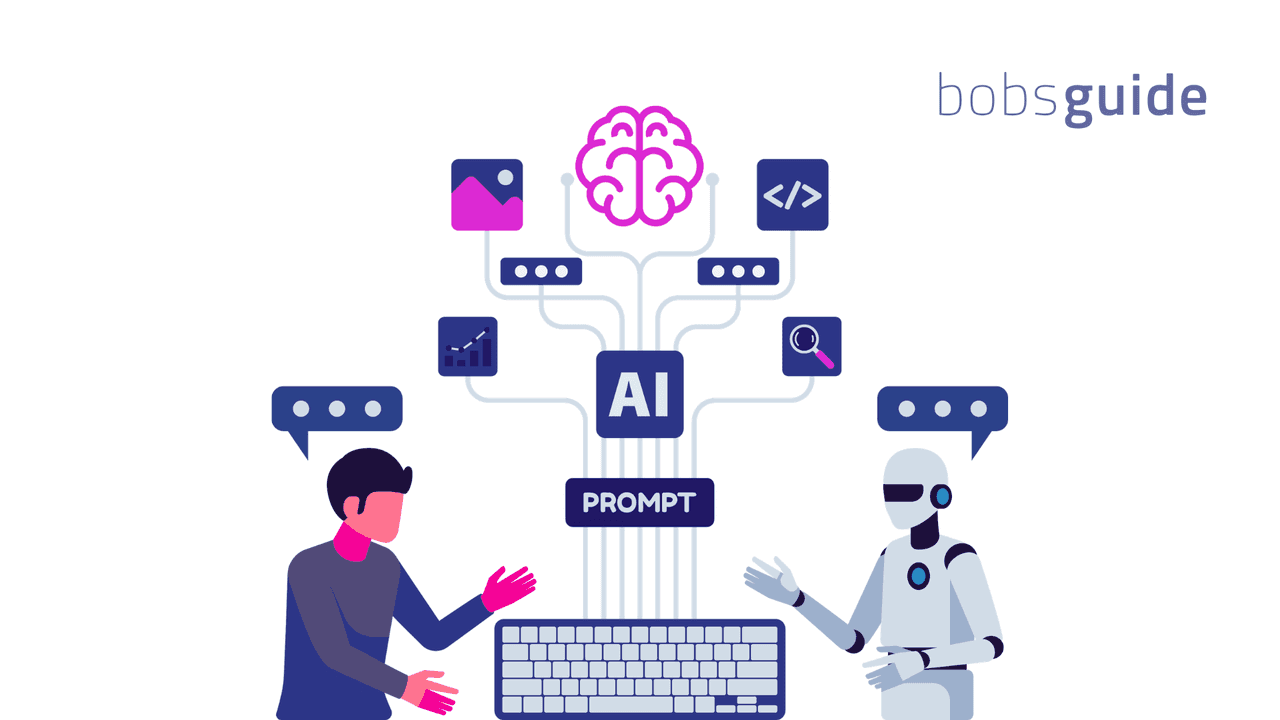
Source: Bobsguide
Sam Sidhu told CNBC that the project will improve the firm's efficiency ratio from approximately 49 to the low 40s, boosting returns starting next year
1
. The bank aims to slash loan timelines from weeks to just seven days by automating the collection of complex data and initial drafting of credit memoranda2
. Complex commercial accounts that previously took days to open will now be processed in minutes through automated KYC and document verification systems2
. This approach allows Customers Bank to scale growth without adding staff at the same pace, decoupling revenue expansion from headcount increases1
.The strategic partnership builds upon a relationship that began in 2023 when Customers Bank first deployed ChatGPT Enterprise
3
. Sidhu revealed that the bank has spent the last year constructing the operational and governance infrastructure necessary to deploy AI at scale, with 75% of team members now using tools powered by OpenAI3
. Internal data indicates that AI is already assisting in writing nearly half of the bank's new software code, resulting in cumulative savings of tens of thousands of work hours2
. This productivity gains allow the institution to scale its digital infrastructure without linear headcount growth.Related Stories

The relationship represents a symbiotic arrangement where Customers Bank and OpenAI will co-create enterprise solutions that could potentially be sold to other banks in the future
1
. "The goal here is end-to-end, automated agentic led workflow" for lending, deposits and payments, Sidhu explained1
. OpenAI chief revenue officer Denise Dresser stated the company was proud to help Customers Bank "build a more intelligent operating model that empowers employees, strengthens client service, and sets a new standard for regional banking"1
. OpenAI announced in March that its enterprise business now comprises more than 40% of its revenue and is projected to reach parity with its consumer business by year-end3
.While the partnership offers clear operational advantages, deploying AI at this scale introduces challenges around model explainability, cybersecurity, and data privacy
2
. Regulators including the Financial Conduct Authority and Securities and Exchange Commission demand transparency in how financial decisions are made, requiring banks to ensure AI-driven credit decisions remain explainable and free from algorithmic bias2
. There is also emerging concern regarding concentration risk, as the industry's reliance on a small number of AI model providers could create systemic vulnerabilities2
. By the end of 2026, Sidhu expects bankers will spend more time on work that creates value for clients and shareholders as AI handles routine tasks3
.Summarized by
Navi
27 Feb 2025•Business and Economy

07 May 2025•Business and Economy
20 Mar 2025•Business and Economy

1
Entertainment and Society

2
Health

3
Technology