Cyclon AI Phone Repurposes Google Pixel to Automate Everything—But Should It?


2 Sources
[1]
'Cyclon' uses an old Google Pixel to let AI do literally everything for you - who wants this?
As the AI era continues to find its footing in the consumer market, "Cyclon" is a new smartphone/software experience that, to start, is reusing old Google Pixel phones with a software experience that literally uses AI to do every little thing. And my biggest question is just... who actually wants
[2]
Cyclon wants to replace your iPhone with an AI phone that actually gets things done
Imagine a phone that handles the boring stuff while you sip your coffee. Most of what we do on our phones still follows the same routine. You open an app, tap through a few screens, and finish the task yourself. Cyclon, a startup from Y Combinator's F26 batch, wants to hand that whole routine over
Share
Copy Link
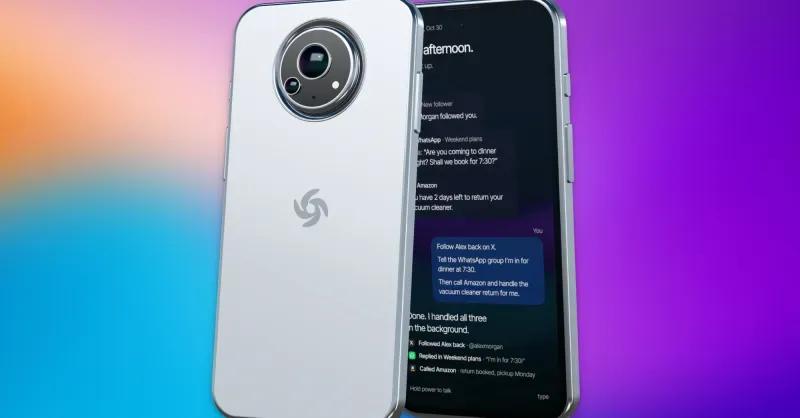
Y Combinator startup Cyclon unveiled an AI phone built on repurposed Google Pixel 8a hardware that promises to automate notifications, generate responses, and create apps on demand. The $199 pre-order includes a working Pixel 8a prototype before the final $699 custom hardware ships, but questions remain about reliability and whether users actually want AI handling every interaction.
Cyclon Promises Total Phone Automation Through AI
Cyclon, a startup from Y Combinator's F26 batch, has introduced an AI phone concept that fundamentally reimagines smartphone interaction by placing artificial intelligence at the center of every task
1
2
. The AI-powered phone operates primarily through a chatbot interface that handles everything from managing notifications to sending messages, with the stated goal of replacing the iPhone1
. Unlike traditional AI assistants that depend on developers building integrations, Cyclon's AI-driven software navigates through apps the same way humans do, moving between multiple applications to complete complex workflows2
.How Cyclon's AI Handle Notifications and App Navigation
The system operates at the OS level, allowing it to interact with any installed application without requiring specific integrations
2
. Demonstrations show the AI monitoring WhatsApp conversations and automatically retrieving photos from a user's gallery to send to friends—all without the user touching the device1
. The platform can order food through DoorDash, contact couriers for building access, and send AI-generated responses to group chats that mimic the user's communication style1
. This approach to automating tasks represents a departure from conventional smartphone use, where users manually navigate through apps and screens to accomplish goals2
.On-Demand App Creation Sets Cyclon Apart
One of Cyclon's most distinctive features involves on-demand app creation tailored to specific user needs
1
. When an application doesn't exist for a particular task, the AI builds one instantly and continues operating in the background while the phone remains in a user's pocket2
. The company showcases a language learning app customized for a specific vacation as an example of this capability, with the added benefit of being shareable with other users1
. This functionality mirrors Google's upcoming Gemini Intelligence "Create my widget" feature, though Cyclon extends the concept further by generating full applications rather than just widgets1
.Repurposed Google Pixel Phones Form Hardware Foundation
Source: Digital Trends
Cyclon currently runs on repurposed Google Pixel phones, specifically the Pixel 8a model, which serves as the working prototype
1
2
. The startup ships first-batch backers a Pixel 8a with Cyclon preinstalled within 30 days of pre-order, which costs $1991
2
. This initial device serves as a placeholder until the final Cyclon Phone hardware launches at $699, meaning early adopters receive two phones for the final price1
. Starting with Google Pixel makes strategic sense because Cyclon's software operates almost entirely at the operating system level, requiring deep integration with Android2
.Custom Hardware Roadmap Prioritizes Data Privacy

Source: 9to5Google
While repurposed Google Pixel phones serve current needs, custom hardware remains on Cyclon's roadmap with specific goals around data privacy and processing power
2
. The planned proprietary device will run more powerful AI models locally while pairing them with cloud-based models, keeping as much personal data on the device as possible2
. This hybrid approach aims to balance processing capabilities with privacy concerns, addressing growing user awareness about data security in AI applications2
.Related Stories

Reliability Questions Shadow Multi-Step Tasks Execution
The core challenge facing Cyclon involves reliability across diverse applications and multi-step tasks
2
. Every app features unique layouts and quirks, and an AI that navigates through screens must handle them all consistently2
. If the system successfully manages this complexity, it could eliminate tedious work, but failure risks creating another assistant that promises more than it delivers2
. The use of AI-generated responses particularly raises concerns about authenticity, with examples like telling a group chat about running late "in your words" seeming like an unnecessary disconnect from genuine human interaction1
.Market Reception Remains Uncertain for Total AI Delegation
The fundamental question surrounding Cyclon centers on whether users genuinely want AI handling every smartphone interaction
1
. While automating tasks like ordering food or calling couriers offers clear utility, delegating personal communications to AI-generated responses raises concerns about maintaining authentic relationships1
. The startup faces the challenge of proving its value proposition in a market where AI assistants have yet to demonstrate consistent, meaningful improvements to daily life for most users1
. Watch for how Cyclon addresses app compatibility issues and whether early adopters find genuine value in surrendering control to AI-driven automation.References
Summarized by

Navi
[1]
Related Stories
AI Features on Smartphones: Hype vs. Reality in Consumer Adoption
05 Nov 2024•Technology

Deutsche Telekom and Perplexity Collaborate on New 'AI Phone' with Advanced AI Assistant
03 Mar 2025•Technology
Newnal's AI Phone: Creating Digital Clones and Raising Privacy Concerns at MWC 2025
06 Mar 2025•Technology
Recent Highlights
1
Google DeepMind unveils Genie 4 world model with audio and 2-minute interactive simulations
Technology

2
Google Unveils Gemini 4 Carbon AI Model With Major Cybersecurity Gains, Beating Claude Opus 5.5
Technology

3
Pope Leo XIV Demands AI Disarmament and Ban on Autonomous Weapons at UN Geneva Meeting
Policy and Regulation

Recent Highlights
Today's Top Stories





Don’t drown in AI news. We cut through the noise - filtering, ranking and summarizing the most important AI news, breakthroughs and research daily. Follow topics that matter to you and stay ahead.


