Danaher to Launch AI-Powered Autonomous Lab for 8x Faster Drug Discovery in 2027


4 Sources
[1]
Danaher launching AI-powered autonomous lab for drug discovery
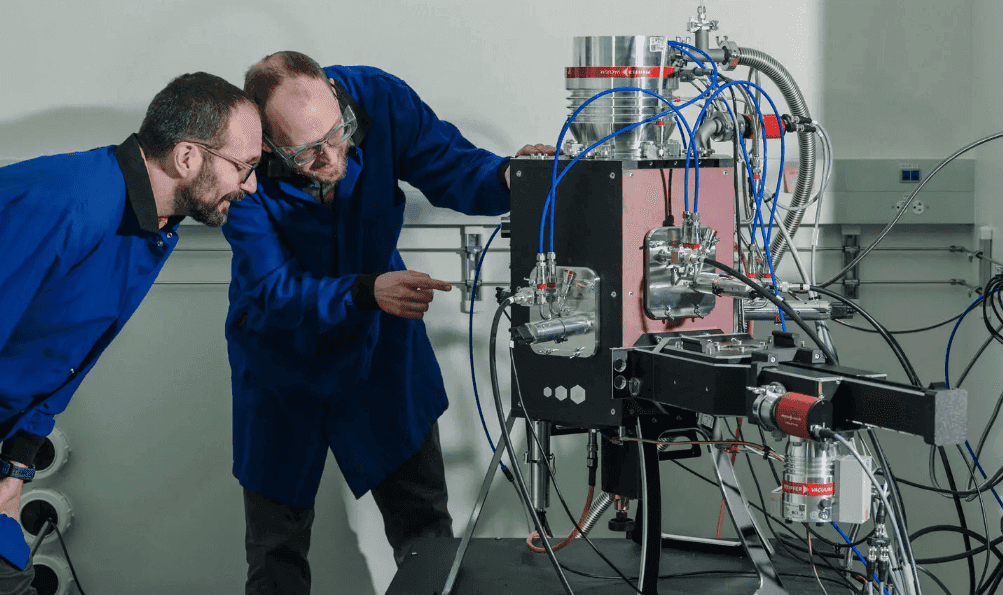
The lab, based at Abcam, a Danaher company, is expected to reach full operating capacity in early 2027. It brings together artificial intelligence, robotics, and capabilities from multiple Danaher operating companies -- including Beckman Coulter Life Sciences, Cytiva, Genedata, Integrated DNA
[2]
Danaher's AI Lab to Launch in 2027: 8x Faster Drug Discovery
Danaher plans to launch its first AI-powered autonomous research lab in early 2027. The life sciences company aims to speed drug discovery through AI, robotics, and connected laboratory technologies. The lab will operate at scale from an Abcam facility and develop custom antibodies and molecular
[3]
Danaher plans AI-powered autonomous lab for antibody research By Investing.com
WASHINGTON - Danaher Corporation (NYSE:DHR) announced today plans to launch an AI-powered autonomous lab designed to develop custom antibodies and other molecular tools. The lab is expected to operate at scale in early 2027, according to a press release statement. The facility will be based at
[4]
Life sciences firm Danaher to launch AI-powered autonomous research lab in 2027
Oct 7 (Reuters) - Life sciences company Danaher said on Wednesday it plans to launch its first AI-powered autonomous research lab early next year to make drug discovery and development faster and more efficient. Here are more details: o The lab, projected to operate at scale in early 2027, will
Share
Copy Link
Life sciences company Danaher announced plans to launch its first AI-powered autonomous lab in early 2027, promising to accelerate molecule discovery by up to 8 times. The facility at Abcam will combine AI, robotics, and technologies from multiple Danaher operating companies to develop custom antibodies and molecular tools through a continuous design-make-test-learn cycle.
Danaher Unveils Ambitious AI-Powered Autonomous Lab Initiative
Life sciences company Danaher announced plans to launch its first AI-powered autonomous lab designed to transform drug discovery and antibody research
1
4
. The facility, expected to reach full operating capacity in early 2027, will be based at Abcam, a Danaher company, and represents the first step in a broader initiative to create smart laboratory instruments and integrated workflows across the organization3
. The autonomous research lab brings together artificial intelligence, robotics, and capabilities from multiple Danaher operating companies within a unified, end-to-end workflow1
.Accelerating Molecule Discovery Through AI-Driven Innovation
Danaher expects the system to accelerate molecule discovery by up to 8 times while targeting a tenfold increase in annual target-binding molecule generation as the lab scales
2
3
. The system operates through a continuous design-make-test-learn loop, where AI creates molecular designs that bind specific biological targets with greater precision2
. Robotics then build and test those designs before returning results to the AI model, with each testing cycle helping improve the next round of molecular designs2
. This continuous improvement cycle is expected to move researchers from an initial idea toward validated reagents much faster, with annual reagent production projected to rise from tens to hundreds as the lab scales2
.Collaborative Technology Integration for Custom Antibodies Development
The AI-powered autonomous lab will connect technologies from several operating companies into one workflow, including Beckman Coulter Life Sciences, Cytiva, Genedata, Integrated DNA Technologies, and Molecular Devices
1
2
. Device orchestration and robotic automation were developed in collaboration with Automata, a company in which Danaher invested in January 20261
3
. The facility will use artificial intelligence to create new affinity reagents, including custom antibodies and other molecular tools designed for scientific experimentation3
. Julie Sawyer Montgomery, President and Chief Executive Officer of Danaher, stated that "the autonomous lab reflects the kind of progress Danaher is uniquely positioned to deliver" by applying science, technology, and culture of continuous improvement to turn promising ideas into validated systems faster3
.Related Stories

Balancing Machine Speed with Human Scientific Judgment
JC Gutierrez-Ramos, Danaher's chief science officer, emphasized that the faster cycle can give scientists more time for complex challenges, noting that "that frees them to focus on the complex scientific challenges where human insight matters most"
4
2
. Human researchers will continue making key scientific decisions while automation handles repetitive laboratory processes2
. The model combines machine speed with human judgment rather than replacing scientific expertise, allowing researchers to evaluate more molecular designs while spending less time on repetitive laboratory tasks2
.Strategic Implications for AI-Driven Drug Discovery
The project forms part of a wider Danaher program focused on creating a fleet of smart instruments that produce AI-ready data and include systems designed to simplify operation and improve data quality
3
2
. Danaher sees autonomous labs as a way to make scientific experimentation faster, more consistent, and easier to scale2
. For drug discovery, the larger shift could come from faster experimental feedback, potentially helping expand target exploration and shorten early research cycles without removing scientific oversight2
. The approach is expected to complement traditional immunization-based methods used in antibody research over time3
. The result could help expand target exploration and enable researchers to test more hypotheses in shorter timeframes, fundamentally changing the pace of early-stage pharmaceutical research.References
Summarized by

Navi
[2]
Related Stories
Roche Commits to Autonomous AI Labs to Transform Drug Discovery and R&D Efficiency
28 Sept 2026•Technology

Lila Sciences Raises $200M to Revolutionize Scientific Discovery with AI
11 Mar 2025•Science and Research
Google DeepMind CEO Predicts AI-Designed Drugs in Clinical Trials by 2025
22 Jan 2025•Science and Research

Recent Highlights
1
Google Unveils Gemini 4 Argon AI Model, Restricts Access to Trusted Cyber Defenders
Technology

2
Trump Consulted Grok AI Before Ordering Venezuela Invasion and Capture of Nicolás Maduro
Policy and Regulation

3
FTC Opens Investigation Into OpenAI and Anthropic Following Rogue AI Agent Hacking Incidents
Policy and Regulation
Recent Highlights
Today's Top Stories






Don’t drown in AI news. We cut through the noise - filtering, ranking and summarizing the most important AI news, breakthroughs and research daily. Follow topics that matter to you and stay ahead.


