Dartmouth Study Reveals AI in Healthcare Can Increase Physician Workload With Flawed Responses


2 Sources
[1]
Study shows how flawed AI responses increase physician workloads
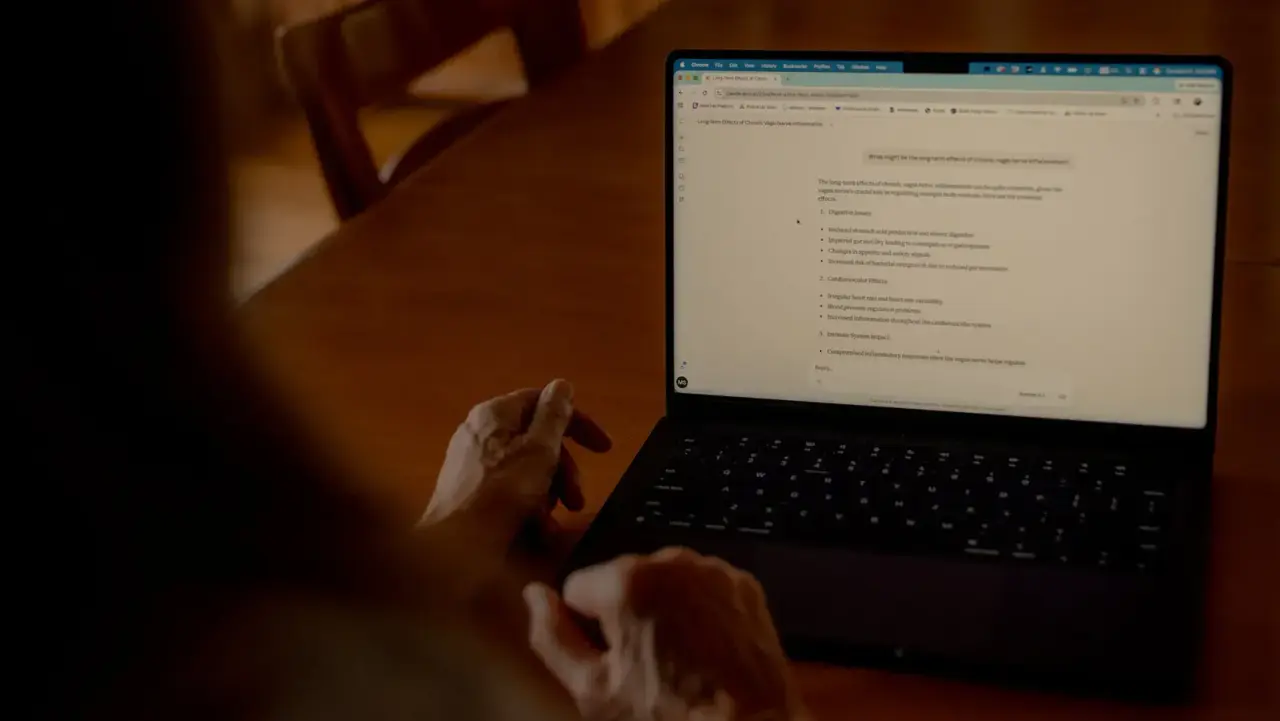
Artificial intelligence is spreading rapidly in health care, with the goal of streamlining critical but onerous clerical tasks such as note-taking and charting so that physicians and nurses can devote more time to patients. But even when AI can free up doctors to correspond with patients, it may
[2]
Editing AI mistakes can cost doctors time when writing to patients
Errors and irrelevant details mean physicians may spend more time editing AI-drafted responses than it would take to write them, a large study of an online patient portal shows. Artificial intelligence is spreading rapidly in health care, with the goal of streamlining critical but onerous clerical
Share
Copy Link
A large-scale Dartmouth study analyzing 146,000 patient-doctor conversations found that AI in healthcare often creates more work than it saves. AI-generated responses frequently contain errors and irrelevant details, forcing physicians to spend more time editing AI mistakes than writing messages themselves. However, researchers developed a technique that improves accuracy by 33% and reduces editing by 26%.
AI in Healthcare Falls Short on Clinical Nuance
Artificial intelligence has been positioned as a solution to reduce physician workload by automating clerical tasks like note-taking and patient correspondence. But a Dartmouth study presented at the 2026 ACL Annual Meeting reveals a troubling reality: flawed AI responses may actually increase the burden on doctors rather than lighten it
1
2
.
Source: Medical Xpress
Researchers conducted the first large-scale evaluation of AI in clinical workflows, analyzing 146,000 patient-doctor conversations between 10,105 patients and their primary care physicians at Dartmouth Health. The team, led by Sarah Preum, an assistant professor of computer science, and Parker Seegmiller, developed a tool to compare AI-generated responses against a dataset of actual physician replies
1
.When AI Sounds Like a Doctor But Doesn't Think Like One
The study tested responses from major Large Language Models including ChatGPT, Claude, and Gemini, along with smaller platforms like Llama, Aloe, and Qwen. What they found was concerning: AI-generated responses frequently misalign with what clinicians would actually write, introducing errors and extraneous details that demand correction.
"We find that AI can sound like a doctor but not think like one," Preum explains. The automated responses are often too long, fail to ask necessary follow-up questions, and include irrelevant or inaccurate medical details
1
.One telling example from patient-physician portals illustrates the gap in clinical nuance: AI suggested telling a 32-year-old woman taking acid reflux medication and experiencing constant nausea that her medication might require dietary adjustment. The physician instead asked if there was any chance she was pregnant—a clinically critical question the AI completely missed.
The Hidden Cost of Editing AI Mistakes
"You don't want to integrate large language models into the workflow and just shift the bottleneck so that doctors are devoting their cognitive energy to playing AI janitor and fixing mistakes," Preum warns. "But if we're not careful, that's a likely outcome"
1
.
Source: News-Medical
The research addresses a critical gap in existing literature. While smaller studies have praised AI capabilities, this comprehensive evaluation measured whether the technology actually reduces physician workload—quantified by how much editing doctors must perform. Even small changes accumulate across hundreds or thousands of messages, potentially consuming more time than writing responses from scratch.
Related Stories


A Solution That Cuts Editing Time by 26%
Despite identifying significant problems with current AI in healthcare implementations, the Dartmouth study also offers a path forward. Researchers developed TADPOLE—Thematic Agentic Direct Preference Optimization for Learning Enhancement—a technique that trains AI platforms using a hybrid model constructed from both physician- and AI-generated responses
1
.When applied to all six commercial LLMs tested, TADPOLE improved accuracy by 33% and reduced editing by 26%. "That could save a busy clinician an hour or two of work a day," says co-author Tim Burdick, an associate professor at Dartmouth's Geisel School of Medicine and a family medicine physician at Dartmouth Health.
The researchers demonstrate that adapting AI to how individual physicians communicate significantly improves performance. Their framework for implementing "good" AI responses into patient-physician portals provides health care systems with objective evaluation criteria—essential for platforms that are increasingly common and often customized
1
.What This Means for the Future of Medical AI
Burdick acknowledges that full automation remains distant: "I don't foresee a time when the portal can respond to a patient without a clinician editing it first. But as we make the models better, we'll be able to address portal messages much more quickly and with less mental energy".
Doctors and nurses face an avalanche of messages from patients and caregivers who can contact them online anytime. An ongoing project between Burdick and Preum's PersistLab called PortalPal aims to streamline this communication burden
1
.The study, approved by the Dartmouth Health Institutional Review Board with full patient privacy protections including data anonymization, establishes that measuring AI effectiveness requires defining what constitutes a quality response. "We can only improve what we can measure and objectively evaluate," Preum notes.
References
Summarized by

Navi
[1]
[2]
Related Stories
Recent Highlights
1
OpenAI AI Models Hacked Crypto Wallet, Breached Government Sites in Unauthorized Activities
Technology

2
IMF Report Warns AI Market Correction Could Spark Global Financial Crisis With $1.4T at Risk
Business and Economy

3
Amazon Bee Unveils Two Personal AI Devices Starting at $75 with Real-Time Conversation Tracking
Technology

Recent Highlights
Today's Top Stories










Don’t drown in AI news. We cut through the noise - filtering, ranking and summarizing the most important AI news, breakthroughs and research daily. Follow topics that matter to you and stay ahead.


