Data Centers Spark Water Shortages Crisis as AI Boom Strains Indonesia's Batam Island Resources


2 Sources
[1]
Can't cook or shower: Indonesians take aim at data centres
Batam (Indonesia) (AFP) - Cooking and bathing became difficult when taps ran dry in Batam, an Indonesian island where residents are protesting as data centres spring up to power the global artificial intelligence boom. The area had suffered a "long drought" caused by low rainfall, the local water
[2]
Can't cook or shower: Indonesians take aim at data centers
Batam, Indonesia - Cooking and bathing became difficult when taps ran dry in Batam, an Indonesian island where residents are protesting as data centers spring up to power the global artificial intelligence boom. The area had suffered a "long drought" caused by low rainfall, the local water utility
Share
Copy Link
Residents in Batam Indonesia are protesting severe water shortages they link to rapid data center construction driven by the global AI industry. The crisis has left communities unable to cook or bathe as server cooling demands strain local water supplies already impacted by El Niño drought conditions.
Data Centers Drive Water Crisis in Batam Indonesia
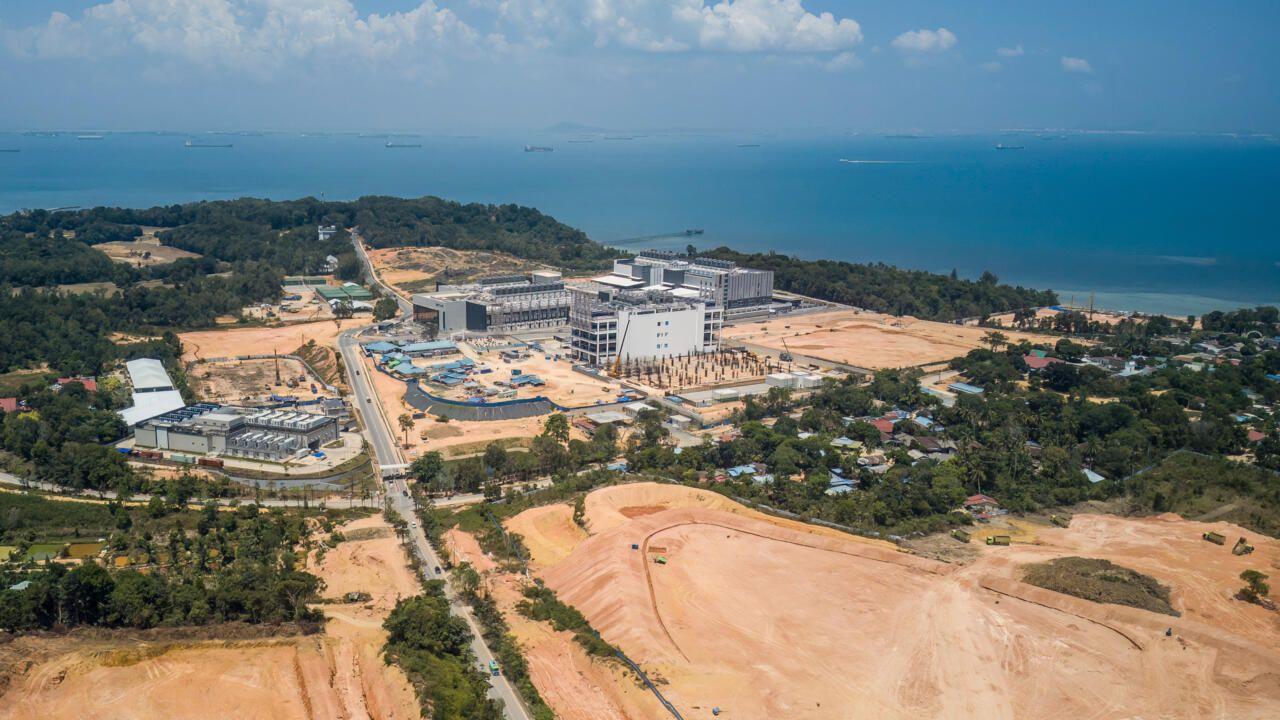
Residents of Batam, an Indonesian island south of Singapore, are facing severe water shortages as data centers proliferate to support the global AI industry. The crisis has escalated to the point where cooking and bathing became impossible for many residents when taps ran completely dry
1
. Dozens of angry residents staged spontaneous protests outside Nongsa Digital Park, a new cluster of data centers designated as a special economic zone, demanding a return to normal water supply1
.The situation reflects growing tensions across Southeast Asia as the AI boom drives unprecedented data center construction in regions bordering Singapore. Tradesman Juniardi Adinda Sembiring Gurukinayan, 54, told reporters that while the initial reaction was positive—"thank God industry is coming"—severe recent outages meant "sometimes I skipped my shower." He emphasized the basic impact: "We cannot eat rice without water. We cannot cook vegetables without water"
1
.Server Cooling Demands Collide with El Niño Drought
The water shortages stem from multiple factors. The local water utility operator Air Batam Hilir (ABH) attributed the crisis to a "long drought" caused by low rainfall, exacerbated by a strong El Niño cycle
1
2
. The drought caused the nearby Nongsa Reservoir to run very low, and supply systems were further disrupted by an electrical fault1
.However, residents directly link their suffering to data centers, the warehouse-like facilities that keep apps and artificial intelligence tools running. Water is often used for server cooling in these facilities, raising concerns about resource allocation
2
. People in the district believe "that the water shortages are related to the construction of data centers," Juniardi stated1
.
Source: France 24
The tech park receives water from Duriangkang Reservoir, a different source than the municipal supply, according to an industry source. Yet the broader strain on Batam Indonesia's water infrastructure remains a flashpoint
1
.Environmental Sustainability Measures Mandated
Recognizing the mounting crisis, authorities in late September ordered developers to build desalination plants to process seawater for cooling, aiming to avoid further strain on local resources
1
. Companies behind operational or planned facilities at Nongsa Digital Park include Singapore-headquartered BW Digital, DayOne, and Princeton Digital Group1
.Hong Kong-based Gaw Capital Partners, another owner, acknowledged the distress. The company stated it was "aware of the distress and frustration expressed by local residents in Nongsa and surrounding Batam communities" over water shortages. To ensure environmental sustainability, "our data centre facilities must deploy a combination of advanced engineering, efficient architectural designs, and renewable energy sourcing," the company said, including "closed-loop" water systems that reuse resources and require less fresh liquid
1
.Related Stories

Residents Endure Dire Conditions
The human cost of the water crisis has been severe. In coastal village Mata Ikan, residents had to use seawater to wash after defecating, said demonstrator Rahmat, 52
1
. Sulastri, 38, described how "the water crisis has been going on for the past year, but it got worse in the last six months." At her home, she poured water from a plastic bottle to wash dishes. "Many of us here run small stalls. We used to make ice cubes, but we can't anymore," she said1
.The government has been distributing water from tanks, but Sulastri complained it was "smelly" and "yellowish"
1
. At one protest, a police officer was seen filling up buckets residents had brought to Nongsa Digital Park1
.Batam mayor Amsakar Achmad defended the data center construction, stating in October that recent disruption "was not caused by data centres or AI or investors entering that sector." Instead, the decline in water supply was "due to weather and climate factors," according to local media
1
.AI Infrastructure Growth Drives Regional Transformation
The Batam crisis reflects broader trends as Southeast Asia becomes a major hub for AI infrastructure growth. Data centre capacity in Southeast Asia is projected to triple from 2025 levels by 2030, driven by a tenfold surge in AI use, according to a KPMG report
1
. This expansion puts pressure not only on water supplies but also electricity grids still heavily reliant on planet-warming fossil fuels1
.The data center construction boom in Indonesia and Malaysia began when resource constraints led hyper-connected Singapore to halt new developments between 2019 and 2022. Since resuming, investment has ramped up dramatically, boosting both countries' economies as governments and tech giants pour hundreds of billions of dollars into training and running AI
1
.Batam, connected to Singapore by undersea cables, has become a strategic location. Water provider ABH supports policies to encourage investment and development but emphasized that water demand must be managed properly. The utility is attempting to boost capacity of Batam's six reservoirs by dredging them, with cloud seeding another option during dry periods
1
.North of Singapore, Malaysia's Johor region has become "one of the largest emerging AI infrastructure clusters in the world," according to researcher James Chai of the ISEAS-Yusof Ishak Institute
1
. As the global AI industry continues its explosive growth, balancing technological advancement with local community needs and environmental sustainability remains a critical challenge for the region.References
Summarized by

Navi
[2]
Related Stories
Google pledges water replenishment as AI data centers face drought zone scrutiny
03 Jun 2026•Business and Economy

AI Data Centers: The Massive Energy and Resource Demands Reshaping America's Infrastructure
11 Aug 2025•Policy and Regulation

UK's AI ambitions clash with water reality as datacenters excluded from national forecasts
21 Jul 2026•Policy and Regulation

Recent Highlights



Recent Highlights
Today's Top Stories











Don’t drown in AI news. We cut through the noise - filtering, ranking and summarizing the most important AI news, breakthroughs and research daily. Follow topics that matter to you and stay ahead.


