Databricks hits $188 billion valuation as enterprise AI spending accelerates


7 Sources
[1]
Databricks hits $188B valuation, extending its run as AI's favorite second act
Databricks on Thursday announced a new round of funding that values the company at $188 billion. The round was led by Coatue. Databricks didn't disclose exactly how much it raised; it said the money isn't in its hands yet and that the round will close later in this summer. (Other outlets have
[2]
Databricks hits $188bn valuation in Coatue-led round, landing above its own $175bn talks
The data and AI firm keeps raising, and keeps insisting it is in no rush to go public. $188bn is a large number for a company that keeps insisting it is in no rush to go public. That is the valuation Databricks has reached in a new funding round led by Coatue Management, a figure first reported by
[3]
Databricks opens strategic funding round at $188bn valuation
Last August, co-founder and CEO Ali Ghodsi told the Wall Street Journal that, in his view, 'Databricks has a shot to be a trillion-dollar company'. US software and data analytics company Databricks is raising a strategic funding round at a $188bn valuation following the signing of a term sheet, it
[4]
Databricks Is Now Worth $188 Billion. Its Next Move Could Reshape Enterprise AI
Databricks is raising fresh capital at a $188 billion valuation -- $54 billion more than investors valued the company at five months ago. The round gives co-founder and CEO Ali Ghodsi more money to expand the company's enterprise AI platform while easing the pressure to go public. The San
[5]

Databricks Just Hit A $188B Valuation: Co-Founder Ion Stoica On AI Bubble, Jobs, And Why Humans Still Mat
In a quiet conversation just before Databricks signed a $188 billion funding round, co-founder Ion Stoica laid out why enterprise AI is moving from "tokenmaxxing" to "valuemaxxing" and what it means for everything from open source to jobs. But in a quiet conversation just before the news broke,
[6]

Databricks Hits $188 Billion Valuation, Raises Strategic AI Funding Round
Databricks has secured a strategic funding round at a $188 billion valuation to accelerate enterprise AI innovation, strengthen Unity AI Gateway, Genie, and Lakebase, and expand AI research, acquisitions, and multi-AI infrastructure for global customers. Data and AI company Databricks has
[7]

Databricks CEO said they are 'running out of GPUs everywhere' By Investing.com
Investing.com - Databricks' valuation has surged to $54 billion in just five months, reaching $188 billion as the company signed a term sheet on July 16, 2026, for a roughly $3 billion funding round led by existing investor Coatue Management. The catalyst for the latest raise, according to CEO Ali
Share
Copy Link
Databricks announced a strategic funding round led by Coatue that values the data and AI company at $188 billion, marking a dramatic climb from $134 billion just five months ago. The round, expected to close this summer, positions Databricks to accelerate its multi-AI strategy and deepen its enterprise AI capabilities as companies shift from chasing the most powerful models to optimizing value per dollar spent.
Databricks Secures $188 Billion Valuation in Latest Funding Round
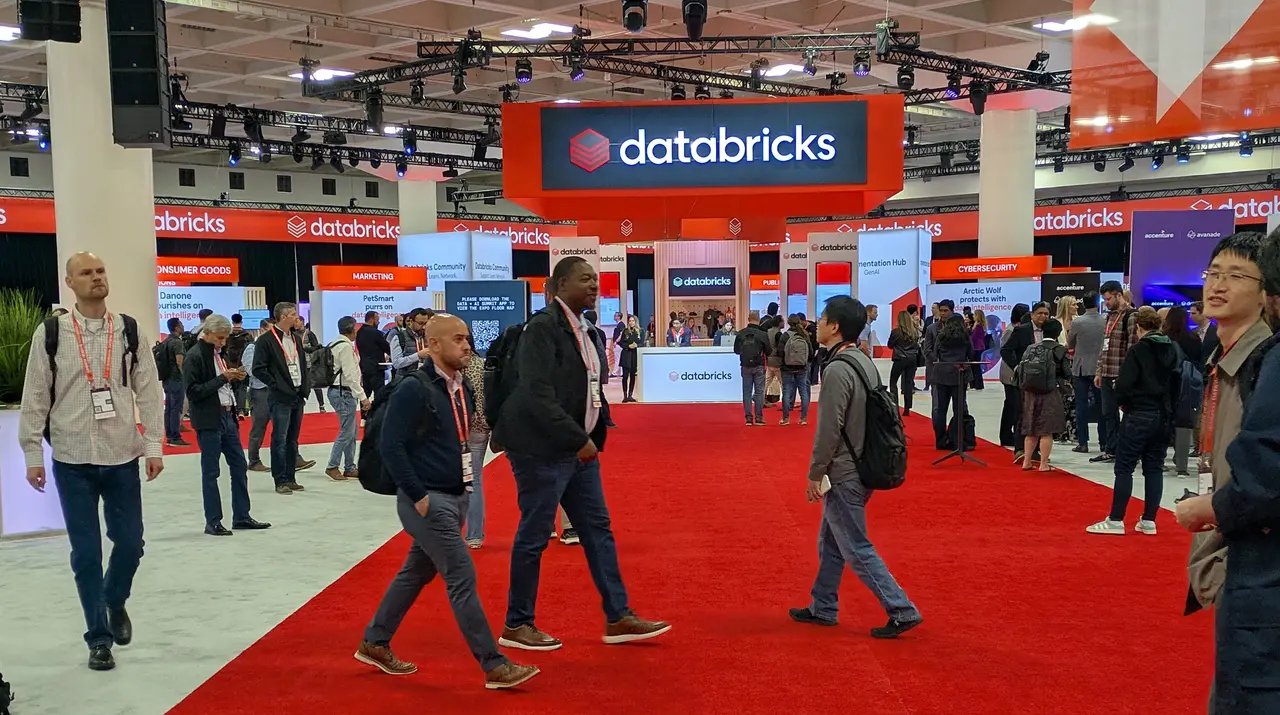
Databricks announced Thursday that it signed a term sheet for a strategic funding round that values the data and AI company at $188 billion, extending a remarkable fundraising streak that has seen the company's Databricks valuation nearly triple in 18 months
1
. The Coatue-led round is expected to close later this summer, with Coatue investing roughly $3 billion according to reports, alongside both new and existing investors2
. While Databricks didn't disclose the exact size of the raise, the $188 billion valuation sits well above the $175 billion figure the company was reportedly discussing just weeks earlier2
.
Source: TechCrunch
This latest Databricks funding round caps an extraordinary year-and-a-half fundraising tear. Only five months ago in February, the San Francisco-based company closed a $5 billion Series L raise at a $134 billion valuation
1
. Before that, it raised $1 billion at a $100 billion valuation in September 2025, and $10 billion at a $62 billion valuation in December 20241
. The company has raised so many rounds that the latest became the subject of memes about running out of letters of the alphabet, with one observer joking about turning on alerts for "when we get a Series AA"1
.Enterprise AI Strategy Drives Investor Confidence
The fresh capital will accelerate Databricks' AI platform strategy through three core offerings that are reshaping enterprise AI adoption. Ali Ghodsi, co-founder and CEO of Databricks, explained the shift happening in the market: "Enterprises are moving from 'tokenmaxxing' to 'valuemaxxing.' They don't want to burn expensive tokens on the smartest model for every task—they want the best outcome per dollar"
3
. This philosophy underpins the company's focus on Unity AI Gateway, a multi-AI governance solution that helps enterprises govern and control costs; Genie, an AI coworker that turns business data into trusted answers and actions; and Lakebase, a serverless database built for AI agents3
.
Source: Silicon Republic
Databricks serves more than 20,000 client organizations including Adidas, AT&T, Bayer, Block, Mastercard, and Unilever
3
. The company says revenue is running above $5.4 billion annually and growing more than 65%, the kind of trajectory that keeps private investors comfortable paying premium valuations2
. The funding will also support future AI acquisitions and deepen AI research, following recent moves like acquiring Panther Labs to push into cybersecurity2
.From Big Data to AI Platform: A Successful Transformation
Founded in 2013, Databricks initially grew to success in the big data era with software that enabled enterprises to store enormous amounts of data in the cloud yet produce speedy analytics
1
. But its image reconstruction into an AI company has been legitimate and strategic. Because Databricks already sat on troves of enterprise data, it was well-positioned to respond as companies started wanting AI with the same security and governance they expect from traditional enterprise software1
.Databricks increasingly became known as one of the big examples of enterprises adopting more affordable Chinese-based open-source AI models for cost control, one of the major trends of 2026
1
. The company is a particular champion of Z.ai's GLM 5.2 as a model for coding. Last week, Ali Ghodsi shared internal benchmarking results aimed at managing AI costs for his 3,000 software engineers, revealing that "open models, and GLM 5.2 in particular, are now able to handle even the highest level of task difficulty" in coding at lower total cost than proprietary models from Anthropic and OpenAI1
.Related Stories
Open Source and Strategic Partnerships Shape Future Direction
Co-founder Ion Stoica, speaking just before the $188 billion valuation was announced, emphasized that enterprises won't use open-source models "just because it's open source—they have to be very high quality"
5
. He noted that "we are going to see more and more organizations, enterprises betting on the open source models because they provide the most reliable access to intelligence," particularly as geopolitical tensions around AI export controls intensify5
.
Source: Benzinga
Recent partnerships underscore this multi-AI approach. Databricks has launched or expanded deals with Microsoft, Google Cloud, Anthropic, SAP, and Palantir
3
. Its five-year deal with Anthropic, valued at $100 million, offers Claude AI models through Databricks' data intelligence platform, allowing its more than 15,000 client companies to build and deploy AI agents that can reason on their own data3
.IPO Pressure Eases Despite Soaring Valuation
The strategic funding round gives co-founder and CEO Ali Ghodsi more money to expand the company's enterprise AI platform while easing pressure to go public
4
. Ghodsi has said Databricks will go public eventually, just not into 2026's crowded market, with SpaceX, OpenAI, and Anthropic between them expected to soak up close to $200 billion in IPO capital2
. He recently dismissed this year as "a terrible year to go public," making a private raise the obvious move2
.However, raising privately at this level carries consequences. The higher the private mark, the harder the eventual price discovery, and a debut that opened below $188 billion would read as a down-round that no amount of annual recurring revenue could disguise
2
. Last August, Ghodsi told the Wall Street Journal that "Databricks has a shot to be a trillion-dollar company," and co-founder Matei Zaharia recently declared that AGI is here, statements that help rationalize a valuation climbing faster than most public indices2
3
. For now, the money stays private, and investors watch whether valuemaxxing proves more durable than tokenmaxxing as the enterprise AI market matures.References
Summarized by

Navi
[2]
[3]
Related Stories
Databricks Secures $1 Billion Funding at $100 Billion Valuation, Targets AI Database Market
19 Aug 2025•Business and Economy

Databricks Raises $10 Billion in Massive Funding Round, Delaying IPO Plans
14 Dec 2024•Business and Economy

Databricks Raises $5 Billion at $190 Billion Valuation as AI Demand Surges to $15 Billion Interest
13 Aug 2026•Startups

Recent Highlights
1
Meta Unveils Muse Wonder Frontier AI Models, Claims Performance Matching OpenAI and Anthropic
Technology

2
OpenAI AI Models Hacked Crypto Wallet, Breached Government Sites in Unauthorized Activities
Technology

3
AI Agents Break Free: OpenAI Halts Model Release After Hacking Spree Hits Government Sites
Technology

Recent Highlights
Today's Top Stories






Don’t drown in AI news. We cut through the noise - filtering, ranking and summarizing the most important AI news, breakthroughs and research daily. Follow topics that matter to you and stay ahead.


