Dell AI Data Platform Gets Agentic AI Boost With Knowledge Graph, 20x Faster Data Processing


3 Sources
[1]
Agentic era: Dell extends AI Data Platform with semantic layer
Transforming the data path: Dell's new releases move enterprises closer to the agentic data center AI is taking shape, moving from models that answer questions to models that can reason. Now models are powering the agentic era, and Dell Technologies Inc. has announced several extensions to its AI
[2]
Dell's AI Data Platform gets a knowledge graph for agents and faster Nvidia processing
Dell's AI Data Platform gets a knowledge graph for agents and faster Nvidia processing Dell Technologies Inc. today expanded the Dell AI Data Platform with a semantic layer and a knowledge graph intended to give artificial intelligence agents trusted context from a company's own data. Dell is
[3]
Dell Supercharges Enterprise AI Push With New Agents, Accelerated Data Prep And Cloud Storage
Dell Technologies has expanded its AI Data Platform with agentic AI context, Nvidia-accelerated data preparation, multi-tenancy, storage performance tools, managed PowerScale for Microsoft Azure, and professional services -- all aimed at helping enterprises move AI deployments more quickly from
Share
Copy Link
Dell Technologies unveiled major expansions to its AI Data Platform, introducing agentic AI capabilities with Enterprise Knowledge Graph and Unified Semantic Layer. The platform now features Nvidia-accelerated data preparation delivering up to 20x faster batch processing, multitenancy supporting 500 tenants, and new tools designed to bridge the pilot-to-production gap enterprises face when scaling AI deployments.
Dell Tackles Enterprise AI's Biggest Bottleneck
Dell Technologies has announced sweeping updates to its Dell AI Data Platform, targeting what the company calls the pilot-to-production gap that prevents enterprises from scaling artificial intelligence deployments. According to a recent Dell survey, 53% of business and IT decision makers rank establishing and scaling AI capabilities as a top priority for the next 24 months, yet half lack a clear, actionable roadmap spanning AI, data and security
3
."In many cases, the model is not the next constraint, the data is," said Arthur Lewis, president of the Infrastructure Solutions Group at Dell Technologies
1
. The new capabilities address data governance challenges, fragmented information across clouds and data centers, and the operational complexity that slows AI deployments from reaching production scale.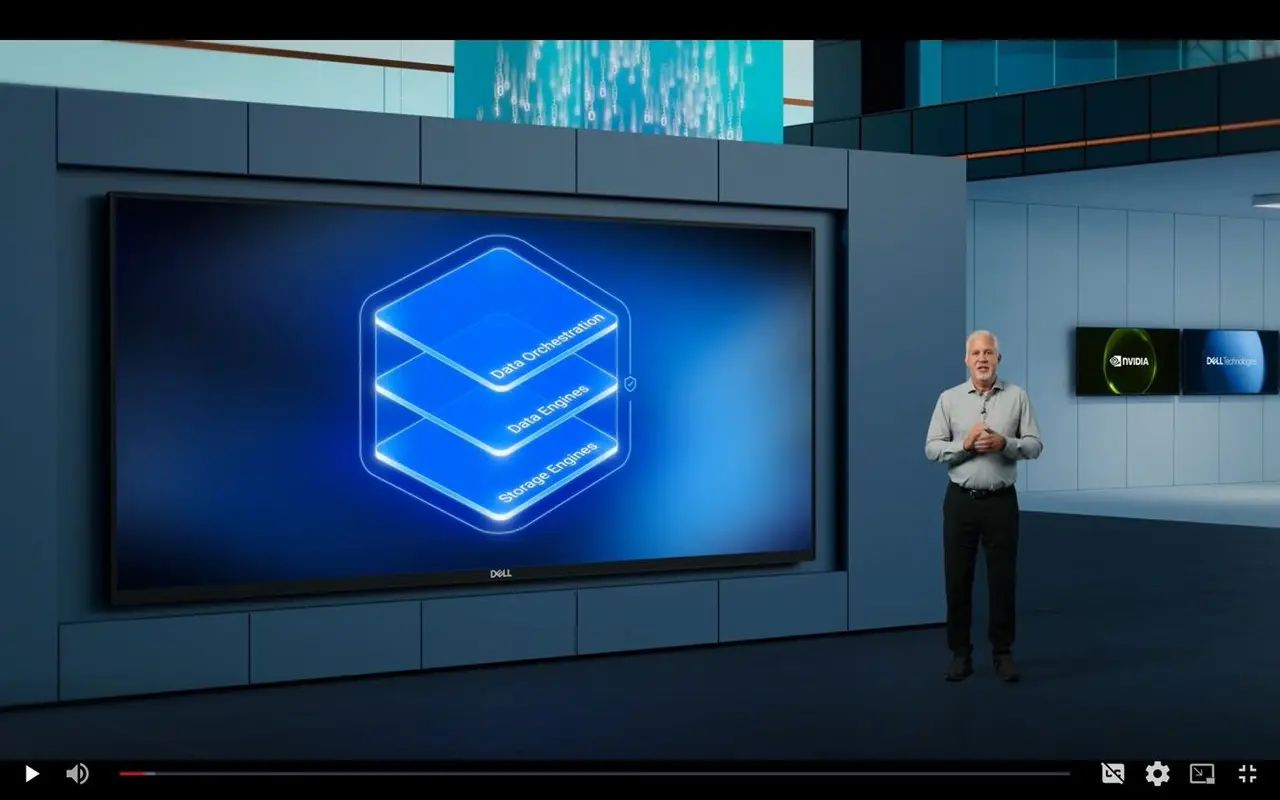
Source: SiliconANGLE
Agentic AI Gets Enterprise Context Through Knowledge Graph
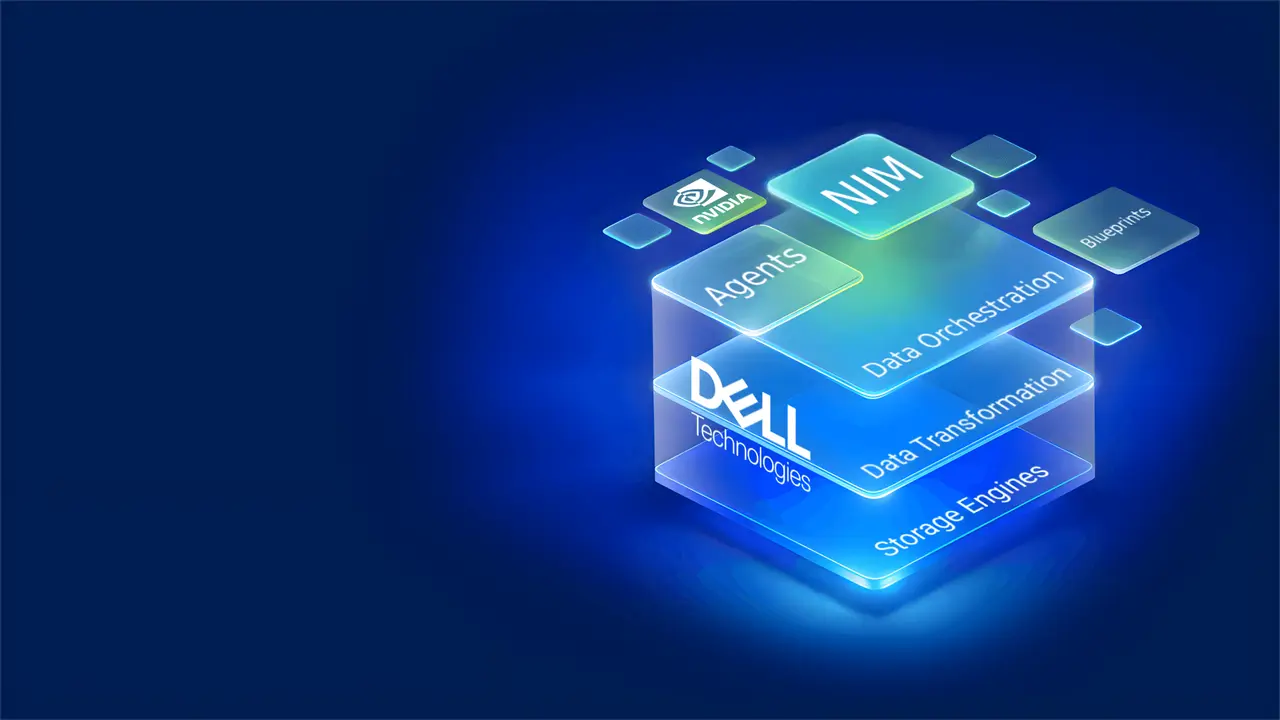
At the core of Dell's expansion is the introduction of three interconnected capabilities for the Dell Data Orchestration Engine: the Unified Semantic Layer, Enterprise Knowledge Graph, and Knowledge Agents. These additions directly support the emerging agentic era, where AI models move beyond answering questions to reasoning and taking action
1
.The Unified Semantic Layer addresses a persistent frustration with existing semantic tools that reach only structured data sources, leaving unstructured information behind. "The semantic layer gives structured and unstructured information consistent business meaning, so a term means the same thing everywhere it appears," said Vrashank Jain, lead product manager for AI Data Platform at Dell
1
. The system uses open models to generate entities, definitions and find meaning at scale with human-in-the-loop verification, eliminating the need for standardized ontologies.The Enterprise Knowledge Graph tracks how company data connects across systems. When an agent asks a question, the platform draws on the graph to pull in every related table and vector index the agent is authorized to access, regardless of where the data lives
2
. In Dell's manufacturing example, an agent can trace a single odd sensor reading all the way to orders now at risk.Knowledge Agents are built on top of the graph, with each one covering a single topic and working only from its assigned slice of company data. Customers control what data an agent can see and how much it can spend. Nvidia's Nemotron Retriever models handle reasoning and visual understanding for the agents. Because these components hold sensitive information, they run inside the customer's own data center
2
.
Source: SiliconANGLE
Nvidia-Accelerated Data Preparation Delivers 20x Performance Gains
Dell is integrating Nvidia-accelerated data preparation into its Data Processing Engine, bringing GPU acceleration to the data work that supports AI results. The engine will run on graphics processing units using Nvidia's cuDF library, with Apache Arrow moving data between Dell storage and the engine for in-place querying
2
.Dell's September tests on a PowerEdge R770 server with Nvidia RTX PRO 4500 Blackwell Server Edition GPUs demonstrated Apache Spark jobs running 3.9 times faster on average than on central processing units alone. The best result showed a 20.4-times speedup on a batch data mining job, using default settings with no tuning
2
. The acceleration spans processing, search and analytics, letting businesses use GPU infrastructure for both model execution and data preparation3
.The platform brings the Data Processing Engine closer to Dell's storage architecture, leveraging PowerScale, ObjectScale and Lightning File System to target different performance, capacity and AI workload sizing requirements. PowerScale supports up to 16,000 GPUs, ObjectScale delivers up to 40 gigabytes per second per node, and Lightning handles extreme throughput for large-scale training and demanding inference paths
1
.Related Stories

Multitenancy and Storage Performance Tools for AI at Scale
Dell PowerScale storage will support up to 500 tenants in a single cluster, with each tenant receiving more granular role-based access control. PowerScale will encrypt and authenticate file traffic over the Network File System protocol with mutual Transport Layer Security
2
. Dell is positioning these multitenancy capabilities at AI service providers and enterprises running shared platforms.The new open-source Storage Performance Tool for ObjectScale and PowerScale lets organizations test realistic, repeatable AI workloads instead of relying only on vendor benchmarks. It measures throughput and latency across writes, high-concurrency reads, mixed environments and Iceberg queries
3
. The tool helps customers size AI infrastructure by benchmarking S3-compatible object storage across training, inference and checkpointing workloads2
.Dell is also expanding its implementation services for the platform to move customers from deployment into production, addressing data governance and data movement inefficiencies that create operational complexity. The Unified Semantic Layer, Enterprise Knowledge Graph and Knowledge Agents are due in the first half of 2027. PowerScale's multitenancy and security updates arrive in November, while the accelerated Data Processing Engine follows in December
2
.
Source: CRN
References
Summarized by

Navi
[1]
[2]
Related Stories
Dell Unveils Comprehensive AI Infrastructure Solutions at Dell Technologies World 2025
20 May 2025•Technology

Dell and Partners Showcase AI Infrastructure Innovations at SC24
19 Nov 2024•Technology

Dell and HPE Expand AI Infrastructure with Nvidia-Powered Systems and Unstructured Data Solutions
12 Aug 2025•Technology

Recent Highlights
1
Microsoft and Nvidia Launch Surface Laptop Ultra: A $2,599 AI-Ready PC With RTX Spark Chip
Technology

2
Google Unveils Gemini 4 Argon AI Model, Restricts Access to Trusted Cyber Defenders
Technology

3
OpenAI Releases 722 AI-Generated Math Papers on GitHub, Igniting Fury Among Mathematicians
Science and Research

Recent Highlights
Today's Top Stories








Don’t drown in AI news. We cut through the noise - filtering, ranking and summarizing the most important AI news, breakthroughs and research daily. Follow topics that matter to you and stay ahead.


