DRAM Revenue Jumps 369% as AI Demand Transforms Memory into Scarce Resource


2 Sources
[1]
Memory makers mint megabucks while buyers beg for mercy
DRAM revenue jumps 369 percent as AI demand keeps supplies tight and prices climbing The big memory manufacturers continue to print money at the expense of long-suffering buyers, with industry DRAM revenue approaching five times its level a year ago. Demand for datacenter capacity and AI
[2]
DRAM revenue surges 369% as AI-driven memory crunch deepens
Industry DRAM revenue surged 369% year on year in the third quarter of 2026 to nearly $200 billion, driven by demand for data center capacity and AI accelerators, Counterpoint Research said. DRAM bit shipments increased by about 4% during the quarter, while revenue rose to almost five times the
Share
Copy Link
Industry DRAM revenue surged to nearly $200 billion in Q3 2026, approaching five times year-ago levels, as AI demand for data center capacity turned memory into a scarce resource. Samsung, SK hynix, and Micron posted record profits while buyers face sustained high prices and tight supplies expected to persist until 2028.
DRAM Revenue Surge Reshapes Memory Market
Industry DRAM revenue exploded 369 percent year-over-year in Q3 2026, reaching nearly $200 billion as AI demand fundamentally transformed the memory landscape, according to Counterpoint Research
1
2
. This DRAM revenue surge represents close to five times the level recorded a year earlier, driven primarily by demand for AI accelerators and data center capacity. The dramatic increase occurred despite bit shipments rising only about 4 percent during the quarter, with average selling prices reaching $1.90 per gigabit remaining the main driver of revenue growth2
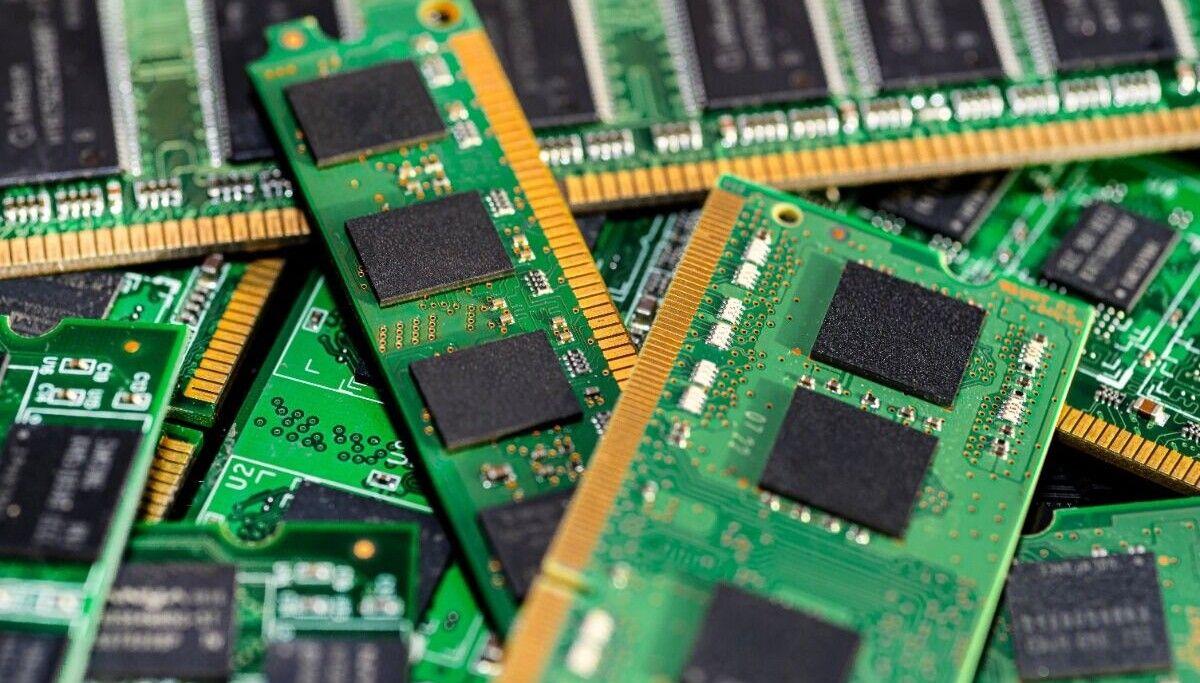
.
Source: The Register
AI-Driven Memory Crunch Creates Supply Competition
"AI has turned memory from a commodity into a valuable scarce resource, and buyers are now competing for supply rather than negotiating on price," said Counterpoint senior analyst Jeongku Choi
1
. This AI-driven memory crunch has fundamentally altered market dynamics, with manufacturers prioritizing more lucrative products for the server market and squeezing supplies for consumer markets including PCs and smartphones1
. The shift reflects how AI demand for data center capacity has created unprecedented pressure on memory production capacity.Record Profits for Memory Manufacturers
Samsung captured a 38 percent share of DRAM revenue among the three largest memory makers and forecast company-wide operating profit of about $80 billion for Q3, compared with $9 billion a year earlier
1
2
. SK hynix posted stronger sequential growth, helping it recover market share lost earlier in 2026, and recorded a $62.8 billion profit2
. Micron's fiscal fourth-quarter net profit reached $37.7 billion, exceeding its entire second-quarter revenue of $23.8 billion1
. Choi noted that suppliers are on track to set new earnings records again next quarter as prices continue rising2
.Related Stories

Memory Shortages Expected Through 2030
SK hynix predicts that memory shortages will persist until at least 2030, signaling extended challenges for buyers
1
. Counterpoint research director MS Hwang expects sustained high prices through 2027, noting that high-bandwidth memory prices, which lagged commodity DRAM this year, are now catching up1
2
. Long-term agreements are supporting prices, while supply will remain tight because major new fabrication plants will not start production until 20281
. Hwang noted that agreement terms may cause short-term differences between suppliers' results, but over time they should all follow the same upward trend1
.Impact on Consumer Electronics Markets
The consequences of transforming memory into a scarce resource have been severe for consumer markets. Average laptop prices and desktop prices increased by double-digit percentages across Europe this summer, resulting in falling PC shipments as vendors struggled to secure supplies and buyers were deterred by the expense
1
. Smartphone prices experienced similar effects, with shipments down by at least a fifth as rising memory costs squeezed budget models out of the market, forcing vendors to focus on high-end devices instead1
. While price increases slowed from the steep rises seen in the first half of 2026, the trajectory remains upward, signaling continued pressure on consumer electronics pricing through at least 2028.References
Summarized by

Navi
[1]
Related Stories
DRAM prices surge up to 95% in Q1 2026 as artificial intelligence boom strains global supply
02 Feb 2026•Business and Economy

AI Demand Drives Memory Prices to Record Highs, Impacting Consumer Tech Market
31 Oct 2025•Business and Economy

Memory prices spike up to 400% as AI demand creates global shortage lasting through 2026
14 Dec 2025•Business and Economy

Recent Highlights



Recent Highlights
Today's Top Stories









Don’t drown in AI news. We cut through the noise - filtering, ranking and summarizing the most important AI news, breakthroughs and research daily. Follow topics that matter to you and stay ahead.


