Moya AI robot walks with 92% human accuracy, has warm skin, and makes eye contact like a person


3 Sources
[1]
She walks, shows emotion, holds eye contact and is warm - but she's a robot
Not what you'd expect to see inside a robotDroidUp/Shanghai Eye At this stage of the robotics race, it's probably fair to assume that a few of us have a bit of humanoid malaise. After all, we've seen more funny videos of robots dropping plates out of dishwashers and taking 10 minutes to open and
[2]
The world's first 'biomimetic AI robot' just strolled in from the uncanny valley -- and yes, it's super-creepy
Disturbingly lifelike humanoid robots are becoming a big theme of 2026 - and a Shanghai startup has just revealed what might be the closest thing to an extra from Westworld. Fortunately, it's still easy to tell that Moya is indeed a robot - the plasticky skin, dead eyes, and slightly jerky
[3]
China debuts world's first biomimetic AI robot with humanlike gait and body temperature - VnExpress International
The robot, named Moya, was developed by Chinese company DroidUp and debuted in Shanghai in late January. According to Interesting Engineering, the company calls it the first fully biomimetic "embodied intelligent" robot integrated with AI, meaning it can perceive, reason, and physically interact
Share
Copy Link
Shanghai startup DroidUp unveiled Moya, a biomimetic AI robot that maintains human body temperature, walks with 92% accuracy, and expresses emotions through subtle facial movements. Priced at $173,000, the humanoid robot is designed for healthcare and education roles, though its lifelike qualities have sparked both fascination and uncanny valley concerns among observers.
Shanghai Startup Unveils Biomimetic AI Robot With Human-Like Features
Shanghai robotics startup DroidUp, also known as Zhuoyide, has introduced Moya, what the company calls the world's first fully biomimetic embodied intelligent robot. Unveiled at Shanghai's Zhangjiang Robotics Valley in late January 2026, this humanoid robot represents a significant shift from traditional metallic designs toward something far more human-like
1
. Standing 1.65 meters tall and weighing approximately 32 kg, Moya integrates advanced walking capabilities with emotional expression systems that enable her to interact with humans in ways that blur the line between machine and living being3
.
Source: VnExpress
What sets this AI robot apart is its ability to perceive, reason, and physically interact with the real world rather than functioning only in digital space. Li Qingdu, founder of DroidUp, emphasized that "a robot that truly serves human life should be warm... almost like a living being that people can connect with"
1
. The company expects Moya to be rolled out later this year with an initial price tag of US$173,000, targeting healthcare, education, and commercial applications where human-robot interaction is essential1
.Humanlike Body Temperature and Warm Skin Enhance Connection
One of Moya's most distinctive features is its humanlike body temperature, maintained between 32-36°C (89.6-96.8°F). This warm skin is not merely a cosmetic touch but a deliberate design choice based on research showing how humans use temperature to gauge connection and feel kinship with others
1
. The bionic humanoid robot also features softness that replicates real skin, fat, and muscle beneath it, complete with a rib cage structure that moves away from the traditional "steel image" of robotics1
.
Source: New Atlas
DroidUp designed Moya using a modular bionic platform architecture, allowing flexible configuration with different gender characteristics and appearances without altering the internal mechanical structure
3
. This customization capability positions the humanoid robot for diverse applications across public service roles at train stations, banks, museums, and shopping malls2
.Advanced Walking Capabilities and Motor Control
DroidUp claims Moya achieves 92% human-like walking accuracy, though observers note the remaining 8% gap is visible in her gait
1
. The robot is equipped with the Zhuoyide cerebellar motor control model, which enables smooth and elegant walking and turning movements1
. Her Walker 3 skeleton builds on technology that won bronze in the world's first robot half-marathon held in Beijing in April 20252
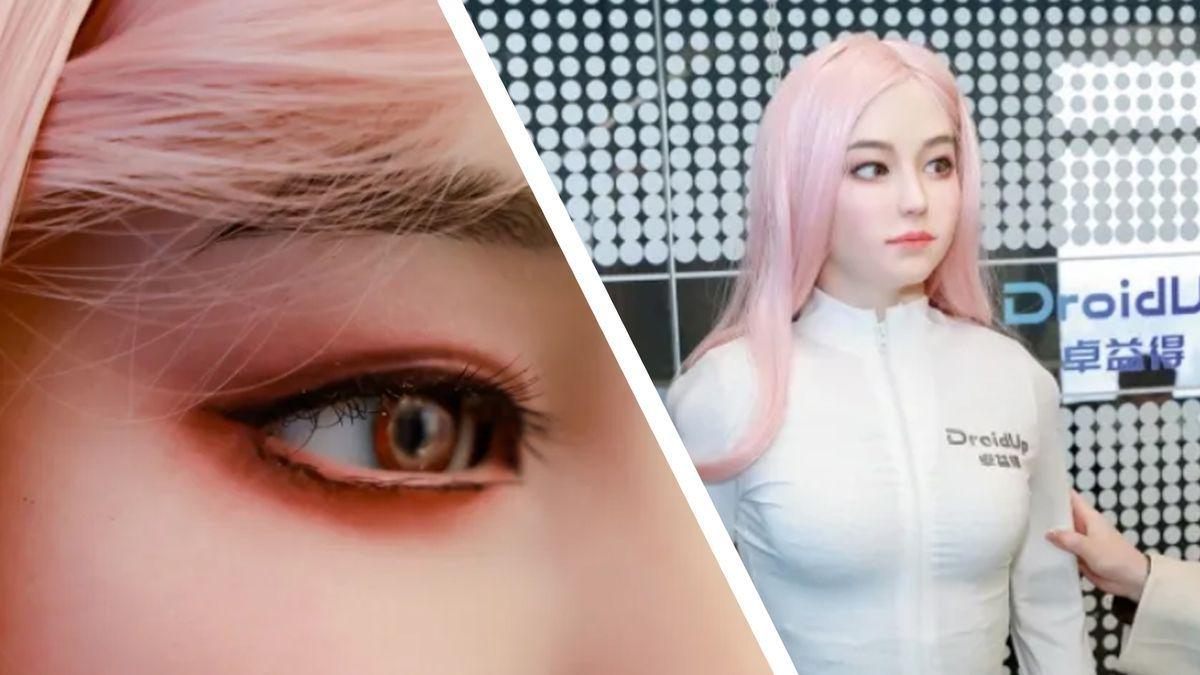
.While walking may not be Moya's primary strength, her ability to interact with humans certainly is. Videos shared by Shanghai Eye and the South China Morning Post show Moya smiling, nodding, maintaining eye contact, and expressing emotions through subtle facial movements
3
.Human-Like Micro-Expressions Through AI Integration
Behind Moya's eyes sits a camera that enables real-time interaction with people facing her. Combined with AI systems, this technology allows the biomimetic AI robot to produce human-like micro-expressions—those subtle facial muscle movements humans make unconsciously during conversation
1
. The highly customizable bionic head can delicately express a wide range of emotions, from joy and anger to sorrow and happiness, with natural grace in its gaze1
.
Source: TechRadar
This represents AI stepping out of the digital world and into physical reality with increasingly convincing results
2
. The integration demonstrates how robotics companies are prioritizing emotional connection over pure functionality, particularly for environments requiring long-term human-robot interaction.Related Stories
Mixed Reactions and the Uncanny Valley Effect
Moya's lifelike appearance has sparked mixed reactions across Chinese social media and international platforms. While some express fascination with the realism, others describe the movements as unsettling, with comparisons to Westworld models and walking ghosts
1
. Comments on social media reflect the uncanny valley phenomenon, with one user stating, "If she dares to take two steps towards my bed, I'm throwing her off the balcony," while another noted, "It walks like a ghost, looks like a deterrent for burglars"2
.Despite these concerns, DroidUp envisions applications beyond family settings, targeting healthcare and education sectors where the friendly, approachable design could benefit patients and students
3
. The company specifically hopes to deploy Moya in aged care facilities, where warm skin and emotional responsiveness could provide comfort to elderly patients1
.What This Means for the Robotics Industry
Moya's debut signals a broader trend in robotics toward biomimetic designs that prioritize human connection over industrial efficiency. However, the US$173,000 price point places these humanoid robots well beyond consumer reach for now
2
. The expected launch in late 2026 will test whether healthcare and education facilities see value in investing in such technology for public service scenarios.As humanoid robots step out of labs and into real-world applications, questions remain about whether truly functional home robots need to look human at all. While Moya represents impressive technical achievement in creating lifelike movement and expression, the practical applications may be limited to specific professional contexts where the benefits of human-like interaction justify the substantial investment.
References
Summarized by

Navi
[2]
Related Stories
UBTech unveils companion humanoid robot that recognizes emotions with 90% accuracy
01 Jul 2026•Technology

Unitree unveils $650K giant rideable mecha robot as company files for $7 billion IPO
15 May 2026•Technology
Realbotix's Aria: The $175K Humanoid Robot Redefining AI Companionship at CES 2025
09 Jan 2025•Technology

Recent Highlights
1
Microsoft and Nvidia Launch Surface Laptop Ultra: A $2,599 AI-Ready PC With RTX Spark Chip
Technology

2
Meta Muse AI Agent Surges to 6.6M Downloads Despite Privacy and Security Controversies
Technology
3
Scientists Build AI Model That Reconstructs Images From Brain Scans in Record Time
Science and Research

Recent Highlights
Today's Top Stories











Don’t drown in AI news. We cut through the noise - filtering, ranking and summarizing the most important AI news, breakthroughs and research daily. Follow topics that matter to you and stay ahead.


