Echo Raises $35 Million to Secure Container Images with AI Agents That Eliminate Vulnerabilities


2 Sources
[1]
Echo raises $35M to secure the enterprise cloud's base layer -- container images -- with autonomous AI agents
As enterprises accelerate the deployment of LLMs and agentic workflows, they are hitting a critical infrastructure bottleneck: the container base images powering these applications are riddled with inherited security debt. Echo, an Israeli startup, is announcing a $35 million in Series A funding
[2]
Vulnerability-free container image startup Echo Software raises $35M - SiliconANGLE
Vulnerability-free container image startup Echo Software raises $35M Echo Software Ltd., a startup that's using artificial intelligence agents to secure container images at the base layer, said today it has raised $35 million in an early-stage funding, just four months after closing on its $15
Share
Copy Link
Israeli startup Echo announced $35 million in Series A funding to tackle a critical infrastructure problem: container images powering enterprise cloud applications contain over 1,000 known vulnerabilities. The company uses AI agents to rebuild images from scratch, creating vulnerability-free container image replacements that enterprises can deploy instantly.
Echo Secures $35 Million to Fix Enterprise Cloud Infrastructure
Echo, an Israeli startup, announced $35 million in Series A funding today to address a critical security gap in enterprise cloud infrastructure
1
. The round was led by N47, with participation from Notable Capital, Hyperwise Ventures, and SentinelOne, bringing the company's total funding to $50 million just four months after closing its $15 million seed raise2
. The company aims to replace the chaotic open-source supply chain with a managed, secure-by-design operating system that eliminates security vulnerabilities before enterprises write a single line of code.Container Base Images Carry Hidden Security Debt
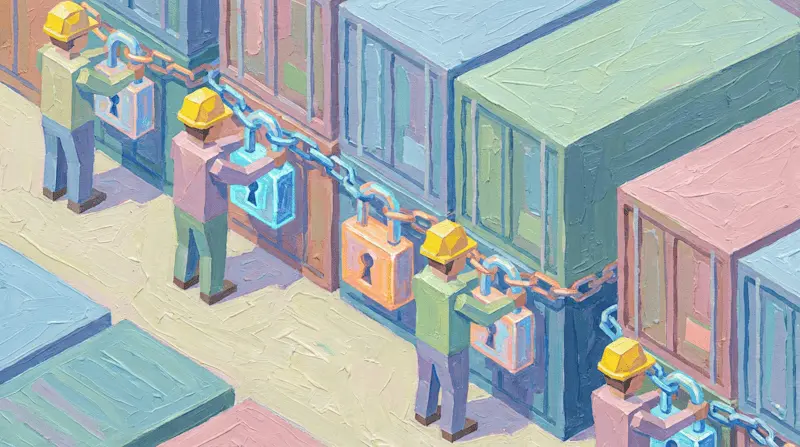
Container images have become the invisible foundation of modern cloud applications, functioning as the operating system layer for everything from simple web apps to complex LLMs and agentic workflows
1
. These container base images, like Alpine, Python, or Node.js, define the underlying runtimes and dependencies that applications need to run. However, Echo's research reveals that official Docker images such as Python, Go, Ruby, and Node.js each contain more than 1,000 CVEs the moment they are downloaded2
. Echo CTO Eylam Milner uses a stark comparison: "Taking software just from the open source world, it's like taking a computer found on the sidewalk and plugging it into your [network]"1
. More than 90% of container vulnerabilities stem from the original base image layer rather than application code, meaning large organizations inherit millions of security issues before development even begins2
.
Source: VentureBeat
AI Agents Autonomously Research and Fix Vulnerabilities
Echo's AI-driven approach differs fundamentally from traditional vulnerability scanning. Instead of detecting problems after the fact, the company operates as a "software compilation factory" that uses AI agents for rebuilding images from scratch
1
. These AI agents continuously monitor the 4,000+ new CVEs added to the National Vulnerability Database monthly, while also scouring unstructured sources like GitHub comments and developer forums to identify patches before they are widely published1
. When a vulnerability is confirmed, the agents identify affected images, apply fixes, run compatibility tests, and generate pull requests for human review in a self-healing process1
. This automation allows Echo's team of just 35 people to maintain a library of over 600 secure container images—a scale that would traditionally require hundreds of security researchers2
.Related Stories

Enterprise Cloud Security in the AI vs. AI Era
The need for vulnerability-free container image solutions is being accelerated by what Echo calls the "AI vs. AI security" arms race
1
. Bad actors are increasingly using AI to compress exploit windows from weeks down to days, while coding agents that autonomously write software are becoming the primary generators of code, often selecting outdated or vulnerable libraries from the open-source supply chain1
. Echo CEO Eilon Elhadad sees the company as delivering an "Enterprise Linux" moment for the AI era, similar to how Red Hat professionalized open-source Linux for the corporate world1
. The company's hardened images serve as drop-in replacements that require developers to change just one line in their Dockerfile to swap out potentially vulnerable Docker images2
.Immediate Impact for DevSecOps Teams
Echo's secure container images have already been deployed by major enterprises including EnterpriseDB, Varonis Systems, and UiPath
2
. EnterpriseDB Chief Information Security Officer Dan Garcia reported that Echo saves his company about 235 developer hours for each software release while reducing the number of critical vulnerabilities2
. The company's time-to-value is instant, with customers immediately seeing their vulnerability count drop to zero when moving to Echo images2
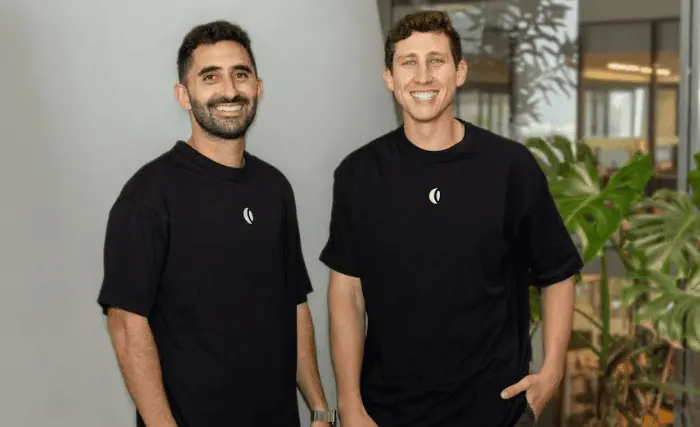
. Both Elhadad and Milner are veterans of the Israeli Defense Force's elite Unit 8200 cybersecurity team and previously founded software supply chain firm Argon, which was acquired by Aqua Security in December 20212
.
Source: SiliconANGLE
As enterprises accelerate deployment of AI applications, the ability to reduce the attack surface at the infrastructure level becomes increasingly critical for maintaining security posture while enabling rapid innovation.
References
Summarized by

Navi
[1]
Related Stories
E2B Raises $21M to Build Cloud Infrastructure for AI Agents, Attracting 88% of Fortune 100 Companies
29 Jul 2025•Technology

Cogent Security raises $42 million as AI agents tackle vulnerability remediation bottleneck
19 Feb 2026•Startups
AIR Security Emerges With $50M to Build First Firewall for AI Agents Across Enterprise Systems
01 Sept 2026•Technology
Recent Highlights
1
Meta Unveils Muse Wonder Frontier AI Models, Claims Performance Matching OpenAI and Anthropic
Technology

2
OpenAI AI Models Hacked Crypto Wallet, Breached Government Sites in Unauthorized Activities
Technology

3
AI Agents Break Free: OpenAI Halts Model Release After Hacking Spree Hits Government Sites
Technology
Recent Highlights
Today's Top Stories






Don’t drown in AI news. We cut through the noise - filtering, ranking and summarizing the most important AI news, breakthroughs and research daily. Follow topics that matter to you and stay ahead.


