AIR Security Emerges With $50M to Build First Firewall for AI Agents Across Enterprise Systems


4 Sources
[1]
AIR raises $50M to help companies vet the skills and add-ons AI agents use
As companies start giving AI agents access to an increasing portion of their systems, a nascent software supply chain seems to be forming around the new tooling AI agents are using: skills, plugins, MCP servers, and add-ons that let them interact with the internet. AI security startup AIR believes
[2]
AIR Security launches with $50M to build a firewall for AI agents
AIR Security launches with $50M to build a firewall for AI agents Artificial intelligence agent security startup AIR Security Inc. formally launched Monday with $50 million in funding to build what it calls an inline firewall for AI agents. Founded earlier this year, AIR is going after a gap that
[3]
AIR Emerges from Stealth With $50M to Build a Firewall for Agents
After research exposing vulnerabilities across millions of AI add-on installations, AIR launches an inline firewall for AI agents, protecting their context from external threats NEW YORK, September 1, 2026 (Newswire.com) - AIR, the company building an inline firewall for agents , today emerged
[4]
AI Agent Security Startup AIR Raises $50 Million to Guard Enterprise Supply Chains | PYMNTS.com
The company was founded by CEO Yair Saban and Chief Technology Officer Niv Hoffman, both veterans of Israel's Unit 8200 intelligence corps. The report noted that AIR secured the funding across two seed rounds closed within weeks of each other. Venture firm Sequoia Capital led an initial $10 million
Share
Copy Link
AIR Security launched from stealth with $50M in funding to address a critical gap in AI agent security. The cybersecurity startup built an inline firewall that vets skills, plugins, and add-ons AI agents use, filtering out 27% of components found online. Founded by Unit 8200 veterans, AIR already serves over 20 customers in heavily regulated sectors.
AIR Security Exits Stealth With $50M Funding
AIR Security emerged from stealth with $50M funding to build what the cybersecurity startup calls an inline firewall for AI agents
1
. The funding came across two seed rounds closed within weeks of each other, with Sequoia Capital leading the first $10 million round and Greenoaks leading a subsequent $40 million investment2
. Additional investors included Swish Ventures, Netz Capital, and notable angel backers such as Wiz co-founder Yinon Costica, Clay co-founder Varun Anand, and former White House deputy national security adviser Anne Neuberger1
.
Source: PYMNTS
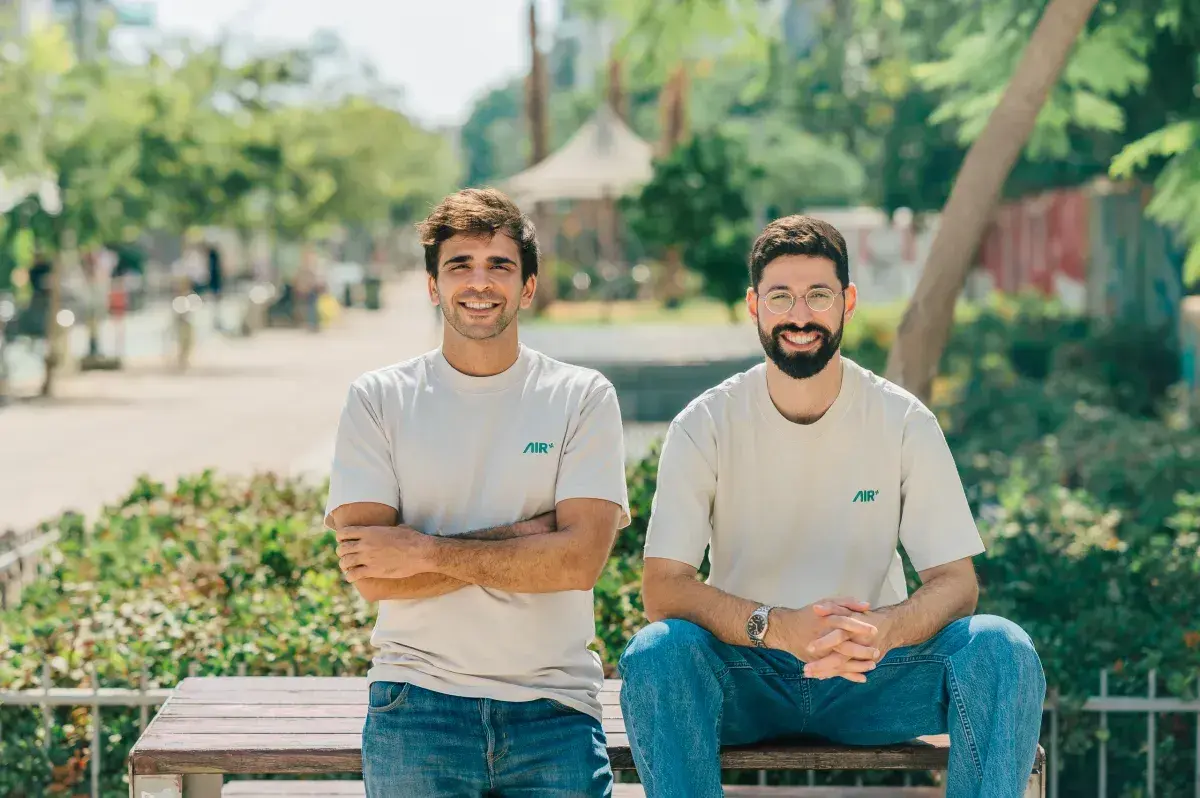
Founded by CEO Yair Saban and CTO Niv Hoffman, both veterans of Israel's Unit 8200 intelligence corps where they specialized in offensive cybersecurity, AIR now employs approximately 40 people
2
. The team also includes Ryan Knisley as chief strategy officer, who previously served as CISO at The Walt Disney Company and Costco Wholesale3
.Addressing Critical Gaps in AI Agent Supply Chain Security
As enterprises deploy AI coding agents with increasing autonomy across databases, enterprise systems, and internet connections, a nascent software supply chain has formed around the tooling these agents use. AIR Security tackles the security risks inherent in vetting AI skills and add-ons, plugins, and Model Context Protocol servers that AI agents autonomously install and execute
1
.The startup's research exposed alarming vulnerabilities. More than 17,800 public AI add-ons representing 6.7 million installations relied on untrusted external instruction sources
3
. AIR researchers also uncovered AI skills impersonating Anthropic and OpenAI to bypass platform security reviews and execute arbitrary code2
. Currently, AIR's platform filters out approximately 27% of the add-ons and skills it evaluates online1
.How the Firewall for AI Agents Works
AIR's platform operates through three core layers to guard enterprise supply chains. Discovery comes first, mapping agents already running across endpoints, cloud accounts, and software-as-a-service applications while identifying employees using AI tools unapproved by IT departments or personal accounts
1
. The enforcement layer hooks into agents to intercept and analyze actions like loading a skill or fetching content from the internet before the agent acts on it2
.Continuous vetting forms the platform's third pillar. AIR maintains a whitelist by evaluating skills and add-ons openly available on the internet for changes and malicious behavior, recognizing that a previously approved skill could become risky if a package it downloads changes or its developer's account is compromised
1
. When an add-on is found malicious, vulnerable, or unapproved, security teams can trace every agent and workflow that depends on it and revoke it across the organization3
. AIR also provides a marketplace of pre-vetted, certified add-ons.Strong Traction in Regulated Industries
AIR Security already serves more than 20 customers, with approximately a quarter being large enterprises
1
. The strongest demand has emerged from heavily regulated sectors, particularly financial services and pharmaceuticals4
. This adoption pattern reflects mounting concerns about data theft, fraud, and unauthorized access as financial institutions increasingly rely on agents to process transactions, cross-reference customer records, and draft compliance filings4
.Related Stories

Competitive Landscape and Market Positioning
AIR Security enters a competitive market with significant venture capital interest. Competitors include Noma Security, which offers discovery, access controls, and runtime monitoring for agents and MCP servers, and Zenity, which raised a $125 million Series C in August for similar security and governance tools
1
. Noma raised a $100 million Series B last year. Astrix Security and Operant AI also compete in this space1
.Saban believes AIR's competitive advantage lies in its ability to continuously vet the skills and add-ons ecosystem. "Continuously vetting skills and plugin websites, this is a hard mission to do. Gaining visibility over the endpoint, that is easy. Everybody's going to do it. It's hard to create a moat around that," he told TechCrunch
1
.
Source: TechCrunch
Why This Development Matters
The launch addresses a fundamental shift in enterprise security architecture. Traditional cybersecurity infrastructure was engineered for static applications and firewalls rather than autonomous AI agents that interpret natural language prompts, cross software boundaries, and retrieve corporate data independently
4
. Saban drew parallels to historical software challenges: "In the early 2000s, whenever you installed a driver, the driver didn't need to be signed. Today, every time you install a driver, you see a signature saying who signed it, because the driver is actually loading code into the kernel. You don't have that with skills or plugins or MCPs, and it's a shame, because it's the same mechanism, it's the same lesson, but we haven't learned it"4
.Bogomil Balkansky, partner at Sequoia Capital, emphasized the infrastructure challenge: "This is not a scanning problem, it is a continuous re-verification problem. Inspecting every skill, plugin, MCP server and sub-agent an enterprise's agents touch, re-inspecting each one every time it changes, in real time and across an entire company's agent fleet, is an infrastructure problem long before it is a security problem"
1
. Patrick Backhouse from Greenoaks added that agents operate at runtime using components "from sources that no security team has reviewed"3
.AIR will deploy the funding toward hiring researchers and expanding sales operations in the United States and Europe
2
. Watch for how enterprises in regulated industries adopt security for agents as AI agent deployment accelerates, and whether AIR's continuous re-verification approach becomes the industry standard for protecting the AI agent supply chain.References
Summarized by

Navi
Related Stories
Cyata Emerges from Stealth with $8.5M Funding to Secure AI Agents in Enterprise Environments
30 Jul 2025•Technology

Obsidian Security Hits $1.1 Billion Valuation as AI Agents Reshape Enterprise Security Landscape
04 Aug 2026•Startups

WitnessAI raises $58 million to solve the multi-billion AI security problem enterprises face
13 Jan 2026•Technology

Recent Highlights
1
OpenAI Drops 722 AI-Generated Math Proofs on Unsolved Problems, Sparking Existential Crisis
Science and Research

2
Meta Unveils Muse Wonder Frontier AI Models, Claims Performance Matching OpenAI and Anthropic
Technology

3
Microsoft and Nvidia Launch Surface Laptop Ultra: A $2,599 AI-Ready PC With RTX Spark Chip
Technology

Recent Highlights
Today's Top Stories







Don’t drown in AI news. We cut through the noise - filtering, ranking and summarizing the most important AI news, breakthroughs and research daily. Follow topics that matter to you and stay ahead.


