Emergent becomes India's second AI unicorn in a month with $1.5 billion vibe coding platform


3 Sources
[1]
Catching up in the AI race? India gets its second AI unicorn in a month
Vibe-coding startup Emergent on Wednesday became the second Indian artificial intelligence company, within a month, to be valued at more than a billion dollars, signaling that the South Asian country was finally entering the AI race Emergent, which was launched a year ago, raised $300 million in a
[2]
Emergent hits $1.5bn as vibe coding mints another unicorn
Emergent's vibe coding platform hit a $1.5bn valuation a year after launch. Its founder says most businesses do not need software, they need a way to turn how they work into it. Emergent's vibe coding platform hit a $1.5bn valuation a year after launch. Its founder says most businesses do not need
[3]
Emergent Vibe Codes its Way to $1. 5 billion Valuation
Vibe-coding startup Emergent has raised $130 million of fresh financing led by private equity firm Creaegis, alongside Ranjan Pai's family office vehicles MNI Ventures and Claypond Capital, at a valuation of $1.5 billion, five times higher than six months ago. The round also saw participation from
Share
Copy Link
Vibe coding startup Emergent raised $130 million at a $1.5 billion valuation, making it India's second AI unicorn within a month. The platform lets users build apps without coding experience, targeting small businesses with AI agents to generate software. With 12 million apps built and a $120 million annual revenue run-rate, Emergent signals India's growing presence in the AI coding sector.
Emergent Secures $130 Million Series C Funding at $1.5 Billion Valuation
Emergent has raised $130 million in Series C funding at a $1.5 billion valuation, marking a fivefold increase from its $300 million valuation just six months ago
3
. The round was led by Bengaluru-based private equity firm Creaegis, with participation from Claypond Capital, MNI Ventures, and Sentinel Global3
. Existing investors Khosla Ventures, SoftBank Vision Fund 2, Lightspeed, and Y Combinator also joined the round1
. The AI startup has now raised a total of $230 million since co-founders Mukund Jha and his twin brother Madhav launched it in 20243
.
Source: ET
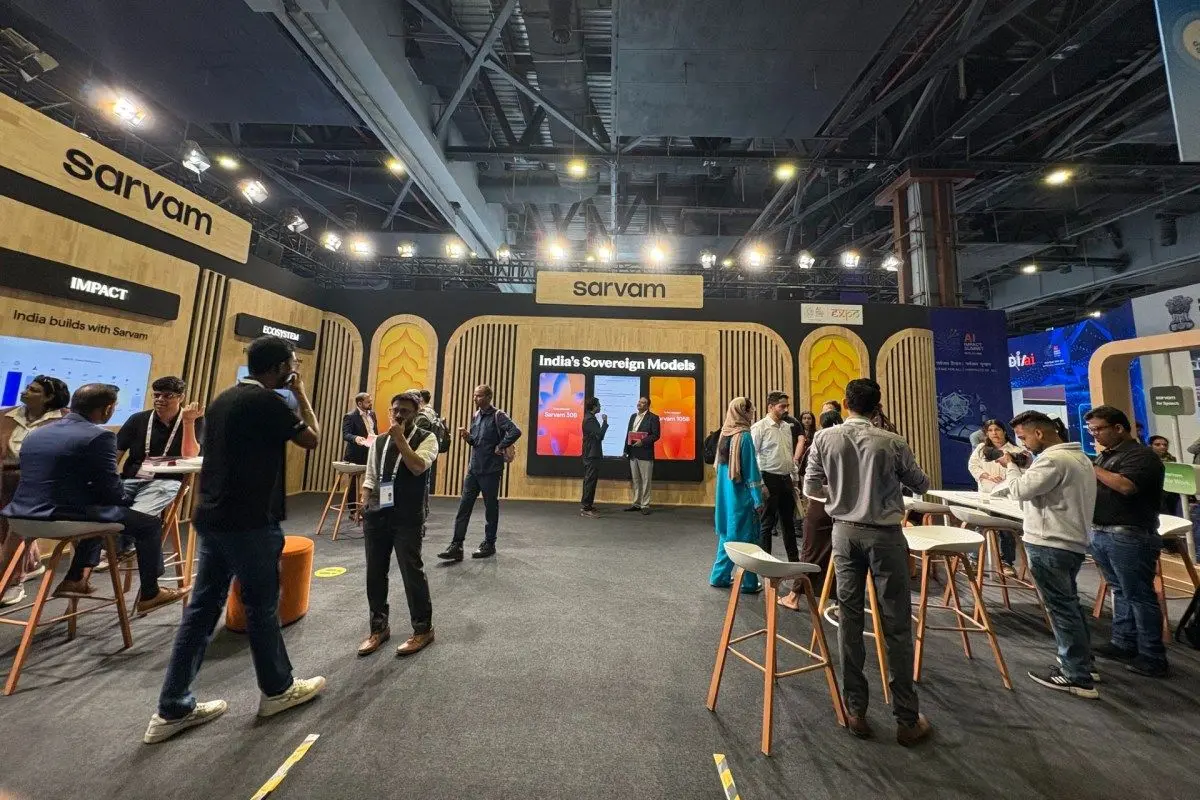
Emergent becomes the second AI unicorn from India's AI ecosystem within a month, following Sarvam's $234 million raise at a $1.5 billion valuation
1
. This development signals that India is entering the global AI race with meaningful momentum. According to Deepika Giri, head of research for AI, analytics and data at IDC Asia Pacific, nearly half of Indian enterprises are already testing agentic AI solutions, representing "unusually fast experimentation and workforce automation at scale for a market this size"1
.Vibe Coding Platform Democratizes Software Development
Emergent's platform enables users to build apps without coding experience through plain-language prompts. The company deploys AI agents to generate software, handling everything from writing code to hosting, testing, and deployment
2
. "We built Emergent for the non-technical entrepreneur and the small business owner, with 70% of our users having no prior coding experience," said Mukund Jha1
. The platform has facilitated the creation of 12 million apps in the past year by small business owners and solo entrepreneurs1
.Users are building full-featured applications including CRMs, inventory systems, and marketplaces. Jha highlighted examples such as an Ohio roofer who replaced five tools with one system and a Florida car detailer who rebuilt his site in four days
2
. "You're basically getting an engineering team in a box," Jha told TechCrunch2
. The company currently has 200,000 paying customers and operates at a $120 million annual revenue run-rate, up from $100 million in February and $50 million in January3
.Revenue Growth Normalizes as AI Costs Come Under Scrutiny
While Emergent achieved a fourfold increase in user numbers and revenue from December to the present, the company is experiencing a normalization in its breakneck revenue growth
3
. Enterprise customers are becoming more conscious of AI costs, with rising inference costs and model usage coming under greater scrutiny. "Cost is a concern globally, and everyone is working to ensure AI platforms remain affordable. Users are increasingly focused on the price-to-value ratio," Jha explained3
. While token prices have remained stable, advances in reasoning models mean applications now consume significantly more tokens to complete the same task, increasing overall costs.The latest financing was smaller than the $200-250 million round the company had initially explored
3
. Despite this moderation, improvements in metrics such as customer acquisition costs and gross margins continue. India contributes 8-9% of Emergent's revenue, with about 200 employees based there, while the US team is expected to expand from 8-9 employees to around 303
.Related Stories

AI Coding Sector Faces Consolidation Pressures
The AI coding sector is entering a phase of consolidation, with major moves reshaping the competitive landscape. Cursor, one of Emergent's rivals, is set to be acquired by Elon Musk's SpaceX in a $60 billion all-stock deal
3
. Frontier AI companies OpenAI and Anthropic have expanded aggressively into AI coding assistants over the past year3
. Against these developments, Emergent's $1.5 billion valuation appears modest compared to competitors like Lovable, which is reportedly seeking a $13.2 billion valuation2
.Emergent's global rivals Lovable and Replit have raised more than $650 million and $900 million, respectively
3
. However, Emergent differentiates itself by targeting small businesses and solo founders rather than professional developers. Jha calls Replit his closest rival and remains candid about current limitations, admitting that design is a weakness and success rates are still lower than desired2
.Strategic Plans for Inorganic Growth and Expansion
The fresh capital provides Emergent with an 18-month runway and positions the company to evaluate inorganic growth opportunities
3
. "We're always in the market, especially after this raise, to acquire smaller startups where there may be meaningful synergies across talent, technology or distribution," Jha said3
. The company is particularly interested in strengthening distribution as SaaS valuations have corrected, though no active acquisition discussions are currently underway3
.Most of the funding will go toward hiring and research, with Emergent aiming to lift success rates and support more complex applications, including those running on open-source models
2
. The company is weighing a European office and expanding its San Francisco presence2
. Jha's ambition extends beyond an app builder, envisioning Emergent as "the operating system for businesses". The company is investing $200,000 into two builder contests to attract more users2
. "We believe this market has tapped less than 1% of its potential," Jha stated, emphasizing that as new models continue to improve, their capabilities will allow Emergent to deliver on its promise of helping businesses build production-ready software3
.References
Summarized by

Navi
[2]
Related Stories
Emergent Raises $30M to Democratize App Development with AI-Powered Vibe Coding
24 Sept 2025•Technology

Anything Secures $11M Funding, Revolutionizing AI-Powered App Development
30 Sept 2025•Startups

Sarvam AI secures $234M Series B, becomes India's newest AI unicorn at $1.5 billion valuation
15 Jun 2026•Startups
Recent Highlights
1
Meta Unveils Muse Wonder Frontier AI Models, Claims Performance Matching OpenAI and Anthropic
Technology

2
IMF Report Warns AI Market Correction Could Spark Global Financial Crisis With $1.4T at Risk
Business and Economy

3
OpenAI Releases 722 AI-Generated Math Solutions, Triggering Existential Crisis in Mathematics
Technology

Recent Highlights
Today's Top Stories







Don’t drown in AI news. We cut through the noise - filtering, ranking and summarizing the most important AI news, breakthroughs and research daily. Follow topics that matter to you and stay ahead.


