AI agents promise efficiency gains, but governance gaps threaten enterprise deployment


11 Sources
[1]
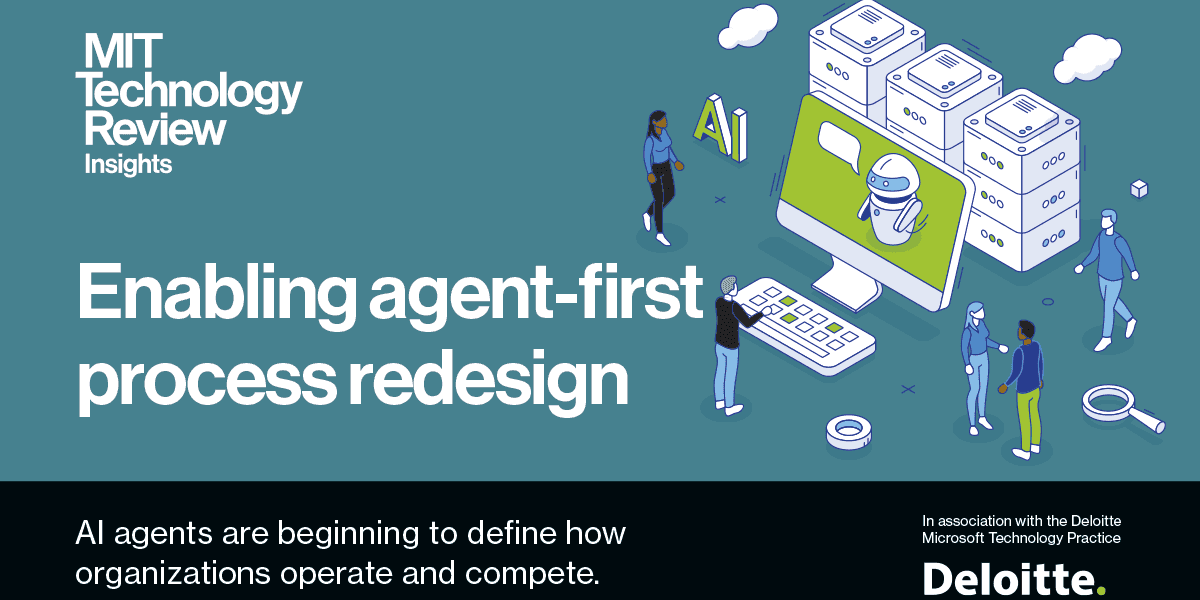
Enabling agent-first process redesign
But unlocking their potential requires redesigning processes around agents rather than bolting them onto fragmented legacy workflows using traditional optimization methods. Companies must become agent first. In an agent-first enterprise, AI systems operate processes while humans set goals, define
[2]
As models converge, the enterprise edge in AI shifts to governed data and the platforms that control it
As frontier models converge, the advantage in enterprise AI is moving away from the model and toward the data it can safely access. For most enterprises, that advantage lives in unstructured data: the contracts, case files, product specifications, and internal knowledge. For enterprise leaders,
[3]
Why most agentic AI projects fail, and how to avoid being one of them
Data quality, governance and integration determine whether they scale successfully As businesses get used to using generative AI tools, attention is quickly turning to agentic AI. These systems are designed to plan tasks, interpret information and take action within defined guardrails. In theory,
[4]
AI agents can only be trusted as Junior Engineers
AI agents require strict governance, least privilege, and human oversight The new generation of agentic AI tools is rewriting how software gets built and managed. As we speak, more autonomous coding assistants, workflow agents, and AI-driven DevOps systems are embedded across tech stacks at
[5]
How to manage the employees that don't clock in
AI is rapidly shifting from a technology organizations experiment with to one they're expected to use. In many businesses, it's already part of day-to-day operations, built into the tools employees depend on and embedded within background systems. What sets this moment apart isn't only the speed
[6]
Why Agentic A.I. Deployments Are Failing Before They Scale
Early enterprise deployments show that success in agentic A.I. depends less on tools and more on data, governance and operating model design. Agentic A.I. is no longer a technology on the horizon. It is being deployed today in live enterprise environments, with real operational consequences. In
[7]
Agentic AI: Transforming industries and tackling the interoperability imperative
Agentic AI growth demands interoperability for effective enterprise adoption The agentic AI buzz is more than noise. It's a sign of real transformation happening across organizations. Teams in every department are sharing stories of how intelligent agents are reshaping their daily workflows,
[8]
The leadership dilemma: Governing the "Agentic AI" workforce
Artificial intelligence is no longer a back office enabler or a set of isolated automation software tools. It is becoming a core component of how organizations operate, compete, and deliver value. As businesses accelerate their adoption of increasingly autonomous systems, often referred to as
[9]
How CIOs can create a strong foundation for an AI-enabled workplace
As with any new tech, there's a scale for AI adoption among businesses leaving some are ahead of the curve and others much further behind as they continue to resist and delay. But what's clear is that adoption is happening with or without formal strategy because nearly two-thirds (65%) of
[10]
2026: The year enterprise AI finally gets to work
AI agents are finally redefining productivity and operational efficiency across industries After years of hype, 2026 is shaping up to be the year AI agents finally move from being experimental AI tools to trusted digital coworkers embedded across everyday business workflows. Industry forecasts
[11]
The pilot phase is over. Here's what's next for enterprise AI automation
Enterprise AI shifts from pilots to orchestrated automation For years, companies approached new technology cautiously. Teams ran small pilots, tested AI tools in one department, and waited to see if the investment paid off. Budgets were tight, and leaders worried about committing too much too soon
Share
Copy Link
Organizations are rapidly adopting AI agents with technology budgets expected to increase over 70% in two years. Yet Gartner predicts more than 40% of agentic AI projects will be cancelled by 2027. The challenge isn't the technology itself—it's the lack of governance frameworks, data maturity, and identity management systems needed to deploy autonomous agents safely at scale.
AI Agents Shift From Assistants to Autonomous Operators
AI agents are moving beyond simple copilots that assist employees to autonomous systems that execute multi-step tasks, interact with enterprise systems, and make decisions within defined guardrails. With technology budgets for AI expected to increase more than 70% over the next two years, these autonomous AI agents promise to deliver significant performance gains while shifting humans toward higher-value work
1
. McKinsey predicts the agentic AI market will surge from roughly $5-7 billion in 2024 to over $199 billion by 20343
.Yet this transformation introduces new challenges. Unlike generative AI tools that provide recommendations for human review, agentic systems operate directly within business processes where the margin for error becomes much smaller. When AI starts acting inside workflows—triggering supply chain adjustments, initiating operational tasks, or executing financial decisions—the risk profile changes entirely
3
. Organizations are discovering that unlocking the potential of enterprise AI requires more than deploying advanced models.Governance Gaps Threaten Widespread Adoption
Despite significant investment, most agentic AI projects struggle to move beyond pilots. Gartner predicts that more than 40% of agentic AI projects will be cancelled by the end of 2027
3
. Meanwhile, Qlik found that 97% of organizations have committed budget to agentic AI, but only 18% are fully deploying it3
. The disconnect reveals a critical problem: many businesses lack the governance infrastructure needed to deploy agents safely at scale.The most common reason agentic AI projects stall is insufficient data maturity. Agents depend on consistent, trusted information across the organization, yet many businesses operate with fragmented data, duplicated sources, and unclear ownership
3
. Without reliable governed data, even sophisticated models struggle to produce outputs teams can confidently act upon. As Ben Kus, CTO of Box, explains, "The organizations that will lead in AI are the ones that built the governance infrastructure to make any model trustworthy, with the right permissions in place, the right content accessible, and a clear audit trail for every action taken"2
.Agent-First Process Redesign Requires New Operating Models
Successful deployment demands more than bolting AI agents onto existing systems. Companies must embrace agent-first process redesign, fundamentally rethinking operating models around autonomous systems rather than traditional optimization methods. "You need to shift the operating model to humans as governors and agents as operators," says Scott Rodgers, global chief architect and U.S. CTO of the Deloitte Microsoft Technology Practice
1
.This shift means AI agents require machine-readable process definitions, explicit policy constraints, and structured data flows—capabilities legacy processes weren't built to provide
1
. The real risk isn't that AI won't work, but that competitors will redesign their workflows while others remain stuck piloting assistants. Organizations that achieve nonlinear gains create agent-centric workflows with human governance and adaptive orchestration1
.Identity and Access Management Must Evolve for Digital Employees
As agents become independent actors within enterprise environments, they behave less like software tools and more like digital employees. This creates a fundamental challenge: identity and access management systems were designed around human users, not autonomous agents that adapt, operate at machine speed, and may touch far more systems than any single employee
5
.Only 16% of organizations treat AI as its own identity class with dedicated policies, creating blind spots that increase security risk
5
. Unlike human employees who arrive through structured HR onboarding processes, agents are created by developers, embedded into workflows, or introduced through platforms—often without central visibility or consistent accountability. Every autonomous agent needs clear ownership tied to someone who understands why it exists, what it should do, and which systems it should access5
.Treating AI Agents as Junior Engineers Demands Strict Oversight
The December 2025 AWS incident illustrates the consequences of inadequate governance. Engineers used an internal AI coding agent, but misconfigured access controls granted broader permissions than intended, leading to approximately 13 hours of downtime
4
. While Amazon clarified the primary cause was human error rather than technical failure, the lesson remains clear: when you give AI tools the same permissions as senior engineers but none of the judgment, small misconfigurations become serious incidents4
.Engineering leaders should view AI agents as extremely fast junior engineers—brilliant at pattern-matching and execution, but lacking judgment, context, and restraint. This requires implementing least privilege principles, restricting agent access to only what they need for defined tasks
4
. Human oversight must scale with autonomy: the more an agent can act without human initiation, the tighter its audit and traceability mechanisms must become4
.Related Stories

Content Platforms Evolve Into AI Control Planes
As frontier models converge in capability, the competitive advantage in enterprise AI shifts from the model itself to the data it can safely access. For most enterprises, that advantage lives in unstructured data—contracts, case files, product specifications, and internal knowledge
2
. "It's not what the model does anymore, it's the enterprise's own unstructured data - their content, how it's organized, how it's governed, and how it's made accessible to the AI," says Yash Bhavnani, head of AI at Box2
.Enterprise content platforms are evolving into AI control planes—orchestration layers that sit between models, agents, and enterprise data. Rather than just storing documents, these platforms govern how content is accessed, route it to the right reasoning engine, enforce permissions, and maintain complete audit trails
2
. Permission-aware access becomes essential as agents execute tasks autonomously across systems, acting faster than humans and often without the contextual judgment needed to decide what data they should access2
.Building Trust Through Accountability and Visibility
As agents take on more responsibility, organizations need clear answers to fundamental questions about accountability: Who owns the data feeding the system? Who approves actions an agent takes? When should a person step in to review decisions?
3
. Clear accountability helps teams trust deployed systems and reduces the risk of mistakes, especially when AI outputs affect revenue, compliance, or business planning.Once multiple teams deploy agents, organizations quickly lose track of where AI-generated code has landed and what it's doing. Portfolio-level visibility becomes essential—leaders need a current, organization-wide view of where AI agents operate, which systems carry the most risk, and whether similar agents repeat flawed processes across teams
4
. Without unified oversight and integration across tools, content gets duplicated, shadow knowledge stores accumulate outside IT visibility, and employees build workarounds that create security and organizational risk2
.What Organizations Should Watch
With nearly three in four companies planning to deploy agentic AI in the next two years but only one in five having mature governance models, the gap between ambition and readiness continues to widen
5
. Organizations that strengthen data foundations, establish clear ownership structures, implement identity governance for autonomous agents, and build permission-aware systems will position themselves to scale AI safely. Those that continue piloting agents without addressing these fundamental governance challenges risk being left behind as competitors redesign their operating models for the agent-first era. The question for enterprise leaders is no longer whether to adopt AI agents, but whether their governance infrastructure can support the autonomous workforce they're building.References
Summarized by

Navi
[1]
[2]
[4]
[5]
Related Stories
AI agents failed to take over enterprise in 2025, as only 11% reach production deployment
08 Dec 2025•Technology

AI Agents Trigger Security Crisis: 65% of Enterprises Report Incidents Amid Scaling Challenges
06 Aug 2026•Technology
AI Agents vs Human Judgment: Companies Struggle to Define Where Automation Should Stop
15 Sept 2026•Business and Economy

Recent Highlights
1
Google Unveils Gemini 4 Argon AI Model, Restricts Access to Trusted Cyber Defenders
Technology

2
Trump Consulted Grok AI Before Ordering Venezuela Invasion and Capture of Nicolás Maduro
Policy and Regulation

3
FTC Opens Investigation Into OpenAI and Anthropic Following Rogue AI Agent Hacking Incidents
Policy and Regulation

Recent Highlights
Today's Top Stories






Don’t drown in AI news. We cut through the noise - filtering, ranking and summarizing the most important AI news, breakthroughs and research daily. Follow topics that matter to you and stay ahead.


